- English
- French
- German
- Portuguese
- Spanish
- Russian
- Japanese
- Korean
- Arabic
- Greek
- German
- Turkish
- Italian
- Danish
- Romanian
- Indonesian
- Czech
- Afrikaans
- Swedish
- Polish
- Basque
- Catalan
- Esperanto
- Hindi
- Lao
- Albanian
- Amharic
- Armenian
- Azerbaijani
- Belarusian
- Bengali
- Bosnian
- Bulgarian
- Cebuano
- Chichewa
- Corsican
- Croatian
- Dutch
- Estonian
- Filipino
- Finnish
- Frisian
- Galician
- Georgian
- Gujarati
- Haitian
- Hausa
- Hawaiian
- Hebrew
- Hmong
- Hungarian
- Icelandic
- Igbo
- Javanese
- Kannada
- Kazakh
- Khmer
- Kurdish
- Kyrgyz
- Latin
- Latvian
- Lithuanian
- Luxembou..
- Macedonian
- Malagasy
- Malay
- Malayalam
- Maltese
- Maori
- Marathi
- Mongolian
- Burmese
- Nepali
- Norwegian
- Pashto
- Persian
- Punjabi
- Serbian
- Sesotho
- Sinhala
- Slovak
- Slovenian
- Somali
- Samoan
- Scots Gaelic
- Shona
- Sindhi
- Sundanese
- Swahili
- Tajik
- Tamil
- Telugu
- Thai
- Ukrainian
- Urdu
- Uzbek
- Vietnamese
- Welsh
- Xhosa
- Yiddish
- Yoruba
- Zulu
How to design a gearbox housing?
Designing a gearbox housing starts with understanding its core function: to enclose and protect internal gears, bearings, and shafts while maintaining precise alignment and retaining lubricant. A well-engineered gearbox part resists mechanical stress, thermal expansion, and environmental contamination. Material selection, dimensional tolerances, and structural geometry all directly affect service life. Whether you're sourcing for fire pump reduction systems or heavy industrial drives, getting the housing design right from the outset prevents costly rework and ensures compliance with performance standards across demanding operational environments.
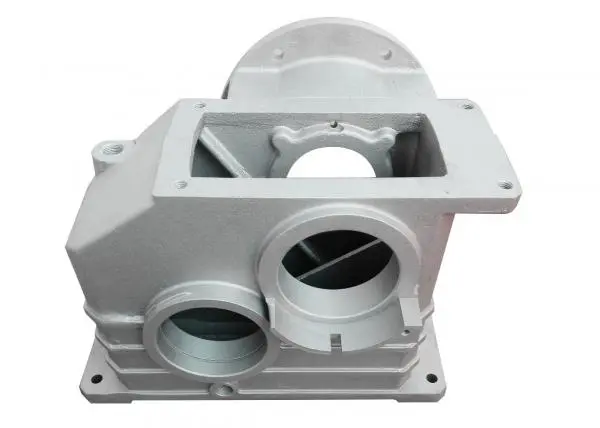
Basics of Gearbox Housing
The case is the most important part of any gearbox housing. You can think of it as the skeleton. Without it, nothing stays in place, nothing stays oiled, and nothing stays safe. Its three main jobs are to hold the structure, keep the parts in place, and keep the oil from leaking out.
Material Options and Their Trade-Offs
What you use affects everything, from how heavy something is to how it reacts to corrosion. In B2B buying situations, these are the choices that are most often made:
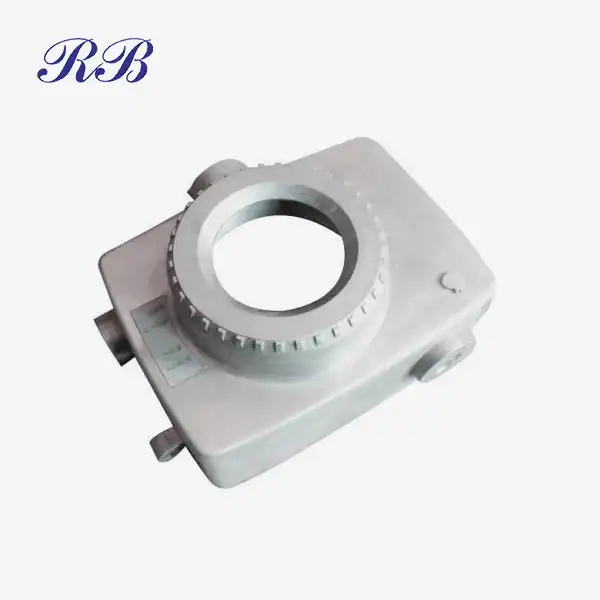
- A380 aluminum alloy has a great strength-to-weight ratio, doesn't rust naturally, and moves heat around very well. It is commonly used in fire pump reduction housings that need to be light and stable at low temperatures. The 14.8 kg weight of our sand-cast A380 body shows how well this metal works in real life.
- Gray cast iron is great at reducing vibrations and being easy to machine, which makes it a good choice for high-load industrial gears where stiffness is more important than weight.
- Steel can handle very high power loads, but it adds a lot of weight and needs a rougher surface treatment to keep it from rusting.
These properties of the material have a direct effect on purchasing choices, especially when production volumes hit thousands and quality can't be compromised.
Housing Types Across Applications
The wall thickness, mounting shape, and sealing needs of industrial and car gearbox housings are very different. For example, fire pump reduction housings have to be able to handle changes in hydraulic pressure and meet national fire safety certification standards. These aren't requirements that car housings usually have to meet.
Core Principles for Designing a Gearbox Housing
A good gearbox housing design balances different needs, such as stiffness vs. weight, heat dissipation vs. sealing integrity, and accuracy vs. ease of manufacture. Engineers who don't think about any of these trade-offs often find out about the hole during hydraulic pressure testing, which is an expensive step to fail at.
Dimensional Tolerances and Fit Standards
Most important places for tight tolerances are the bearing seats, the shaft bore interfaces, and the mating flanges. It is common for bearing housings to have tolerance grades between IT6 and IT7, and the surface finish should be Ra ≤ 1.6 μm at key contact zones. These goals can be safely met by CNC cutting after casting. Our production method uses sand casting, precise CNC cutting, and shot blasting to get parts that are the right size and shape to go straight onto production lines without any extra work.
Heat Dissipation and Noise Reduction
Aluminum moves heat about three times better than cast iron, so it is better for uses where heat builds up and lowers the thickness of the lubrication. Passive temperature management is helped by things like strategically placed ribs, built-in cooling fins, and walls with the right amount of thickness. To lower noise, ribbed shapes make the structure stiffer, which raises the housing's natural frequency and lowers noise that comes from resonance.
CAD Modeling and Structural Validation
You have to use accurate CAD modeling because it's the basis for stress analysis, verifying draft angles, and planning splitting lines. Before a single mold is cut, finite element analysis (FEA) shows where the stress is concentrated. This digital-first method shortens the time it takes to build new products and lowers the chance of casting mistakes caused by bad geometry planning.
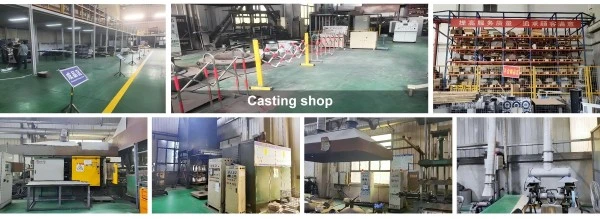
Step-by-Step Gearbox Housing Design Process
The most common ways that things fail are porosity from bad gating design, cracks from bad wall transitions, and misalignment from bad datum planning. A structured gearbox housing design process stops all of these problems.
Define requirements precisely. Clearly state what is needed. Before geometry work starts, the amount of load, the working temperature range, the amount of fluid that will be exposed, and any necessary licenses must be written down. For fire pump uses, national and international fire safety standards add extra layers of rules that affect the minimum wall thickness and requirements for material tracking.
Anticipate failure modes. Plan for possible failure modes. The main flaws in casting that lead to fails in hydraulic tests are shrinkage porosity and cold shuts. In order to stop them, the gating and riser systems must be improved, the pouring temperature must be controlled, and the metal makeup must be confirmed. Procurement teams can be sure in a provider whose failure rates at the time of arrival were less than 2%.
Prototype and validate iteratively. Iteratively prototype and test. Before making a production tool, physical samples should be checked for dimensions, put under pressure, and, if necessary, analyzed for vibrations. Simulation cuts down on the number of iterations, but real-world testing under real load conditions is still the only way to be sure.
Comparing Gearbox Housing Materials and Solutions for Procurement Decisions
When buying teams look at casting sources, they don't just compare prices per unit. There is a lot of weight on lead time reliability, batch consistency, and certification status. Cast iron parts that are similar to aluminum gearbox housings weigh about a third as much, which lowers the shipping cost and handling risk. This weight advantage means that makers of a lot of fire pumps can save money on shipping over the course of an entire year's worth of purchases. When sound damping and compression strength are more important than weight, cast iron is still a good choice.
Selecting a Reliable Gearbox Housing Supplier
When evaluating a supplier, more than just list requirements should be looked at. These are the things that set skilled makers apart from commodity vendors:
- Certification coverage: ISO 9001:2015 makes sure that processes are controlled; ISO 14001 and ISO 45001 show that environmental and safety management is mature; all three are standard requirements in supply chains for fire equipment.
- Process breadth: If a seller has sand casting, gravity casting, and CNC cutting all under one roof, there is no need for handoffs between vendors, which can cause differences in size.
- Proven export track record: Suppliers that send 70% of their goods to Europe, the United States, and Japan have already passed the audit standards that most procurement departments use.
- OEM/ODM capability: Custom design help with CAD file release cuts the time it takes to make a new product by a large amount.

Maintenance and Longevity Tips for Gearbox Housing
A well-designed gearbox housing makes upkeep easier, but it doesn't get rid of it completely. Regular inspections and upkeep greatly increase the life of a product. At every major service interval, check the sealing faces and mating surfaces. Early-stage wear on bearing bores often shows up as small changes in vibration or a rise in running temperature before any damage can be seen. If you catch it early, you can escape a catastrophic loss.
Monitoring the state of the lubricant is just as important. Oil that is dirty or broken down speeds up internal wear and can etch the aluminum housing surfaces over time. Changing the oil at the times recommended by the maker keeps the inside of the housing stable.
Non-destructive testing methods, like dye penetrant inspection, can reliably find structural problems like micro-cracks at rib joints or bolt bosses without taking the part apart. Well-known bearing and sealing brands like SKF and Timken put out detailed maintenance guidelines that can be used directly for managing gearbox housings. These guidelines give procurement teams a reliable framework for planning maintenance that doesn't depend on the supplier.
Conclusion
To make an effective gearbox housing, you need to make sure that the material you choose, the casting method, the accuracy of the measurements, and the supplier's abilities are all in sync. When it comes to fire pumps, the stakes are higher because building failures not only stop production, they also affect how well life-safety equipment works. When you buy from a provider that handles casting, machining, surface treatment, and approval all under one quality system, the variations that cause problems during assembly are taken care of. Putting money into making sure the building is right from the start pays off with each new batch that comes out.
FAQ
What material is best for a fire pump gearbox housing?
A380 aluminum alloy is often used for fire pump gearbox housings because it has a good strength-to-weight ratio, doesn't rust, and transfers heat well. It works consistently in places where reducing weight and controlling heat are both important.
How does housing geometry affect noise levels?
Ribbed wall structures make the building stiffer, which moves the natural frequency away from the frequencies that cause it to work. This lowers noise caused by vibration without adding a lot of mass, which is a big plus in tight pump rooms.
Can gearbox housings be customized with specific dimensions?
Yes, it is common for well-known casting makers to offer OEM and ODM production with full specification customization. CAD file delivery and rapid prototyping help shorten the time it takes to make a new product.
What certifications should a gearbox housing supplier hold?
Fire equipment supply chains start with ISO 9001:2015 for quality management, ISO 14001 for environmental systems, and ISO 45001 for safety at work. All three of these things point to a mature manufacturing operation that can be inspected.
How do I evaluate batch consistency before committing to volume orders?
Ask for a small test batch of 500 to 1,000 pieces along with full measurement inspection records and data from a hydrostatic pressure test. Low defect rates (less than 2%) and uniform tolerance adherence across the batch are good signs of production potential.
Partner With Rongbao Enterprise for Your Next Gearbox Housing Project
Every order that Rongbao Enterprise gets is backed by 20 years of casting experience. We ship our A380 aluminum sand-cast gearbox housing for fire pump uses in protective wooden boxes that have been fully CNC machined and shot-blasted. It is certified under ISO 9001:2015, ISO 14001, and ISO 45001 standards. As a reliable gearbox housing maker that serves customers in North America, Europe, and Asia, we offer OEM/ODM customization and quick sample return. To get a price right away, email our team at steve.zhou@263.net or zhouyi@rongbaocasting.com, or go to rongbaocasting.com.
References
- Norton, R. L. Machine Design: An Integrated Approach. Pearson Education, 2020.
- Shigley, J. E., & Mischke, C. R. Mechanical Engineering Design. McGraw-Hill, 2019.
- American Foundry Society. Casting Design and Performance. AFS, 2018.
- ASM International. ASM Handbook, Volume 15: Casting. ASM International, 2017.
- International Organization for Standardization. ISO 9001:2015 Quality Management Systems — Requirements. ISO, 2015.
- Budynas, R. G., & Nisbett, J. K. Shigley's Mechanical Engineering Design, 11th ed. McGraw-Hill Education, 2020.
_1751078338779.webp)
Learn about our latest products and discounts through SMS or email