- English
- French
- German
- Portuguese
- Spanish
- Russian
- Japanese
- Korean
- Arabic
- Greek
- German
- Turkish
- Italian
- Danish
- Romanian
- Indonesian
- Czech
- Afrikaans
- Swedish
- Polish
- Basque
- Catalan
- Esperanto
- Hindi
- Lao
- Albanian
- Amharic
- Armenian
- Azerbaijani
- Belarusian
- Bengali
- Bosnian
- Bulgarian
- Cebuano
- Chichewa
- Corsican
- Croatian
- Dutch
- Estonian
- Filipino
- Finnish
- Frisian
- Galician
- Georgian
- Gujarati
- Haitian
- Hausa
- Hawaiian
- Hebrew
- Hmong
- Hungarian
- Icelandic
- Igbo
- Javanese
- Kannada
- Kazakh
- Khmer
- Kurdish
- Kyrgyz
- Latin
- Latvian
- Lithuanian
- Luxembou..
- Macedonian
- Malagasy
- Malay
- Malayalam
- Maltese
- Maori
- Marathi
- Mongolian
- Burmese
- Nepali
- Norwegian
- Pashto
- Persian
- Punjabi
- Serbian
- Sesotho
- Sinhala
- Slovak
- Slovenian
- Somali
- Samoan
- Scots Gaelic
- Shona
- Sindhi
- Sundanese
- Swahili
- Tajik
- Tamil
- Telugu
- Thai
- Ukrainian
- Urdu
- Uzbek
- Vietnamese
- Welsh
- Xhosa
- Yiddish
- Yoruba
- Zulu
Customized Aluminum Die Casting Robot Parts: Durability Meets Lightweight for Automation Lines
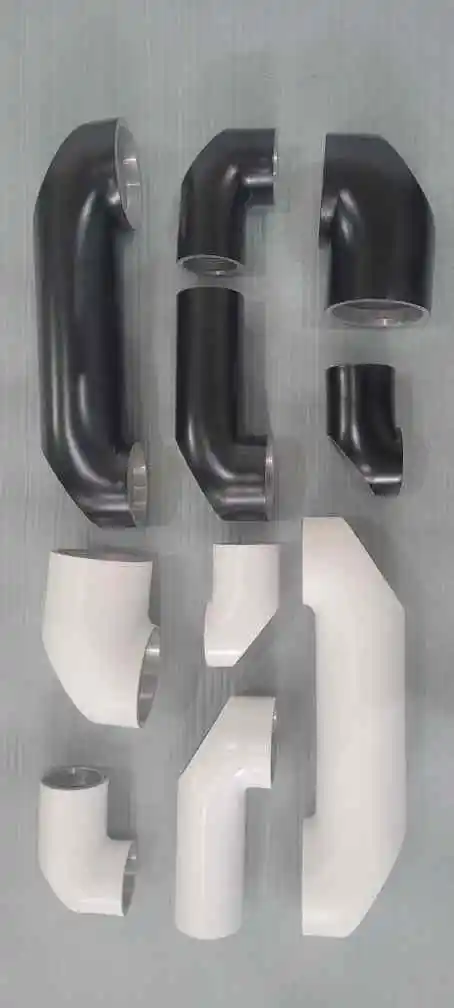
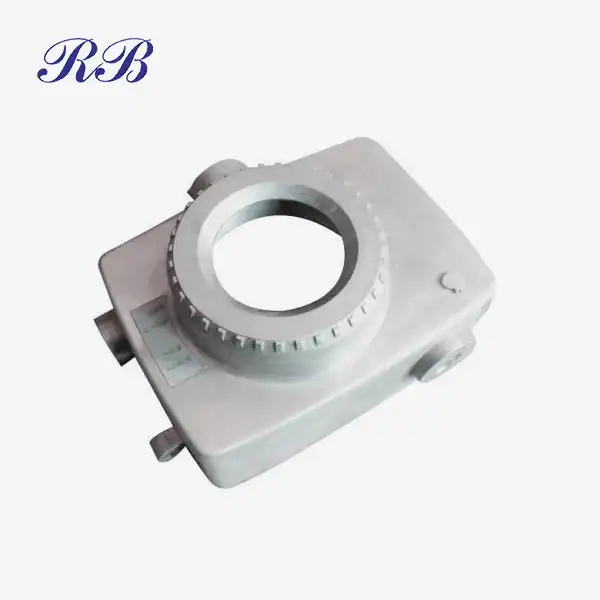
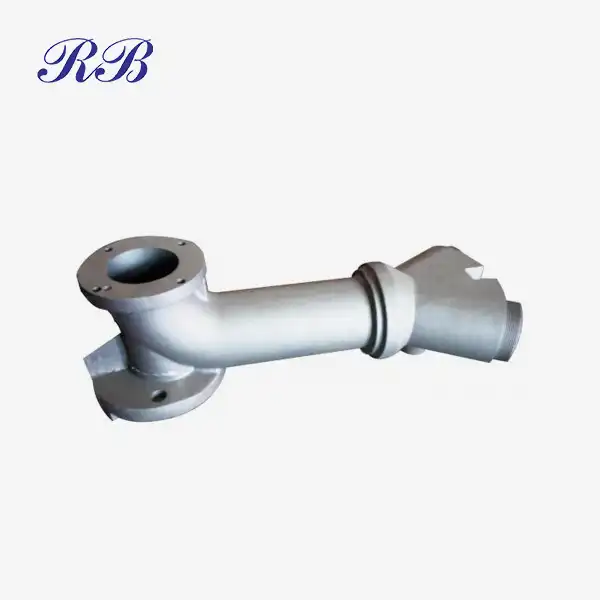
Industrial robots need to move fast, position accurately and perform reliably during repetitive manufacturing cycles. The robot arm consists of components that all contribute to the mass, the stiffness and the longevity of the robot arm. Excess weight can increase the load on motor and reducer requirements, and improperly designed housings might result in undesirable deflection or alignment difficulties. For equipment manufacturers, selecting customized aluminum die casting robot arm parts This is a compromise between structural requirements, manufacturability and total product cost.Rongbao Enterprise specializes in Aluminum Casting for industrial robot arm housing and spare parts. Lightweight architectures and integrated geometries can be researched using other appropriate manufacturing technologies such as A356 aluminum alloy gravity casting. The correct decision will rely on the part geometry, mechanical requirements, manufacturing volume and dimensional tolerances. Understanding these properties helps engineers develop robot parts that will fit their equipment, yet are easy to build in large quantities.
Why Lightweight Robot Arm Components Matter on Automation Lines?
Industrial robots are employed to carry out repetitive switching activities, examine equipment, handle materials, and assemble products. Many applications have the same constraint: the arm construction must be stiff enough, but not overmassive. They operate in different environments.
Reducing the mass of moving parts reduces the inertia that must be overcome by the drive system during acceleration and deceleration. Depending on the robot’s construction, this can also help minimize motor and reducer strain, improve motion response, or support higher operating speeds. However, a lighter design doesn't necessarily equate to better performance. The true result depends on the whole mechanical system, the position of joints, the design of the transmission, the payload, and the control parameters.
Aluminum alloy is a suitable alternative for areas where weight conservation is essential. It is far less dense than steel, which allows engineers to create lighter housings and structural parts. Aluminum also has good resistance to corrosion and conducts heat well, but how well it performs depends on the kind of aluminum alloy, the state of the surface, and the climate in which it is used.
Robot arm housings are not only for hiding the internal mechanisms. They can offer mounting surfaces, protect wires, locate sensors, and hold assembled elements in relative alignment. The housing may overbend under stress, causing misalignment of the bearings or positioning problems. This is why it is so crucial for engineers to think about the mix of stiffness, wall thickness, rib placement, and mounting geometry and not only reduce material to save weight.
Custom designs are especially useful when a regular enclosure cannot fit a certain motor, reducer, sensor configuration, or wire routing. The interfaces are such that a casting made around them can incorporate many qualities in a single component without the use of separate brackets and fasteners.
The purpose of an automation equipment manufacturer is not to make every part as light as possible. This is to achieve the requisite mechanical performance with an appropriate amount of material and a manufacturing process adapted to the required production volume.
Choosing A356 Aluminum and the Right Casting Process
What A356 Aluminum Offers for Robot Arm Housings?
A356 is an aluminum–silicon–magnesium casting alloy for applications where an optimum combination of castability, relatively low density, and suitable mechanical properties is needed. The metal is fluid while casting on account of the silicon content and can be made strong by adequate heat treatment on account of magnesium.
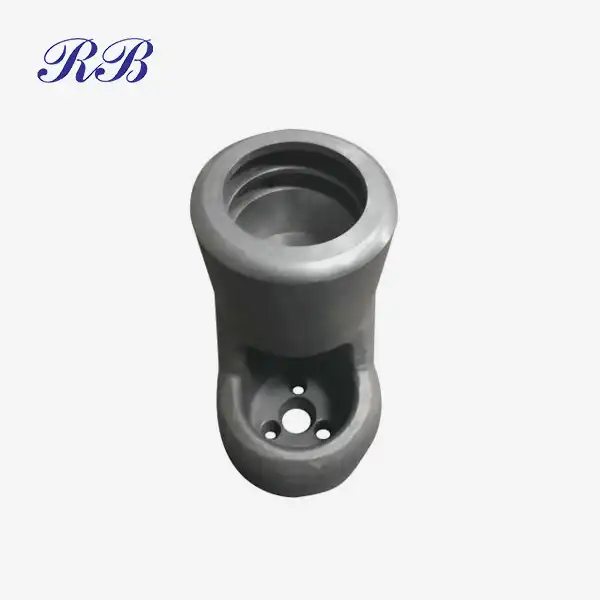
These qualities make A356 a good candidate for robot arm shells, equipment housings, and other parts with relatively complex shapes. Depending on design and production specification, the alloy can accommodate integrated ribs, mounting bosses, curved surfaces, and machined interfaces.
Its qualities must not be regarded as permanent values, regardless of the conditions of manufacture. The mechanical qualities of a finished component can be influenced by its chemical composition, casting quality, heat-treatment conditions, location of specimens, and wall thickness. Buyers should not rely just on alloy categorization but should specify the material condition and acceptance standards desired.
Fatigue resistance is of significant importance for robot applications with repetitive movements. Sharp interior corners, rapid changes in section thickness, and mounting holes in unsuitable locations can cause local stress concentrations. Good casting design can reduce these dangers, but the geometry and loading conditions still need to be reviewed throughout technical development.
Gravity Casting and High-Pressure Die Casting Are Different Processes
Die casting is a term that is loosely used in the commercial description of products, but when evaluating a supplier, the exact technique of manufacture is significant. Gravity permanent mold casting and high-pressure die casting feature different filling systems, tool setups, and process parameters.
Permanent-mold (gravity) casting Molten metal is poured under gravity force into a reusable mold. The technology can be suited for parts for which a permanent mold, controlled geometry, and a production path compatible with the desired mechanical properties are beneficial. The success, however, depends upon mold design, gating, venting, melt quality, and solidification management.
High-pressure die casting is a manufacturing method where molten metal is injected into a mold at high velocity and pressure. It may be a good choice for complex, high-volume items when cycle time and dimensional reproducibility are crucial. Its process requirements are different from gravity casting, and the choice depends on part geometry, wall sections, mechanical specifications, and downstream operations.
There is no one process that will always remove casting defects. If the production conditions or the design of the mold are not acceptable, porosity, shrinkage, inclusions, and partial filling may occur. The engineering team would choose the technique and determine the inspection criteria in accordance with the requirements of the component.
Buyers need to evaluate the real casting technique of their project when designing customized aluminum die casting robot arm parts. If the design specified is A356 gravity casting, then the product spec, quotation, tooling plan, and inspection documents should all be consistent with the process. This helps to prevent misunderstandings between the design department, purchasing, and the production source.
Designing Castings Around Real Assembly Requirements
A casting is of utility when the components that are fitted around it may be accommodated without excessive manufacturing complexity. Before the tooling is started, the engineers should provide the supplier with the relevant 3D model, technical drawings, load requirements, and interface dimensions.
Base Wall Thickness. For the base wall thickness. Large variations between thick and thin sections can cause solidification issues and increase the likelihood of shrinkage defects. Where the design allows, gradual transitions between sections can help to create more consistent casting conditions.
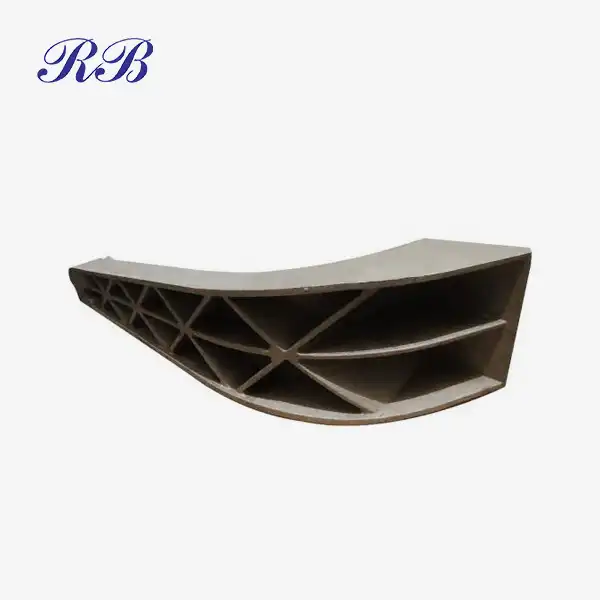
Ribs can provide stiffness without needing uniform wall thickness. The height, the thickness, the distance, and the relation to the surrounding construction are to be studied at one time. If the intersections of the ribs are too thick, local hot spots may develop. Ribs in the wrong spot can interfere with machining or mounting of internal parts.
Large corner radii can enhance metal flow and lower stress concentrations. Draft angles help the casting pull away from the mold. The amount of draft angle depends on the tooling design and the surfaces involved. There should be enough material for the necessary threads or inserts, but not so much as to introduce undesired mass in the mounting bosses.
An early decision on the machining allowances is required. However, functional faces with seats and threaded holes may need extra material for finishing; too much allowance may lead to longer machining time and wasting of material. Identifying the main datums and critical interfaces before mold making helps guarantee the casting design satisfies the final assembly requirements.
Rongbao Enterprise is able to review drawings and 3D models to discuss these manufacturing factors. All proposed design changes must be discussed with the client for structural calculations, assembly requirements, and related product specifications prior to approval.
From Initial Drawings to Finished Robot Arm Components
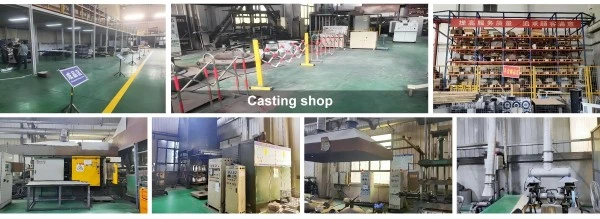
A strong manufacturing chain from cast design, tooling, machining, inspection, and surface finishing. Each stage affects the next. Quality control should not be restricted to a final visual check.
Engineering Review and Tooling Development
It is produced from customer drawings, 3D models, or reference parts. The engineering team will examine shape, wall sections, draft angles, machining allowances, and mounting interfaces to identify if there are any potential manufacturing concerns.
If needed, a casting simulation can be done for the analysis of filling behavior and solidification patterns. Simulation is an engineering technique and not an assurance of error-free output. The usefulness of the model for customized aluminum die casting robot arm parts depends on the validity of the model, material data, boundary conditions, and interpretation of the results.
Once the design and manufacturing strategy are agreed, the permanent mold is built and the trial production is prepared. The team can use the early samples to verify the casting geometry, machining approach, and assembly interfaces before producing at a greater scale.
All changes found during sampling must be documented and approved. This is especially true for parts intended for use in contemporary robot assemblies where a slight dimensional change might ruin cable routing, fastening, or alignment.
Casting Inspection and Material Verification
The initial examination shall verify that the casting conforms to the permitted drawing and material specification. Surface faults, partial filling, and damage can be seen by visual inspection. No internal or mechanical quality can be verified.
Verify measurements on features that affect fit and function. Depending on the drawing, it could be overall size, positions of mounting holes, datum relationships, wall sections, or machining allowances. They may be used where the capabilities of coordinate measuring equipment and suitable gauges are compatible with the tolerances required.
Chemical composition testing can verify that the material is the correct alloy grade. Mechanical testing may be needed. The procurement specification shall specify the test process, specimen type, heat-treatment setting, and acceptability limits.
Other non-destructive tests shall be selected in relation to the risk and the application of the component. If interior porosity is a significant issue, it may be worth investigating with X-ray or via radiography. Dye penetrant inspection is employed to find surface-breaking discontinuities in acceptable materials and surfaces. Dye penetrant testing cannot detect interior faults that are not open to the surface.
Not every inspection method is needed for every robot arm enclosure. The correct plan must be able to explain the purpose of the part, the consequences of failure, the technical specification, and the “defined” quality requirements. The order shall specify the test methodologies for the entire batch, for a single sample, or only for the parameters given.
CNC Machining and Dimensional Control
After a lot of castings you have to machine the parts some more before they can be used in a robot arm. CNC machining can generate interfaces like mounting faces, bearing seats, threaded holes, sealing surfaces, etc. that require closer dimensional control than is possible in the as-cast condition.
The fixture design is very important, as a component not correctly supported may move or deform during machining. The same datums preserve the relation of the main elements and reduce the chance of placement problems between procedures.
The procedure of machining should also depend on the shape of the casting and the remaining wall thickness. But if too much material is taken from a small area, it could alter the stiffness of the local area or expose surface faults that were not there in the original surface. The design of the process must take into account the final dimensions and the structural function of the material that is to be removed.
After machining, inspect to ensure key dimensions per drawing. Measurement records can be used for recording data for critical interfaces, if appropriate. The customer must specify which metrics are to be pointed out formally so that the supplier is aware of the extent of inspection required prior to manufacturing.
Surface Treatment, Final Inspection, and Packaging
The surface finish obtained is based upon the working environment and esthetic needs of the part. Spraying or other coating techniques will improve the corrosion resistance and provide a uniform surface finish. The coating specification shall indicate the necessary preparation procedure, kind of coating, thickness (if applicable), and inspection criteria.
Machined surfaces, threaded holes, and electrical contact points may need masking or careful treatment to prevent coating build-up affecting the assembly. The type of coating to be used also needs to be selected based on the temperature exposure, the chemicals used for cleaning, the outside conditions, and the maintenance requirements of the user.
The last parts will be inspected according to the inspection plan before shipping. Packaging must protect machined surfaces, threaded features, and coated surfaces from impact, abrasion, and moisture during storage and transit. The choice of wooden cases or other appropriate packaging relies on the dimension of the part, the mode of transport, and the export requirement.
This allows the client to readily accept, inspect, and handle the items upon delivery with clear identification and traceability records. Documentation may contain material certificates, dimensional inspection reports, nondestructive testing results, and related process or coating records, where applicable.
Conclusion
The lightweight robot arm components, including customized aluminum die-casting robot arm parts, may be efficiently automated by simultaneously selecting the material, form, and production process. A356 is a good aluminum casting alloy. High-pressure die casting and gravity casting Extensive range of solutions for a wide range of design and manufacturing requirements. Diligent engineering research, regulated machining, good inspection, and correct surface treatment will enable you to create robot assembly components that are reliable fits.
Rongbao Enterprise can address the design requirements for custom aluminum die casting robot arm parts, casting feasibility, CNC machining, inspection plan, and production capacity. Give us your 2D drawings or 3D models, estimated order quantities, material needs, and critical tolerances for a project evaluation and price. A clear specification is the first step to an economically manufacturable robot arm component.

FAQ
1: What information do I need to provide for a quotation on customized aluminum die casting robot arm parts?
To quote customized aluminum die casting robot arm parts, Rongbao needs both technical and commercial information. Technical data include 2D drawings, 3D models, target tolerances, and any special surface or coating requirements. Commercial information covers estimated annual volume, delivery schedule, and preferred packaging or labeling. With this picture, engineers can propose an optimized casting and machining plan, along with a realistic price.
2: How do customized aluminum robot arm shells compare with welded steel structures?
Welded steel frames can handle very heavy loads but add substantial mass and rotational inertia. That extra weight demands larger motors, gearboxes, and foundations, which increases both cost and energy use. A356 aluminum gravity‑cast shells provide high stiffness at much lower weight, which suits fast, precise motion. For most automation lines, this balance delivers better cycle times and easier installation than comparable welded designs.
3: Can Rongbao support design changes during the lifetime of my automation project?
Yes, design updates are possible when they follow a controlled engineering change process. Rongbao reviews the modification, checks impacts on tooling, machining, and testing, then prepares a revised quotation. New samples are produced and validated before full production switches to the updated version. This method keeps your line supplied while still allowing gradual optimization of robot arm components.
Customized aluminum die casting robot arm parts Supplier: Rongbao Enterprise
If your automation project needs industrial robot arm shells that combine durability and low weight, Rongbao can help. Our customized A356 gravity‑cast components are designed specifically for demanding automation lines, including high‑voltage distribution applications. Each arm shell falls within a weight range of about 0.45 to 1.5 kilograms, depending on geometry.
Castings are produced in Xi’an, China, using stable gravity die casting molds followed by precise CNC machining. Sprayed surface treatments provide a clean, protective finish suitable for industrial environments and outdoor substations. Parts are packed carefully in wooden boxes to protect every edge and functional surface during transport.
Rongbao offers both OEM and ODM services, so you can bring either a finished design or a concept. Production capacity of around 10,000 pieces supports pilot runs, full‑scale rollouts, and long‑term spare strategies. Whether you supply switchgear, disconnectors, or other high‑voltage accessories, we align robot arm shells with your equipment.
To discuss a specific project or request drawings, you can contact our engineering and sales team directly. Please email steve.zhou@263.net or zhouyi@rongbaocasting.com; we usually reply within one working day. A short conversation can reveal whether our customized aluminum solutions match your automation and high‑voltage distribution plans. When you are ready, send your drawings to our team. We will turn them into customized aluminum die casting robot arm parts that support safer, faster lines.
References
International Federation of Robotics. “World Robotics 2023 – Industrial Robots.”
North American Die Casting Association. “Die Casting Process Overview.”
MatWeb Material Property Data. “A356 Aluminum Alloy Property Data.”
International Organization for Standardization. “ISO 9001 – Quality Management Systems.”
McKinsey & Company. “Manufacturing’s Next Act: The Digital Transformation of Industry.”
Learn about our latest products and discounts through SMS or email