- English
- French
- German
- Portuguese
- Spanish
- Russian
- Japanese
- Korean
- Arabic
- Greek
- German
- Turkish
- Italian
- Danish
- Romanian
- Indonesian
- Czech
- Afrikaans
- Swedish
- Polish
- Basque
- Catalan
- Esperanto
- Hindi
- Lao
- Albanian
- Amharic
- Armenian
- Azerbaijani
- Belarusian
- Bengali
- Bosnian
- Bulgarian
- Cebuano
- Chichewa
- Corsican
- Croatian
- Dutch
- Estonian
- Filipino
- Finnish
- Frisian
- Galician
- Georgian
- Gujarati
- Haitian
- Hausa
- Hawaiian
- Hebrew
- Hmong
- Hungarian
- Icelandic
- Igbo
- Javanese
- Kannada
- Kazakh
- Khmer
- Kurdish
- Kyrgyz
- Latin
- Latvian
- Lithuanian
- Luxembou..
- Macedonian
- Malagasy
- Malay
- Malayalam
- Maltese
- Maori
- Marathi
- Mongolian
- Burmese
- Nepali
- Norwegian
- Pashto
- Persian
- Punjabi
- Serbian
- Sesotho
- Sinhala
- Slovak
- Slovenian
- Somali
- Samoan
- Scots Gaelic
- Shona
- Sindhi
- Sundanese
- Swahili
- Tajik
- Tamil
- Telugu
- Thai
- Ukrainian
- Urdu
- Uzbek
- Vietnamese
- Welsh
- Xhosa
- Yiddish
- Yoruba
- Zulu
How to Calculate the Cost of Investment Casting?
Calculating investment casting costs is not as simple as multiplying the weight of a finished part by a price per kilogram. The last quotation usually includes material consumption, wax pattern, ceramic shell, melting and pouring, finishing, heat treatment, inspection, tooling, labor, overhead, packing and shipment. Furthermore, the volume of manufacturing is a crucial consideration, because some costs are fixed for a project, and some costs grow with each successive casting. Buyers can do this in the best way possible by breaking the cost down into its components and establishing which cost is charged per part, per batch or for the full order. Investment casting costs can be broken down as follows: Total Cost = Material Cost + Tooling Cost + Pattern and Shell Cost + Casting Processing Cost + Finishing Cost + Inspection Cost + Overhead + Packaging and Logistics. The exact percentage of each element is contingent on the alloy, part design, weight of the casting, annual volume, tolerances required, surface condition, and inspection requirements. Even if the two completed parts weigh about the same, the cost of a small stainless steel part with a complicated internal route may vary greatly from that of a bigger, simple, carbon steel casting.
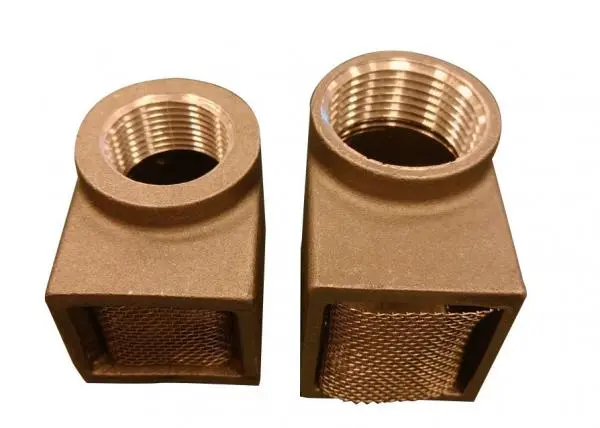
What Goes Into an Investment Casting Cost?
Being aware of the major pricing considerations might help you secure the finest price. Investment castings are manufactured through a number of steps that may contribute to the unit cost of the finished part.
Material Consumption and Casting Yield
Material is sometimes one of the most obvious aspects of the quotation, and it is not defined by the weight of the finished product.
The foundry has to buy enough alloy to create the casting tree, which includes the gates, runners and other temporary bits needed to transfer the molten metal to the various wax patterns. Some of this material may be recovered and reintroduced to the melt process; more losses could occur during melting, handling, oxidation or processing.
A rough estimate of the material can be written as:
Material Cost = (Weight of required metal) * (Price of material per kilogram)
Usually the metal weight required would be based on the actual casting system and not just the finished piece. For example, a finished product may weigh 1.0 kilogram, but the casting method requires more metal for runners and gates. Thus, the alloy utilised per excellent casting will be greater than 1.0 kg.
The casting yield now becomes important. If the technique leads to high additional metal consumption, then the cost of a design with a high metal-to-product ratio may be higher than the cost of a lighter design.
The grade of the material is important also. There are quite a few differences in raw-material cost and melting requirements for carbon steel, stainless steel, aluminium, nickel-based alloys, cobalt alloys and titanium alloys. Special alloy additives and stringent chemical controls also drive the price up.
Therefore, when asking for a quote for an investment casting, consumers should specify the particular material specification and not just mention “steel” or “stainless steel”.
Tooling and Wax Pattern Costs
Another important issue is tooling, especially when developing a new component.
In the investment casting process a pattern system is frequently used that can reproduce the desired shape before the ceramic shell is formed. Tooling cost is part-size and shape, dimensional requirements, pattern setup and expected production volume dependent.
Simple items may require simple tooling. Castings with complex curves, thin walls, multiple cores or tight dimensional tolerances may require more sophisticated equipment.
Tooling is normally a project expense, not a cost that is incurred for each casting and added up over time. This is an important point to understand.
If the tooling cost is $6,000 and the buyer is going to create 1,000 units, the initial tooling allocation is:
$6,000 / 1,000 pieces = $6/piece
Now, if the same tooling produces 20,000 parts, the distribution is:
$6,000 / 20,000 pieces = $0.30 each
This is one reason investment casting may become more inexpensive with increased volumes of manufacture.
Ceramic Shell and Pattern Assembly
The ceramic shell is a key part of the investment casting process. When many components are made on one tree, the wax pattern is mixed with multiple designs. The structure is then covered and stuccoed repeatedly to build up the ceramic shell to the proper strength.
Factors affecting shell cost include the size of the casting, the thickness of the shell, the number of coating layers, the ceramic materials, the drying requirements, and the number of pieces per tree.
Complex parts may require additional shell work or special core arrangements. Also, if the casting has tight passages or complex internal geometry, additional processing may be required from the foundry to make sure that the ceramic system is able to reproduce the necessary features.
These activities require people, material, floor space and manufacturing time and, as such, should be dealt with separately when building a comprehensive cost model.

How to Calculate the Processing Cost?
Once you have the material and tooling costs, the next step is to determine the actual production costs.
Melting and Pouring
The metal is melted and poured under controlled conditions in investment casting. The cost of melting includes running the furnace, energy consumption (electricity or otherwise), furnace maintenance, handling of alloy, and production labor.
The cost includes the price of the alloy itself. Other materials require higher melting temperatures or more stringent process control. Also, smaller production batches might be less efficient since the furnace capacity may not be fully utilized.
The finished casting weight should therefore not be the sole basis for comparison between two offers. Two vendors may quote you different prices depending on batch size, furnace usage, material yield, and production techniques.
Cutting, Grinding, and Finishing
After solidification the casting tree has to be separated from the single sections. The castings may then require finishing processes such as removal of gates, grinding, shot blasting, polishing, or others.
The finishing is relatively easy for a simple industrial casting. Finishing could be a substantially greater percentage of the cost of manufacture for a part with visible surfaces or strict dimensional tolerances.
Therefore, the surface requirement should be included in the drawing or RFQ. A quote for a casting in a basic as-cast condition can’t be compared to a quote that has a lot of grinding and surface finishing.
Heat Treatment
Often heat treatment is required to obtain certain mechanical properties, or to stabilize the casting for future machining.
Typical treatments include solution treatment, aging, annealing, normalizing, quenching, or additional treatments depending on the alloy and application.
The cost of heat treating will depend on the size of the furnace, the length of the cycle, the number of parts you want to process, the temperature profile you want to achieve, and the documentation you require. This should also be quoted for if mechanical testing or traceability is needed after heat treatment.
Machining Allowance and Secondary Machining
Investment castings can be complex near-net-shape products, but that doesn't necessarily mean there is no machining.
CNC turning, milling, drilling, tapping, grinding, or other machining may be required for critical surfaces. The cost of these operations varies according to the material to be removed, the machining tolerances, the fixture requirements, cycle time, and production volume.
Good casting design can reduce the amount of machining required by getting the material near to the final shape. But too little machining allowance can lead to manufacturing problems. Therefore, the quotation should be confirmed with the casting drawing and the machining drawing.
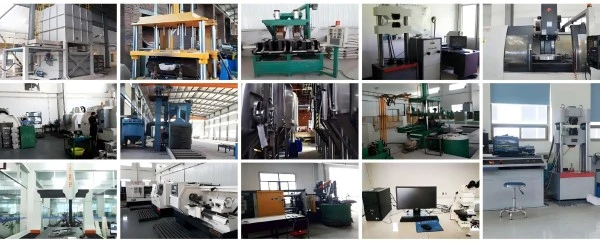
Inspection and Quality Requirements
The quality control process can greatly affect the cost of investment casting, especially in the aerospace, automotive, energy, medical, or other sectors with rigorous documentation requirements.
Dimensional Inspection
Basic dimensional inspection can involve calipers, micrometers, gauges, CMM measurement, or other equipment depending on the tolerance necessary.
The cost of inspection might be reasonably minimal if only a few important dimensions have to be checked. A thorough dimensional report for each casting is more expensive since it increases inspection time and paperwork effort.
Non-Destructive Testing
More inspection can involve dye penetrant testing, magnetic particle testing, radiographic testing, ultrasonic testing, or other procedures.
What is the correct procedure? It is determined on the material, geometry, application, and customer spec. NDT should not be included in the basic casting price automatically, as the extent of inspection can vary widely from one project to another.
Certification and Traceability
Material certificates, heat treatment records, inspection reports, dimensions reports, process records, and traceability paperwork can all affect the final estimate.
The buyer should mention these needs before receiving a quotation. Otherwise two vendors may appear to have different pricing merely because their scope of quotation is not the same.
How Production Volume Changes the Unit Cost?
Production quantity is one of the most essential aspects in an investment casting quote.
Typical cost structures have both fixed and variable costs.
Fixed or semi-fixed costs could include:
-
Tooling development,
-
engineering review,
-
first sample development,
-
fixture preparation and certain qualification tasks.
Variable costs might include:
metal, wax, ceramic material, casting labor, finishing, machining, inspection, packing, and freight.
As the volume of production increases, fixed costs are spread over more sections. This decreases the tooling and development cost spent each unit.
For example, suppose a project involves $5,000 in tooling and engineering costs. 500 pieces; this is $10 each. Divide the same cost by 5,000 parts and you are down to a mere $1 per part.
This does not mean that all investment casting projects should be manufactured in the highest quantities available. Buyers also have to take into account inventory expenses, demand uncertainty, cash flow, storage, and product change. The ideal order amount is one that balances the efficiency of manufacturing with the actual demand.
Why Casting Weight Alone Is Not Enough?
A common mistake in purchasing is to compare vendors on a simple price per kg basis.
Weight is useful but not the complete story of manufacturing complexity.
A 2 kg simple shape casting may be cheaper than a 1 kg thin-walled casting with deep cavities, precise tolerances, several cores, and substantial machining.
There are a number of reasons for this difference:
Geometry
More elaborate wax toolings, ceramic shell preparations, core arrangements, and polishing are required for complex geometries.
Wall Thickness
Very thin walls may also need closer process control and may be more susceptible to incomplete filling or deformation.
Dimensional Tolerance
For tighter tolerances, more inspection, more machining, and greater tooling control may be needed.
Surface Requirements
A casting could need further finishing or processing if it has a certain surface requirement.
Internal Features
Internal channels and cavities might contribute to core and inspection needs.
Therefore, the most accurate quotation is usually based on the full drawing and technical specification, not only the casting weight.
A Practical Investment Casting Cost Calculation Example
Let's consider a hypothetical stainless steel investment casting weighing 1.5 kg finished and having an annual requirement of 10,000 pieces.
Assume that the project requires new tooling and that the supplier determines that the average alloy consumption per acceptable casting is more than the completed weight due to the casting system and normal process losses.
The calculation might be set up like this:
-
Material cost = alloy weight used x alloy price
-
Tooling allocation = Total tooling cost Planned production quantity
-
Cost of casting procedure = melting + pouring + shell + labor + equipment
-
Cost of finishing = blasting + grinding + gate removal
-
Machining cost = machine rate x machining cycle time
-
Inspection cost = inspection labor + testing + documentation +
-
Final manufacturing cost = sum of all manufacturing costs
Then, depending on the negotiated delivery term, packaging, internal transit, export documents, and international freight can be added.
This approach provides a lot more clarity than the use of a general “price per kg” standard.
What Buyers Should Include in an RFQ?
Generally, the more technical information is provided in the RFQ, the more reliable the investment casting quote the supplier will be able to provide.
The most useful information is 2D drawings, 3D CAD models, material grades, annual amounts, estimated order quantities, critical tolerances, surface requirements, heat-treatment requirements, machining requirements, inspection standards, packaging specifications, and delivery destinations.
It is also helpful to know if the quote includes tooling, samples, first article inspection, third-party testing, and shipment.
For novel items, buyers should require the supplier to identify assumptions made in quoting. This means you won’t get any surprise costs after you’ve placed your order.
If machining is not included in the original quotation and is later found to be necessary, the unit price may go up. This risk is reduced by clearly stating the scope of the citation at the beginning.
How to Reduce Investment Casting Costs Without Sacrificing Quality?
It is not enough to negotiate a price with the supplier; cost reduction should go beyond that. Engineering decisions made before production carry more weight.
Optimize the Part for Casting
The component design for investment casting can minimize superfluous machining, ease tooling, and enhance material use.
Uniform wall sections, proper radii, practical draft considerations, and well-placed machining allowances can help provide a more robust production process.
Reduce Unnecessary Tolerances
Not all dimensions have to be the same precision. Unnecessarily close tolerances might increase tooling, inspection, machining, and rejection costs.
It is consequently necessary to explicitly identify critical tolerances and to apply practical production limits to non-important dimensions.
Review the Casting Tree.
The provider can decide how many pieces will be placed on each tree and how the gating system should be configured. Better use can lead to increased casting yield and less labor per part.
Consolidate Secondary Operations
If machining, heat treating, surface finishing, and inspection can be managed through a single supplier or an integrated supply chain, occasionally the handling and transportation between many vendors can be minimized.
Depending on order volume and process requirement, the actual benefit may vary; however, it is worth considering in the sourcing stage.
Regional Pricing Should Be Used Carefully
Labor rates and the cost of operations vary from one manufacturing area to another, but the price comparisons between areas should not be taken as a universal norm.
Cheaper hourly labor rates do not always translate into cheaper total casting costs. Factors that determine the final price are tooling capabilities, material purchasing power, yield, rejection rates, automation, machining capacity, inspection capability, and logistics.
In foreign procurement, buyers should evaluate the total commercial bundle and not just factory-gate unit prices.
The comparative analysis should encompass tooling, sampling, inspection, packing, freight, import expenses (where applicable), lead time, payment conditions, and supplier quality performance.
Conclusion
Investment casting costs are not only completed at weight x material price. A good estimate will include material consumption, casting yield, tooling, wax patterns, ceramic shells, melting, finishing, heat treatment, machining, inspection, overhead, packing, and logistics. The scale of production also is essential since the tooling and engineering costs can be spread over more parts.
Buyers should make sure that each supplier is pricing the same technical scope as the best approach to compare estimates. Accurate drawings, material specifications, quantities, tolerance requirements, finishing requirements, and inspection standards can greatly increase the accuracy of quotations. Procurement teams should consider production capability, quality consistency, lead time, documentation, and overall landed cost, rather than simply the lowest unit price.
Partner with Rongbao Enterprise for Competitive Investment Casting Solutions
Rongbao Enterprise provides investment casting solutions for automotive, aerospace, electronics, industrial equipment, and other demanding applications. Its capabilities cover precision casting and related secondary manufacturing processes, allowing customers to discuss casting, machining, finishing, and inspection requirements within one supply chain.
Rongbao reports certifications including IATF16949, AS9100D, ISO9001, ISO14001, and ISO45001. These certifications are relevant when projects require documented quality and management systems, although the applicable certification should always be matched with the requirements of the specific order.
With experience in international supply, Rongbao can support customers through quotation, engineering review, tooling development, casting production, machining, inspection, and delivery coordination. For a new investment casting project, buyers can provide the part drawing, 3D model, material grade, quantity, tolerance requirements, finishing specifications, and inspection requirements for a more complete quotation review.
A detailed RFQ allows the supplier to evaluate the actual manufacturing route rather than relying on a generic price-per-kilogram estimate. This approach can help buyers understand where the cost comes from, identify realistic opportunities for cost reduction, and select an investment casting solution based on both price and long-term production requirements.
Whether you need high-volume automotive components with PPM defect rates below 50, lightweight aerospace structures meeting AS9100D requirements, or precision medical device components with superior biocompatibility, Rongbao Enterprise offers the expertise and capacity to exceed your expectations. Contact us at steve.zhou@263.net and zhouyi@rongbaocasting.com to discuss your investment casting supplier requirements and receive detailed quotations tailored to your specific applications.
References
1. Campbell, John. "Complete Casting Handbook: Metal Casting Processes, Techniques and Design." Butterworth-Heinemann, 2015.
2. Beeley, Peter R. "Foundry Technology." Newnes, 2001.
3. Brown, John R. "Foseco Ferrous Foundryman's Handbook." Butterworth-Heinemann, 2000.
4. Investment Casting Institute. "Investment Casting Handbook." Investment Casting Institute, 2019.
5. Stefanescu, Doru Michael. "Science and Engineering of Casting Solidification." Springer, 2009.
6. Pattnaik, Sanmitra, Dibya Bhusan Karunakar, and Prashant K. Jha. "Developments in Investment Casting Process: A Review." Journal of Materials Processing Technology, 2012.

Learn about our latest products and discounts through SMS or email