- English
- French
- German
- Portuguese
- Spanish
- Russian
- Japanese
- Korean
- Arabic
- Greek
- German
- Turkish
- Italian
- Danish
- Romanian
- Indonesian
- Czech
- Afrikaans
- Swedish
- Polish
- Basque
- Catalan
- Esperanto
- Hindi
- Lao
- Albanian
- Amharic
- Armenian
- Azerbaijani
- Belarusian
- Bengali
- Bosnian
- Bulgarian
- Cebuano
- Chichewa
- Corsican
- Croatian
- Dutch
- Estonian
- Filipino
- Finnish
- Frisian
- Galician
- Georgian
- Gujarati
- Haitian
- Hausa
- Hawaiian
- Hebrew
- Hmong
- Hungarian
- Icelandic
- Igbo
- Javanese
- Kannada
- Kazakh
- Khmer
- Kurdish
- Kyrgyz
- Latin
- Latvian
- Lithuanian
- Luxembou..
- Macedonian
- Malagasy
- Malay
- Malayalam
- Maltese
- Maori
- Marathi
- Mongolian
- Burmese
- Nepali
- Norwegian
- Pashto
- Persian
- Punjabi
- Serbian
- Sesotho
- Sinhala
- Slovak
- Slovenian
- Somali
- Samoan
- Scots Gaelic
- Shona
- Sindhi
- Sundanese
- Swahili
- Tajik
- Tamil
- Telugu
- Thai
- Ukrainian
- Urdu
- Uzbek
- Vietnamese
- Welsh
- Xhosa
- Yiddish
- Yoruba
- Zulu
The difference between Low-Pressure & High-Pressure Die Casting
The difference between low-pressure and high-pressure die casting is not simply a matter of using more or less pressure. The two processes introduce molten metal into a reusable die in fundamentally different ways, which affects filling behavior, solidification, cycle time, tooling requirements, part geometry, and the type of defects that need to be controlled.low pressure die casting uses controlled pressure to move molten metal from a furnace into the die, while high-pressure die casting uses a piston-driven injection system to fill the cavity at much higher speed. This distinction matters when selecting a casting process for an automotive housing, industrial component, structural part, or other engineered casting. A slower filling process may be advantageous when internal soundness and controlled solidification are priorities, while high-pressure die casting can be attractive when complex thin-wall geometry and high production volumes justify faster cycles and more intensive tooling. The right choice therefore depends on the component rather than on pressure alone. Material grade, part geometry, wall thickness, dimensional requirements, production volume, machining requirements, and acceptable defect levels should all be considered before a manufacturer selects the process.
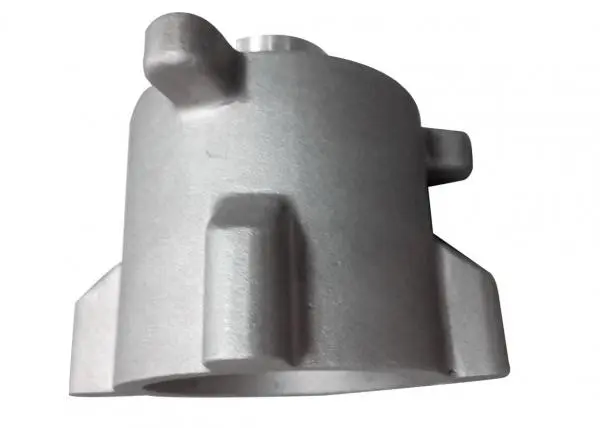
How Low-Pressure and High-Pressure Processes Actually Fill the Die?
The biggest difference starts with the flow of molten metal into the mold.
In low-pressure die casting the molten metal is generally stored in a furnace or crucible situated below or near to the die. Controlled gas pressure is delivered to the melt surface, which forces the metal up a riser tube into the cavity. The metal is progressively pushed, rather than forced into the die by a typical high-speed shot system, and the filling process can be regulated according to the component geometry and solidification requirements.
This can be handy for portions where controlled filling and feeding are needed. In addition, the gating system can be designed to give a relatively stable flow of metal and directional solidification. But reduced pressure does not automatically get rid of porosity or other casting problems. Hence, temperature management, die design, venting, filling circumstances, alloy quality, and solidification behavior are still critical.
The injection mechanism of high pressure die casting is distinct. A shot sleeve and plunger propel molten metal quickly into the die cavity. The rapid filling speed allows reasonably complex parts with thin sections and intricate surfaces to be produced in relatively short cycle times. As defined by NADCA, conventional high-pressure die casting involves injecting liquid metal into a reusable steel die at high pressure.
However, the faster filling speed may increase the need for air removal and flow management. Gas porosity can influence later machining, pressure tightness, or mechanical performance in the case of entrapped air during injection. This is one reason vacuum-assisted and high-vacuum HPDC techniques have become significant for higher-integrity applications. NADCA indicates that high vacuum die casting can reduce gas entrapment in the casting and increase casting soundness.
Thus, it is more appropriate to consider LPDC and HPDC as two separate process techniques rather than one being universally preferable.
Internal Quality, Solidification, and Mechanical Performance
The way the mold cavity is filled directly affects the solidification of the metal and the distribution of flaws in the completed component.
One advantage of low pressure die casting is the comparatively regulated way in which the metal enters the cavity. This may help to minimize needless turbulence and provide a more regulated feed pattern for compatible part shapes. This approach can be particularly useful when internal integrity is more important than getting the quickest possible cycle.
This property is of interest for components such as wheels, housings, structural castings, and other parts where internal faults may cause problems during machining or service. However, internal quality should always be checked with an appropriate inspection plan and not inferred from the casting procedure alone.
High-pressure die casting has a different solidification environment. The metal is swiftly fed into the cavity and contacts comparatively cool die surfaces. For parts designed around thin walls and fine features, this can provide very good surface reproduction and dimensional repeatability.
The trade-off is that the fast injection process can introduce air or oxide layers if the gating, venting, overflow, and injection settings are not adequately designed. Process control is consequently crucial. NADCA’s technical materials cover specific issues in die-casting engineering, such as metal flow, venting, runners, overflows, process control, and porosity.
The table below is copied from the source page and should be seen as an illustrative comparison rather than a universal standard. The actual mechanical properties and surface outcomes rely on the alloy, the geometry, the production settings, the heat treatment, the inspection site, and the applicable standards.
| Property | Low-Pressure Die Casting | High-Pressure Die Casting |
|---|---|---|
| Tensile Strength | 280-320 MPa | 240-290 MPa |
| Elongation | 8-12% | 3-6% |
| Porosity Level | <2% | 3-8% |
| Surface Finish | Ra 3.2-6.3 μm | Ra 1.6-3.2 μm |
The table also drives home a crucial point for buyers: surface appearance and internal quality are separate issues. HPDC may provide a good as-cast surface while LPDC may be chosen for a component where internal integrity and pressure tightness are more critical. Neither attribute should be considered apart from the part’s ultimate function.
Production Volume and Cycle Time: Where HPDC Gains an Advantage
If the same component has to be produced in huge numbers (e.g. 10,000 or more) then production economics become more relevant.
Particularly suitable for high volume manufacturing is high pressure die casting which has a high degree of automation of the process and the cavity is filled in a short time. Once process settings and tooling are validated, quick cycles can make HPDC economically feasible for automotive, electronics and other sectors with large yearly demand.
The benefit is much greater if the component has relatively thin walls, complicated external features or a geometry that would be difficult to create efficiently with a slower filling process.
The low pressure die casting is usually running with longer filling and solidification phases. This can cut the number of parts produced each hour. But, the speed of manufacturing is not the sole economic aspect. If a part requires internal soundness, pressure tightness or a certain distribution of material, then a slower process may be justified if it results in less rejection or less downstream machining issues.
Therefore the decision to produce should be taken on the basis of the total manufacturing cycle and not just by comparing machine cycle times.
Consider the case where a part is produced at a lower rate but requires less corrective machining and generates fewer functional rejects. The slower casting cycle need not always give a higher cost per acceptable component. In contrast, where the annual demand is very high and the geometry is well suited to HPDC, the productivity gain may outweigh the increased tooling and equipment needs.
In fact, NADCA’s current technical standards are also focused on process selection, tooling, alloy characteristics, dimensional tolerances and GD&T and quality assurance—not just speed of production.
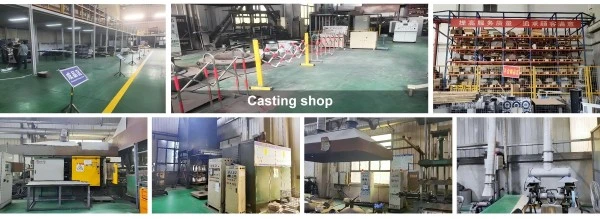
Tooling, Equipment, and Total Manufacturing Cost
Another significant factor when comparing the two techniques is the tooling investment.
High-pressure die casting requires a particular injection equipment that is able to provide the appropriate shot force and injection conditions. The die also must be able to tolerate repeated thermal and mechanical loads. In high-volume projects these costs can be justified because the same tooling can produce huge numbers of parts with relatively low cycle times.
The equipment layout for low-pressure die casting is different. The furnace, pressure control system, riser tube, die, gating system, and thermal management arrangement must work together to ensure steady filling and solidification.
It would be incorrect to say LPDC will always be cheaper or LPDC tooling will last a certain number of times longer than HPDC tooling. Many variables affect the tool life, such as material, alloy temperature, thermal cycling, cooling design, maintenance, casting geometry, manufacturing conditions, etc.
A more useful purchase question, therefore, is not just:
-
Which process has the least equipment costs?
-
Instead, buyers should consider:
-
Which technique yields the needed component at the lowest total cost at the required quality level?
Such an estimate should include tooling, machine time, material yield, scrap, machining, inspection, maintenance, manpower, energy usage, and expected output volume.
If the manufacturing run is modest, the economics may favor a procedure with reduced initial tooling requirements. For a very large production program, the faster cycle and automation capabilities of HPDC may offer a stronger long-term financial case.
Choosing the Right Process for Different Component Requirements
Often the casting machine is not the best starting point to begin the application.
Internal soundness, controlled filling, and pressure tightness are necessary. Low-pressure casting may be considered. Suitable applications are several automotive housings, wheels, structural parts, pump-related parts, and industrial castings where the interior features of the component are of special importance.
High-pressure die casting is generally an appealing candidate for components that require complex geometry, thin walls, good surface replication, and high production rates. The method may be suitable for high-volume items, including automotive housings, brackets, electronic enclosures, heat-management components, and others.
But these categories should not be seen as rigid norms of the industry. Modern casting technologies include vacuum-assisted HPDC, structural die casting, squeeze casting, and other high-integrity methods. NADCA notes that high-vacuum, squeezing, and semi-solid techniques are variations utilized when improved casting integrity is needed.
The part design has to be checked before the production route is finalized.
The design engineer must consider wall thickness, draft angles, filets, location of gates, machining allowances, cooling requirements, and spots where porosity is unacceptable. NADCA lists further die-casting design considerations such as consistent wall thickness, proper draft, and appropriate fillets.
The alloy should be considered simultaneously. Aluminum alloys are acceptable for both LPDC and HPDC; however, the preferred alloy and process combination are determined by the mechanical requirements, casting geometry, corrosion considerations, finishing needs, and downstream processes.
What Buyers Should Check Before Ordering Die Cast Parts?
The name of the process is not enough information to decide on a purchase.
A buyer should question the supplier before ordering which casting route is being recommended and why it is appropriate for the component. The supplier should be able to describe the relationships between the part geometry, alloy, tooling design, filling circumstances, solidification, and inspection.
Quality documentation is as vital as well. The buyer may require, depending upon the project, material certificates, dimensional inspection reports, mechanical testing findings, X-ray or other non-destructive inspection, process-control data, and sample approval documents.
For high-pressure projects, vacuum capability, venting, overflow design, shot parameters, and porosity control can be particularly critical questions. For low-pressure projects the buyer may want to understand pressure control, furnace temperature control, filling behavior, design of riser, and solidification control.
A good supplier should also talk about the machining requirements up front. Internal faults may only be revealed when a casting is machined. If a sealing surface, threaded hole, bearing seat, or other essential location is to be machined post-casting, the supplier needs to know that requirement during process development, not after production has started.
Often this engineering debate is more helpful than a mere comparison of advertised unit prices.
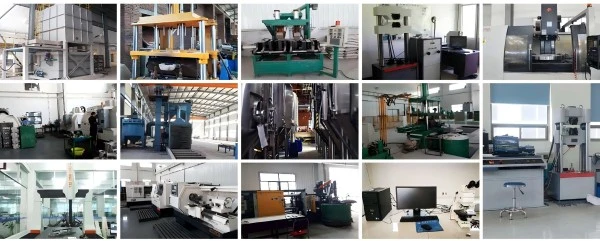
Rongbao Enterprise's Approach to Low Pressure Die Casting
Rongbao Enterprise's production information emphasizes low-pressure casting among its aluminum alloy casting capabilities, as well as other casting and precision manufacturing techniques. ISO-based quality and environmental management systems and expertise working for the automotive and industrial applications are also indicated in the released material.
This is important because low pressure casting should not be considered as independent machine operation. The quality of the end component is dictated by how the supplier integrates casting design, tooling, production control, machining, and inspection.
For an OEM project, engineering can start with a study of the component drawing and important characteristics. The provider can now determine if the geometry is acceptable for low-pressure casting, where to position gates and risers, which sections require additional cooling, and where to offer machining allowances.
Selecting the material is another key part of the procedure. Varied aluminum alloys provide varied balances of castability, strength, elongation, corrosion resistance, and machining behavior. Hence, the selected alloy should meet the real requirements of the finished component and not be selected for the reason it is often used for casting.
Tooling development must also consider the planned production volumes. The tooling strategy for a prototype or a relatively small production run may be different from that for a long-term automotive operation. By designing for predicted production quantity, producers may better balance tooling investment, cycle time, maintenance, and future capacity.
Rongbao’s disclosed low-pressure casting data also provides insight into its experience in the automotive and industrial components sectors and its international customer base.
The practical benefit for purchasers is that they can talk to a supplier about process selection before the tooling route is set.
How to Decide Between Low-Pressure and High-Pressure Die Casting?
No single process works optimally for all die-cast components.
If your key concerns are controlled filling, internal integrity, or the pressure-tight component requirements, low-pressure die casting can be worth considering initially. If the project requires very high production volumes, thin-wall geometry, fast fill, and good surface replication, then HPDC can provide a more suitable manufacturing option.
The selection should also take into account whether vacuum assistance, machining, heat treatment, or other downstream processes are necessary. In some circumstances a modern high-integrity HPDC procedure may be a better solution than standard HPDC. In some circumstances, LPDC can offer a more straightforward method to obtain the desired properties of the components.
A useful supplier evaluation should evaluate at least five areas: part geometry, alloy, production volume, quality requirements, and total manufacturing cost.
This method also avoids the typical error of picking a casting method because its machine has a greater pressure rating or its quoted unit price appears better at first sight.
Partner with Rongbao Enterprise for Low-Pressure Die Casting Projects.
Ultimately, selecting a die-casting vendor is an engineering and supply chain decision. The provider must understand not just how to make a casting, but also how the casting will be machined, inspected, assembled, and used.
Low Pressure Casting Rongbao Enterprise is a manufacturing service provider of low-pressure casting. The company has experience in aluminum alloy components for automotive and industrial applications. The company's public information indicates it has been running since 2003 and exports a large share of its goods to international markets.
The component drawing and the technical specification are usually the most beneficial starting points for the client in evaluating low-pressure die casting. Then the provider can review the alloy, wall thickness, critical parameters, projected annual quantity, machining requirements, surface treatment, and inspection requirements.
The provider should also be able to justify the use of LPDC for the particular component, rather than just suggesting it as a conventional option. That as well should be caught in the engineering review when the design is better suited to another casting technique.
Such technical discussion can help to minimize the risk of selecting inappropriate tooling and/or finding process limits once production has begun.”
A prototype or sample evaluation can be applied to new projects before a complete production commitment. Inspection results from first pieces can then be compared to the drawing and accepted quality requirements. This gives a clearer transition from the product development to the serial manufacturing.
Conclusion
The difference between low-pressure and high-pressure die casting goes much further than the pressure during filling. LPDC employs less pressure and a slower filling mechanism as compared to HPDC, which uses fast mechanical injection for short cycles and high output rates. These differences impact internal quality, surface qualities, tooling, economics of production, and the design of the parts.
The buyer's optimal process is driven by the requirements of the finished part. Low-pressure die casting can be a useful option for applications requiring controlled filling, internal integrity, and pressure tightness. High-pressure die casting is helpful when complicated geometry, thin walls, surface reproduction, and high volume production are of significant importance.
The choice must be based on alloy, geometry, manufacturing volume, quality requirements, tooling investment, machining, inspection, and total cost and not on pressure alone. An engineering-capable supplier may help evaluate these issues before tooling completion, reducing manufacturing risk and providing a more predictable path from design to production.
Ready to discuss your specific casting requirements and explore how our low-pressure die casting expertise can optimize your component performance? Our technical specialists stand ready to provide detailed consultation on material selection, process optimization, and quality assurance protocols. Contact us at steve.zhou@263.net and zhouyi@rongbaocasting.com to begin your partnership with proven manufacturing excellence.
The main factors that will help you decide between low-pressure and high-pressure die casting are your specific quality needs, production quantities, and cost goals. Low-pressure die casting is great for jobs that need better internal quality, better mechanical qualities, and pressure tightness. High-pressure processes are best for making a lot of parts that need to have a great surface polish and be the right size. Knowing these basic differences helps you make smart choices that lead to the best manufacturing results. To acquire long-term competitive advantages in your target markets, you need to carefully think about the metallurgical requirements, production efficiency needs, and economic variables while choosing a casting.
References
- Campbell, J. "Complete Casting Handbook: Metal Casting Processes, Metallurgy, Techniques and Design." Butterworth-Heinemann, 2015.
- Beeley, P.R. "Foundry Technology." Butterworth-Heinemann, 2001.
- Kaufman, J.G. and Rooy, E.L. "Aluminum Alloy Castings: Properties, Processes, and Applications." ASM International, 2004.
- Sigworth, G.K. "Fundamentals of Solidification in Aluminum Castings." International Journal of Metalcasting, Volume 8, 2014.
- Dispinar, D. and Campbell, J. "Critical Assessment of Reduced Pressure Test." International Journal of Cast Metals Research, Volume 17, 2004.
- Tiryakioğlu, M. "Statistical Process Control and Quality Assessment of Shape Castings." Shape Casting: The John Campbell Symposium, TMS, 2019.
Learn about our latest products and discounts through SMS or email