- English
- French
- German
- Portuguese
- Spanish
- Russian
- Japanese
- Korean
- Arabic
- Greek
- German
- Turkish
- Italian
- Danish
- Romanian
- Indonesian
- Czech
- Afrikaans
- Swedish
- Polish
- Basque
- Catalan
- Esperanto
- Hindi
- Lao
- Albanian
- Amharic
- Armenian
- Azerbaijani
- Belarusian
- Bengali
- Bosnian
- Bulgarian
- Cebuano
- Chichewa
- Corsican
- Croatian
- Dutch
- Estonian
- Filipino
- Finnish
- Frisian
- Galician
- Georgian
- Gujarati
- Haitian
- Hausa
- Hawaiian
- Hebrew
- Hmong
- Hungarian
- Icelandic
- Igbo
- Javanese
- Kannada
- Kazakh
- Khmer
- Kurdish
- Kyrgyz
- Latin
- Latvian
- Lithuanian
- Luxembou..
- Macedonian
- Malagasy
- Malay
- Malayalam
- Maltese
- Maori
- Marathi
- Mongolian
- Burmese
- Nepali
- Norwegian
- Pashto
- Persian
- Punjabi
- Serbian
- Sesotho
- Sinhala
- Slovak
- Slovenian
- Somali
- Samoan
- Scots Gaelic
- Shona
- Sindhi
- Sundanese
- Swahili
- Tajik
- Tamil
- Telugu
- Thai
- Ukrainian
- Urdu
- Uzbek
- Vietnamese
- Welsh
- Xhosa
- Yiddish
- Yoruba
- Zulu
How to avoid porosity in high pressure die casting?
In the world of manufacturing, particularly in industries such as automotive, aerospace, medical equipment, and electrical and electronic sectors, high pressure die casting (HPDC) plays a crucial role in producing complex, high-quality aluminum alloy components. However, one of the most persistent challenges in this process is porosity – a defect that can significantly impact the quality and performance of the final product. At Rongbao Enterprise, we understand the importance of minimizing porosity to meet the stringent requirements of our customers, including reasonable cost control, stable and timely delivery, controllable product quality, and excellent after-sales service.
Founded in 2003, Rongbao Enterprise has established itself as a specialized manufacturer in aluminum alloy casting and precision processing. We deliver integrated component supply solutions for equipment manufacturers, offering a full spectrum of precision parts engineered with multi-material compatibility and fabricated through cross-process manufacturing technologies. Our commitment to quality is evident through our certifications in ISO 9001:2016 (Quality Management System), ISO 14001 (Environmental Management System), and ISO 45001 (Occupational Health and Safety Management System).
In this comprehensive guide, we'll explore three critical factors that significantly influence porosity: Injection Speed & Pressure, Melt Temperature, and Die Temperature. By understanding and optimizing these parameters, manufacturers can greatly reduce the occurrence of porosity and improve the overall quality of their die cast components.
Injection Speed & Pressure
The injection speed and pressure are fundamental parameters in the high pressure die casting process that directly impact the formation of porosity. These factors determine how quickly and efficiently the molten metal fills the die cavity, which in turn affects the solidification process and the potential for gas entrapment.
Optimizing injection speed is crucial for minimizing porosity. A speed that is too low can lead to premature solidification, resulting in cold shuts and incomplete filling. Conversely, excessively high speeds can cause turbulence in the metal flow, leading to air entrapment and subsequent porosity. The ideal injection speed should be fast enough to ensure complete filling of the die cavity before solidification begins, yet controlled enough to prevent turbulence.
Pressure plays an equally important role in the process. Adequate pressure must be maintained throughout the injection and solidification phases to ensure proper compaction of the metal and to counteract the formation of shrinkage porosity. The application of pressure helps to force liquid metal into areas that may be prone to shrinkage, thereby reducing the likelihood of porosity formation.
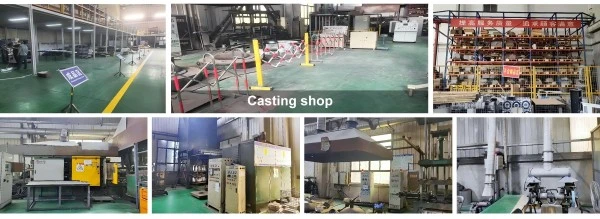
At Rongbao Enterprise, we employ advanced process control systems to precisely regulate injection speed and pressure. Our experienced engineers utilize computer simulations and real-time monitoring to optimize these parameters for each specific component, ensuring minimal porosity and maximum quality.
Melt Temperature
The temperature of the molten metal is another critical factor in controlling porosity in high pressure die casting. The melt temperature affects the metal's fluidity, which in turn influences its ability to fill the die cavity completely and rapidly. However, finding the right balance is crucial, as both excessively high and low temperatures can contribute to porosity formation.
When the melt temperature is too low, the metal may solidify prematurely, leading to incomplete filling of the die cavity and the formation of cold shuts. This can result in trapped air pockets and porosity. Additionally, lower temperatures can increase the viscosity of the metal, making it more difficult to achieve proper flow and compaction during the injection process.
On the other hand, if the melt temperature is too high, it can lead to increased gas solubility in the molten metal. As the metal cools and solidifies, this dissolved gas can come out of solution, forming gas porosity within the casting. Excessively high temperatures can also lead to oxidation of the molten metal, which can introduce oxide inclusions and associated porosity.
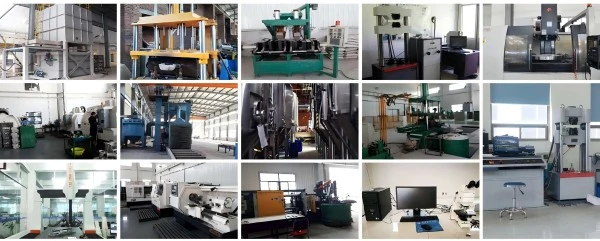
At Rongbao Enterprise, we utilize advanced temperature control systems and carefully calibrated furnaces to maintain optimal melt temperatures throughout the casting process. Our metallurgists work closely with process engineers to determine the ideal temperature range for each alloy composition and component design, ensuring consistent quality and minimal porosity.

Die Temperature
The temperature of the die itself plays a significant role in the formation of porosity during high pressure die casting. Proper die temperature management is essential for controlling the solidification rate and thermal gradients within the casting, which directly impact the potential for porosity formation.
If the die temperature is too low, it can cause rapid and uneven solidification of the molten metal upon contact with the die surface. This can lead to the formation of cold shuts, trapped air pockets, and shrinkage porosity. Rapid cooling can also increase the viscosity of the metal, making it more difficult to achieve complete filling of intricate die features.
Conversely, if the die temperature is too high, it can result in slower solidification rates, which may allow more time for gas bubbles to form and coalesce within the casting. Additionally, excessively high die temperatures can lead to increased cycle times and potential die damage, impacting both productivity and tool life.
To optimize die temperature, it's crucial to consider factors such as the component's geometry, wall thickness variations, and the specific alloy being used. Implementing an effective die temperature control system, including strategic placement of cooling channels and the use of die heating/cooling units, is essential for maintaining consistent and appropriate die temperatures throughout the casting cycle.
At Rongbao Enterprise, we employ advanced thermal management systems and sophisticated die designs to ensure optimal die temperatures. Our engineers use thermal imaging and computer simulations to analyze heat distribution within the die and make necessary adjustments to minimize porosity and achieve consistent, high-quality castings.
Achieving Excellence in High Pressure Die Casting
Minimizing porosity in high pressure die casting requires a comprehensive approach that addresses multiple process parameters. By carefully controlling injection speed and pressure, melt temperature, and die temperature, manufacturers can significantly reduce the occurrence of porosity and improve the overall quality of their die cast components.
At Rongbao Enterprise, we are committed to delivering superior aluminum alloy components through the optimization of these critical factors. Our advanced production methods, including high-pressure die casting, low-pressure die casting, gravity casting, and precision machining services, enable us to meet the diverse needs of our customers across various industries.
If you're looking for a reliable partner to provide high-quality, porosity-free die cast components, we invite you to reach out to our team. Contact us at zhouyi@rongbaocasting.com or steve.zhou@263.net to discuss how we can support your manufacturing needs and help you achieve excellence in your products.
References
- Campbell, J. (2015). Complete Casting Handbook: Metal Casting Processes, Metallurgy, Techniques and Design. Butterworth-Heinemann.
- Vinarcik, E. J. (2003). High Integrity Die Casting Processes. John Wiley & Sons.
- Street, A. C. (1986). The Diecasting Book. Portcullis Press.
- Andresen, B. (2005). Die Casting Engineering: A Hydraulic, Thermal, and Mechanical Process. CRC Press.
- Walkington, W. G. (1997). Die Casting Defects: Causes and Solutions. North American Die Casting Association.
Learn about our latest products and discounts through SMS or email