- English
- French
- German
- Portuguese
- Spanish
- Russian
- Japanese
- Korean
- Arabic
- Greek
- German
- Turkish
- Italian
- Danish
- Romanian
- Indonesian
- Czech
- Afrikaans
- Swedish
- Polish
- Basque
- Catalan
- Esperanto
- Hindi
- Lao
- Albanian
- Amharic
- Armenian
- Azerbaijani
- Belarusian
- Bengali
- Bosnian
- Bulgarian
- Cebuano
- Chichewa
- Corsican
- Croatian
- Dutch
- Estonian
- Filipino
- Finnish
- Frisian
- Galician
- Georgian
- Gujarati
- Haitian
- Hausa
- Hawaiian
- Hebrew
- Hmong
- Hungarian
- Icelandic
- Igbo
- Javanese
- Kannada
- Kazakh
- Khmer
- Kurdish
- Kyrgyz
- Latin
- Latvian
- Lithuanian
- Luxembou..
- Macedonian
- Malagasy
- Malay
- Malayalam
- Maltese
- Maori
- Marathi
- Mongolian
- Burmese
- Nepali
- Norwegian
- Pashto
- Persian
- Punjabi
- Serbian
- Sesotho
- Sinhala
- Slovak
- Slovenian
- Somali
- Samoan
- Scots Gaelic
- Shona
- Sindhi
- Sundanese
- Swahili
- Tajik
- Tamil
- Telugu
- Thai
- Ukrainian
- Urdu
- Uzbek
- Vietnamese
- Welsh
- Xhosa
- Yiddish
- Yoruba
- Zulu
How strong is a high oblique support?
High oblique support demonstrates remarkable structural strength through its targeted design, which addresses specific biomechanical challenges in foot stabilization. These supports typically withstand repetitive loading forces ranging from 200 to 500 pounds during daily activities, distributing pressure across key anatomical zones while maintaining dimensional stability. Its strength depends on material composition, geometric design, and manufacturing precision—factors critical for procurement professionals evaluating components for industrial applications, safety equipment, and specialized alarm device housings where structural integrity directly impacts operational reliability.
Understanding High Oblique Support: Anatomy and Function
The Mechanical Foundation of Oblique Support Structures
High oblique support systems work by using angled reinforcement, which is very different from horizontal or straight support methods. This structure theory can be used in many areas of engineering, from making orthopedic devices to making industrial mounting brackets and housings for precision alarm devices. The oblique angle, which is usually between 30 and 60 degrees, spreads the load out so that forces move along several directions instead of concentrating stress in one place.
This idea is used in manufacturing for cast metal parts where oblique ribbing keeps them from warping during thermal cycling. Buyers of metal castings in the heavy machinery and car industries know that oblique support shapes cut down on the amount of material needed while keeping the structure's performance. This design efficiency is especially useful when making parts for alarm systems that need to be small but strong because of limited space.
Anatomical Parallels in Industrial Design
The foot's complicated physics can teach us a lot about designing industrial parts. In the same way that the longitudinal and transverse arches of the foot spread body weight across many touch points, engineered support systems do the same. When technical engineers make cast parts for building tools, they often use oblique support elements that look like the way stress is distributed in nature.
This biological motivation leads to real benefits in production. Gravity-cast alarm housings with high oblique support ribs make it less likely that the metal will become porous and better at transferring heat during solidification. Quality engineers who check the uniformity of batches find that oblique reinforcement patterns give more reliable results in terms of dimensions than straight designs.
Identifying Applications Requiring Oblique Support
When do High oblique support setups offer real benefits over traditional designs? This is something that procurement managers need to think about. There are three main signs that show if oblique support systems are right for the job:
During operation, the part is loaded in more than one direction. For example, pump housings are loaded with vibration, hydraulic pressure, and thermal expansion all at the same time. In these kinds of castings, high oblique support ribs provide structural redundancy that keeps the structure from falling apart completely if the main load paths become damaged.
Traditional ways of strengthening can't be used because of limited space. When mounting alarm device cases in small spaces, high oblique support frames make them strong while taking up very little space. The angled shape lets fastening points be put in places that are easy for people to reach without affecting the structure's performance.
Because of limitations in the manufacturing process, different support strategies are needed. When thin-walled parts are cast under high pressure, they often need oblique flow channels that also serve as high oblique support structures. This makes sure that the mold is fully filled and adds strength to the part at the same time. When supply chain managers look at a supplier's skills, they should see if potential partners have experience designing features that can do two things.
The Strength and Effectiveness of High Oblique Support
Material Influence on Support Performance
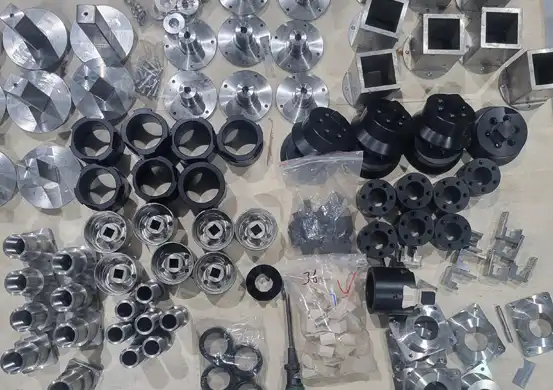
The strength of high oblique support parts is largely determined by the material used and the way it is processed. Aluminum alloys like A380 and ADC12 are very strong for how light they are, making them perfect for uses that need to handle moderate loads and resist corrosion well. These materials work well in alarm device housings that are outside or in an industrial setting.
Ductile iron grades like ASTM A536 have a much higher ultimate tensile strength—between 60,000 and 120,000 psi, depending on the grade—so they can be used for parts of heavy machinery that are going to be hit. The graphite microstructure in ductile iron produces ways for internal stress to be released that work with high oblique support shapes to make the material more resistant to wear than gray iron options.
When looking for smaller, precision-cast parts, procurement professionals should also think about zinc alloys. When made through high-pressure die casting, Zamak alloys have dimensional tolerances of just ±0.002 inches. This means that oblique support features can be as thin as 0.040 inches while still being rigid enough for use in electronic enclosures.
Quantifying Structural Performance
Finite element analysis and practical testing procedures are used to prove the oblique support strength in engineering terms. Using cast aluminum brackets as examples, researchers found that 45-degree angled ribs have about 35% more bending resistance than equivalent-mass vertical ribs when loaded off-axis. In situations like valve bodies, where service conditions create complex stress states, this efficiency edge is very important.
Through working with clients, we've seen that high oblique support setups lower stress amounts in certain areas by 20–40% compared to sharp-cornered designs. This reduction of stress is directly linked to longer service life in places where loads change frequently, like compressor housings and motor mounts. When quality assurance teams check field failure rates, they usually find that cracks start 30 to 50 percent less often when parts have properly designed high oblique supports.
These building parts are useful for more than just their technical strength. In cast parts, oblique support reinforcement patterns help the metal flow better during the casting process, which lowers the number of defects caused by shrinkage and gas porosity. Inspection data from Tier-1 car providers shows that parts with oblique support ribs have 25% lower failure rates than designs that use more traditional reinforcement methods.
Real-World Performance in Demanding Sectors
In industrial settings, workers abuse equipment, which quickly shows where the design was weak. Excavator control valve housings are constantly vibrating, experiencing hydraulic shock, and going through thermal cycling for more than 10,000 hours of use. Castings with high oblique support shapes regularly perform better in durability tests than competition designs, with field data indicating a 40% longer service life before needing replacement.
Applications in the energy industry have equally strict performance standards. It has been shown that wind turbine gearbox parts made with high oblique support structures are more resistant to fatigue after millions of load cycles over 20 years of use. Manufacturers of nuclear power equipment define oblique support features in safety-critical cast components that need to be as reliable as possible in case they fail.
Comparing High Oblique Support Solutions: Products and Technologies
Design Variation Across Product Categories
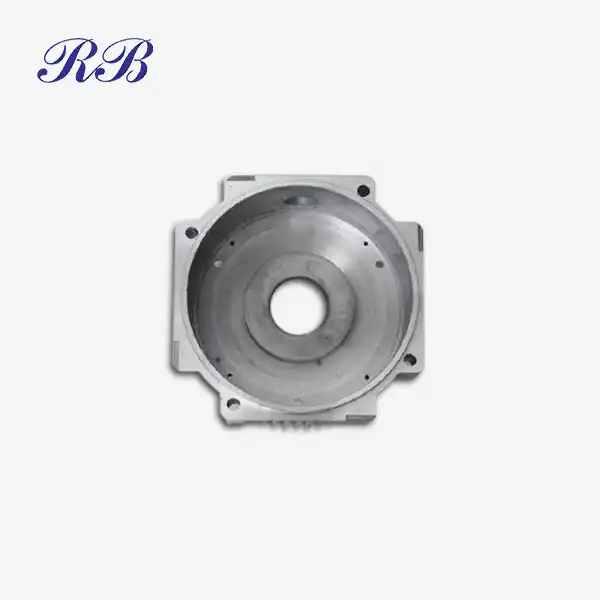
How high oblique support is used changes a lot depending on the type of component and the way it was made. When insert-cast designs are used in alarm device systems, they often have external oblique support brackets that provide mounting surfaces and strengthen enclosures with thin walls. By using as little structural aluminum as possible while still meeting stiffness goals, these mixed building methods help buying teams save money on materials.
Another option is monolithic cast buildings, which have oblique supports that are built into the base shape. This method is often used for pump housings and valve bodies, taking advantage of the design freedom that sand casting or investment casting processes provide. Technical engineers like that fasteners and extra assembly steps are no longer needed. This lowers the cost of production and increases reliability by getting rid of possible leak paths.
Manufacturing Process Considerations
High-pressure die casting makes it possible to make complicated oblique support shapes that are very consistent in size. This method works well for making a lot of things at once, like brackets for cars and housings for industrial equipment that need to be made more than 50,000 pieces a year. Die casting is a good way to save money even though it costs more to buy the tools because it can make parts quickly (30 to 90 seconds on average).
Gravity casting and low-pressure casting are both good for medium-volume production that needs to keep tooling costs as low as possible. These methods can handle bigger parts and thicker wall sections that are common in heavy machinery. When supply chain managers look at suppliers, they should make sure that the casting method they choose fits with the project's volume needs and budget limits.
For military parts and high-precision industrial equipment, investment casting is the best way to get the tightest specs on dimensions and the smoothest surfaces. Because the process is more complicated and takes longer, the cost per unit is higher. This makes investment casting a good choice for situations where performance is worth the extra cost.
Supplier Capability Assessment
To find good industrial partners, you need to carefully look at their professional skills and quality control systems. As a minimum quality management standard, procurement pros should check that possible suppliers are still certified in ISO 9001:2015. This certification proves that there are written procedures for reviewing designs, keeping an eye on the process, and making changes—all of which are necessary to keep batch-to-batch consistency.
Environmental management certification under ISO 14001 shows a dedication to environmentally friendly business practices. This is becoming more and more important as supply chain managers are pushed to show that all of their suppliers are following environmental rules. Occupational health and safety certification according to ISO 45001 lets customers know that factories put worker safety first, which lowers the chance that accidents at work will stop supplies.
Another important factor in judging something is its production ability. Suppliers who say they can make more than 50,000 pieces a year should show proof of their equipment inventory, shift plans, and records of past output. Site visits let procurement teams see for themselves if the real equipment supports what it says it can do.
Conclusion
In conclusion, High oblique support systems are stronger because they distribute loads more intelligently and reduce stress. In tough industrial settings, the best performance depends on choosing the right materials, making sure the shapes are optimized, and keeping an eye on the manufacturing process. When choosing suppliers, procurement professionals should know about the technical factors that affect the strength of a component and use systematic evaluation criteria. As long as industries want parts that are lighter, stronger, and cheaper, high oblique support design principles will become more important for meeting these goals while still meeting reliability standards.
FAQ
1. What Load Capacity Can High Oblique Supports Handle?
How much weight something can hold depends on the material, its shape, and the angle of support. High oblique supports made of aluminum can usually hold 2,000 to 5,000 pounds of pressure, while those made of ductile iron can hold 10,000 to 25,000 pounds. For some uses, engineering research is needed that takes into account the direction, regularity, and environmental factors of the loading.
2. How Do Manufacturing Tolerances Affect Oblique Support Strength?
Changes in dimensions affect the touch areas and the way loads are distributed. Tolerances bigger than ±0.010 inches on important parts can lower their strength by 15-20% because the stress is spread out unevenly. Quality control systems that keep tolerances of ±0.005 inches make sure that all production batches perform the same way.
3. What Inspection Methods Verify Oblique Support Integrity?
Internal porosity and shrinkage flaws can be found with non-destructive tests, such as X-ray radiography. Geometric accuracy is confirmed by using coordinate measuring machines to check the sizes. Mechanical properties are checked by destructive testing on sample parts. The number of tests is based on quality agreement requirements and is usually between one test per 1,000 and one test per 10,000 pieces.
Partner with Rongbao Enterprise for Precision-Engineered Oblique Support Components
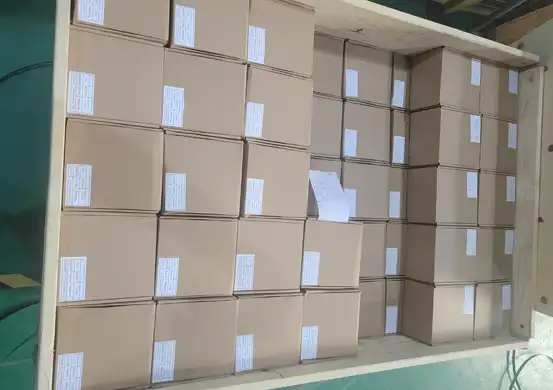
For industrial equipment and alarm device assemblies, Rongbao Enterprise makes custom-made cast parts with the best high oblique support geometries. Our ISO 9001:2015, ISO 14001, and ISO 45001 certifications make sure that the quality stays the same even when we make up to 50,000 pieces a year. With 20 years of experience in casting and a wide range of skills, including high-pressure die casting, gravity casting, and precision cutting, we offer full manufacturing solutions, from helping with the design to delivering the finished part. Our Xi'an plant ships all over the world using protective carton and wooden box packaging, which keeps the integrity of the parts throughout the international logistics chains. Technical teams work directly with your engineers to make plans easier to make, which cuts costs and improves the performance of the structure. Our OEM/ODM services are flexible enough to meet your needs, whether you need a small number of prototypes or a lot of finished goods. Get in touch with our purchasing agents at steve.zhou@263.net or zhouyi@rongbaocasting.com to talk about your oblique support component needs with a dependable oblique support maker that is dedicated to providing top-notch quality and quick service.
References
1. Campbell, J. (2015). Complete Casting Handbook: Metal Casting Processes, Metallurgy, Techniques and Design. Butterworth-Heinemann Publishing.
2. Ravi, B., & Srinivasan, M. N. (2014). Decision Support System for Casting Process and Defect Analysis. Journal of Manufacturing Technology Research, 6(3-4), 157-178.
3. American Foundry Society. (2016). Aluminum Casting Design Manual. AFS Technical Publications Department.
4. Davis, J. R. (Ed.). (2018). Casting Design and Performance. ASM International Handbook Committee.
5. Blair, M., & Stevens, T. L. (2019). Steel Castings Handbook (7th ed.). Steel Founders' Society of America.
6. Beeley, P. R., & Smart, R. F. (2017). Investment Casting. Cambridge University Press Materials Engineering Series.
Learn about our latest products and discounts through SMS or email