- English
- French
- German
- Portuguese
- Spanish
- Russian
- Japanese
- Korean
- Arabic
- Greek
- German
- Turkish
- Italian
- Danish
- Romanian
- Indonesian
- Czech
- Afrikaans
- Swedish
- Polish
- Basque
- Catalan
- Esperanto
- Hindi
- Lao
- Albanian
- Amharic
- Armenian
- Azerbaijani
- Belarusian
- Bengali
- Bosnian
- Bulgarian
- Cebuano
- Chichewa
- Corsican
- Croatian
- Dutch
- Estonian
- Filipino
- Finnish
- Frisian
- Galician
- Georgian
- Gujarati
- Haitian
- Hausa
- Hawaiian
- Hebrew
- Hmong
- Hungarian
- Icelandic
- Igbo
- Javanese
- Kannada
- Kazakh
- Khmer
- Kurdish
- Kyrgyz
- Latin
- Latvian
- Lithuanian
- Luxembou..
- Macedonian
- Malagasy
- Malay
- Malayalam
- Maltese
- Maori
- Marathi
- Mongolian
- Burmese
- Nepali
- Norwegian
- Pashto
- Persian
- Punjabi
- Serbian
- Sesotho
- Sinhala
- Slovak
- Slovenian
- Somali
- Samoan
- Scots Gaelic
- Shona
- Sindhi
- Sundanese
- Swahili
- Tajik
- Tamil
- Telugu
- Thai
- Ukrainian
- Urdu
- Uzbek
- Vietnamese
- Welsh
- Xhosa
- Yiddish
- Yoruba
- Zulu
How is a casting fixed connector manufactured?
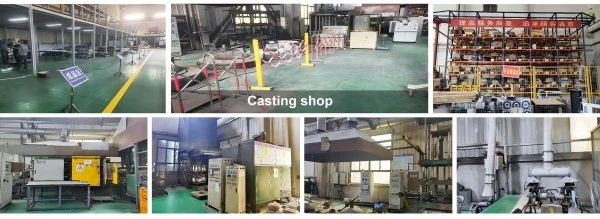
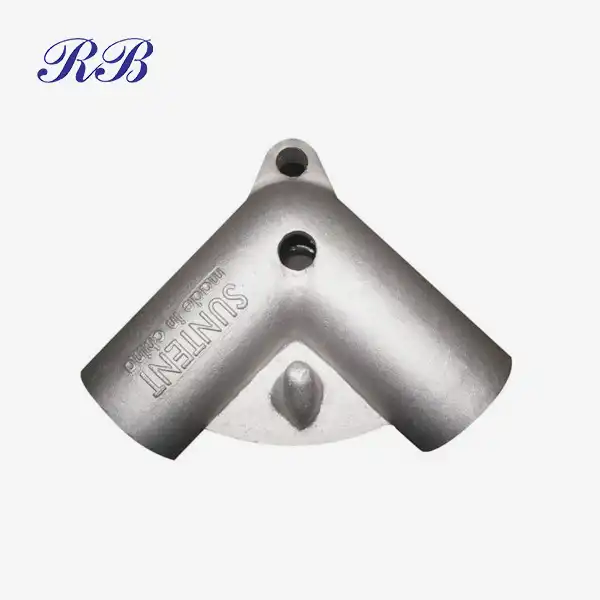
Manufacturing a casting fixed connector involves a systematic approach combining material science, precision casting techniques, and rigorous quality control. The process begins with selecting an appropriate aluminum alloy—such as ZL101A—followed by gravity casting to form the basic structure. After casting, components undergo CNC machining to achieve precise dimensional tolerances, and surface treatments like shot blasting enhance durability and corrosion resistance. Each connector must meet strict performance standards certified under ISO9001:2015, ensuring reliability across demanding applications including three-way pipe systems, automotive assemblies, and heavy machinery connections. Understanding these manufacturing steps allows procurement professionals and engineers to evaluate supplier capabilities and select components that deliver consistent performance under operational stress.
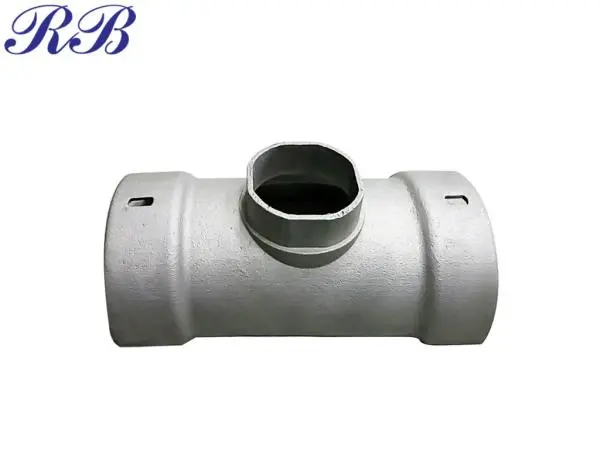
Understanding Casting Fixed Connectors: Definition and Applications
Casting fixed connectors are a specific type of structural joining part that is made for situations where long-term steadiness and high mechanical strength are essential. Unlike regular mechanical fasteners that use threaded engagement or welded joins that create heat-affected zones, these connectors are made through combined metal casting methods that make solid structures whose mechanical properties can be predicted.
What Makes These Connectors Essential?
The main benefit is that they can evenly distribute stress across connection points, which lowers the risk of failure in high-load situations. These parts are used in many fields, from making cars to building energy systems, because they keep their structure even when they are loaded and unloaded repeatedly and when temperatures change. Heavy machinery operators use them on machines like excavators and loaders, where a broken part can cause expensive downtime and safety risks.
Industry-Specific Applications
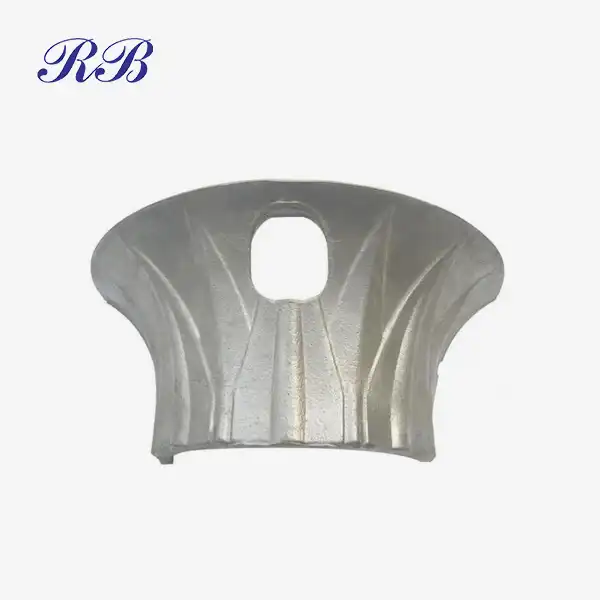
These connections are very important for three-way pipe designs, hydraulic systems, and structural assemblies in building and infrastructure projects. They are used by automakers in suspension systems and parts of the engine where saving weight can't come at the expense of strength. In the energy industry, materials need to be very strong because they are exposed to harsh environments, like in wind turbine systems and oil and gas equipment. To meet specific performance standards like tensile strength, fatigue resistance, and corrosion protection, each application needs a carefully chosen material and an optimised production process.
Comparing Casting Fixed Connectors With Alternative Joining Solutions
Engineers must look at many things when choosing how to put components together. These include how well the structure works, how hard it is to install, how much upkeep is needed, and the total cost over the whole life of the part. In some situations, casting fixed connectors are better than other ways to join things, but other methods are still good for some situations.
Structural Integrity Considerations
Cast connectors work better in situations where there are complicated load lines or where stress needs to be distributed in more than one way. Stress builds up at weld interfaces or fastener holes, but the monolithic structure gets rid of those stress spots. Even though welded parts are flexible, they have areas where the material qualities are different from the base metal when it's heated up. This could create places where failure starts. Mechanical screws focus loads on the bolt holes and need to be properly torqued so that they don't come loose when the machine shakes. Even though adhesive bonding spreads stress evenly, it usually can't match the load-bearing capacity of cast metal parts, especially when temperatures are high.
Maintenance and Operational Lifespan
As far as maintenance goes, once they are properly placed, cast connections don't need much care. To keep their clamping force, mechanical fasteners need to be inspected and retorqued on a regular basis, which adds to the costs of doing business. Even though welded joints are permanent, they are hard to take apart for maintenance or to replace parts. Cast connectors with the right surface treatments don't break down in harsh environments and keep working well for a long time, even in places where it's hot or corrosive, like in heavy machinery and energy equipment.
Cost Analysis for Procurement
The total cost of ownership is more than just the price of the parts themselves. When compared to assemblies using standard fasteners, cast connectors usually require a bigger upfront investment for tools. This means that they are most cost-effective for medium to large production volumes. Because we can make 5,000 pieces in a run, we can take advantage of economies of scale that make casting cheaper than other methods. For procurement managers to find the most cost-effective option for their needs, they should look at unit prices, installation labour, maintenance needs, and expected service life.
Installation, Maintenance, and Best Practices for Casting Fixed Connectors
Correct assembly methods and repair schedules have a direct effect on the performance and service life of casting fixed connectors, so operations teams need to pay close attention to them.
Installation Protocols
Making sure that the mating surfaces are clean, not damaged, and within the required size ranges is the first step to a successful installation. Before finalising three-way pipe connectors, they need to be aligned in several directions to make sure there aren't any generated stresses that could cause them to fail early. Manufacturers should tell you how much torque to use on any gear for locking things down, and you should use regulated tools to make sure you have the right clamping force. If needed, gaskets or seals must be put in the right place and checked for damage before being put together. Our custom specifications include detailed installation instructions that are made to fit each application. This helps people working in the field avoid making common installation mistakes.

Routine Maintenance Requirements
Cast aluminium joints don't break down easily in many ways, but eye inspections every so often can help find problems before they affect operations. When things are inspected, they should be checked for rust, especially near the coast or in chemical processing areas, damage from impact or shaking, and proper sealing when fluid systems are involved. Using surface processes like shot blasting to protect the metal is a good start, but in really harsh settings, extra protective coats may be needed during installation. Our technical team can tell you how often to do maintenance based on how your tools and surroundings are used.
Compliance and Safety Standards
Installing and maintaining parts must be in line with safety standards in the industry, such as OSHA rules for U.S. operations and OEMs' equipment-specific instructions. When our connectors are made using ISO45001 occupational health and safety management systems, they are made with safety features that make them easier to handle and install. Each shipment comes with quality paperwork that includes material approvals and dimensional inspection reports. This makes it possible to track the goods and helps with compliance checks during equipment tests. Components are kept safe during shipping and storage in wooden boxes, which makes sure they get to installation places in the right state.
Procurement Insights and Choosing the Right Casting Fixed Connector Supplier
When choosing a seller partner, it's important to look at more than just price per unit, because the casting fixed connector supplier's skills have a direct impact on the success of the project and the reliability of operations in the long run.
Key Evaluation Criteria
Quality certificates are the basis for judging a seller. Our ISO9001:2015 certification shows that we have well-thought-out quality management systems with set steps for controlling processes, making improvements all the time, and making sure customers are happy. Getting ISO14001 certification for environmental management shows that you are committed to using sustainable manufacturing practices, which are becoming more and more important to supply chain managers. Another important factor is production capacity. Being able to make 5,000 pieces per production run means we can meet the number needs for both prototypes and large-scale production while still meeting our delivery dates.
Customization Capabilities
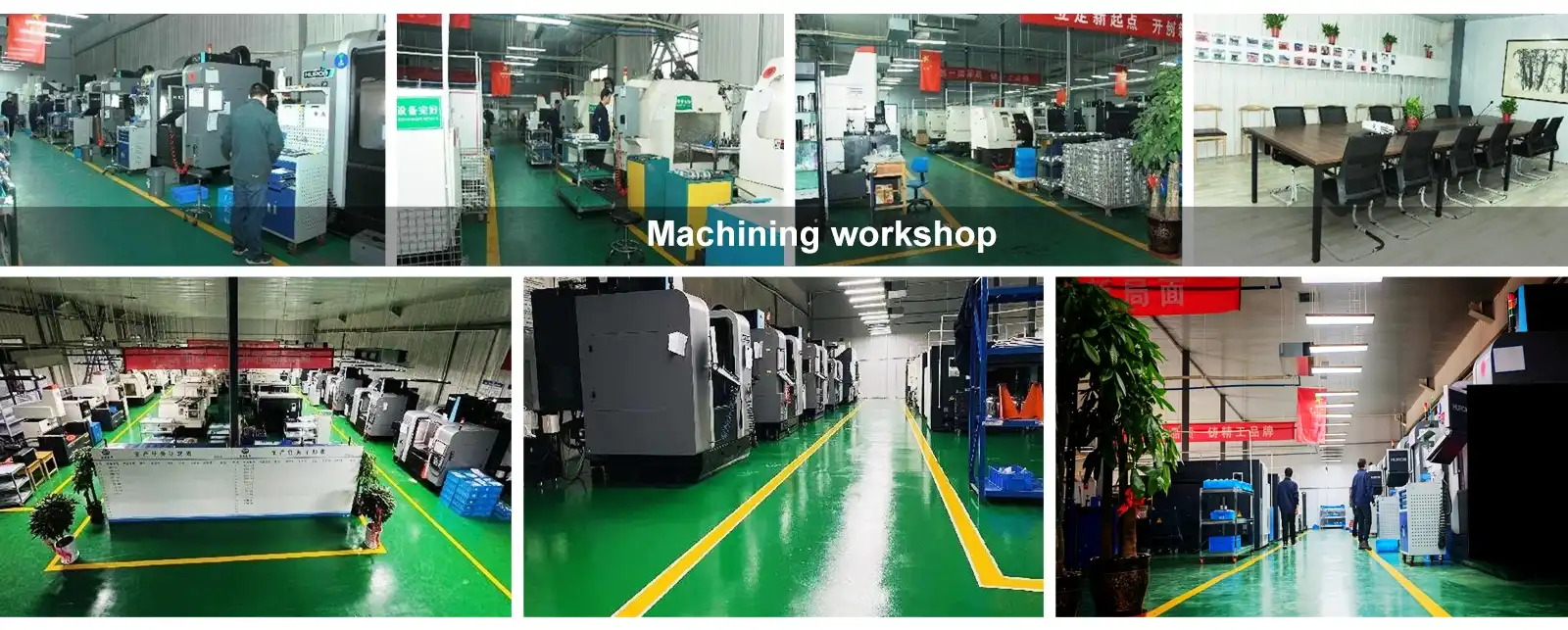
Suppliers who can help with product development are different from those who can only sell standard catalogue items because they can offer OEM and ODM customisation services. We offer Design for Manufacturing (DFM) consulting that helps engineering teams during the design phase by finding the best part geometry for casting while still meeting functional needs. Our whole manufacturing process—from making the mould to casting, machining, and finishing the surface—allows for quick prototyping and a smooth switch to mass production without switching providers. This lowers the risk of the program and the doubt about when it will be finished.
Global Market Experience
Since 70% of our production goes to Europe, North America, and Japan, we know what kind of paperwork is needed, what kind of quality is expected, and how to communicate in order for foreign partnerships to work. This experience makes the buying process easier for people in the United States because expert help is available in English and people are familiar with standards like ASTM specifications that are used in American industries. Our factory in Xi'an has competitive prices and high-tech systems that meet the needs of Tier-1 auto suppliers and original equipment manufacturers (OEMs) in the construction equipment sector.
Conclusion
To make high-quality casting fixed connectors, you need to use material science, precise casting methods, advanced machining skills, and strict quality management. Using the gravity casting method with ZL101A aluminium metal and finishing the parts with CNC machining and shot blasting gives them great mechanical qualities and accurate measurements. In the energy, building, automobile, and industrial equipment industries, where reliable performance in tough situations is important, these connectors play key roles. For procurement to go well, suppliers must have a wide range of production skills, the right certifications, and a track record of success in foreign markets. When procurement managers and engineers know about the whole production process, they can make smart choices that improve the quality of parts, the reliability of delivery, and the total cost of ownership over the duration of a product.
FAQ
What materials work best for high-stress connector applications?
For most industrial uses, ZL101A aluminium alloy is the best choice for a casting fixed connector because it is strong, light, and doesn't rust. This aluminium metal with silicon has tensile forces of about 240 MPa after being heated, but it can still be bent easily. Different alloys may be needed for uses with higher temperatures or extreme loads. Our engineering team can suggest these based on the specifics of the job.
How does the gravity casting process affect component strength?
When done right, gravity casting makes parts with a regular grain structure and few holes. This means that the parts' mechanical features can be predicted. When compared to high-pressure methods, the slower solidification lets gas escape and lowers the number of flaws inside. When this process is followed by CNC machining to get rid of any surface flaws, it makes parts that meet the structural needs of heavy machinery and cars.
Can specifications be customized for unique applications?
Our OEM and ODM services allow for a lot of customisation, such as changing the size, the type of material, and the way the surface is treated. During the development stages, we work together with engineering teams and provide DFM input that makes designs easier to make while still meeting performance standards. Customisation includes changing the way the packaging is set up and the format of the quality documentation to fit the way the customer buys things.
Partner With Rongbao Enterprise for Reliable Casting Fixed Connector Solutions
Rongbao Enterprise has been a precision casting expert for 20 years and can help sourcing managers, engineers, and OEM partners who are looking for reliable casting fixed connector providers. We offer full CNC machining services, as well as gravity casting, low-pressure die casting, high-pressure die casting, and other processes. This means that we can make parts from start to finish in a single process. Our ISO9001:2015, ISO14001, and ISO45001 certified facilities in Xi'an, China, keep strict quality standards that meet global needs in the automotive, construction equipment, and industrial sectors. We are experts at making specifications that are exactly right for your application. We can make up to 5,000 pieces in a run, and we offer flexible delivery times. Our engineering team gives expert advice throughout the whole project creation process to make sure that it can be made and works well. Contact steve.zhou@263.net or zhouyi@rongbaocasting.com right away about your connector needs and find out how our full-chain manufacturing can give your projects the quality, reliability, and low prices they need. You can look at all of our products at rongbaocasting.com and ask for full technical specs to help you make your decision.
References
- Campbell, John. "Complete Casting Handbook: Metal Casting Processes, Metallurgy, Techniques and Design." Butterworth-Heinemann, 2015.
- ASM International Handbook Committee. "ASM Handbook Volume 15: Casting." ASM International, 2008.
- Kaufman, J. Gilbert and Rooy, Elwin L. "Aluminum Alloy Castings: Properties, Processes, and Applications." ASM International, 2004.
- Brown, John R. "Foseco Ferrous Foundryman's Handbook." Butterworth-Heinemann, 2000.
- Beeley, Peter R. "Foundry Technology." Butterworth-Heinemann, 2001.
- Davis, Joseph R. "Aluminum and Aluminum Alloys: ASM Specialty Handbook." ASM International, 1993.
Learn about our latest products and discounts through SMS or email