- English
- French
- German
- Portuguese
- Spanish
- Russian
- Japanese
- Korean
- Arabic
- Greek
- German
- Turkish
- Italian
- Danish
- Romanian
- Indonesian
- Czech
- Afrikaans
- Swedish
- Polish
- Basque
- Catalan
- Esperanto
- Hindi
- Lao
- Albanian
- Amharic
- Armenian
- Azerbaijani
- Belarusian
- Bengali
- Bosnian
- Bulgarian
- Cebuano
- Chichewa
- Corsican
- Croatian
- Dutch
- Estonian
- Filipino
- Finnish
- Frisian
- Galician
- Georgian
- Gujarati
- Haitian
- Hausa
- Hawaiian
- Hebrew
- Hmong
- Hungarian
- Icelandic
- Igbo
- Javanese
- Kannada
- Kazakh
- Khmer
- Kurdish
- Kyrgyz
- Latin
- Latvian
- Lithuanian
- Luxembou..
- Macedonian
- Malagasy
- Malay
- Malayalam
- Maltese
- Maori
- Marathi
- Mongolian
- Burmese
- Nepali
- Norwegian
- Pashto
- Persian
- Punjabi
- Serbian
- Sesotho
- Sinhala
- Slovak
- Slovenian
- Somali
- Samoan
- Scots Gaelic
- Shona
- Sindhi
- Sundanese
- Swahili
- Tajik
- Tamil
- Telugu
- Thai
- Ukrainian
- Urdu
- Uzbek
- Vietnamese
- Welsh
- Xhosa
- Yiddish
- Yoruba
- Zulu
Custom Casting Connection Bracket for Industrial Automation Robot Systems
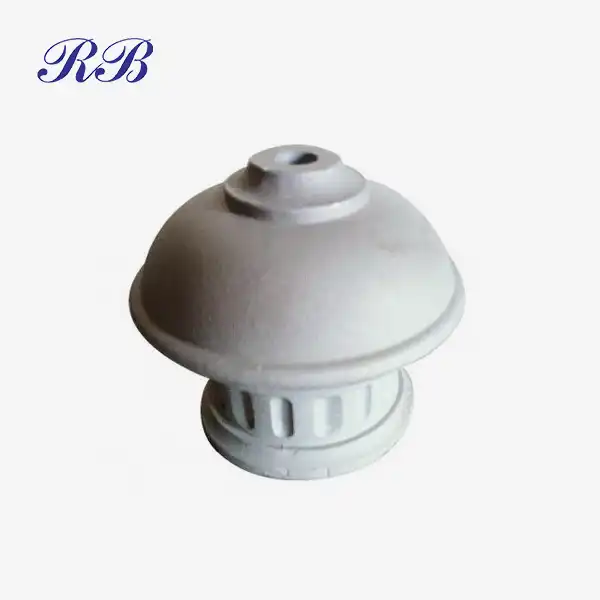
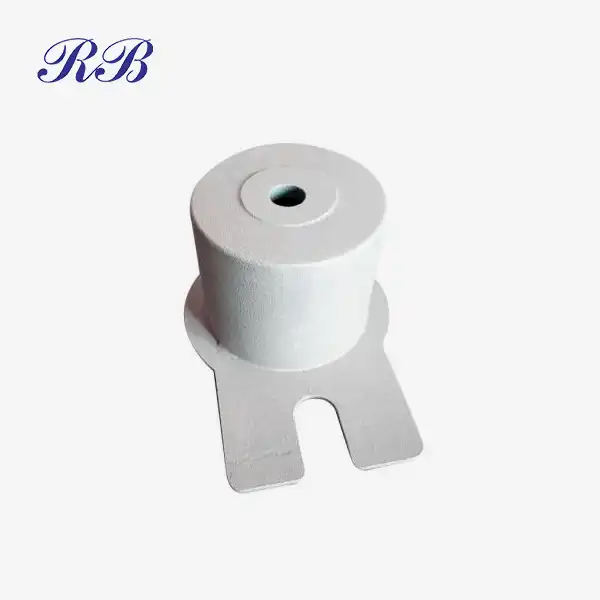
A casting connection bracket serves as a critical structural element in industrial automation robot systems, providing secure attachment points and load-bearing support between robotic arm segments and supporting infrastructure. These precision-engineered components must withstand repetitive mechanical stress, dynamic loading, and environmental challenges while maintaining dimensional accuracy throughout extended operational cycles. Custom-designed brackets manufactured through advanced casting processes deliver tailored solutions that address specific robotic applications, offering superior performance compared to generic alternatives.
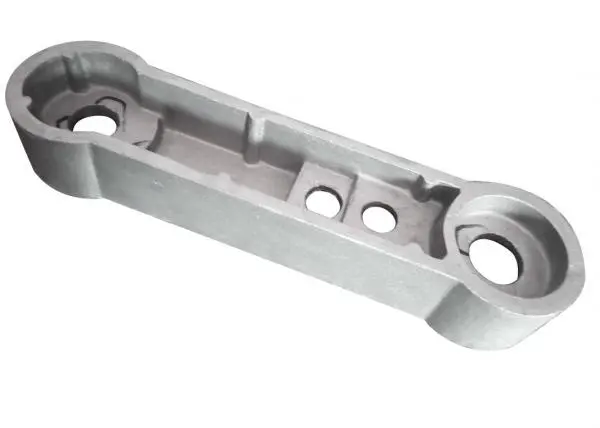
Understanding the Role of Casting Connection Brackets in Industrial Automation Robots
Industrial robots have to work in tough situations where every part has to work perfectly. Casting connection brackets are the backbone of robotic structures. They transfer forces between different mechanical parts and keep their precise positions even when they move quickly.
Why Material Selection Matters?
The choice of casting material has a direct effect on how well and how long the bracket works. Because it has a great strength-to-weight ratio and is easy to make, A356 aluminium alloy has become a popular choice for industrial robot support arms. Silicon and magnesium are in this metal, which makes it more fluid during the casting process and stronger after it has been heated. The tensile strengths of parts made from A356 are higher than 30,000 psi, and the parts are lighter, which means that servo motors and drive systems are less affected by inertial loads.
At Rongbao Enterprise, we make robot support arm parts that weigh 8.9 kg using a combination of gravity casting and CNC cutting. This way of making things lets us make complicated shapes with varying wall thicknesses that improve strength distribution while getting rid of extra material.
Structural Integrity Requirements
Casting connection brackets have to be able to handle different kinds of stress at the same time. They have to be able to handle tensile forces when the robot is extending, compressive loads when it is carrying objects, and torsional stresses when it is rotating. Off-the-shelf brackets often break under these combined loading conditions, either by cracking too soon around the mounting holes or deforming at important joint interfaces.
Engineers can carefully place reinforcement ribs, change wall thicknesses based on finite element analysis results, and add features that spread out load concentrations when custom casting. By putting helpful compressive pressures on the surface layers and making the texture uniform, shot blasting improves wear resistance even more. This makes it easier for coatings to stick to the surface.
How to Select the Right Custom Casting Connection Bracket for Your Robot System?
When looking for a casting connection bracket, procurement managers and technical engineers have to make hard choices that balance performance needs with cost concerns and the reliability of the supply chain.
Evaluating Application Parameters
Before working with suppliers, teams should make a full list of all the practical needs they need. When robot support arms are used for welding in cars, they are loaded in different ways than when they are used for packaging or moving things around. Temperature exposure varies a lot. Parts that are close to welding operations may be exposed to high temperatures, while automation in cold storage needs materials that can still be bent at low temperatures.
When you do a load study, you should look at both static and dynamic forces, as well as loads that are caused by acceleration during quick positioning motions. A bracket that holds up a six-axis robot arm weighs 8.9 kg and has to deal with the weight of parts further down the line as well as the momentum forces that are created when the arm changes direction or stops suddenly.
Manufacturing Process Comparison
Gravity casting has clear benefits for making medium to large frames that need to be very stable in terms of their size. Using gravity to fill mould spaces with liquid aluminium, this process makes parts that are consistently dense and have few holes. When compared to high-pressure die casting, gravity casting has slower fill rates that lower flaws caused by turbulence. This makes it perfect for structure parts where internal soundness is very important.
After the casting process, CNC milling makes exact interfaces, mounting surfaces, and bolt holes. This method combines the cost-effectiveness of near-net-shape casting with the accuracy of subtractive manufacturing. Critical measurements can be within ±0.005 inches of accuracy, which ensures a good fit during assembly.
Supplier Qualification Criteria
Quality management certifications are objective proof of the ability to make things and keep the process under control. ISO9001:2015 certification shows that quality systems are standardised. ISO14001 and ISO45001 certifications show that a company cares about the environment and is committed to safety at work. When looking for suppliers for long-term partnerships that need stable quality from batch to batch, these qualifications are especially important.
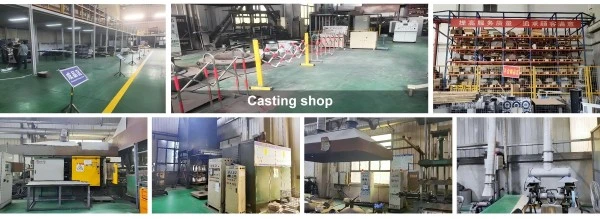
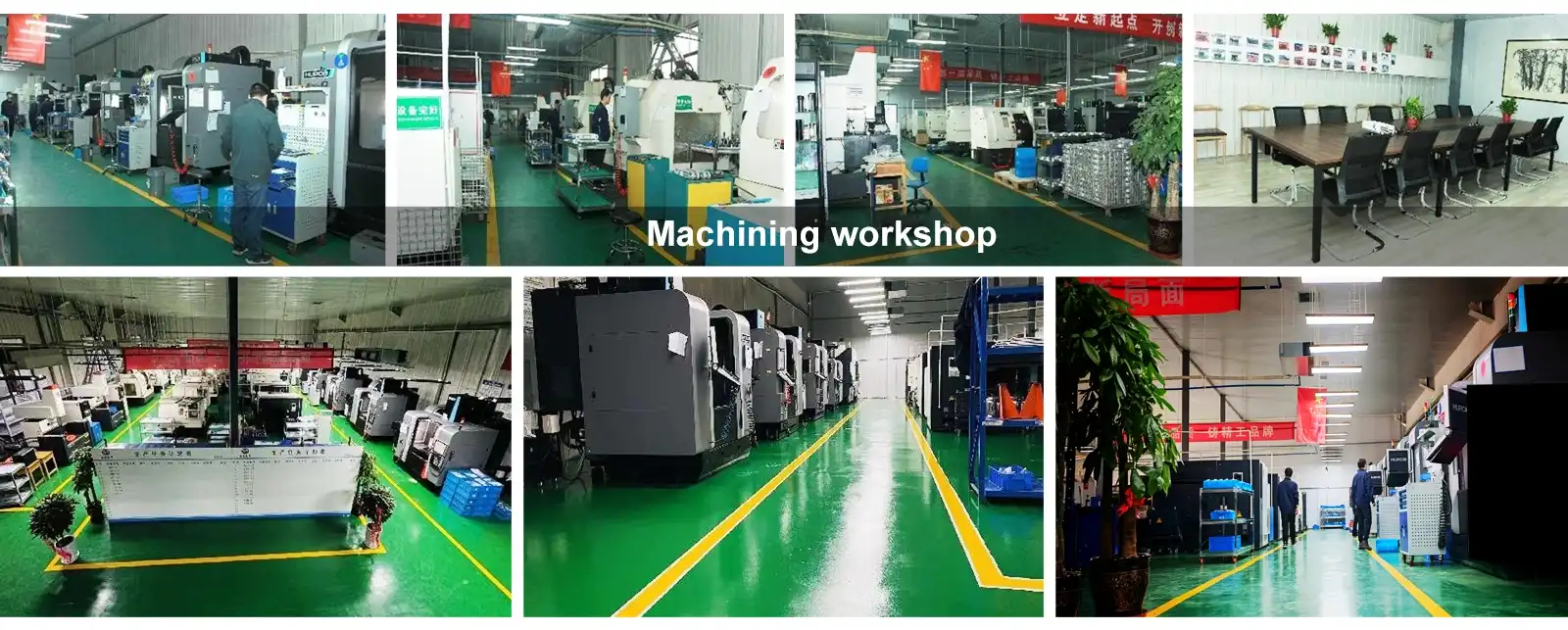
Another important evaluation factor is production capacity. Suppliers who can make 5,000 pieces with controlled lead times can meet the needs for mass production while keeping quality standards high. We at Rongbao Enterprise have standardised large-scale workshops in Xi'an that use full-spectrum automatic tools for casting, machining, and inspection.
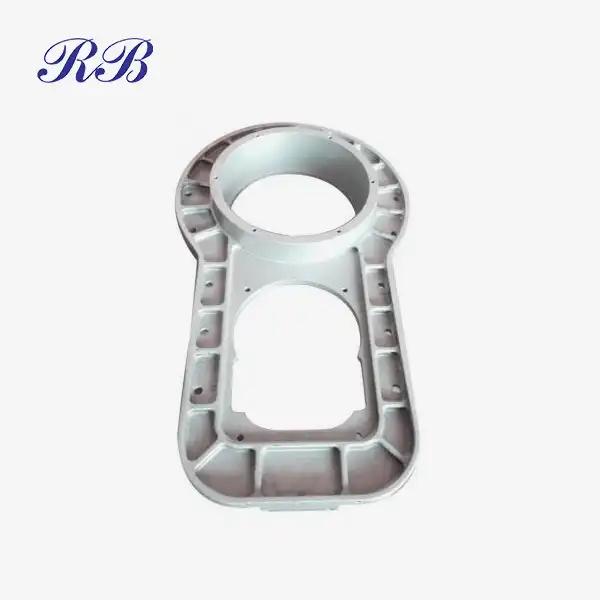
The Evolution and Advantages of Custom Casting Connection Brackets in Modern Robot Systems
In the last few decades, industrial automation has come a long way. Robotic systems are now faster, more accurate, and able to do more complicated jobs. In the same way, casting connection brackets have changed over time, going from simple steel pieces that were welded together to complex aluminium parts that were made better with computer-aided engineering.
Development Process for Custom Solutions
Custom brackets that work well are made after end users, robot manufacturers, and casting specialists work together on design consultations. The engineering teams look at the working needs, the CAD models of the whole robotic system, and possible failure modes. This knowledge helps choose the right materials and make the best use of geometry.
Before committing to production tooling, prototype development usually involves making a lot of changes quickly using simulation tools. Finite element analysis shows how stress is distributed, which lets engineers add material where it's needed and take it away from areas that aren't under much stress. Thermal models can predict how the dimensions will change as the casting hardens, which lets mould designers make adjustments.
Real-World Performance Improvements
Manufacturers of cars have seen big improvements in reliability after using custom-cast aluminium brackets in robotic welding cells. Over the course of 18 months, one Tier-1 provider saw a 40% drop in unexpected maintenance events after replacing fabricated steel brackets with A356 gravity-cast parts. The brackets went from 14.2 kg to 8.9 kg lighter, which made them faster because there was less inertial resistance.
Casting connection brackets are especially useful for holding heavy loads precisely where they need to be placed, which requires very high rigidity. Manufacturers of construction tools that use robots to put together parts benefit from clamps that are made to fit specific bolt patterns and interface shapes without the need for adapter plates or other changes.
Key Benefits of Using Custom Casting Connection Brackets in Industrial Automation
Buying custom-designed casting connection brackets has many benefits that go beyond the cost of the parts themselves. These benefits affect the total cost of ownership over the lifecycle of the equipment.

Enhanced Durability and Service Life
When built correctly, cast aluminium frames are more resistant to fatigue than manufactured ones. The continuous grain structure that comes with casting gets rid of weld zones that can cause stress to build up and cracks to start. When you shot blast a surface, you create compressive surface stresses that stop cracks from spreading even more. This makes the part last longer under cyclic loading conditions.
Predictable performance is ensured by using the same material throughout the casting. In welded structures, heat-affected zones change the mechanical properties of certain areas. Cast brackets, on the other hand, have similar properties that make structural analysis and reliability estimates easier.
Design Flexibility and Weight Optimization
Casting processes can make complicated three-dimensional shapes that would be too expensive or impossible to make by machining or fabricating. Engineers can use undercuts, internal spaces, and organic forms to make structures stronger while also lighter. This design freedom lets you combine multiple functions into a single part, which cuts down on the number of steps needed to put it together and the places where it could go wrong.
The 8.9 kg weight of our A356 robot support arm brackets is the result of careful optimisation between the need for strength and the desire to reduce mass. Robot servo motors use less power to speed up and slow down lighter mechanical assemblies, so lower bracket mass directly leads to lower energy use.
Lifecycle Cost Advantages
Even though the original costs of making custom moulds may be higher than those of buying standard mounts, the overall costs of ownership usually work out better for custom solutions. Longer service times cut down on the cost of repair labour and keep production from stopping too often. Fewer repair rounds over the life of an item lowers the costs of buying it and keeping it in stock.
Before the bracket is shipped, it is checked for quality by quality assurance procedures such as measuring, material certification, and non-destructive testing. Upstream quality control keeps bad parts from getting into production, where they would cause a lot of damage and cost a lot more to fix.
Best Practices for Integrating Custom Casting Connection Brackets into Your Automation Workflow
To make custom casting connection brackets work, different functional groups within manufacturing companies need to plan and work together in a structured way.
Early Collaboration Between Stakeholders
Instead of waiting until plans are finalised, procurement managers should start working with casting suppliers as soon as ideas are being thought of. When manufacturing experts are involved early on, they can have a say in design decisions and help find ways to make the product easier to cast, cheaper, and better in terms of performance. Supply chain professionals can also set realistic deadlines that take into account the time it takes to make tools, test prototypes, and start making more of the product.
Technical experts can learn from suppliers about the powers of materials, the limits of processes, and ways to improve designs. Experts in casting can suggest changes that raise yield rates and lower the risk of defects without affecting the function standards.

Comprehensive Quality Verification
By following strict inspection protocols, you can keep bad parts from getting into production. Coordinate measuring machines are used for dimension verification to make sure that important features are within the allowed ranges. Material certifications list the alloy's makeup and mechanical qualities, making sure that they match the assumptions made during design.
Non-destructive testing methods give you even more confidence in the internal integrity of something. Ultrasonic screening finds holes or other things in the ground that could weaken the structure. Dye penetrant testing finds flaws that go through the surface and can't be seen with the naked eye.
Conclusion
Casting connection brackets are designed solutions that meet the unique performance needs of current robot systems for industrial automation. The properties of the A356 aluminium alloy, the gravity casting process, and precise CNC machining work together to make parts that are very strong for their weight and have accurate dimensions. Instead of using normal off-the-shelf parts, companies that want to improve the stability of their robotic systems, lower the cost of upkeep, and speed up operations should look into custom cast brackets. Carefully choosing a supplier based on their ability to manufacture, quality certifications, and willingness to work with you will ensure a successful implementation that supports your long-term automation goals.
FAQ
What advantages does A356 aluminum alloy offer for robot brackets?
As a result of being heated, A356 aluminium has better mechanical properties and is easier to cast. The silicon in the metal makes it easier to fill moulds, and the magnesium makes it stronger through a process called precipitation hardening. Components have tensile strengths similar to many steel alloys but weigh only about a third as much. This makes robot drive systems less affected by inertial loads.
How does gravity casting compare to other processes?
Gravity casting makes a casting connection bracket that is very consistent in size and has few holes inside. When compared to high-pressure die casting, the managed fill rates cut down on flaws caused by turbulence. This method works especially well for structural parts that weigh several kilograms and need to be internally sound and have good mechanical properties.
What certifications should qualified suppliers maintain?
Suppliers of castings you can trust should have ISO9001:2015 certification, which shows they have quality control methods in place. Getting ISO14001 and ISO45001 certifications shows that a company cares about safety and the environment. These standards, which are known all over the world, give concrete proof of process control skills and organisational development.
Partner with Rongbao Enterprise for Your Custom Casting Needs
Combining 20 years of manufacturing knowledge with cutting-edge production tools, Rongbao Enterprise offers complete solutions for each casting connection bracket used in industrial automation. To meet exact requirements, our Xi'an factory makes custom parts by using gravity casting, CNC cutting, and shot blasting to treat the surface. We keep our ISO9001:2015, ISO14001, and ISO45001 certifications up to date. This makes sure that the quality of all of our production runs, from small prototypes to 5,000-piece volumes.
70% of what we make goes to markets in Europe, the United States, and Japan, which shows that we can meet quality standards around the world. Our full-chain manufacturing method includes designing moulds, casting, precise machining, and surface treatment. This gives you the convenience of a single source for all your needs and makes sure that all of your parts work together. Our engineering team works with your technical staff to make sure that plans are the best they can be in terms of performance and ease of production, whether you need robot support arm brackets or other structure parts for automation systems.
Get in touch with our expert team to talk about your unique needs. Steve Zhou can be reached at steve.zhou@263.net or zhouyi@rongbaocasting.com to talk about how Rongbao Enterprise can be your reliable supplier of casting connection brackets. You can find out more about what we can do and see more case studies that show how good we are at making accurate parts by going to rongbaocasting.com.
References
- Campbell, John. "Complete Casting Handbook: Metal Casting Processes, Metallurgy, Techniques and Design." Butterworth-Heinemann, 2015.
- Kaufman, J. Gilbert and Rooy, Elwin L. "Aluminum Alloy Castings: Properties, Processes, and Applications." ASM International, 2004.
- Nee, Andrew Y.C. "Handbook of Manufacturing Engineering and Technology." Springer-Verlag London, 2015.
- Siciliano, Bruno and Khatib, Oussama. "Springer Handbook of Robotics." Springer International Publishing, 2016.
- Boothroyd, Geoffrey, Dewhurst, Peter and Knight, Winston A. "Product Design for Manufacture and Assembly." CRC Press, 2011.
- Davis, Joseph R. "Aluminum and Aluminum Alloys." ASM International Handbook Committee, 1993.
Learn about our latest products and discounts through SMS or email