- English
- French
- German
- Portuguese
- Spanish
- Russian
- Japanese
- Korean
- Arabic
- Greek
- German
- Turkish
- Italian
- Danish
- Romanian
- Indonesian
- Czech
- Afrikaans
- Swedish
- Polish
- Basque
- Catalan
- Esperanto
- Hindi
- Lao
- Albanian
- Amharic
- Armenian
- Azerbaijani
- Belarusian
- Bengali
- Bosnian
- Bulgarian
- Cebuano
- Chichewa
- Corsican
- Croatian
- Dutch
- Estonian
- Filipino
- Finnish
- Frisian
- Galician
- Georgian
- Gujarati
- Haitian
- Hausa
- Hawaiian
- Hebrew
- Hmong
- Hungarian
- Icelandic
- Igbo
- Javanese
- Kannada
- Kazakh
- Khmer
- Kurdish
- Kyrgyz
- Latin
- Latvian
- Lithuanian
- Luxembou..
- Macedonian
- Malagasy
- Malay
- Malayalam
- Maltese
- Maori
- Marathi
- Mongolian
- Burmese
- Nepali
- Norwegian
- Pashto
- Persian
- Punjabi
- Serbian
- Sesotho
- Sinhala
- Slovak
- Slovenian
- Somali
- Samoan
- Scots Gaelic
- Shona
- Sindhi
- Sundanese
- Swahili
- Tajik
- Tamil
- Telugu
- Thai
- Ukrainian
- Urdu
- Uzbek
- Vietnamese
- Welsh
- Xhosa
- Yiddish
- Yoruba
- Zulu
How does gravity casting work?
Gravity casting stands as one of manufacturing's oldest yet most reliable metal forming processes. Dating back to the Bronze Age around 3200 BCE, when craftsmen in Mesopotamia first poured molten bronze into stone molds, this technique has evolved considerably while maintaining its fundamental principles. Unlike its high-pressure cousins, gravity casting—sometimes called permanent mold casting—relies on something utterly straightforward: the natural force of gravity to fill molds with molten metal.
Back in 1908, when Ford began mass-producing the Model T, their engineers faced a challenge: creating thousands of identical engine blocks efficiently. Their solution? Gravity casting. Since then, the process has been refined through decades of metallurgical research and practical application across industries. Today's practitioners benefit from both this long history and modern innovations in materials science.
Looking beyond the seemingly simple concept lies a sophisticated manufacturing technique that demands precise temperature control, careful mold design, and intimate knowledge of how metals behave during solidification. Let's break down exactly how this process works, examining each stage from mold preparation to finished product.
Gravity-Driven Filling
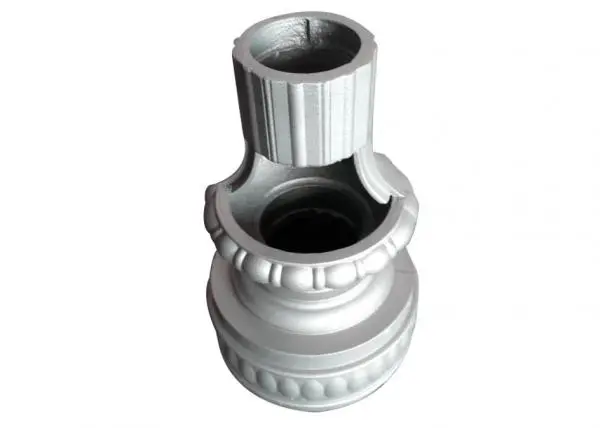
At its core, gravity casting depends entirely on Earth's gravitational pull to move molten metal through the mold cavity. When you use a pressure die, on the other hand, mechanical forces push the metal into place. John Campbell, a famous British metallurgist who changed the way we think about metal casting at Birmingham University in the 1990s, showed that this gravity-driven method greatly lowers turbulence during filling, which means that fewer oxides and gas entrapments are created, which are common problems with other casting methods.
The process typically begins with heating metal—commonly aluminum, zinc, or copper alloys—to 50-100°C above its melting point in a furnace. At Michigan's Cadillac Foundry, for example, aluminum alloy A356 reaches approximately 720°C before pouring begins. This temperature sweet spot ensures adequate fluidity without excessive oxide formation or mold erosion. The material must remain liquid long enough to fill all mold details yet solidify quickly enough for production efficiency.
Once heated, workers transport the molten metal via insulated ladles to preheated molds. The molten stream follows a carefully designed gating system—a network of channels directing metal into the mold cavity. At this critical moment, pour rate becomes essential; too fast creates turbulence and defects, while too slow risks premature solidification. Skilled operators at Japan's Yamaha motorcycle engine plant maintain pouring speeds around 0.5-0.7 kg/second for their aluminum gravity castings, having determined this range minimizes defects while maintaining productivity.
As metal flows downward through the sprue and into the cavity, engineers must account for volumetric shrinkage during solidification—typically 4-8% for aluminum alloys. Dr. Merton Flemings' pioneering work at MIT during the 1970s established that progressive, directional solidification—from furthest points inward toward feed gates—produces the strongest castings. Modern mold designs incorporate risers (reservoirs of extra metal) that feed shrinkage zones, ensuring complete filling even as the metal contracts during cooling. This natural flow pattern, driven purely by gravity, creates distinct solidification characteristics that give gravity castings their unique mechanical properties.
Reusable (Permanent) Mold
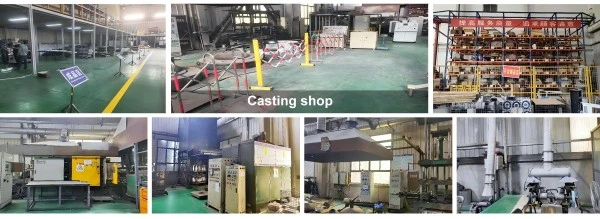
Unlike sand casting with its single-use molds, gravity casting employs durable metal molds—typically crafted from H13 tool steel or gray cast iron—designed to withstand hundreds or thousands of production cycles. The DaimlerChrysler plant in Kokomo, Indiana, reported in 2003 that their H13 steel molds routinely survived 20,000+ casting cycles when properly maintained, though complex geometries with thin cores might require replacement after 8,000-10,000 castings.
These molds represent significant upfront investment. A medium-complexity automotive component mold might cost $25,000-$75,000 to design and machine, based on 2019 industry figures from the North American Die Casting Association. This initial expense gets amortized across production runs, making gravity casting economically viable primarily for medium to high-volume manufacturing—typically batches exceeding 500 identical parts.
Thermal management within these permanent molds proves critical. Before casting begins, molds undergo preheating to 150-300°C depending on the alloy being cast and part geometry. This preheating, often accomplished through gas burners or electrical heating elements, serves multiple purposes: it reduces thermal shock to both mold and metal, minimizes premature solidification, and helps control cooling rates. At Toyota's Kamigo plant, where they've gravity cast transmission cases since 1985, technicians apply specialized coatings to mold surfaces—typically mixtures of graphite, silica, and various minerals—that insulate the steel mold from direct contact with molten metal, extending tool life while controlling solidification rates.
Modern molds incorporate sophisticated features: ejector pins for part removal, movable cores to create interior geometries, and water cooling channels that accelerate solidification in specific areas. The Midwest foundry supplier Palmer Manufacturing introduced computer-controlled mold temperature regulation systems in 2014 that maintain different temperatures in various mold sections—allowing thick-walled areas to cool more rapidly while thin sections remain hotter longer, creating more uniform solidification throughout complex parts. This level of thermal control directly influences microstructure development, and consequently, the mechanical properties of the finished casting.
Ideal For High-Volume, High-Quality Parts
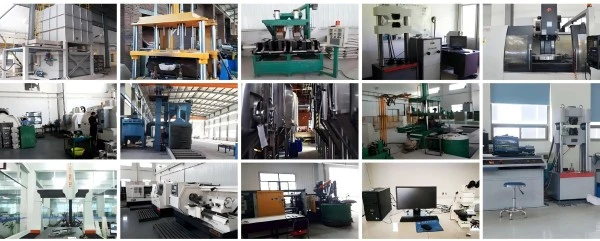
When BMW needed to produce 30,000 cylinder heads monthly for their N52 inline-six engine introduced in 2004, they selected gravity casting over alternatives like sand casting or high-pressure die casting. Their decision reflected the process's unique position in the manufacturing landscape: gravity casting delivers superior mechanical properties compared to high-pressure methods while offering better surface finish and dimensional accuracy than sand casting.
The controlled solidification inherent to gravity casting creates distinct microstructural advantages. Research published by the American Foundry Society in 2017 documented that properly executed gravity castings exhibit finer grain structures than their sand-cast counterparts, with dendritic arm spacing typically 30-50% smaller. This translates directly to improved tensile strength, typically 15-25% higher than equivalent sand castings. For critical aerospace components manufactured by companies like Honeywell, these mechanical property improvements justify the higher tooling costs.
Dimensional precision represents another significant advantage. While sand casting typically achieves tolerances of ±0.8mm, gravity casting routinely delivers ±0.3mm on most dimensions. Bosch's fuel system components facility in Brazil achieves even tighter tolerances—±0.15mm on critical surfaces—through careful mold design and temperature control. Because of its accuracy, this method often gets rid of or greatly reduces the need for extra machining, which saves a lot of money in the long run.
Production efficiency further distinguishes gravity casting in high-volume scenarios. A well-designed gravity casting operation can produce 40-60 castings per hour on a single mold, compared to 15-25 for comparable sand casting operations. When German pump manufacturer KSB shifted production of their impeller housings from sand to gravity casting in 2016, they reported cycle time reductions of 62% along with 27% lower rejection rates. For industries facing increasing cost pressures while demanding higher quality—particularly automotive, aerospace, and medical equipment—gravity casting often represents the optimal balance between cost, quality, and production volume.
New and old ideas come together in an interesting way to make gravity casting work. Measurements that are accurate, good mechanical properties, and low prices for making complicated metal parts are the best things about the process. The method keeps getting better. Using Earth's most basic energy and more advanced thermal management methods are two of these benefits.
The process's versatility explains its enduring presence across manufacturing sectors despite newer alternatives. Gravity casting flourishes particularly in applications requiring both strength and precision—from critical automotive components to medical device housings—where the balance of properties achievable through controlled gravitational filling and directional solidification creates unique advantages.
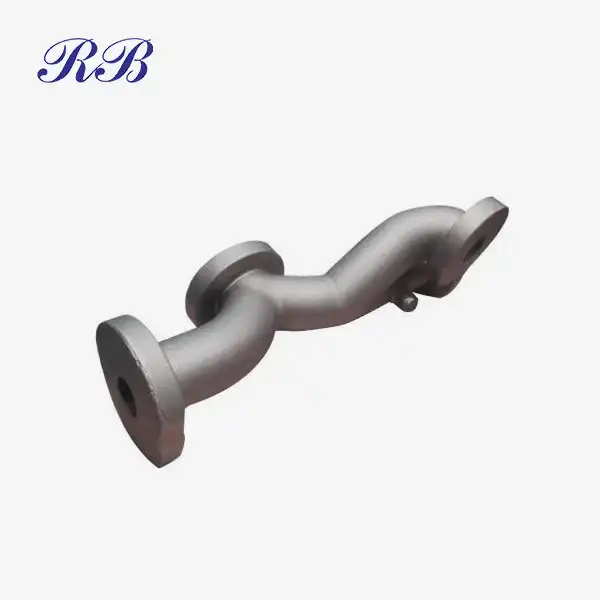
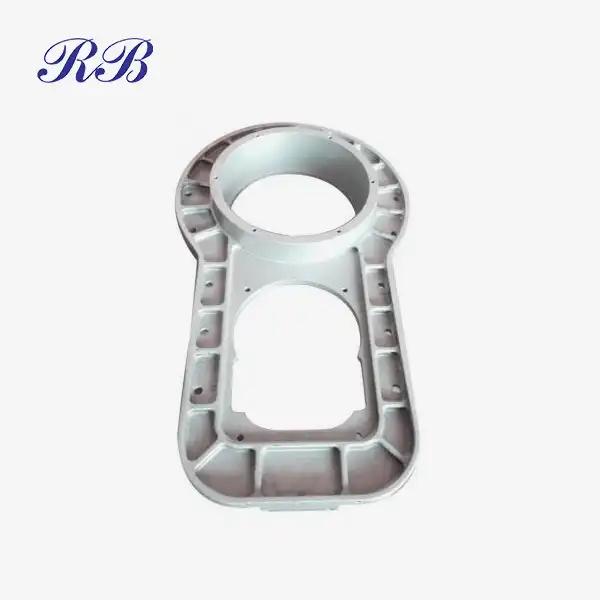
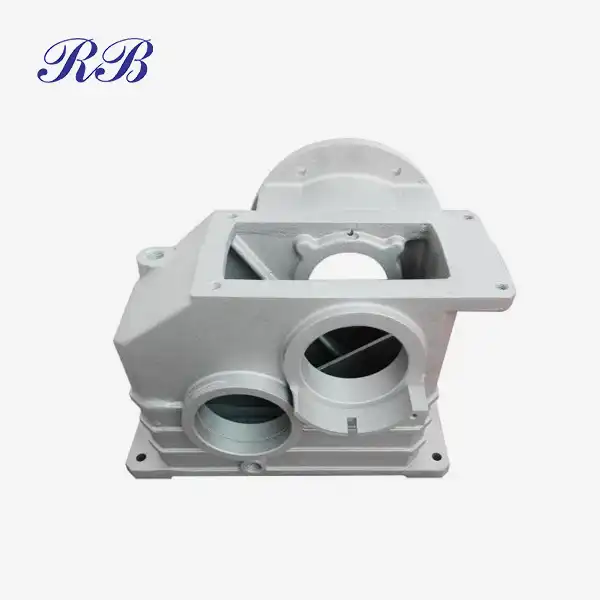
Rongbao has been a leader in gravity casting technology for many years, and we're especially good at making custom metal parts for tough jobs. As part of our production, we can make custom flanges for a wide range of industrial uses, threaded floor flanges for food machinery, lamp holders, coupling flanges for telecommunications equipment, and special stainless steel flanges for fire protection systems. For inquiries about your specific gravity casting requirements or to request free samples of our work, contact us at steve.zhou@263.net or zhouyi@rongbaocasting.com.
References
1. Campbell, J. (2015). Complete Casting Handbook: Metal Casting Processes, Metallurgy, Techniques and Design. Butterworth-Heinemann.
2. Stefanescu, D. M. (2008). Science and Engineering of Casting Solidification (2nd ed.). Springer.
3. ASM International. (2017). ASM Handbook, Volume 15: Casting. Materials Park, OH: ASM International.
4. Flemings, M. C. (1991). Solidification Processing. McGraw-Hill Education.
5. American Foundry Society. (2019). Aluminum Casting Technology (3rd ed.). Schaumburg, IL: AFS.
Learn about our latest products and discounts through SMS or email