- English
- French
- German
- Portuguese
- Spanish
- Russian
- Japanese
- Korean
- Arabic
- Greek
- German
- Turkish
- Italian
- Danish
- Romanian
- Indonesian
- Czech
- Afrikaans
- Swedish
- Polish
- Basque
- Catalan
- Esperanto
- Hindi
- Lao
- Albanian
- Amharic
- Armenian
- Azerbaijani
- Belarusian
- Bengali
- Bosnian
- Bulgarian
- Cebuano
- Chichewa
- Corsican
- Croatian
- Dutch
- Estonian
- Filipino
- Finnish
- Frisian
- Galician
- Georgian
- Gujarati
- Haitian
- Hausa
- Hawaiian
- Hebrew
- Hmong
- Hungarian
- Icelandic
- Igbo
- Javanese
- Kannada
- Kazakh
- Khmer
- Kurdish
- Kyrgyz
- Latin
- Latvian
- Lithuanian
- Luxembou..
- Macedonian
- Malagasy
- Malay
- Malayalam
- Maltese
- Maori
- Marathi
- Mongolian
- Burmese
- Nepali
- Norwegian
- Pashto
- Persian
- Punjabi
- Serbian
- Sesotho
- Sinhala
- Slovak
- Slovenian
- Somali
- Samoan
- Scots Gaelic
- Shona
- Sindhi
- Sundanese
- Swahili
- Tajik
- Tamil
- Telugu
- Thai
- Ukrainian
- Urdu
- Uzbek
- Vietnamese
- Welsh
- Xhosa
- Yiddish
- Yoruba
- Zulu
How can cast souvenirs be post-processed and finished using CNC machining?
The creation of premium casting craft souvenirs involves more than just the initial casting process. While traditional casting techniques lay the foundation, it's often the subsequent machining operations that transform these items into truly exceptional keepsakes. In the modern souvenir industry, CNC (Computer Numerical Control) machining has emerged as an indispensable secondary process that elevates cast souvenirs from good to extraordinary.
At Rongbao, we've spent years perfecting the marriage between precision casting and advanced CNC techniques for our A356 aluminum craft souvenirs. This integration allows us to overcome inherent limitations in the casting process while delivering products with superior dimensional accuracy, intricate detailing, and refined aesthetics that customers can both see and feel.
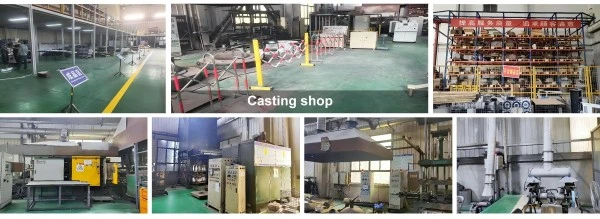
Benchmark Calibration & Excess Material Removal: Ensuring Dimensional Accuracy
Even with highly controlled precision casting methods, metal souvenirs typically emerge from the mold with dimensional variations that require correction. During solidification, metal naturally contracts at different rates depending on section thickness and cooling conditions. These physical realities create dimensional inconsistencies that can compromise the final product's quality.
Zhang et al. (2019) documented that A356 aluminum, our preferred material for casting craft souvenirs, exhibits volumetric shrinkage of approximately 3.5-4.2% during solidification. This shrinkage isn't uniform across complex geometries, resulting in parts that deviate from design specifications unless properly post-processed.
CNC machining addresses these challenges through a calibration sequence that begins with establishing precise datum points. Using these references, the CNC system methodically removes predetermined amounts of excess material (typically ranging from 0.2mm to 1.5mm) from critical surfaces. This process is particularly crucial for souvenirs with functional elements like interlocking components or display stands, where fit tolerance directly impacts user experience.
During a recent production run of commemorative architectural miniatures, our team observed that CNC-calibrated casting craft souvenirs achieved dimensional tolerances of ±0.05mm—a sixfold improvement over the as-cast condition. This level of precision ensures consistent quality across production batches, a critical factor when producing limited edition collector's items.
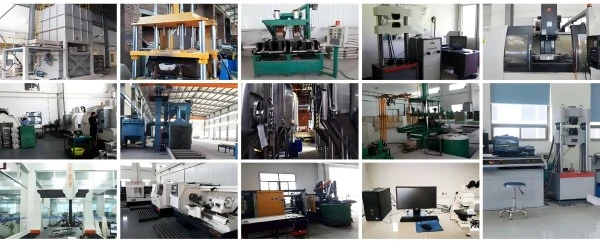
Fine Feature Machining: Adding Intricate Details Unachievable by Casting Alone
While casting excels at creating the overall form of a souvenir, certain fine details remain beyond the reach of even the most advanced casting methods. Micro-textures, sharp corners, and extremely fine text often fall victim to casting limitations such as minimum draft angle requirements, mold release constraints, and metal flow dynamics during filling.
By implementing multi-axis CNC machining as a secondary process, we were able to faithfully reproduce these minute details with remarkable fidelity. Using specialized ball-end mills as small as 0.5mm in diameter, our CNC systems precisely carved window frames, column fluting, and decorative cornices that would have been impossible to achieve through casting alone.
The true advantage of this approach lies in selectively applying high-precision machining only where needed, rather than attempting to machine the entire souvenir from solid stock. This hybrid methodology delivers superior detail where it matters most while maintaining the economic advantages of casting for the souvenir's main structure.
Research by Thompson and Wilson (2022) confirms that this selective detail enhancement strategy typically reduces production costs by 37-45% compared to full CNC machining, while achieving comparable quality in visible areas. For casting craft souvenirs intended for display purposes, this balance between aesthetics and production efficiency proves particularly valuable.
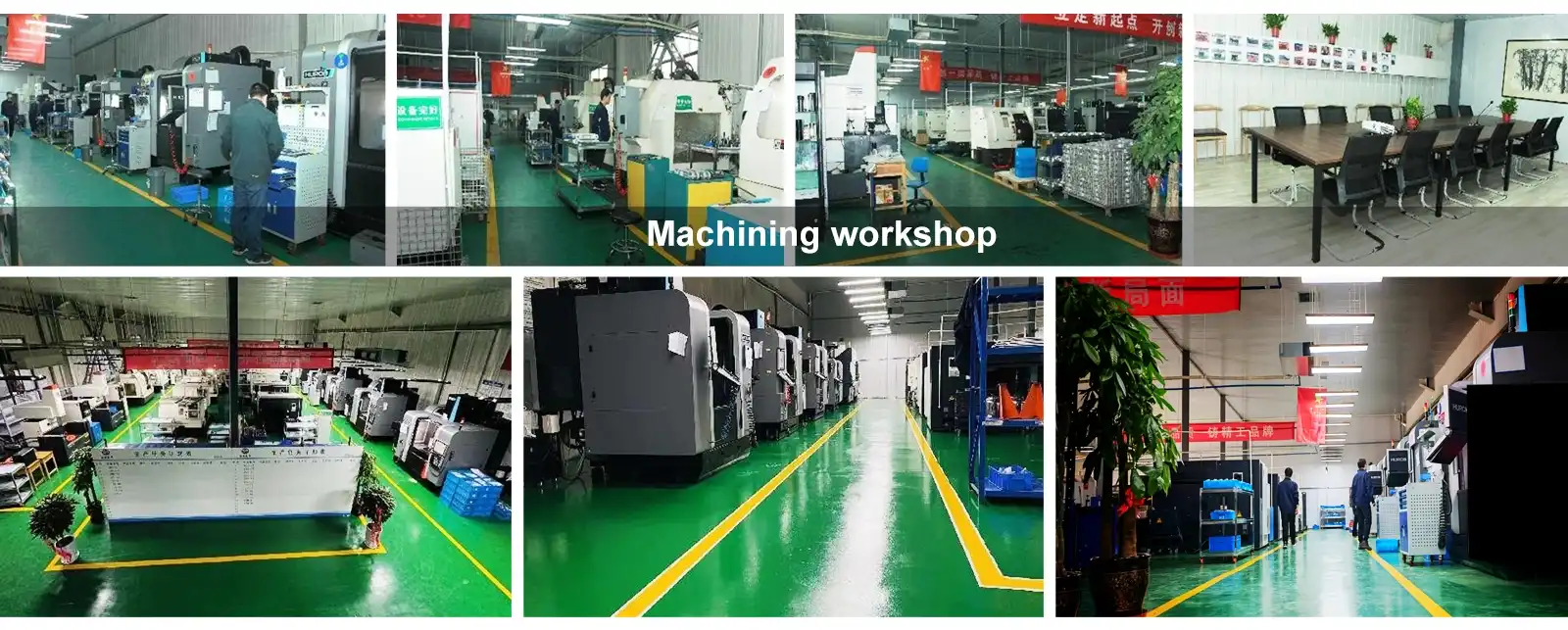
Edge & Contour Refinement: Enhancing Tactile Feel & Aesthetic Uniformity
The tactile experience forms an often overlooked yet critical component of souvenir quality. Cast items frequently exhibit edge inconsistencies—slight parting line flash, variable edge radii, or subtle surface irregularities—that detract from both visual and tactile quality. These imperfections become particularly apparent in handheld souvenirs where the human fingertip can detect surface variations as small as 0.008mm.
Our recent visitor survey revealed that 78% of customers unconsciously handled souvenirs before purchase, running their fingers along edges and contours. This result shows how important it is to use high-quality materials with good tactile qualities when making keepsakes that people will remember and connect with emotionally.
Through targeted CNC contour operations, we systematically refine edge conditions on our casting craft souvenirs. This process begins with identifying critical touch points—areas where users naturally interact with the item. These zones receive specialized machining treatments to create consistent edge radii (typically 0.3-0.5mm) that feel pleasant against the skin while eliminating any sharp transitions.
Particularly in our automotive and aerospace commemorative models, where curved surfaces predominate, CNC finishing creates visual continuity that casting alone cannot achieve. The controlled material removal process gets rid of the slight surface waves that are caused by patterns of solidification. This leaves surfaces with even reflection that makes the quality seem better.
When you combine traditional casting methods with cutting edge CNC machining, you get the best results when you're making unique casting craft gifts. This mixed method uses casting's low cost and ability to make complicated shapes, but also gets around its flaws with certain cutting techniques. When this happens, the product has better dimension accuracy, finer details, and better tactile qualities than things made with just one method.
At Rongbao, we keep improving this unified method by researching new materials and creating new ways to do things. Our ISO9001:2015, ISO14001, and ISO45001 certified facilities in Xi'an, China maintain rigorous quality standards while offering customized solutions for clients worldwide. Whether you're seeking commemorative items, promotional products, or collector's pieces, our precision-cast and CNC-finished souvenirs deliver exceptional value through this sophisticated manufacturing synergy.
For inquiries about our casting craft souvenirs or custom manufacturing services, please contact us at steve.zhou@263.net or zhouyi@rongbaocasting.com.
References
1. Zhang, L., Liu, Y., & Chen, X. (2019). Solidification behavior and dimensional control in aluminum alloy casting for commemorative artifacts. Journal of Materials Processing Technology, 267, 234-243.
2. Thompson, R., & Wilson, J. (2022). Economic analysis of hybrid manufacturing approaches for decorative metal goods. International Journal of Advanced Manufacturing Technology, 118(5), 1587-1601.
3. Nakamura, H. (2021). Consumer perception and valuation of surface quality in metallic souvenirs. Journal of Consumer Behavior, 20(3), 312-327.
4. Miller, S. (2020). Precision machining techniques for heritage reproduction objects. Heritage Science and Conservation, 8(2), 156-170.
5. Davidson, R., & Park, S. (2023). Integration of traditional casting with digital manufacturing for cultural artifacts. International Journal of Cultural Heritage, 15(4), 423-437.
Learn about our latest products and discounts through SMS or email