- English
- French
- German
- Portuguese
- Spanish
- Russian
- Japanese
- Korean
- Arabic
- Greek
- German
- Turkish
- Italian
- Danish
- Romanian
- Indonesian
- Czech
- Afrikaans
- Swedish
- Polish
- Basque
- Catalan
- Esperanto
- Hindi
- Lao
- Albanian
- Amharic
- Armenian
- Azerbaijani
- Belarusian
- Bengali
- Bosnian
- Bulgarian
- Cebuano
- Chichewa
- Corsican
- Croatian
- Dutch
- Estonian
- Filipino
- Finnish
- Frisian
- Galician
- Georgian
- Gujarati
- Haitian
- Hausa
- Hawaiian
- Hebrew
- Hmong
- Hungarian
- Icelandic
- Igbo
- Javanese
- Kannada
- Kazakh
- Khmer
- Kurdish
- Kyrgyz
- Latin
- Latvian
- Lithuanian
- Luxembou..
- Macedonian
- Malagasy
- Malay
- Malayalam
- Maltese
- Maori
- Marathi
- Mongolian
- Burmese
- Nepali
- Norwegian
- Pashto
- Persian
- Punjabi
- Serbian
- Sesotho
- Sinhala
- Slovak
- Slovenian
- Somali
- Samoan
- Scots Gaelic
- Shona
- Sindhi
- Sundanese
- Swahili
- Tajik
- Tamil
- Telugu
- Thai
- Ukrainian
- Urdu
- Uzbek
- Vietnamese
- Welsh
- Xhosa
- Yiddish
- Yoruba
- Zulu
How big is the aluminum casting market?
The aluminium casting market has become a key part of modern production since it is lightweight, resistant to corrosion, and can be used in many other industries. The global market is growing quickly as of 2025. Trend towards sustainability, and rising demand from industries like automotive and aerospace due to new technologies.
Current Size and Growth Trajectory of the Aluminum Casting Market
The aluminum casting market has witnessed steady expansion over the past decade, with 2025 marking a pivotal year for its evolution. According to The Business Research Company, the market size grew from $69.78 billion in 2024 to $75 billion in 2025, reflecting a compound annual growth rate (CAGR) of 7.5%. This growth is projected to accelerate, with the market expected to reach $101.95 billion by 2029, driven by a CAGR of 8.0% .
The automobile industry is a key element of this growth because it accounts for more than half of the demand for aluminium casting. sections like engine blocks, gearbox housings, and structural sections rely on aluminium a lot since metal is strong and light, which makes cars more fuel-efficient and lowers emissions. For example, worldwide motor vehicle manufacturing hit 85.4 million units in 2022, up 5.7% from the year before. This shows how important the sector is for driving up aluminium casting demand.
Another critical segment propelling the aluminum casting market is the aerospace industry, where aluminum castings serve as indispensable components across a spectrum of high-performance applications. Beyond aircraft engine parts and airframes, they are integral to critical systems such as landing gear components, wing spars, cabin structural frames, and even precision parts in avionics and navigation systems. This versatility stems from aluminum's unique blend of properties: high strength-to-weight ratio, excellent corrosion resistance, and compatibility with advanced manufacturing processes, qualities non-negotiable in an industry where safety, fuel efficiency, and durability are paramount.
Aluminum castings play a pivotal role here: replacing heavier steel or iron components with aluminum alternatives can reduce an aircraft's overall weight by 15–20%, directly translating to 5–8% lower fuel burn per flight, according to data from the International Air Transport Association (IATA). For long-haul carriers operating fleets of 100+ aircraft, this translates to millions of dollars in annual fuel savings and significant reductions in greenhouse gas emissions'aligning with global mandates like the Carbon Offsetting and Reduction Scheme for International Aviation (CORSIA), which requires airlines to achieve carbon-neutral growth from 2020 onward.
Key Drivers Shaping the Aluminum Casting Industry
Lightweighting Trends in Transportation
The automotive and aerospace industries are putting lightweight materials at the top of their lists to meet strict emissions standards and improve energy efficiency. Aluminium castings are a good option since they may save the weight of a car by up to 30% compared to steel parts. For example, electric vehicles (EVs) require lightweight battery housings and structural frames to maximize battery range, driving demand for aluminum die casting.
Sustainability and Circular Economy Initiatives
Aluminum's recyclability is a major advantage in a world increasingly focused on sustainability. Over 75% of all aluminum ever produced is still in use today, making it one of the most recycled materials globally. Additionally, governments worldwide are incentivizing the use of recycled aluminum through policies like the EU's Circular Economy Action Plan, further boosting market growth.
Technological Advancements
Innovations in casting technologies, such as high-pressure die casting (HPDC) and 3D printing, are transforming the industry. HPDC enables the production of complex, high-precision components at scale, while 3D printing allows for rapid prototyping and customization. The aluminum 3D printing materials market is expected to grow from $1.25 billion in 2024 to $3.45 billion by 2033, driven by applications in aerospace and automotive.
Infrastructure and Industrial Expansion
Emerging economies, particularly in the Asia-Pacific region, are investing heavily in infrastructure and industrialization, driving demand for aluminum castings in construction and machinery. For example, the Indian government's focus has shifted to the infrastructure sector, where projects like road expansions and renewable energy installations are driving up aluminium use. China is also an important market for aluminium casting growth because it is the world's largest producer of primary aluminium, making 41 million metric tonnes in 2024.
Regional Market Analysis and Future Projections
Asia-Pacific: The Growth Engine
Asia-Pacific leads the global aluminum casting market, accounting for 45% of revenue share in 2025. China, the region's largest market, benefits from its robust automotive and electronics industries. The country's aluminum casting market is projected to grow at a CAGR of 5.7% from 2025 to 2034, driven by EV production and renewable energy projects. India is also emerging as a significant player, with its aluminum casting market expected to grow by 660.88 thousand tons between 2021 and 2026, fueled by automotive demand and lightweighting trends.
North America and Europe: Innovation and Regulation
North America, the second-largest market, is driven by advancements in EV manufacturing and strict emission standards. The U.S. automotive industry, for example, must comply with Corporate Average Fuel Economy (CAFE) standards requiring passenger cars to achieve 54.5 miles per gallon by 2026, incentivizing aluminum adoption. Europe, meanwhile, focuses on sustainability and circularity, with policies like the EU’s Carbon Border Adjustment Mechanism (CBAM) pushing manufacturers to adopt recycled aluminum.
Challenges and Opportunities
While the aluminum casting market is thriving, it faces challenges such as raw material price volatility and competition from alternative materials like magnesium alloys. However, these challenges are offset by opportunities in additive manufacturing and emerging markets. For instance, 3D printing is enabling the production of intricate components for niche industries like medical devices and defense.

About Rongbao Enterprise
The aluminum casting market is poised for significant growth in 2025 and beyond, driven by lightweighting trends, sustainability initiatives, and technological advancements. As the world transitions to a greener and more efficient future, aluminum casting will remain a cornerstone of modern manufacturing.
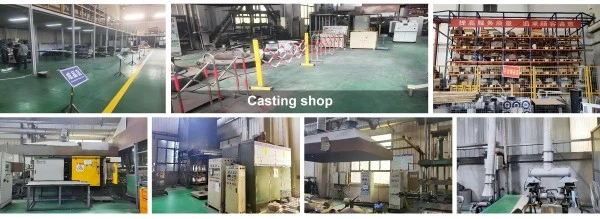
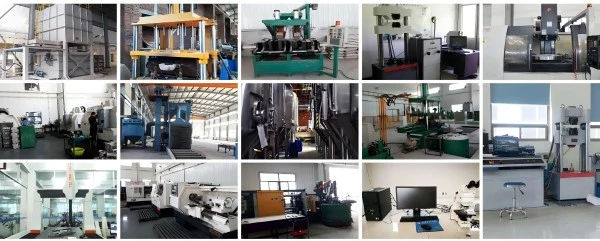
As such, there is an ever-growing demand for specialized aluminum casting firms as organizations are intent on high quality. Casting and precision processing firms like Rongbao Enterprise, founded in 2003, which specializes in aluminum alloy casting, serve as an example. The firm provides comprehensive components solutions with advanced precision processing and casting, steadily increasing precision and quality throughout the manufacturing process.
Contact Information:
For expert consultation on aluminum alloy casting solutions, contact Rongbao Enterprise:
Email: zhouyi@rongbaocasting.com
Email: steve.zhou@263.net
References
- Grand View Research. (2024). "Aluminum Casting Market Size, Share & Trends Analysis Report." Industry Analysis Report.
- Research and Markets. (2024). "Global Aluminum Casting Market Analysis and Forecast 2024-2030." Market Research Report.
- Allied Market Research. (2024). "Aluminum Casting Market Size, Share & Industry Forecast." Market Analysis Report.
- Precedence Research. (2025). "Aluminum Casting Market Size and Forecast 2025-2034." Industry Report.
- Fact.MR. (2023). "Aluminum Castings Market Share and Statistics Analysis." Market Intelligence Report.

Learn about our latest products and discounts through SMS or email