- English
- French
- German
- Portuguese
- Spanish
- Russian
- Japanese
- Korean
- Arabic
- Greek
- German
- Turkish
- Italian
- Danish
- Romanian
- Indonesian
- Czech
- Afrikaans
- Swedish
- Polish
- Basque
- Catalan
- Esperanto
- Hindi
- Lao
- Albanian
- Amharic
- Armenian
- Azerbaijani
- Belarusian
- Bengali
- Bosnian
- Bulgarian
- Cebuano
- Chichewa
- Corsican
- Croatian
- Dutch
- Estonian
- Filipino
- Finnish
- Frisian
- Galician
- Georgian
- Gujarati
- Haitian
- Hausa
- Hawaiian
- Hebrew
- Hmong
- Hungarian
- Icelandic
- Igbo
- Javanese
- Kannada
- Kazakh
- Khmer
- Kurdish
- Kyrgyz
- Latin
- Latvian
- Lithuanian
- Luxembou..
- Macedonian
- Malagasy
- Malay
- Malayalam
- Maltese
- Maori
- Marathi
- Mongolian
- Burmese
- Nepali
- Norwegian
- Pashto
- Persian
- Punjabi
- Serbian
- Sesotho
- Sinhala
- Slovak
- Slovenian
- Somali
- Samoan
- Scots Gaelic
- Shona
- Sindhi
- Sundanese
- Swahili
- Tajik
- Tamil
- Telugu
- Thai
- Ukrainian
- Urdu
- Uzbek
- Vietnamese
- Welsh
- Xhosa
- Yiddish
- Yoruba
- Zulu
How are aluminum door handles manufactured?
A 400-ton transport truck stops in the wide, dusty space of an open-pit mine. The driver gets out and swings the cab door shut by holding on to the heavy-duty handle. This easy task depends on a part that has to be able to handle a lot of vibration, severe temperatures, and regular use. The aluminum door handle that connects the body of the mine truck to the door is not something you can buy at a hardware store. It is a piece of very precise engineering.
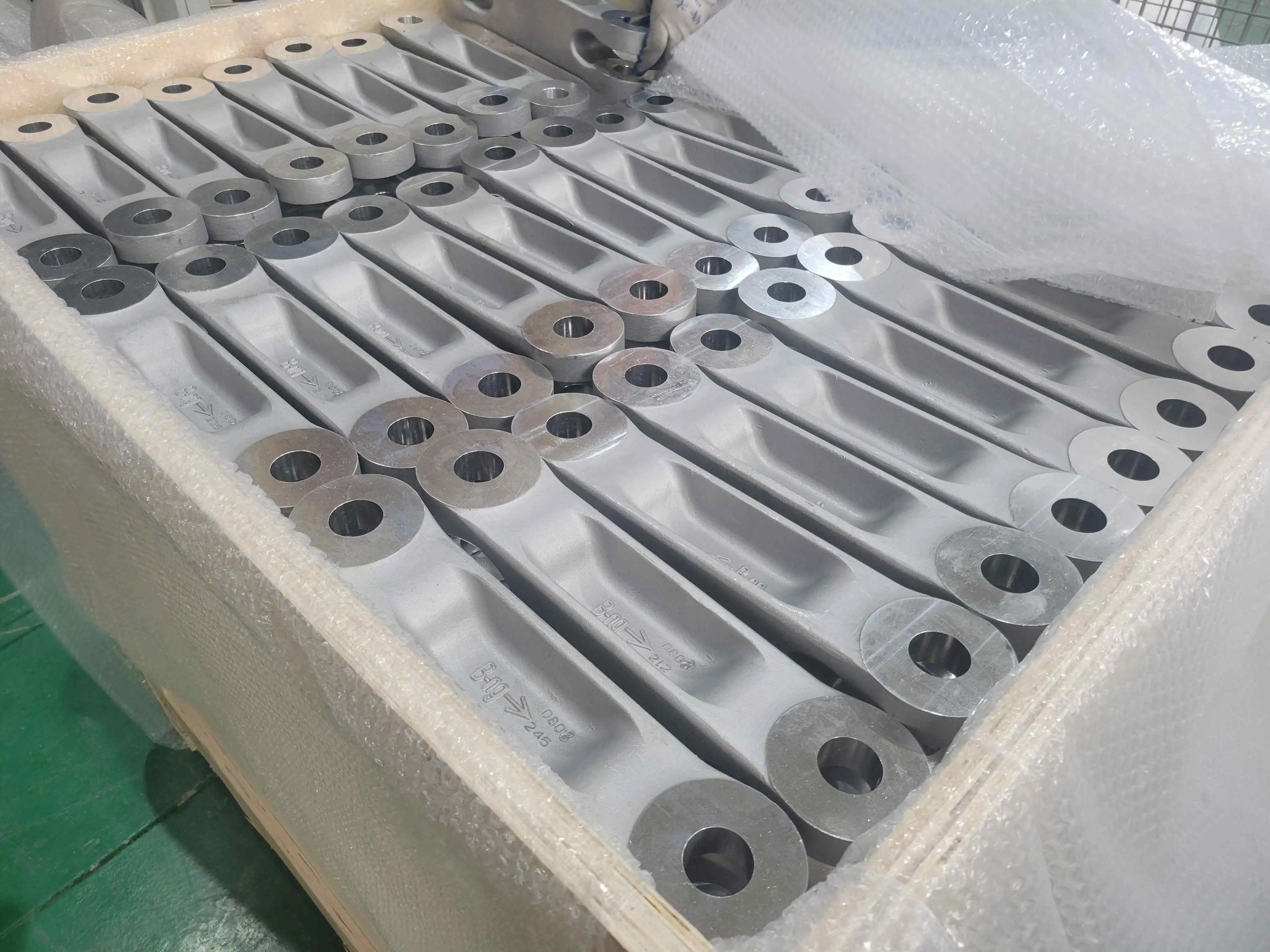
People who buy and work with aluminum door knobs sometimes wonder, "How are they made?" The response shows why these parts are so important for safety and efficiency. Industrial handles, on the other hand, need to be made in a way that puts structural integrity above all else. Every step, from choosing high-quality alloys to using innovative casting methods, makes sure that the handle won't break when it matters most.
The Science Behind Low Pressure Casting Technology
Manufacturers use Low Pressure Die Casting (LPDC) to make aluminum door handles that can stand up to the harsh conditions of a mine. This procedure is very different from high-pressure die casting or gravity casting. In LPDC, the mold is above the furnace. We put air into the furnace, which slowly forces the melted aluminum up a riser tube and into the mold cavity. This small adjustment in how the metal is "pushed" uphill makes a big impact in the ultimate quality.
Eliminating Porosity for Structural Strength
Casting is a huge problem because tiny air pockets can form inside the metal, which makes it weaker. In high-pressure casting, molten metal is quickly poured into the mold. This might trap air or generate turbulence, which can make holes in the metal. Low pressure casting tackles this problem by gently filling the mold, which keeps the flow smooth and laminar. This controlled rise of metal keeps the air from becoming stuck and keeps the turbulence down. This makes the inside of the handle even and dense, which makes it exceptionally sturdy and long-lasting. It can be employed in tough situations, as when car parts are in a dangerous place.
The Importance of AA601 Alloy
The type of alloy used is important for the success of low-pressure casting. This process works well with AA601 (AlSi7Mg). This aluminum-silicon-magnesium alloy is both robust and easy to cast. Silicon helps the metal flow better, so it can fill in small details in molds without making mistakes. Magnesium makes the metal tougher and harder when it is under stress. AA601 also reacts well to heat treatment, which helps you modify the microstructure to acquire the optimal strength and durability. Manufacturers make a high-performance item by heating the cast handles. This part is made of lightweight aluminum and has the structural strength needed for difficult jobs. This lets them switch out heavier steel pieces without compromising dependability.
From Molten Alloy to Precision Engineering
Making a heavy-duty handle requires a lot of different thermal and mechanical processes to work together. When the AA601 alloy melts, the low-pressure machine starts its cycle. The metal fills the mold chamber, which makes the handle's complicated design, including the comfortable grip and strong mounting points. The pressure is kept on until the metal hardens, which makes sure that the part feeds correctly and doesn't shrink.
Refining the Shape with CNC Machining
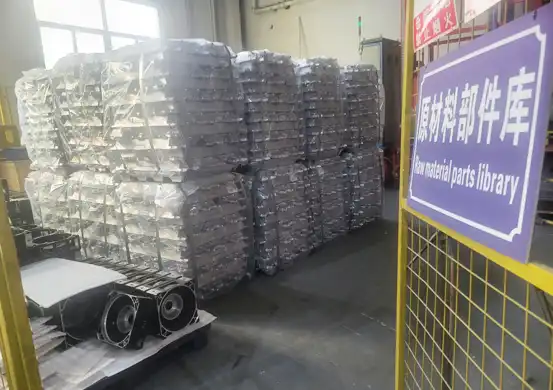
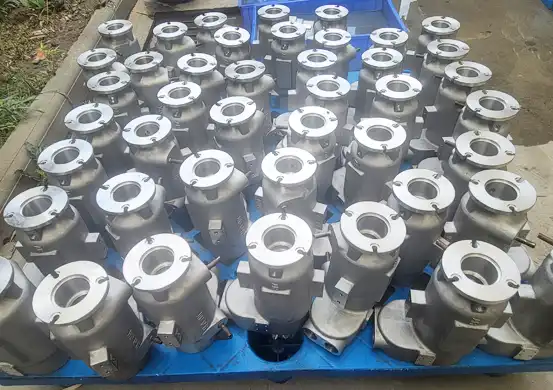
After the low-pressure casting process, the handle comes out with a solid but rough shape that follows the mold's shape exactly but needs to be improved for it to work properly. At this point, CNC machining is very important to get the right sizes and tolerances. Carefully drilled and machined holes for fasteners, mounting surfaces, and other connections make sure that everything lines up perfectly with the vehicle body. Even little changes of a millimeter could make things not fit right, which could lead to early wear or structural failure under large loads. CNC machines make sure that every item is always the same size and shape, so that every aluminum door handle fits properly on mine trucks. This means that there is no need to make any changes during assembly.
Surface Treatment for Longevity
After machining, surface treatment makes the handle survive longer, which is important in mining where wear, corrosion, and fatigue are common. Small, round media are shot at the aluminum surface at great speed in shot blasting. This method gets rid of any casting imperfections that are still there and makes the surface look smooth and matte. More importantly, it puts beneficial compressive stress on the surface, which is known as peening. The compressive layer makes the handle far more resistant to wear and tear, so it won't break or wear out as soon. This method, together with the intrinsic strength of AA601 alloy, makes sure that every aluminum door handle may stay in good shape even when it is put under a lot of stress.
Quality Assurance in Extreme Environments
Verification is an important part of manufacturing. If a part of a mine truck breaks, it might cost thousands of dollars an hour to fix. As a result, quality control is a part of every step of making aluminum door handles. We don't just look at the part; we look inside it.
Non-Destructive Testing
Non-destructive testing is an important step in making sure that aluminum door handles are safe and reliable for use in mining. Engineers utilize X-ray inspection a lot to look at the inside of low-pressure cast parts. This lets them find hidden porosity, cavities, or other flaws that could weaken the item. Also, tensile testing is done on sample batches to make sure that the heat-treated AA601 alloy fulfills exact mechanical standards for yield strength, elongation, and hardness. These tests make sure that every handle can bear heavy loads, vibration, and stress from the outside world. Only parts that pass these strict checks are allowed to be used, which guarantees that they will work even in the most difficult conditions.
Meeting International Standards
For manufacturing to be reliable and trustworthy, it is vital to meet international standards. We keep a watch on every step of production, from melting the alloy to putting it in the final box, using strict quality management systems like ISO9001:2015. This makes sure that each step can be repeated, measured, and traced, so the 100th handle is just as nice as the first. Standardized methods lower the risk of human error and provide purchasers confidence that the product will operate properly, even in difficult mining conditions. Following these worldwide standards indicates that you are competent and reliable, which helps suppliers build long-term relationships with customers who need parts that can survive extreme conditions without breaking.
Aluminum Door Handle Supplier: Rongbao Enterprise
At Rongbao Enterprise, we understand that a door handle is more than just a piece of metal—it is a critical touchpoint for operator safety. We specialize in manufacturing high-performance aluminum door handles specifically for mine truck body door connections. Our process begins with premium AA601 alloy and utilizes advanced low-pressure casting to ensure a defect-free, 3.5kg component designed to last.
We use this strong casting technique along with accurate CNC mechanical processing and shot blasting surface treatments to provide a product that is better than what the industry expects. Our Xi'an, China, facility is accredited to ISO9001:2015, ISO14001, and ISO45001 standards, which show that we care about quality, the environment, and the health of our workers. We can make 20,000 pieces and fully customize them to match your fleet's needs.
Ensure the safety and reliability of your fleet with our engineered solutions.
Contact us today regarding your inquiry:
Email: steve.zhou@263.net or zhouyi@rongbaocasting.com
FAQ
Q1: Why is low-pressure casting better than sand casting for door handles?
A: Low-pressure casting produces a much smoother surface finish and tighter dimensional tolerances than sand casting. More importantly, it creates a denser part with fewer internal defects (porosity), providing the structural integrity required for safety-critical applications like mine truck handles.
Q2: Can the aluminum door handle be customized for different truck models?
A: Yes. The mold design process allows for customization. Because the final shape is refined via CNC machining, mounting points and specific dimensions can be adjusted to fit various truck body specifications. OEM and ODM services are a core part of the manufacturing capability.
Q3: Does the AA601 alloy require painting to prevent rust?
A: Aluminum does not rust like steel; it oxidizes, which actually forms a protective layer. However, the shot blasting process provides an excellent surface for painting or powder coating if additional aesthetic or environmental protection is desired. The alloy itself is inherently resistant to corrosion.
References
1. The Aluminum Association. (2024). Design and Production of Aluminum Castings. Arlington, VA: The Aluminum Association.
2. ASM International. (2023). Casting Design and Performance. Materials Park, OH: ASM International.
3. Campbell, J. (2003). Castings: The New Metallurgy of Cast Metals. Butterworth-Heinemann. (Detailed analysis of low-pressure vs. gravity casting).
4. Kaufman, J. G. (2000). Introduction to Aluminum Alloys and Tempers. ASM International. (Properties of Al-Si-Mg alloys like AA601).
5. Society of Automotive Engineers (SAE). (2025). Heavy Duty Vehicle Body Attachments: Materials and Testing Standards. SAE Technical Papers.

Learn about our latest products and discounts through SMS or email