- English
- French
- German
- Portuguese
- Spanish
- Russian
- Japanese
- Korean
- Arabic
- Greek
- German
- Turkish
- Italian
- Danish
- Romanian
- Indonesian
- Czech
- Afrikaans
- Swedish
- Polish
- Basque
- Catalan
- Esperanto
- Hindi
- Lao
- Albanian
- Amharic
- Armenian
- Azerbaijani
- Belarusian
- Bengali
- Bosnian
- Bulgarian
- Cebuano
- Chichewa
- Corsican
- Croatian
- Dutch
- Estonian
- Filipino
- Finnish
- Frisian
- Galician
- Georgian
- Gujarati
- Haitian
- Hausa
- Hawaiian
- Hebrew
- Hmong
- Hungarian
- Icelandic
- Igbo
- Javanese
- Kannada
- Kazakh
- Khmer
- Kurdish
- Kyrgyz
- Latin
- Latvian
- Lithuanian
- Luxembou..
- Macedonian
- Malagasy
- Malay
- Malayalam
- Maltese
- Maori
- Marathi
- Mongolian
- Burmese
- Nepali
- Norwegian
- Pashto
- Persian
- Punjabi
- Serbian
- Sesotho
- Sinhala
- Slovak
- Slovenian
- Somali
- Samoan
- Scots Gaelic
- Shona
- Sindhi
- Sundanese
- Swahili
- Tajik
- Tamil
- Telugu
- Thai
- Ukrainian
- Urdu
- Uzbek
- Vietnamese
- Welsh
- Xhosa
- Yiddish
- Yoruba
- Zulu
How 500-Bar Pressure Testing Guarantees Casting Accessories Reliability in Gas Systems?
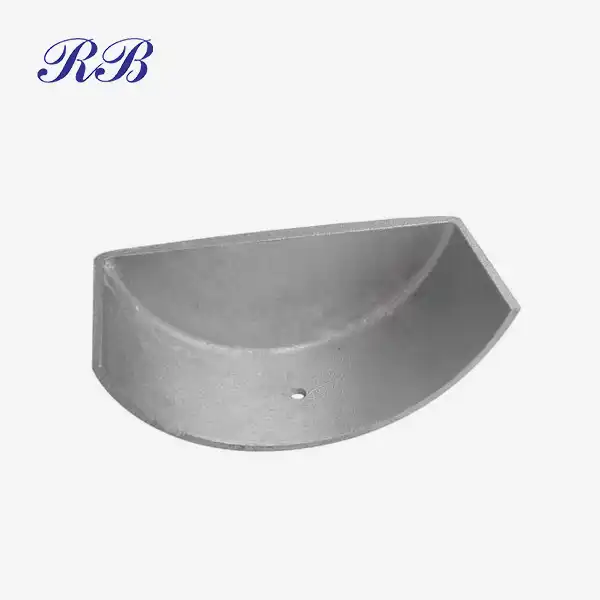
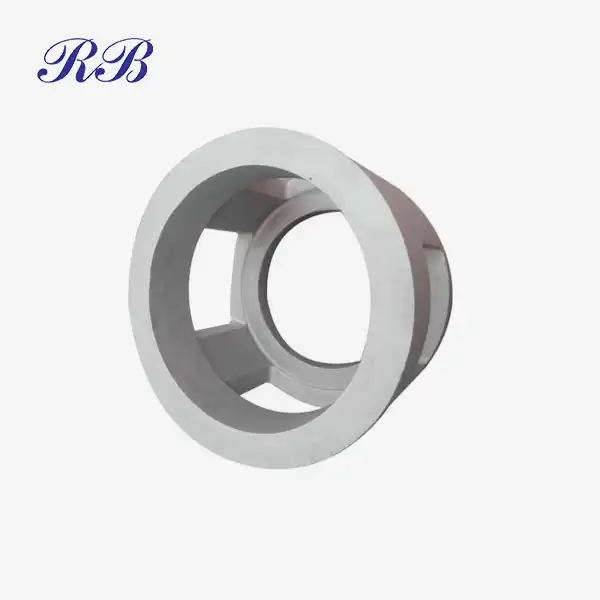
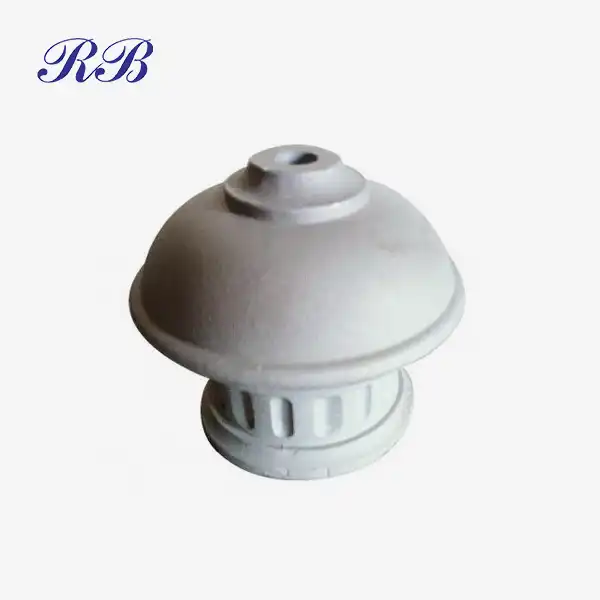
When it comes to gas systems, the stakes are simply too high to cut corners. Casting accessories—the aluminum alloy housings, valve bodies, and protective enclosures that hold gas infrastructure together—must perform flawlessly under punishing conditions. At Rongbao Enterprise, we subject our A380 aluminum die-cast components, including natural gas control valve housings, to 500-bar pressure testing before they ever leave our facility in Xi'an, China. This rigorous protocol verifies structural integrity, seal performance, and dimensional accuracy, giving procurement engineers and OEM partners the documented assurance they need to approve components with confidence.
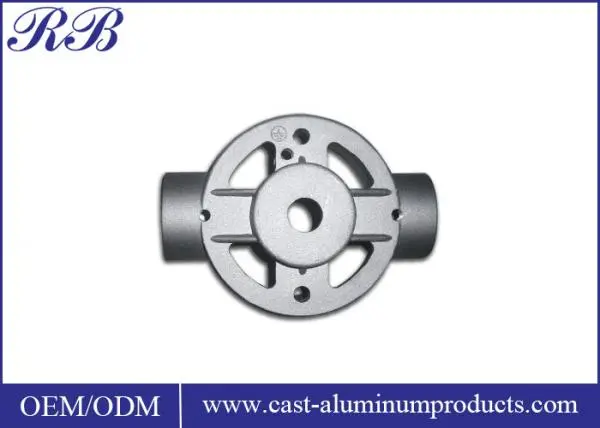
Challenges in Ensuring Casting Accessory Reliability
There are times when even a well-designed aluminium casting accessory has secret flaws. One of the most common flaws in high-pressure die casting is micro-porosity, which are tiny holes that form when the metal hardens. A 2019 study in the Journal of Materials Processing Technology found that A380 aluminium alloy casts with deep porosity had up to 23% less burst-pressure performance than specimens that did not have any defects. The problem is made worse by temperature cycling. Gas control environments often go from -20 °C to +80 °C, and this causes repeated thermal stress that can open tiny cracks that can't be seen with the naked eye.
Corrosion makes the risk even greater. Hardware used to distribute natural gas is often subject to water, hydrogen sulphide, and mechanical stress. If the sealing quality isn't checked, a valve body that looks fine on the production line could start to leak slowly within months of being installed. These are not just made up situations; the U.S. Pipeline and Hazardous Materials Safety Administration (PHMSA) reported 122 major gas distribution incidents in 2022 alone, and some of them were linked to failed components.
When procurement teams understand these ways of failing, it's clear why they can't just rely on dimensional inspection or low-pressure air tests. It is important that the validation method be adjusted to work in the real world.
The Role of 500-Bar Pressure Testing in Quality Assurance
In 500-bar pressure testing, hydraulic pressure (about 7,250 psi) is applied to a covered casting accessory while sensors record how the pressure drops over a set amount of time. A drop in pressure shows a leak path, whether it's because of holes, a wall that isn't full, or a threaded interface that isn't working right. The test pressure is much higher than the highest pressure that most gas delivery parts can handle. This makes a real safety margin instead of a simple pass/fail level.
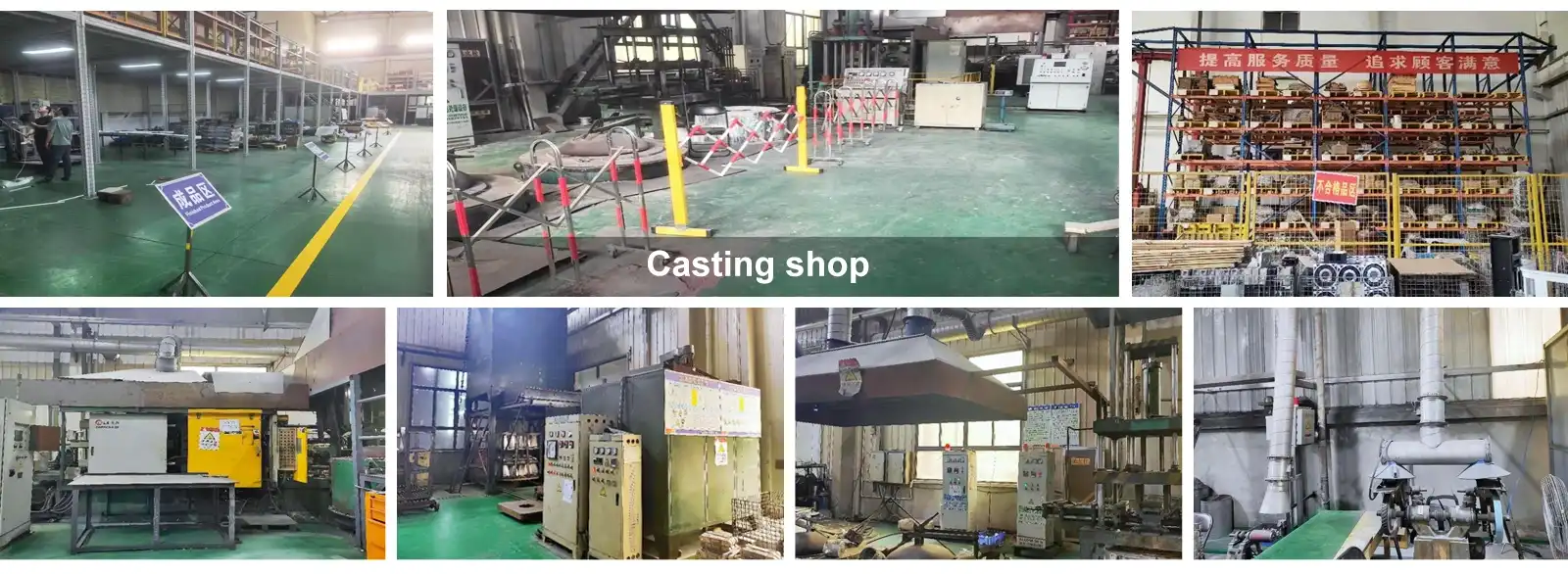
Before the pressure test starts at our plant, the CNC-machined sealing surfaces on each valve body are checked. External surfaces that have been shot-blasted are checked for visual problems. The part is then slowly pressed down on until it reaches its highest point of pressure, and it is digitally watched. This order follows the rules set out in ISO 10474 and EN 12266-1, which are two well-known international standards for checking industrial valves and moulds under pressure.
A standard 10-bar air leak test can find flaws that are at least ten times bigger than those found by 500-bar hydraulic testing. That difference is very important when casting accessories will be in a natural gas control system for years and a small mistake today could become a rupture tomorrow.
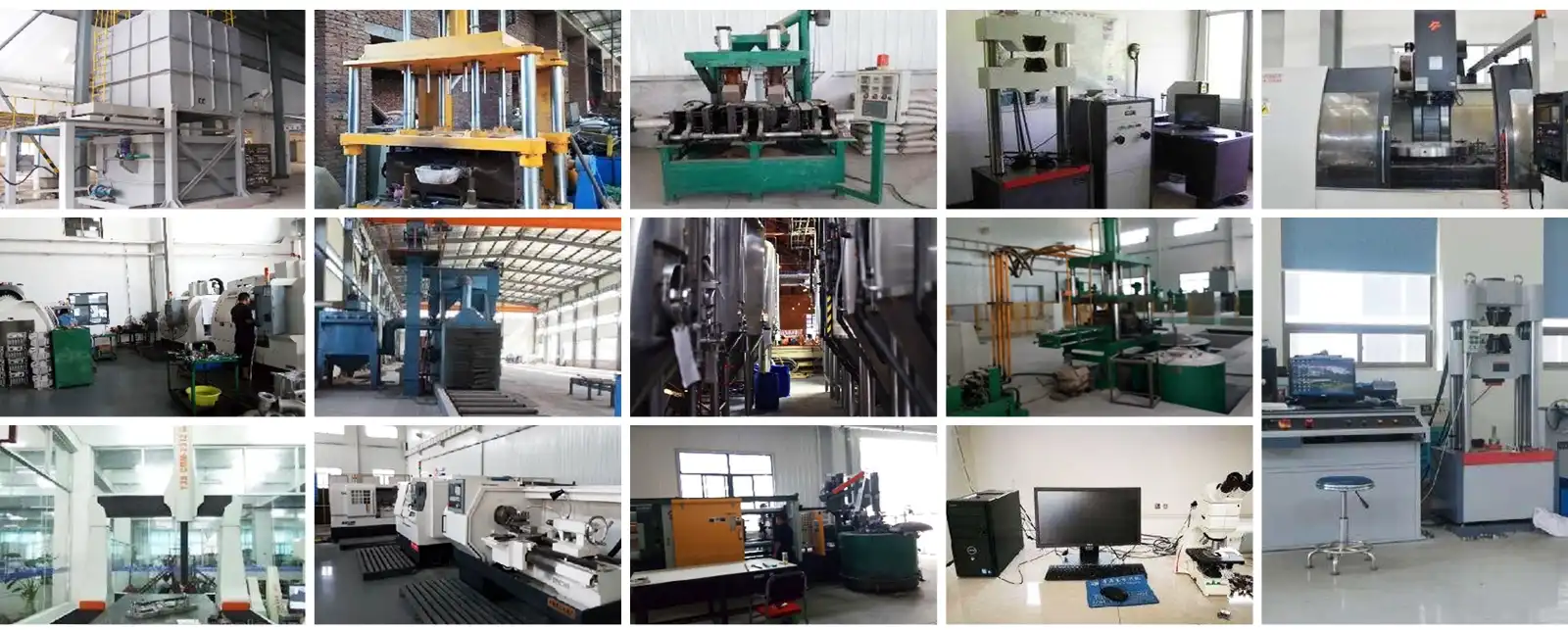
Key Benefits of 500-Bar Pressure Testing for Gas System Components
This testing standard has many useful benefits that go beyond regulatory checkboxes. When purchase experts and OEM partners use 500-bar-validated parts, they always list these main benefits:
- Traceable safety compliance: Every tested piece generates a pressure-decay record linked to its batch number, giving quality managers documentary evidence for ISO 9001:2015 audits and customer inspections. Our certifications—ISO 9001:2015, ISO 14001, and ISO 45001—mean this documentation integrates seamlessly into existing supplier approval workflows.
- Reduced field warranty costs: Components that clear a 500-bar hydrostatic threshold demonstrate a dramatically lower probability of in-service leakage. For OEMs assembling gas alarm control panels or meter protective enclosures, fewer warranty returns translate directly into margin protection.
- Optimized maintenance intervals: Verified pressure integrity data supports predictive maintenance modeling. Engineers can schedule inspections based on actual performance data rather than conservative conservative blanket intervals, reducing operational downtime.
There is a constant worry among security device makers that their products might fail an explosion-proof test because the seal integrity wasn't checked by a third party. These benefits take away that worry. When your aluminium housing passes 500 bars in our test bay, it gives your IP65 and Ex d IIB T6 certifications a much better base.
These things don't just happen by chance. They are made by putting them through a lot of tests, using the right metal (A380), and using precise CNC cutting to keep the sealing surface tolerances at or below 0.05 mm.
Integrating 500-Bar Pressure Testing into Your Procurement Process
Defining Component-Specific Acceptance Criteria
Integration that works well starts with the design phase. Our engineering team works with OEM clients to figure out the fastest pressure loss that is allowed for each shape before the mould is cut. Acceptance limits are different for a meter cover with thin walls and a valve body with thick walls. Putting these criteria in the drawing package instead of just agreeing to them verbally stops disagreements later on and speeds up the approval process for the prototype.
Selecting and Qualifying Suppliers
Not all casting accessories suppliers have a hydraulic test bench that can handle 500 bars of pressure. Procurement managers should ask vendors for written test methods, calibration certificates for pressure transducers, and sample test results from recent production runs when they are reviewing vendors. Rongbao Enterprise keeps its test tools adjusted and stores test records in a quality management system that can be tracked, as required by ISO 9001:2015.
A cost-benefit analysis always shows that more money should be spent up front on testing. A 2021 study in Quality Progress magazine found that the average cost of a field-failure recall in the industrial valve sector is between $50,000 and over $500,000. This includes the cost of labour, risk, and the damage to the company's image. A pressure test only adds a small amount to that cost per part.
Future Trends in Casting Accessory Testing for Gas Systems
The world of testing is changing quickly. Non-destructive testing methods, like computed tomography (CT) scans, can now be used with hydraulic testing to map the casting accessories' internal porosity in three dimensions without damaging it. NDT & E International published a study that showed that CT scanning could find porosity clusters in aluminium die castings more precisely than radiographic film.
IoT-enabled pressure sensors are starting to show up on production test rigs. These sensors send real-time decay curves to cloud dashboards, where AI algorithms look for problems before a human reader even opens the report. These features cut down on the return loop between the test bench and the casting cell, which lets you fix problems more quickly when a process goes off track. At Rongbao Enterprise, we keep buying new equipment to keep up with these changes and help clients whose end markets, mostly in Europe and North America, are making it harder to get performance documentation every year.
Conclusion
Pressure testing at 500 bars is not a small improvement in quality; it is a major change in how the dependability of casting accessories is proven. For companies that make gas safety devices, warning enclosures and natural gas control hardware, choosing a provider that does this level of testing takes away a key unknown from the licensing process. Rongbao Enterprise has 20 years of experience with high-pressure die-casting, knowledge of A380 alloys, precise CNC machining, and a quality management system that has been triple-certified. They consistently deliver parts that meet this standard. When dependability is a must, the safety margin your customers experience is determined by the test protocol you choose during the purchase stage.
FAQ
Does 500-bar pressure testing apply to all aluminum casting geometries?
The process works for any closed-cavity part that needs to be sealed properly for it to work. Gas valve bodies, junction boxes and meter covers that are meant to be used in pressurised settings should always be tested hydrostatically at or above their maximum allowed working pressure with a useful safety multiplier. Thin-walled decorative housings may use lower-pressure versions.
How often should pressure testing be conducted across a component's lifecycle?
For safety-critical gas uses, production lot testing—which includes every batch instead of just a few samples every so often—is the norm. After being fixed or modified in the field, parts should be tested again before they are put back into service.
Can 500-bar testing detect microscopic porosity?
Hydrostatic testing finds any flaw that makes a leak path that leads to the top. To find isolated subsurface holes that don't go through the wall, you need to use extra tools like CT scans or X-ray radiography. When you use both methods together, you get the most complete picture of integrity.
What certifications should a casting supplier hold for gas safety applications?
At the very least, ISO 9001:2015 for quality control and product approvals like ATEX or IECEx for being safe from explosions. ISO 14001 and ISO 45001 are signs that a supplier is carefully controlling risks to the environment and workers' safety, which is linked to stable production quality.
Partner with Rongbao Enterprise: Trusted Casting Accessories Manufacturer for Gas Safety Applications
From Xi'an, China, Rongbao Enterprise sends ISO-certified and 500-bar-validated aluminium die casts to OEM customers in North America, Europe, and Southeast Asia. We offer OEM/ODM customization for our A380 natural gas control casting accessories from prototypes to 5,000-piece production runs. They come with full pressure-test records and CNC-machined sealing surfaces. You can email our expert team at steve.zhou@263.net or zhouyi@rongbaocasting.com to get a price, or you can go to rongbaocasting.com.
References
[1] Bonollo, F., Urban, J., Bonatto, B., & Botter, M. (2019). "Porosity defects in aluminum alloy A380 die castings: a quantitative analysis." Journal of Materials Processing Technology, 265, 100–108.
[2] U.S. Pipeline and Hazardous Materials Safety Administration (PHMSA). (2022). Significant Incident Files — Gas Distribution. U.S. Department of Transportation.
[3] European Committee for Standardization. (2012). EN 12266-1: Industrial Valves — Testing of Metallic Valves — Part 1: Pressure Tests. CEN.
[4] Barsalou, M. (2021). "The real cost of product recalls in industrial manufacturing." Quality Progress, 54(3), 22–28.
[5] Carmignato, S., Dewulf, W., & Leach, R. (Eds.). (2018). "Industrial X-ray computed tomography for dimensional metrology and defect detection in aluminum castings." NDT & E International, 95, 45–57.
[6] International Organization for Standardization. (2015). ISO 9001:2015 — Quality Management Systems: Requirements. ISO.
Learn about our latest products and discounts through SMS or email