- English
- French
- German
- Portuguese
- Spanish
- Russian
- Japanese
- Korean
- Arabic
- Greek
- German
- Turkish
- Italian
- Danish
- Romanian
- Indonesian
- Czech
- Afrikaans
- Swedish
- Polish
- Basque
- Catalan
- Esperanto
- Hindi
- Lao
- Albanian
- Amharic
- Armenian
- Azerbaijani
- Belarusian
- Bengali
- Bosnian
- Bulgarian
- Cebuano
- Chichewa
- Corsican
- Croatian
- Dutch
- Estonian
- Filipino
- Finnish
- Frisian
- Galician
- Georgian
- Gujarati
- Haitian
- Hausa
- Hawaiian
- Hebrew
- Hmong
- Hungarian
- Icelandic
- Igbo
- Javanese
- Kannada
- Kazakh
- Khmer
- Kurdish
- Kyrgyz
- Latin
- Latvian
- Lithuanian
- Luxembou..
- Macedonian
- Malagasy
- Malay
- Malayalam
- Maltese
- Maori
- Marathi
- Mongolian
- Burmese
- Nepali
- Norwegian
- Pashto
- Persian
- Punjabi
- Serbian
- Sesotho
- Sinhala
- Slovak
- Slovenian
- Somali
- Samoan
- Scots Gaelic
- Shona
- Sindhi
- Sundanese
- Swahili
- Tajik
- Tamil
- Telugu
- Thai
- Ukrainian
- Urdu
- Uzbek
- Vietnamese
- Welsh
- Xhosa
- Yiddish
- Yoruba
- Zulu
How much do Gravity Casting Parts cost?
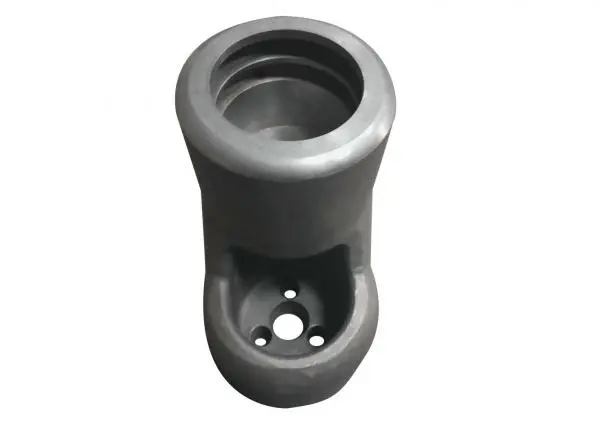
When sourcing aluminum components for high-voltage transmission equipment and industrial scenarios, grasping the core pricing rules of gravity cast parts is a prerequisite for cooperating with suppliers. The pricing of gravity casting parts is not fixed or single, but is comprehensively determined by material purity, mold investment, part structural complexity, production batch and other multiple factors. This guide systematically sorts out all cost influencing factors, casting process cost differences, supplier selection standards and cost optimization design skills, helping procurement engineers and technical managers formulate accurate budget plans and avoid additional cost risks in product certification and mass production stages.
Basic Overview of Gravity Casting and Core Cost Factors
Basic Principles and Advantages of Gravity Casting
Gravity casting is a reusable permanent mold casting process. It relies entirely on gravity to pour molten metal into pre-made steel or iron molds, and the molds can be recycled for long-term use. Compared with other casting processes, this technology can produce parts with uniform internal density, stable dimensional accuracy and excellent surface finish. The finished products only need a small amount of post-processing, which is very suitable for high-standard industrial parts such as outdoor power transmission components.
Seven Core Factors Determining Unit Cost
The final unit price of gravity casting parts is the superposition of multiple cost items, and each factor directly affects the overall pricing level:
Material selection: Aluminum alloys represented by A356 have obvious cost advantages over brass and bronze materials, and their mechanical and electrical performance indicators can fully meet the use requirements of high-voltage electrical equipment. The price of aluminum ingots is closely linked to LME aluminum spot prices, and market price fluctuations will be directly reflected in the quotation of casting parts, which is the core variable of material cost.
Part structural design: Complex cross-sectional structures, internal hollow channels and ultra-thin wall designs will increase the production cycle time of parts, and greatly improve the risk of casting defects and waste products, thus pushing up production costs. On the contrary, reasonably optimized structural designs can balance product functionality and casting processability. For example, the 2.3kg aluminum conductor part produced by Rongbao Enterprise adopts a standardized and reasonable structure, which can be produced with conventional molds and effectively controls comprehensive costs.
Mold manufacturing cost: The permanent metal molds used for gravity casting have higher manufacturing costs than sand casting molds, with a single mold cost ranging from $1,500 to $8,000. The specific price depends on the complexity of the mold cavity structure. However, the reusable feature of molds makes the cost evenly amortized in medium and large batch production, with significant cost advantages in mass production scenarios.
Secondary processing procedures: For high-precision and safety-critical electrical parts, subsequent processing is essential. CNC precision machining is used to ensure the precision of hole diameter dimensions, and shot blasting is used to clean the surface of parts and improve surface finish. These secondary processes will increase production costs, but are indispensable to meet industrial safety and quality standards.
Qualification and compliance costs: Formal and standardized suppliers will obtain ISO 9001:2015 quality management system, ISO 14001 environmental management system and ISO 45001 occupational health and safety management system certifications. The daily operation, audit and maintenance of standardized management systems will generate certain operating costs, which will be reflected in product pricing. However, certified suppliers can effectively reduce product defect rates and subsequent equipment qualification risks, and reduce long-term comprehensive costs for buyers.
Labor and equipment costs: The whole production process including metal pouring, cooling forming, trimming and polishing consumes labor and equipment resources. Automated precision production equipment can effectively shorten the production cycle, reduce manual operation errors, and reduce the labor cost of single parts compared with traditional manual production modes.
Production batch size: Batch is one of the key factors affecting unit price. Affected by fixed costs such as mold opening, equipment debugging and delivery, the unit price of small-batch orders is significantly higher than that of large-batch orders. Under the same part specification, the unit cost of 500-piece orders is 20%-35% higher than that of 5,000-piece orders.
Cost Comparison Between Gravity Casting and Other Mainstream Casting Processes
Cost and Performance Advantages and Disadvantages of Various Processes
In industrial production, high-pressure die casting, sand casting and investment casting are the mainstream processes competing with gravity casting. Each process has obvious differences in mold cost, unit price, product performance and applicable scenarios, which directly determines the cost-effectiveness of different production batches and product requirements.
High-pressure die casting: It has the lowest unit cost in large-batch production (more than 50,000 pieces). But its mold manufacturing cost is extremely high, exceeding $30,000 for a single set of steel molds. In addition, the high-speed filling process of high-pressure die casting is easy to trap gas inside the parts, resulting in internal porosity defects, which will seriously affect the electrical conductivity and structural stability of high-voltage equipment parts, so it is not suitable for high-precision and high-safety electrical scenarios.
Sand casting: The biggest advantage is almost zero mold cost and low early investment. However, the product dimensional tolerance is large, the surface roughness is high, and the consistency of batch products is poor. The rough surface of sand casting parts requires multiple precision machining processes, which increases subsequent processing costs and production cycle, and is not suitable for high-standard power transmission equipment parts.
Investment casting: It can produce parts with ultra-fine structures and high dimensional accuracy, with excellent product performance. But the cost is extremely high, and the unit price per kilogram is 2-4 times that of gravity casting. The high cost limits its application scope, and it is not suitable for medium-sized structural parts and mass production scenarios.
Applicable Batch Scenarios of Gravity Casting
Gravity casting is in the middle level in terms of mold cost, production cycle and product performance, with comprehensive cost performance. Its slow and laminar metal filling mode can effectively avoid gas trapping, ensure the internal compactness of parts, and avoid internal void defects that affect the safety and performance of high-voltage equipment.
For annual orders of 300 to 5,000 pieces, gravity casting aluminum parts are the most cost-effective choice among all mainstream casting processes. It balances early mold investment, single-piece production cost and product quality, and perfectly matches the production demand of medium-batch industrial high-precision parts.
Detailed Breakdown of Gravity Casting Comprehensive Cost
Raw Material Cost (Core Proportion Cost)
Raw material cost is the largest component of gravity casting parts cost, accounting for 40% to 55% of the total comprehensive cost. The mainstream A356 aluminum ingot price fluctuates with the international LME aluminum index, and the market price of industrial pure aluminum has long been stable between $2,200 and $2,700 per metric ton.
In the actual casting production process, due to the loss of pouring gates, trimming residues and process waste, the material utilization rate cannot reach 100%. Taking the 2.3kg finished aluminum conductor part as an example, the actual pouring metal weight required for production is 2.8kg to 3.0kg, and the material loss in the production process is also included in the raw material cost.
Processing and Operation Cost
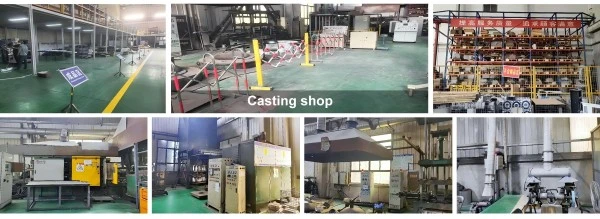
Processing and operation costs cover the whole production link including manual pouring, cooling forming, residual trimming, surface shot blasting and CNC precision machining. The production efficiency of equipment directly affects this part of the cost. The automated precision production equipment adopted by Rongbao Enterprise's Xi'an production base greatly optimizes the production cycle compared with traditional manual operation, significantly improves production efficiency, and reduces the single-piece labor and equipment operation cost.
In addition, batch effect is obvious in operating costs. Fixed links such as mold debugging and equipment parameter setting are one-time investments. With the increase of production batches, the fixed cost amortized to a single piece continues to decrease, so the larger the order volume, the lower the single-piece operating cost.
Selection Standards for Reliable Gravity Casting Suppliers
Qualification and System Certification Requirements
Excellent gravity casting parts suppliers must have complete three-system certifications of ISO 9001:2015 quality management, ISO 14001 environmental management and ISO 45001 occupational health and safety management. These certifications represent that the supplier's production, quality inspection, environmental protection and safety processes have standardized and auditable management mechanisms, rather than informal workshop-style production. Standardized management can effectively control product defect rates and ensure the stability of batch product quality, reducing the hidden cost of subsequent product return and rework.

Production Capacity and Service Capability
First, suppliers need to have mature OEM cooperative experience in the power transmission industry. Professional industry experience enables suppliers to accurately grasp the dimensional tolerance, surface finish and safety standards of power grid equipment parts, avoiding quality problems caused by unfamiliar process requirements.
Second, integrated production capacity is essential. High-quality suppliers realize one-stop production including casting forming, CNC precision machining and surface shot blasting treatment. The integrated production mode avoids precision errors and delivery delays caused by multi-party handover of processes, shortens the production cycle and reduces the comprehensive cooperation cost.
Finally, suppliers need to have transparent and stable production capacity. The clear single-batch production capacity of 5,000 pieces can ensure that the supplier does not outsource orders without permission, guarantee the stability of product quality and delivery cycle, and bring stable procurement expectations for buyers.
Comprehensive Cost Performance Judgment
In supplier selection, the lowest unit price does not mean the lowest total ownership cost. Low-price and low-quality suppliers often have a certain proportion of dimensional unqualified products and defective parts. For high-voltage transmission equipment with high safety requirements, a 3% defective rate in 5,000-piece orders will not only offset the initial price advantage, but also cause equipment installation delays, grid connection delays and other losses, bringing greater economic losses to the enterprise.
Design Optimization Skills to Reduce Gravity Casting Costs
Structural Design Optimization
Reasonable structural design is the key to reduce production costs without losing product performance. In the design process, the wall thickness of parts should be kept uniform, which can effectively avoid shrinkage porosity and internal cavity defects caused by uneven cooling, reduce the scrap rate, and thus reduce the loss cost caused by defective products.
In addition, non-critical areas should avoid setting excessive precision tolerance requirements. Blindly requiring high precision for all dimensions will greatly increase the difficulty and time of CNC machining, resulting in unnecessary cost waste. Only setting high-precision tolerances for assembly and functional key positions can balance product performance and processing cost.
Process Parameter Optimization and Early Communication
Setting a reasonable draft angle of 1° to 3° for parts can facilitate mold ejection, reduce mold wear, prolong mold service life, and reduce the frequency and cost of mold maintenance and replacement.
At the initial stage of project cooperation, the quality inspection team and the supplier's process team should jointly carry out the first-piece inspection and process confirmation. Potential mold problems and process defects can be found and corrected in advance before mass production, avoiding large-scale rework and scrap losses in the later stage, and saving a lot of time cost and economic cost for product qualification and mass production.
Conclusion
Gravity cast aluminum parts have outstanding cost performance in medium-batch, high-precision and high-safety industrial scenarios such as high-voltage transmission equipment. Its final price is affected by raw material market price, part structure, mold investment, processing technology, order batch and supplier qualification. Blindly pursuing low prices will lead to hidden quality risks and increase the total ownership cost.
Enterprises can effectively control procurement costs and ensure product quality by optimizing part structural design, formulating reasonable batch procurement plans, and selecting standardized suppliers with three-system certification, integrated production capacity and mature industry OEM experience. As a professional gravity casting manufacturer with 20 years of production experience, Rongbao Enterprise is based in Xi'an, China, providing one-stop services including casting, CNC machining, surface treatment and packaging. Its products are exported to Europe, North America, Japan and other regions, and its quality standards are in line with international procurement requirements, which can provide stable and high-cost-effective casting parts solutions for industrial customers.
FAQ
What is the most critical factor affecting the price of gravity cast parts?
Raw material cost is the core factor accounting for the highest proportion of cost, while part structural complexity is the key factor affecting processing and scrap cost. The fluctuation of LME aluminum price directly affects the basic material cost, and unreasonable structural design will increase production difficulty and defect rate, jointly determining the final pricing of products.
Will the order batch significantly affect the unit price?
The order batch has a very obvious impact on the unit price. Affected by fixed costs such as mold opening and equipment debugging, the unit price of small-batch orders is significantly higher than that of large-batch orders. The unit cost of 5,000-piece large-batch orders is 20%-35% lower than that of 500-piece small-batch orders, and the larger the batch, the more obvious the cost advantage.
Are gravity cast parts suitable for high-precision electrical application scenarios?
Gravity cast parts are very suitable for high-precision and high-safety electrical scenarios such as high-voltage transmission equipment. Its slow laminar filling process avoids internal gas trapping, ensures the internal compactness of parts and stable electrical conductivity. After CNC precision machining and shot blasting surface treatment, the parts can meet the strict dimensional tolerance and surface quality requirements of electrical equipment, with high operational safety and stability.
What is the conventional qualification cycle for the first order of gravity cast parts?
Under the condition of early full communication between the two parties and joint confirmation of process parameters and mold standards, the conventional first-order qualification cycle is short. The first-piece inspection and mold correction work completed before mass production can effectively shorten the trial production and verification cycle, avoid repeated adjustments, and greatly improve the efficiency of product qualification and mass production launch.
Gravity Casting Part Supplier: Rongbao Enterprise
When searching for a reliable gravity casting part supplier, Rongbao Enterprise stands out. Based in Xi'an, China, the company specializes in high-precision aluminum gravity casting. With ISO9001:2015, ISO14001, and ISO45001 certifications, Rongbao ensures quality, environmental responsibility, and workplace safety.
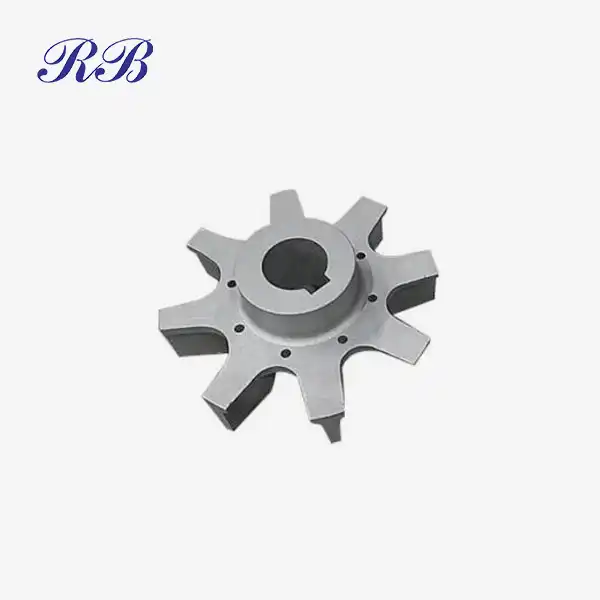
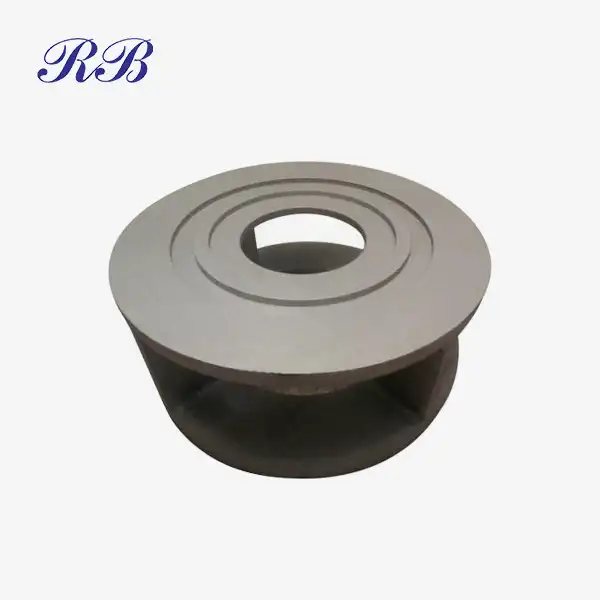
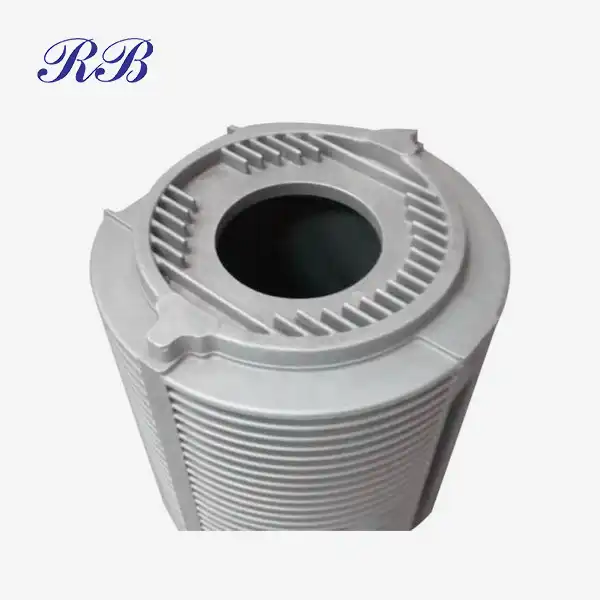
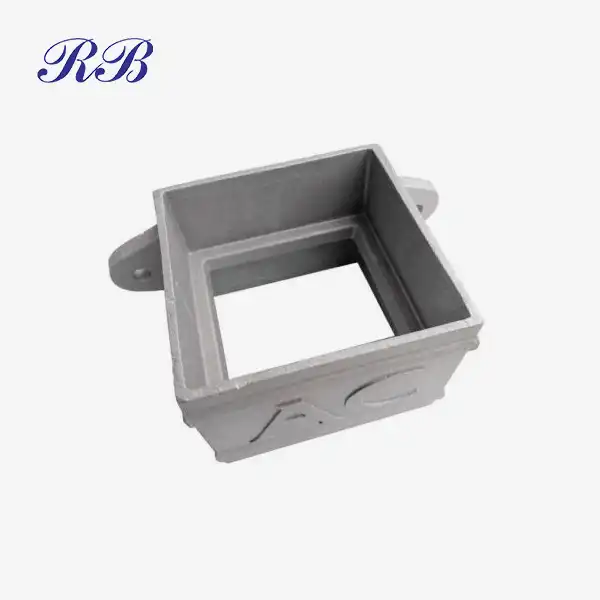
Rongbao Enterprise produces gravity casting parts for demanding applications, including high-voltage transmission and transformation conductors. One example is a gravity-cast conductor weighing approximately 2.3kg, made from A356 aluminum alloy. The part undergoes CNC machining for precision and shot blasting for surface integrity. Packaging is done in wooden boxes to prevent damage during transit.
The company offers OEM and ODM services, allowing full customization of specifications. Production capacity reaches up to 5,000 pieces per batch, making it suitable for both prototyping and mass production. All parts are manufactured to meet international standards, ensuring compatibility and performance.
Buyers interested in gravity casting part can contact Rongbao Enterprise directly. For sales inquiries, email steve.zhou@263.net. For technical support or project discussions, reach out to zhouyi@rongbaocasting.com. Visit the official website for more details and to submit an inquiry form.
Choosing Rongbao Enterprise means partnering with an experienced manufacturer that values quality, transparency, and customer satisfaction. Whether you need a single prototype or a large production run, they provide tailored solutions backed by technical expertise and proven processes.
References
[1] ASM International. Aluminum Alloy Castings: Properties, Processes, and Applications. ASM International, 2004.
[2] London Metal Exchange (LME). Aluminum Price Data and Market Reports. LME, 2024.
[3] International Organization for Standardization. ISO 9001:2015 Quality Management Systems — Requirements. ISO, 2015.
[4] Campbell, J. Complete Casting Handbook: Metal Casting Processes, Metallurgy, Techniques and Design. Butterworth-Heinemann, 2015.
[5] Bralla, J. G. Design for Manufacturability Handbook. McGraw-Hill, 1998.
[6] American Foundry Society. Metalcasting Industry Statistics and Forecasts. AFS, 2023.
Learn about our latest products and discounts through SMS or email