- English
- French
- German
- Portuguese
- Spanish
- Russian
- Japanese
- Korean
- Arabic
- Greek
- German
- Turkish
- Italian
- Danish
- Romanian
- Indonesian
- Czech
- Afrikaans
- Swedish
- Polish
- Basque
- Catalan
- Esperanto
- Hindi
- Lao
- Albanian
- Amharic
- Armenian
- Azerbaijani
- Belarusian
- Bengali
- Bosnian
- Bulgarian
- Cebuano
- Chichewa
- Corsican
- Croatian
- Dutch
- Estonian
- Filipino
- Finnish
- Frisian
- Galician
- Georgian
- Gujarati
- Haitian
- Hausa
- Hawaiian
- Hebrew
- Hmong
- Hungarian
- Icelandic
- Igbo
- Javanese
- Kannada
- Kazakh
- Khmer
- Kurdish
- Kyrgyz
- Latin
- Latvian
- Lithuanian
- Luxembou..
- Macedonian
- Malagasy
- Malay
- Malayalam
- Maltese
- Maori
- Marathi
- Mongolian
- Burmese
- Nepali
- Norwegian
- Pashto
- Persian
- Punjabi
- Serbian
- Sesotho
- Sinhala
- Slovak
- Slovenian
- Somali
- Samoan
- Scots Gaelic
- Shona
- Sindhi
- Sundanese
- Swahili
- Tajik
- Tamil
- Telugu
- Thai
- Ukrainian
- Urdu
- Uzbek
- Vietnamese
- Welsh
- Xhosa
- Yiddish
- Yoruba
- Zulu
High Pressure Die Casting vs. Gravity Die Casting: Cost & Performance Comparison
When choosing between high-pressure die casting and gravity die casting for industrial parts, the choice has a big effect on both the cost of production and the performance of the parts. High-pressure die casting uses steel molds and pressurized injection systems to make exact, thin-walled parts in large quantities. It works best with aluminum and zinc metals, even though it costs more to buy the tools. Gravity die casting uses metal models that can be used more than once and are filled by gravity alone. This method has lower making costs and more design options for medium production runs. It varies on how many parts you need to make, how precise you need them to be, how smooth you want the surface to be, and how complicated the shapes of your parts are.
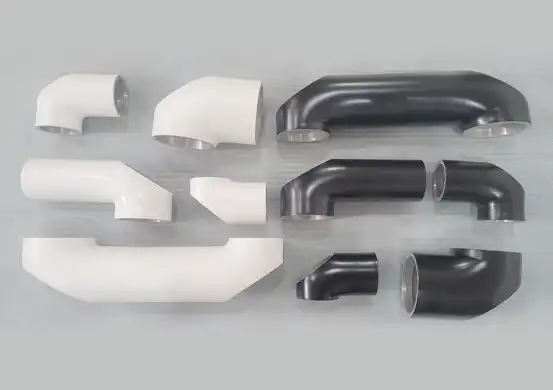
Understanding High Pressure Die Casting and Gravity Die Casting
Die casting methods are used a lot in modern production to make metal parts that are always of good quality and the right size. These techniques have changed over time to meet the needs of a wide range of industries, from building engine blocks for cars to making parts for spacecraft.
The High Pressure Die Casting Process
High-pressure die casting pushes liquid metal into precisely made steel dies at speeds of more than 100 feet per second and pressures of 10,000 to 30,000 psi. This strong injection makes sure that the mold is fully filled, even in places where the walls are only 0.5 mm thick. The process is great at making parts out of aluminum alloy, zinc alloy, and magnesium that have great surface quality and can be made in the same size every time. This method is often used for power tool parts, computer enclosures, and transmission housings for cars because it can repeat fine features over millions of production runs.
How Gravity Die Casting Works?
Gravity die casting, which is also called permanent mold casting, fills metal forms that can be used again and again by using gravity alone, without any help from outside pressure. Molten aluminum or one of its alloys flows easily into the mold hole. This makes parts with better grain structure and better mechanical stability. This softer filling method lowers turbulence and air capture, making parts that are more structurally sound on the inside. In industry, it is used for things like pump housings, valve bodies, and structural parts for building equipment where the qualities of the material are more important than the need for very thin walls.
Material Compatibility and Equipment Differences
The types of materials used depend on their melting points and how easily they flow through these processes. Aluminum alloys like A380, A383, and ADC12 can be used in high-pressure systems. So can zinc metals like Zamak 3 and Zamak 5. It's easy to use gravity methods with A356, AlSi7Mg, and other heat-treatable aluminum alloys that solidify more slowly. Different types of equipment are needed for different jobs. For example, high-pressure installations need hydraulic or electric injection systems, while gravity setups only need tilting devices or ladles for dumping metal. Knowing these technical basics helps buying teams match the manufacturing skills with the needs of the project.
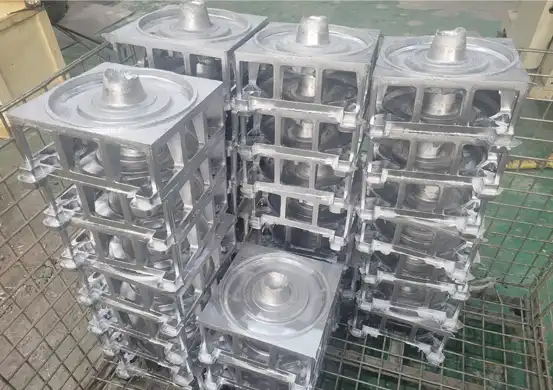
Cost Comparison: HPDC vs. Gravity Die Casting
Cost analysis looks at more than just unit prices. It also looks at investments in tools, how efficiently production works, and ongoing costs that affect the economics of total ownership.
Tooling Investment and Amortization
Making a die for high-pressure die casting applications and high pressure die casting applications costs a lot up front; the cost can be anywhere from $15,000 to $80,000, based on how complicated the part is and how many cavities it has. These steel dies have been strengthened so that they can take hundreds of thousands of shots. This spreads out the cost over a big amount of production. Because they are easier to build and use, gravity die casting tools cost 30 to 50 percent less than other types. When purchasing managers want to make more than 50,000 pieces a year, high-pressure tooling is usually the best option from an economic point of view. On the other hand, projects that need to make less than 20,000 units often benefit from gravity casting's lower entry hurdles.
Production Cycle Economics
Cycle time directly affects how fast and efficiently things are made and how much work gets done. Depending on the size of the part, high-pressure die casting can finish a shot in 15 to 60 seconds. This means that each machine can make thousands of parts every day. Because filling and cooling happen more slowly, gravity casting processes take between 2 and 5 minutes longer, which means that the daily output is smaller by the same amount. This difference in efficiency affects how workers are assigned; automated high-pressure cells work with little control, while pouring and part extraction in gravity processes need more hands-on help. There are also differences in how much energy is used. For example, high-pressure systems use more electricity for hydraulic power but finish more parts per kilowatt-hour.
Scrap Rates and Material Efficiency
Using materials in the best way changes profits throughout the whole production process. After runners, gates, and some scrap parts are taken into account, high-pressure die casting usually gets return rates of 85 to 92%. The pressure injection cuts down on porosity and makes sure that the fill patterns are uniform, which lowers the rate of rejection. Gravity casting wastes a little more material because the feeding systems have to be thicker to make up for the fact that natural flow is limited. However, current modeling software has increased yield to 78–85%. Reusing scrap metal restores its value, but it costs more to handle, and these costs add up over long production runs.

Performance Comparison: Quality, Precision, and Applications
Quality of a component includes its mechanical properties, dimensional accuracy, and surface features that decide how well it works in a wide range of demanding situations.
Mechanical Properties and Density
Due to the strong pressing of the metal during solidification, high-pressure die casting makes parts with densities that are close to 98–99% of the theoretical maximum. This higher density means that the tensile strength is higher, usually between 300 and 350 MPa for aluminum alloys. This means that the parts can be used in structural stress situations. Rapid cooling that comes with pressure injection makes fine-grained microstructures that stop cracks from spreading. Gravity casts have slightly lower densities, between 95 and 97%. This is made up for by better grain orientation and lower internal pressures from a more gradual solidification process. When parts need to be heated again, like T6 temper for aircraft uses, gravity methods are often better because they give better microstructural reaction.
Dimensional Accuracy and Tolerances
Different methods have measurable differences in how precise they can be, including gravity die casting. High-pressure die casting keeps limits of ±0.1mm for important measurements without needing extra work, which lets them be put together directly in many situations. Surface finishes can hit Ra 1.6–3.2μm right from the die, which means that cleaning isn't needed or is done less often. This level of physical stability comes from using hard steel tools and managing temperatures consistently. Gravity casting gives tolerances of about ±0.3mm, which is good enough for many commercial uses but often needs careful machining to make the sides fit together. It changes the total cost of production; for example, tighter combined tolerances lower the cost of downstream processes but raise the price of casting.
Defect Management Across Methods
Pores, holes caused by shrinking, and surface flaws all pose problems to both processes in different ways. Rapid turbulent filling causes gas to get trapped in high-pressure die casting. This problem can be fixed with better gate design and vacuum-assist systems. To keep flaws to a minimum, modern process control keeps an eye on the speed of filling, the temperature of the metal, and the thermal profiles of the die. Gravity casting doesn't have the porosity that comes from turbulence, but it needs careful feeding design to avoid shrinking gaps when the concrete hardens. Quality engineers use non-destructive testing like X-rays and ultrasonic checking to make sure that parts inside are safe, especially safety-critical parts like brake systems or airplane structure parts.
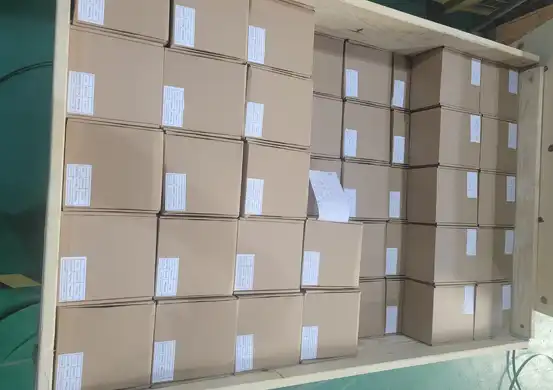
Choosing Between High Pressure Die Casting and Gravity Die Casting
To choose the right casting method, you have to weigh the technical needs against the costs and logistics of the supply chain.
Volume Thresholds and Batch Economics
Process choice is largely determined by the amount of production. When you make more than 20,000 to 30,000 units a year, high-pressure die casting starts to make economic sense because the higher setup costs are outweighed by the savings from gear amortization and cycle efficiency. This is a benefit for industries like automotive, where a single type of car needs millions of identical parts over the course of its production life. Gravity casting works well for orders between 500 and 20,000 units, helping construction equipment companies make dozens of different backhoe types with different part needs. Even though they cost more per unit, sand casting or machining are often used for small batch development or production runs of less than 500 pieces.
Complexity and Design Considerations
Complexity of the geometry affects both practicality and cost. High-pressure die casting is great for making structures with thin walls, complicated internal paths, and built-in features that don't need to be put together. Electronics housings have fixing holes, cooling fins, and closing surfaces all in one. Gravity methods work better with simpler shapes and cost less, but they have trouble with walls that are thinner than 3 mm or with undercuts that are complicated and need complex core mechanisms. Design for manufacturing principles help engineers make shapes that are right for the process, like keeping section thickness at the right level for gravity uses while minimizing draft angles for high-pressure tools.
Procuring High Pressure Die Casting and Gravity Die Casting Services
Comparing quotes is only one part of successful buying. You also need to build relationships with makers who understand your technical needs and business goals.
Evaluating Manufacturer Capabilities
The first step in evaluating a supplier is to check their production ability. We suggest going to sites to check on the state of the equipment, the level of automation, and the quality control infrastructure. Suppliers of high-pressure die casting should show current tonnage that ranges from 250 to 3000 tons and uses computer-controlled process settings. If post-casting processing is needed, gravity casting processes need enough oven space, mold handling tools, and heat treatment facilities. Material approvals show that the alloy is conformal; asking for mill certificates and looking over material tracking systems shows that the supply chain is careful. Transparency in the production schedule helps procurement managers correctly predict wait times, especially when demand is high.
Pricing Models and Negotiation Strategies
Knowing how costs are structured helps you negotiate more effectively. In casting quotes, making costs are usually listed separately from piece prices, and the costs of the tools are spread out over the expected amounts. We've found that honest providers give us thorough breakdowns of how much the materials cost, how long it takes to process, how much time is spent on quality checks, and how much profit they make. Price tiers can be unlocked by making volume promises. For example, committing to yearly amounts can lower piece prices by 8–15% while securing production capacity. Working capital is affected by payment terms. To protect both parties, fees should be balanced against milestone payments and the final shipment. Long-term contracts that last for several years keep prices stable even when the prices of commodities change, and they give providers the confidence to invest in specialized tools and process optimization.
Conclusion
When deciding between high-pressure die casting and gravity die casting, you need to carefully look at the amount of output you need, the quality standards you need, and the cost structures. For large-scale production, high-pressure die casting methods offer better accuracy, faster cycles, and lower unit costs. This makes them perfect for use in automobile, aircraft, and consumer electronics. Gravity casting is a cost-effective way to make medium-sized parts because it requires fewer tools and has better mechanical qualities. A good buying process combines these specialized skills with the qualifications of the seller, the need for certification, and the total cost of ownership over the whole lifecycle. When buying managers, engineers, and supply chain workers understand the basics of a process, they can make decisions that improve the performance of parts while keeping costs low.
FAQ
What materials work best for high pressure die casting applications?
Aluminum alloys like A380, A383, ADC12, and AlSi9Cu3 are used a lot in high-pressure die casting situations because they are strong, flexible, and good at moving heat. Zinc metals like Zamak 3 and Zamak 5 work well for smaller, more precise parts that need to be made with tighter tolerances. Even though the materials are more expensive, magnesium alloys can help reduce weight in car and aircraft uses.
How do production cycle times affect overall manufacturing costs?
When cycle times are shorter, daily output goes up. This lowers the cost of work per component and increases the rate at which equipment is used. One machine can make 400 to 2000 parts per day with high-pressure die casting (15 to 60 seconds), but only 100 to 250 parts per shift with gravity casting (2 to 5 minutes). This has a direct effect on cost efficiency at scale.
Can gravity die casting achieve precision comparable to high pressure methods?
Tolerances for gravity casting are usually around ±0.3mm, while tolerances for high-pressure casting are around ±0.1mm. This difference can be made up for by strategically milling important features in situations where combined accuracy isn't worth the extra cost. The choice is based on the function needs and the total budget for making.
Partner with Rongbao Enterprise for Advanced Die Casting Solutions
Rongbao Enterprise has been helping procurement workers find dependable high-pressure die casting makers and gravity casting providers and high pressure die casting for 20 years. We can do everything in the production chain, from making the mold to precision cutting and surface treatment, and we can send finished parts that are ready to be put together. We keep our ISO 9001, ISO 14001, and ISO 45001 certifications up to date to make sure that all of our processes are consistent with quality standards and follow environmental rules. We know how to meet the strict specs and paperwork needs of global OEMs and Tier 1 providers because 70% of our production goes to markets in Europe, the United States, and Japan. Both high-volume car parts and medium-batch industrial equipment parts are made perfectly in our automatic production facilities. You can email our technical team at steve.zhou@263.net or zhouyi@rongbaocasting.com to talk about your project needs and get full quotes that meet your quality standards and delivery dates.
References
1. American Foundry Society. (2021). Die Casting Handbook: Processes, Materials, and Applications. Des Plaines, IL: AFS Publications.
2. Campbell, J. (2015). Complete Casting Handbook: Metal Casting Processes, Metallurgy, Techniques and Design (2nd ed.). Oxford: Butterworth-Heinemann.
3. North American Die Casting Association. (2020). NADCA Product Specification Standards for Die Castings. Arlington Heights, IL: NADCA.
4. Kaufman, J.G., & Rooy, E.L. (2016). Aluminum Alloy Castings: Properties, Processes, and Applications. Materials Park, OH: ASM International.
5. Vinarcik, E.J. (2013). High Integrity Die Casting Processes. New York: John Wiley & Sons.
6. International Journal of Metalcasting. (2022). Comparative Analysis of Die Casting Methods in Automotive Component Manufacturing. Vol. 16, Issue 3, pp. 1247-1262.
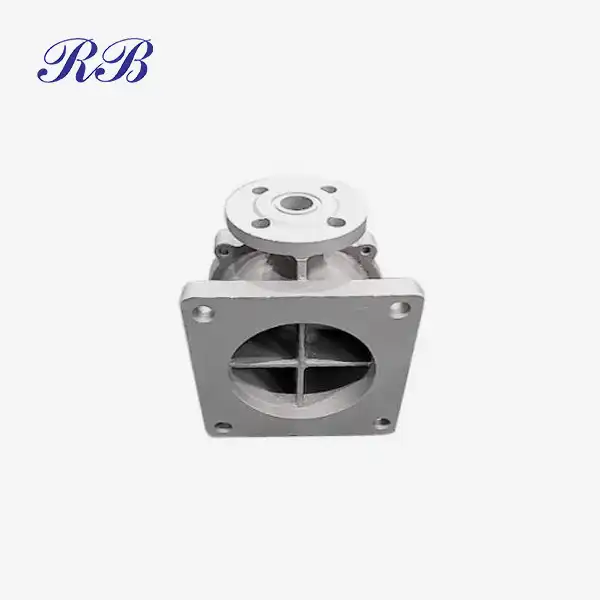
Learn about our latest products and discounts through SMS or email