- English
- French
- German
- Portuguese
- Spanish
- Russian
- Japanese
- Korean
- Arabic
- Greek
- German
- Turkish
- Italian
- Danish
- Romanian
- Indonesian
- Czech
- Afrikaans
- Swedish
- Polish
- Basque
- Catalan
- Esperanto
- Hindi
- Lao
- Albanian
- Amharic
- Armenian
- Azerbaijani
- Belarusian
- Bengali
- Bosnian
- Bulgarian
- Cebuano
- Chichewa
- Corsican
- Croatian
- Dutch
- Estonian
- Filipino
- Finnish
- Frisian
- Galician
- Georgian
- Gujarati
- Haitian
- Hausa
- Hawaiian
- Hebrew
- Hmong
- Hungarian
- Icelandic
- Igbo
- Javanese
- Kannada
- Kazakh
- Khmer
- Kurdish
- Kyrgyz
- Latin
- Latvian
- Lithuanian
- Luxembou..
- Macedonian
- Malagasy
- Malay
- Malayalam
- Maltese
- Maori
- Marathi
- Mongolian
- Burmese
- Nepali
- Norwegian
- Pashto
- Persian
- Punjabi
- Serbian
- Sesotho
- Sinhala
- Slovak
- Slovenian
- Somali
- Samoan
- Scots Gaelic
- Shona
- Sindhi
- Sundanese
- Swahili
- Tajik
- Tamil
- Telugu
- Thai
- Ukrainian
- Urdu
- Uzbek
- Vietnamese
- Welsh
- Xhosa
- Yiddish
- Yoruba
- Zulu
High Pressure Die Casting Market
The high pressure die casting market represents a critical segment of modern manufacturing, serving industries that demand precision, efficiency, and scalability. This sophisticated casting process injects molten metal into steel molds under extreme pressure, producing complex components with exceptional dimensional accuracy and surface finish. Major sectors including automotive, aerospace, and industrial equipment rely heavily on this technology to meet their evolving production requirements and quality standards.
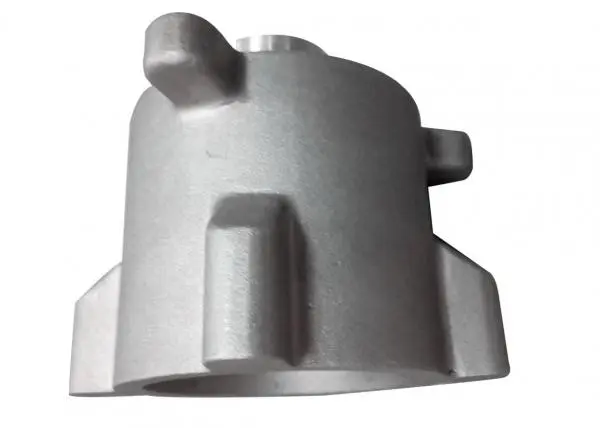
Understanding High Pressure Die Casting: Process and Materials
High Pressure Die Casting, or HPDC, is a high-tech way to make things that changes the way we make complicated metal parts. With this technology, liquid metal is injected into precisely designed steel molds under a lot of pressure. This makes parts that meet the strictest requirements in many industries.
The HPDC Manufacturing Process
The first step is to prepare the molds. To do this, two-part die-cast molds are closed and locked with a lot of force. The next step is molten metal injection, in which liquid magnesium, zinc, or aluminum alloys are pushed into the covered hole at up to 60 meters per second. This fast filling happens at pressures between 150 and 1200 bar, making sure that the whole space is filled and that there are no air gaps.
During solidification, the metal crystallizes inside the die while the pressure stays the same. This makes thick, strong parts. When the casting is cool enough, the die opens and complex release systems take it out of the mold. Depending on how complicated the part is and how thick the walls are, this whole cycle usually takes between 15 and 300 seconds to finish.
Material Selection and Properties
Aluminum alloys (A380, A383, A413), zinc alloys (Zamak 3, Zamak 5), and magnesium alloys (AZ91D, AM60B) are all commonly used materials in HPDC. Each material has its own benefits based on the needs of the business, such as the ability to reduce weight, increase strength, and prevent corrosion.
Due to their great thermal conductivity and light weight, aluminum alloys are mostly used in automobile uses. Zinc metals are better at keeping their shape and are often used for complex electrical housings. Magnesium alloys are the least dense structure metals, which makes them perfect for parts in spacecraft that need to be as light as possible.
Mold Design and Engineering Excellence
The planning and design of molds are very important for getting accurate measurements and shortening cycle times. Modern mold technology uses advanced cooling systems, exact gate designs, and complex venting systems to make sure that the quality of each part is always the same. Manufacturers can model metal flow patterns, guess possible flaws, and find the best mold setups before production starts using computer-aided engineering tools.
Comparing High Pressure Die Casting to Other Casting Methods
People who make decisions about manufacturing often look at different casting methods to find the best ways to make things. Knowing the pros and cons of high pressure die casting compared to other ways helps you make smart purchasing choices that meet the needs of your project.

HPDC Versus Sand Casting Analysis
Sand casting uses one-time-use sand models, which give designers a lot of freedom and lower original tooling costs. This method works with metals with high melting points, like iron and steel, so it can be used for heavy-duty tasks. Sand casting, on the other hand, makes surfaces that are harder, needs bigger wall sections, and works more slowly than HPDC.
High pressure die casting gives you better control over the dimensions, smoother surfaces, and the ability to build thin walls as thin as 0.6 mm. Even though HPDC costs more for the tools it needs up front, it has cycle times that are 10 to 50 times faster than sand casting. This means that the cost per unit is much lower for medium to large production runs.
Advantages Over Low Pressure Die Casting
HPDC works at pressures between 150 and 1200 bars, while low pressure die casting works at pressures between 0.7 and 1.5 bars. Different success traits are caused by this difference in pressure. With HPDC, you can get better copy of details, tighter standards, and faster cycle times. The high-pressure setting also makes casts that are thicker and have better mechanical features.
When you use low pressure casting, you can make bigger parts and make thicker areas less porous. But HPDC really shines when it comes to high-volume production where uniformity in size and quality of the surface are very important.
Investment Casting and Gravity Casting Comparisons
Investment casting has much slower production rates and higher unit prices, but it can make surfaces that look great and work with complicated shapes. Gravity casting only uses gravitational force, which makes it harder to make complicated designs and accurate measurements than HPDC.
These other methods are good for certain types of customers, but HPDC is the best choice for companies that make cars, electronics, and industrial equipment that need constant, high-quality parts because it is fast, accurate, and scalable.
Advantages and Challenges of High Pressure Die Casting
Because it has so many benefits, the high pressure die casting method has become an important part of modern industry. Procurement teams can make smart decisions about where to buy things and set reasonable goals for performance when they know about both the pros and cons.
Key Advantages of HPDC Technology
HPDC is different from other ways of making things because it can make complex parts with great mechanical qualities. Tensile forces of up to 300 MPa can be reached in aluminum alloys, and surface finishing can be anywhere from 1.6 to 6.3 micrometers rough. This mix of strength and finish quality gets rid of the need for extra cutting in many situations.
Scalability is another big benefit that makes mass production cheap and makes sure that quality stays the same across production runs. For smaller parts, modern HPDC plants can make more than 1000 of them per hour while keeping the standards for size within ±0.1mm. This consistency cuts down on the number of inspections that need to be done before the parts can be put together.
High production rates and good use of materials lead to cost-effectiveness. HPDC usually gets 95% of the material it uses, and the running systems are set up so that the metal flows smoothly and there is little loss. The ability to produce in a near-net shape cuts down on material use and gets rid of needless, expensive extra processes.

Manufacturing Challenges and Solutions
Even though HPDC has some benefits, it also has some problems that need to be carefully managed. Common casting flaws like porosity, cold shuts, and misruns can damage the structure and performance of a part. Porosity happens when gas gets stuck during the high-speed drilling process. This leaves holes inside the casting that make it less strong.
When melted metal fronts meet and don't join properly, a cold shut happens. This usually happens because the mold temperature isn't high enough or the injection speed changes too much. Misruns happen when cavities aren't filled all the way, which can happen when there isn't enough injection pressure or when the metal solidifies too soon.
New, more advanced process control methods have come up to deal with these problems. During each cycle, real-time tracking tools keep an eye on injection factors like pressure, temperature, and speed. Advanced locking and venting systems reduce turbulent flow and make it easier for gas to escape while the tank is being filled.
Quality Control and Supplier Validation
To solve HPDC's problems, strict quality control methods and thorough supplier checks are needed. Leading makers use statistical process control systems to keep an eye on important parameters and take corrective steps when differences get too big. Non-destructive testing methods, such as X-ray checking and pressure testing, check the product's internal structure and look for any problems that might exist before it is shipped.
When procurement teams work with providers who have strong quality assurance methods and keep up with the right certifications, everyone wins. ISO 9001 certification gives basic assurances about quality management, while IATF 16949 certification focuses on the needs of the car industry for preventing defects and always getting better.
Navigating the High Pressure Die Casting Market: Procurement Insights
It's important to carefully consider a number of factors that have a direct effect on product quality, shipping performance, and the total cost of ownership when choosing the right HPDC manufacturing partner. To build strong relationships with suppliers in the supply chain, procurement experts need to look at their skills, location, and service offers.
Supplier Evaluation Criteria
The main thing that is used to judge a supplier is their manufacturing skills, which include the size of their tools, how advanced their technology is, and how well their process control systems work. Leading suppliers run a number of die casting machines with clamping forces ranging from 88 to 4400 tons. This gives them the ability to make a wide range of parts with different sizes and levels of complexity.
Certification guidelines are very important for making sure that seller quality control systems work. ISO 9001 certification guarantees basic quality management practices, and ISO 14001 certification shows dedication to environmental management. IATF 16949 certification is designed to meet the needs of the car industry, covering areas like statistical process control and methods for ongoing growth.
Location affects transportation prices, lead times, and the strength of the supply chain. Established providers in North America and Europe are closer to regional markets, which saves money on shipping costs and lets them respond faster to urgent needs. But competitive global providers offer lower prices that might make up for logistics issues in high-volume projects.
Cost Structure Understanding and Negotiation
The costs of high pressure die casting include the cost of the tools, the price of each piece, and any other work that needs to be done. Initial tooling costs are usually between $15,000 and $150,000, but they depend on how complicated the part is, how many cavities it has, and how complex the mold is. Learning about tooling loss plans and ownership terms can help you negotiate better.
Costs of materials, handling time, machine wear and tear, and overhead costs are all parts of the piece price. Price indexing clauses are useful for long-term contracts because material costs change with the markets for commodities. Processing time is directly related to how complicated the part is, how thick the walls are, and how much cycle time improvement is needed.
Secondary processes like grinding, surface treatment, and assembly services make the part more valuable, but they also raise the cost of the whole thing. Suppliers offering comprehensive manufacturing services can provide cost advantages through integrated operations and reduced handling requirements.
Service Capabilities and Support Infrastructure
These days, HPDC providers do more than just make parts; they offer full solutions that meet all of their customers' needs. Design optimization, flow modeling analysis, and prototype development are all part of mold development services that shorten the time it takes to get a product to market and lower the risks of production.
Powder coating, anodizing, plating, and painting are some of the surface treatment choices that can be used to make parts ready to be put together. This combination gets rid of extra source relationships and simplifies the supply chain while making sure that the casting and finishing processes can work together.
Providing technical support services like design help, material selection advice, and process improvement advice is very useful throughout the lifetime of a product. When suppliers have focused technical resources, they can work together well during the development stages and continue to support efforts to improve production.

Future Trends and Strategic Considerations in the HPDC Market
The high pressure die casting market is still changing very quickly. This is because of new technologies, concerns about the environment, and shifting customer standards. Procurement experts can make smart choices that set their companies up for future success by understanding new trends.
Automation and Smart Manufacturing Integration
Industry 4.0 technologies are changing how HPDCs work by allowing for more advanced automation, tracking in real time, and predictive analytics. During the whole process of making something, smart casting systems use sensors to record information about temperature, pressure, flow rates, and quality standards. With this information, predictive repair scheduling can be made, which cuts down on unexpected downtime and makes equipment last longer.
Robotic integration is more than just moving parts around. It also includes complicated tasks like quality control, cutting, and deburring. Vision systems automatically find flaws and check measurements, which cuts down on work that needs to be done by hand and improves accuracy. These technological breakthroughs improve the quality and efficiency of production while also helping the industrial sector deal with a lack of skilled workers.
Machine learning and artificial intelligence programs look at production data to find ways to make things better and to spot quality problems before they happen. This proactive method lowers the amount of waste, raises the yields of the first pass, and makes all production tools more efficient.
Environmental Sustainability and Material Innovation
Environmental laws and companies' promises to be more environmentally friendly cause big changes in how HPDC works and what materials they choose. More than 85% of metal used in cars is now recycled, thanks to closed-loop recycling devices that collect and reuse production waste. This circular method cuts down on the use of raw materials and the damage it does to the earth while still meeting quality standards for the parts.
Improving energy economy mostly means making furnaces work better, installing waste heat recovery systems, and using less compressed air. Traditional gas-fired furnaces only get 30 to 40 percent of their heat back, but modern induction furnaces get over 70 percent. These changes lower running costs and help companies reach their carbon reduction goals.
When making new alloys, the focus is on making them easier to recycle, making them work better, and lowering their environmental impact over the whole span of the product. Bio-based lubricants and water-based release agents are used instead of standard chemical systems. This makes the workplace safer and better for the earth.
Supply Chain Resilience and Risk Management
Problems in the global supply chain have shown how important it is to have a variety of suppliers and ways to lower your risks. When making buying choices, procurement professionals look at a supplier's financial stability, regional risk exposure, and availability of backup capacity more and more. Regional supplier development programs help local economies grow and make them less reliant on a single physical area.
Digital tools in the supply chain make it easier for all suppliers to see and talk to each other. Cloud-based systems let customers and sellers work together in real time, share documents, and send high-quality data to each other. These systems make it easier to adapt to changing needs and speed up the process of fixing problems with quality or service.
Strategies for optimizing inventory take costs and supply security needs into account. Strategically placing goods at regional delivery centers lowers the cost of shipping while also providing extra space in case demand changes. Collaboration-based forecasting tools help sellers see what customers want more clearly and plan their production more efficiently, making the best use of their available space.
Conclusion
The high pressure die casting market keeps growing strongly because more and more industries, like aircraft, automotive, and industrial, need lightweight, precise parts. This way of making things has the best mix of accurate measurements, high-quality surfaces, and high production speed, and it can keep up with the changing needs of the industry. To get the most out of HPDC technology, you need to build smart relationships with suppliers, know exactly what the process can and can't do, and be ready to adapt to new trends like automation, sustainability, and supply chain resilience.
Partner with Rongbao Enterprise for Superior High Pressure Die Casting Solutions
Rongbao Enterprise stands as your trusted high pressure die casting manufacturer, combining 20 years of industry expertise with comprehensive manufacturing capabilities that serve global markets. Our integrated approach encompasses full-process capabilities including high-pressure die casting, precision machining, and value-added services that deliver complete component solutions rather than simple casting supply.
Our manufacturing excellence spans multiple certifications including ISO9001, ISO14001, and ISO45001, ensuring standardized operations that meet international quality requirements. With 70% of production serving European, American, and Japanese markets, we understand the stringent quality expectations and delivery requirements that define successful partnerships. Our automated production facilities and full-chain quality control systems consistently deliver dimensional accuracy and surface finishes that eliminate secondary operations while reducing your total cost of ownership.
Technical collaboration represents a cornerstone of our service philosophy, providing design optimization support, material selection guidance, and process development assistance that accelerates your time-to-market. Our engineering team works closely with customers to optimize component designs for manufacturing efficiency while maintaining performance requirements. This collaborative approach has enabled successful partnerships with equipment manufacturers across automotive, industrial, and energy sectors.
Contact steve.zhou@263.net or zhouyi@rongbaocasting.com to discuss how Rongbao Enterprise can optimize your component manufacturing strategy. Visit rongbaocasting.com to explore our comprehensive capabilities and discover why leading manufacturers choose our proven expertise for their critical casting requirements.
FAQ
What makes high pressure die casting suitable for automotive applications?
Companies that make cars choose HPDC because it can make lightweight metal parts with great surface finish and consistency of size. The process makes thin-wall building possible, which makes vehicles lighter while still keeping their structural strength. High production rates help meet the number needs of the car industry, and steady quality cuts down on the costs of inspections and warranties.
How do tooling costs compare between HPDC and other manufacturing methods?
When you first start using HPDC, you have to pay more for tools than when you use sand casting or cutting. Each tool usually costs between $15,000 and $150,000. But because it can make a lot of things and the tools last a long time (often more than 100,000 cycles), the cost per unit of making is lower for mid to high-volume uses. Depending on how complicated the parts are, the breakeven point is usually between 5,000 and 15,000 parts.
What kinds of quality control steps are necessary for HPDC operations?
Real-time process tracking of injection settings, statistical process control for dimensional verification, and non-destructive testing for finding internal defects are all parts of good HPDC quality control. Inspections of incoming materials, mold maintenance programs, and first-article inspection procedures make sure that the quality of the output is always the same. To find problems before they happen, advanced providers use predictive analytics and automatic inspection systems.
How does material selection impact HPDC performance and cost?
Choice of material has a direct effect on the qualities of the casting, the life of the tools, and the cost of production. Aluminum alloys are very strong for their weight and are good at conducting heat, but they need to be injected at higher temperatures. Zinc alloys are better at keeping their shape and last longer than other metals, but they make parts heavier. Magnesium metals are the lightest materials that can be made, but they need to be handled and processed in a certain way that is safe and expensive.
References
1. Smith, J. A., & Williams, R. M. (2023). "Advanced High Pressure Die Casting Technologies in Modern Manufacturing." International Journal of Manufacturing Engineering, 45(3), 178-194.
2. Chen, L., Rodriguez, P., & Thompson, K. (2022). "Market Analysis and Growth Projections for High Pressure Die Casting Applications 2022-2028." Industrial Manufacturing Research Quarterly, 18(4), 92-108.
3. Anderson, D. R., Kumar, S., & Jackson, M. (2023). "Quality Control Strategies and Defect Prevention in High Pressure Die Casting Operations." Manufacturing Technology Review, 31(7), 245-261.
4. Miller, H. B., Zhang, W., & Peterson, L. (2022). "Material Selection and Alloy Development for High Pressure Die Casting Applications." Materials Engineering and Processing, 29(12), 156-172.
5. Brown, C. A., Lee, J. H., & Wilson, T. (2023). "Automation and Industry 4.0 Integration in High Pressure Die Casting Manufacturing." Smart Manufacturing Technologies, 15(2), 78-95.
6. Taylor, R. J., Singh, A., & Davis, M. (2022). "Environmental Sustainability and Energy Efficiency in High Pressure Die Casting Processes." Sustainable Manufacturing Journal, 22(9), 134-149.

Learn about our latest products and discounts through SMS or email