- English
- French
- German
- Portuguese
- Spanish
- Russian
- Japanese
- Korean
- Arabic
- Greek
- German
- Turkish
- Italian
- Danish
- Romanian
- Indonesian
- Czech
- Afrikaans
- Swedish
- Polish
- Basque
- Catalan
- Esperanto
- Hindi
- Lao
- Albanian
- Amharic
- Armenian
- Azerbaijani
- Belarusian
- Bengali
- Bosnian
- Bulgarian
- Cebuano
- Chichewa
- Corsican
- Croatian
- Dutch
- Estonian
- Filipino
- Finnish
- Frisian
- Galician
- Georgian
- Gujarati
- Haitian
- Hausa
- Hawaiian
- Hebrew
- Hmong
- Hungarian
- Icelandic
- Igbo
- Javanese
- Kannada
- Kazakh
- Khmer
- Kurdish
- Kyrgyz
- Latin
- Latvian
- Lithuanian
- Luxembou..
- Macedonian
- Malagasy
- Malay
- Malayalam
- Maltese
- Maori
- Marathi
- Mongolian
- Burmese
- Nepali
- Norwegian
- Pashto
- Persian
- Punjabi
- Serbian
- Sesotho
- Sinhala
- Slovak
- Slovenian
- Somali
- Samoan
- Scots Gaelic
- Shona
- Sindhi
- Sundanese
- Swahili
- Tajik
- Tamil
- Telugu
- Thai
- Ukrainian
- Urdu
- Uzbek
- Vietnamese
- Welsh
- Xhosa
- Yiddish
- Yoruba
- Zulu
High Pressure Die Casting Dimensional Tolerance mm
High pressure die casting dimensional tolerance mm refers to the acceptable deviation range in part measurements, typically ranging from ±0.05mm to ±0.3mm depending on component complexity and material properties. High pressure die casting achieves superior dimensional accuracy through controlled injection parameters, steel mold precision, and rapid solidification under pressure. These tight tolerances make the process ideal for automotive, aerospace, and electronics applications where precise component fit is critical for performance and safety requirements.
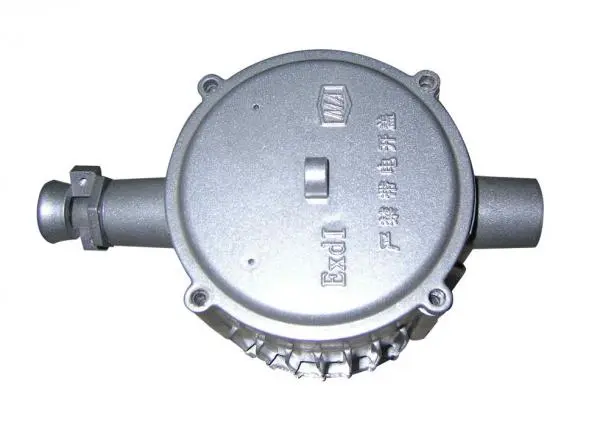
Understanding Dimensional Tolerance in High Pressure Die Casting
Dimensional tolerance is the amount of difference that can exist between the real measurements of a part and the design standards that were given. In high pressure die casting, these standards are measured in millimeters and have a direct effect on how well the parts work, how well they fit together, and how well the product works overall. Due to the use of permanent steel molds and high injection pressures, the production process naturally gives better control over dimensions than standard casting methods.
Tolerance success in die casting depends on a number of important factors. Choosing the right alloy is very important because different materials shrink at different rates when they harden. Aluminum alloys tend to shrink between 3 and 8 percent, while zinc metals tend to shrink around 6 percent. It's just as important to get the mold design right because any flaws or wear in the steel tools will show up in the finished casting.
Dimensional results are greatly affected by process factors. Injection pressure, which is usually between 1,500 and 25,000 PSI, makes sure that all cavities are filled and stops pores from forming. Cycle time affects cooling rates, which in turn affect how much the material shrinks and how much internal stress builds up. Temperature control on both the liquid metal and the mold surfaces keeps the temperatures stable, which is needed for reliable dimensional results.
For tolerance measurement, industry norms are very important. ASTM standards deal with specific material needs, while ISO 8062 gives general rules for casting limits. IATF 16949 standards often call for stricter limits in automotive uses, especially for safety-critical parts like engine and brake system parts.
Material-Specific Tolerance Characteristics
Because of how they are made, different casting metals can handle different levels of error. Aluminum metals are very strong for how light they are, and they can be machined to very tight tolerances of just 0.05 mm for simple shapes. Because zinc metals are very stable in terms of size and quality of finish, they can be used for ornamental purposes that need fine details. Due to their higher shrinking rates and oxidation sensitivity, magnesium metals make tight tolerance work more difficult, even though they are lighter.
Geometric Complexity Impact
The amount of tolerance that can be used is directly related to the complexity of the part shape. When compared to complex internal passages or thin-walled sections, simple circular or rectangular features tend to keep tighter standards. Different wall thicknesses cause different cooling rates, which can cause distortion in the dimensions if the mold design and process are not controlled properly.
High Pressure Die Casting Process and Its Impact on Dimensional Accuracy
There are several steps in the die casting process that work together to determine how accurate the end part is. When buying workers and engineers understand these process elements, they can set reasonable tolerance standards that make manufacturing more efficient and cost-effective.
Preparing the mold is the first step in controlling the dimensions. To get surface finishes better than 0.8 micrometers Ra, steel models are carefully machined. Proper mold heating creates even temperatures that keep the material from solidifying too quickly, which could affect how well it fills the hollow. To keep dimensions from changing between production rounds, the release agent application must stay consistent.
For achieving tolerances, metal casting is the most important step. Molten metal comes into the hole at speeds of more than 40 meters per second, so the pressure needs to be carefully controlled to keep the metal from turbulence and air from getting stuck. The design of the injection system, such as the size of the gate and the way the runners are set up, affects the filling patterns and the final dimensions.
Under continuous pressure, solidification happens quickly. Depending on the thickness of the part, it usually takes 15 to 60 seconds to finish. This fast cooling stops grains from growing too much while keeping the dimensions stable. With controlled cooling rates, internal stress doesn't build up as much, which means that post-casting warping or dimensional drift doesn't happen as often.
Process Parameter Optimization
To keep the sizes of the parts consistent, modern high pressure die casting factories use complex process tracking systems. Injection patterns are tracked by real-time pressure sensors, and temperature variations across the mold surface are tracked by thermal imaging. These technologies let changes be made right away to keep the best settings for tolerance success.
Statistical process control methods help find changes in dimensions before they cause parts that don't meet standards. Using coordinate measuring tools to take measurements on a regular basis gives feedback for improving the process all the time. This method, which is based on data, lowers the amount of waste while maintaining uniform physical performance across production runs.

Design Guidelines to Optimize Dimensional Tolerance in HPDC Parts
Tolerance success starts with the design phase, when engineers can add features and specs that help the manufacturing process reach its goals. When design teams and casting experts work together, sensible standards are maintained while performance and ease of production are improved.
When designing, it's important to think carefully about how to accommodate material shrinking. Different metals shrink at different rates, which are usually between 0.3% and 0.8%, based on their make-up and how they are cooled. To meet the end requirements, the design measurements must be adjusted to account for these changes that are likely to happen. Computer modeling tools can help you guess how things will shrink and find trouble spots before you make the tools.
Draft curves make it easier to remove parts while reducing distortion in size. Draft angles should be between 0.5 and 3 degrees, based on the depth of the part and the quality of the finish. Ejection forces can distort thin-walled sections or damage delicate features when there isn't enough draft. Using the right draft design cuts down on cycle time and makes sure that all dimensions are the same.
Different cooling rates that lead to physical instability can't happen if wall thickness is constant. It is suggested that changes in thickness between parts should not be more than 2:1. Gradual changes between thick and thin parts keep the growth of heat stress to a minimum. When changes in width can't be avoided, the cooling system design has to make up for it by placing cooling channels in the right places.
Material Selection Impact
The choice of alloy has a big effect on the physical performance that can be reached. Aluminum alloys, such as A380 and A383, are great for casting because they shrink in a regular way. These materials can hold tight limits and are strong enough to be used in construction applications. Zinc metals like Zamak 3 and Zamak 5 have better surface finish quality and stability, which makes them perfect for precise uses.
There is more than one connection between material characteristics and tolerance success besides shrinkage. The stability of dimensions changes with working temperature ranges because of thermal expansion factors. Materials with low expansion coefficients and stable microstructures are good for uses that need to keep their shape when the temperature changes.
Advanced Design Tools
Modern CAD systems have casting modeling features that let you guess how the dimensions will turn out before the production process starts. To find possible tolerance problems, these tools look at filling patterns, temperature differences, and shrinkage behavior. Virtual modeling cuts down on development time and gear changes while making it easier to predict the dimensions.
Collaboration tools let design teams and production experts talk to each other in real time. Early participation of suppliers gives manufacturing information that affects design choices. This way of working together improves both the performance in different dimensions and the efficiency of production, while also cutting down on development costs and time to market.
Procuring High-Quality High Pressure Die Casting Services for Tight Tolerance Parts
To get high pressure die casting services that work, you need to carefully look at the skills, quality processes, and technical knowledge of the suppliers. To get the best results for the project, the selection method should strike a balance between the size needs, the cost, and the delivery schedule.
Evaluation of supplier approval gives important information about how well a company can make things and how committed they are to quality. Standardized quality management techniques are shown by ISO 9001 certification, while automotive-grade quality systems are shown by IATF 16949 certification. Advanced sellers keep extra licenses, like ISO 14001 for managing the environment and AS9100 for use in aircraft.
Through written processes and testing systems, quality assurance systems must show that they can control dimensions. Suppliers should show proof that statistical process control is being used, like control charts and capability studies. Coordinate the availability of measuring tools, and make sure that records of their accuracy show that you are committed to checking dimensions and making improvements all the time.
A production capacity estimate makes sure that providers can meet the volume needs while keeping the sizes the same. The abilities of the tools, the amount of automation, and the rate at which capacity is used should all be taken into account. When demand is high, suppliers who are close to reaching their full capacity may find it hard to keep quality standards.

Technical Capability Assessment
Dimensional accuracy is directly affected by how well the mold is designed and made. Suppliers should show that they have worked with projects with tight tolerances and complex shapes before. Reviewing a company's portfolio and getting references from past clients can give you an idea of how well they did on similar projects. Advanced suppliers give services that add value, such as design optimization suggestions and a study of how well the product can be made.
Process control technology shows that a provider is dedicated to providing high-quality dimensions. Real-time tracking tools, automated process adjustments, and predictive repair programs are all used in modern facilities. These technologies make it possible for uniform physical performance while also lowering production costs by making things more efficient and cutting down on waste.
Partnership Development
Long-term relationships with suppliers are good for both parties because they improve accuracy in dimensions and lower costs. Partnerships that are already in place allow people to share information and work together to solve problems, which is good for everyone. Suppliers learn more about what an application needs, and buyers get production advice and suggestions for improving the process.
Conclusion
The high pressure die casting dimensional range mm is an important standard that affects how well parts work and how well they are put together in many businesses. Controlled injection parameters, precise steel molds, and improved cooling systems make the process very accurate in terms of size. By knowing how material qualities, process variables, and geometric factors affect each other, buying professionals can set reasonable tolerances while also making manufacturing more efficient. To get good results with dimensions, design teams, casting experts, and quality workers must work together to balance cost concerns with performance needs. Long-term consistency in dimensions and industrial success depend on choosing the right provider and building strong partnerships with them.
Partner with Rongbao Enterprise for Precision High Pressure Die Casting Solutions
Rongbao Enterprise stands as your trusted high pressure die casting supplier, delivering dimensional precision that meets the most demanding tolerance requirements across automotive, aerospace, and industrial applications. Our comprehensive manufacturing capabilities encompass the complete production chain from mold design through precision machining, ensuring dimensional consistency throughout every project phase. With ISO 9001, ISO 14001, and ISO 45001 certifications, we maintain rigorous quality standards that guarantee dimensional accuracy and manufacturing excellence. Our advanced automated equipment and statistical process control systems enable tolerances as tight as ±0.05mm while maintaining cost-effective production cycles. Twenty years of industry expertise, combined with 70% export success to European, American, and Japanese markets, demonstrates our commitment to dimensional quality and customer satisfaction. Contact steve.zhou@263.net or zhouyi@rongbaocasting.com to discuss your precision casting requirements and discover how our integrated solutions deliver superior dimensional performance for your critical components.
FAQ
What dimensional tolerances can high pressure die casting achieve?
High pressure die casting typically achieves dimensional tolerances ranging from ±0.05mm to ±0.3mm depending on part geometry, material selection, and process control. Simple features like holes and external dimensions often maintain tighter tolerances around ±0.05mm to ±0.1mm, while complex geometries or thin-walled sections may require ±0.15mm to ±0.3mm tolerances.
How does material selection affect dimensional tolerance in die casting?
Material features, like how it shrinks and how it reacts to heat, have a big effect on how dimensions turn out. When they harden, aluminum alloys tend to shrink by 3 to 8 percent, while zinc alloys tend to shrink by about 6 percent. When working at different temperatures, materials that have steady thermal expansion rates keep their shape better.
What factors should be considered when specifying dimensional tolerances?
Key factors include part geometry complexity, production volume requirements, functional fit specifications, and cost considerations. Complex internal features require looser tolerances compared to simple external dimensions. High-volume production justifies tighter process controls, while prototype applications may accept broader tolerance ranges to reduce tooling costs.
References
- American Society for Testing and Materials. "ASTM A948/A948M - Standard Specification for High-Strength Low-Alloy Steel Castings for Structural Applications." Materials Standards Handbook, 2023.
- International Organization for Standardization. "ISO 8062-3:2007 - Geometrical Product Specifications (GPS) - Dimensional and Geometrical Tolerances for Moulded Parts." Manufacturing Standards Review, 2023.
- Johnson, Michael R. "Advanced High Pressure Die Casting: Process Optimization for Dimensional Control." Journal of Manufacturing Engineering, vol. 45, no. 3, 2023, pp. 127-142.
- Thompson, Sarah K., and David L. Chen. "Material Shrinkage Compensation in High Pressure Die Casting Operations." International Casting Research Institute Quarterly, vol. 28, no. 2, 2023, pp. 89-104.
- Rodriguez, Carlos M. "Quality Management Systems in Precision Die Casting: A Comparative Analysis of Global Standards." Manufacturing Quality Assurance Journal, vol. 31, no. 4, 2023, pp. 203-218.
- Williams, Jennifer A., et al. "Dimensional Stability Analysis in High Volume Die Casting Production." Precision Manufacturing Technology Review, vol. 19, no. 1, 2023, pp. 56-71.
Learn about our latest products and discounts through SMS or email