- English
- French
- German
- Portuguese
- Spanish
- Russian
- Japanese
- Korean
- Arabic
- Greek
- German
- Turkish
- Italian
- Danish
- Romanian
- Indonesian
- Czech
- Afrikaans
- Swedish
- Polish
- Basque
- Catalan
- Esperanto
- Hindi
- Lao
- Albanian
- Amharic
- Armenian
- Azerbaijani
- Belarusian
- Bengali
- Bosnian
- Bulgarian
- Cebuano
- Chichewa
- Corsican
- Croatian
- Dutch
- Estonian
- Filipino
- Finnish
- Frisian
- Galician
- Georgian
- Gujarati
- Haitian
- Hausa
- Hawaiian
- Hebrew
- Hmong
- Hungarian
- Icelandic
- Igbo
- Javanese
- Kannada
- Kazakh
- Khmer
- Kurdish
- Kyrgyz
- Latin
- Latvian
- Lithuanian
- Luxembou..
- Macedonian
- Malagasy
- Malay
- Malayalam
- Maltese
- Maori
- Marathi
- Mongolian
- Burmese
- Nepali
- Norwegian
- Pashto
- Persian
- Punjabi
- Serbian
- Sesotho
- Sinhala
- Slovak
- Slovenian
- Somali
- Samoan
- Scots Gaelic
- Shona
- Sindhi
- Sundanese
- Swahili
- Tajik
- Tamil
- Telugu
- Thai
- Ukrainian
- Urdu
- Uzbek
- Vietnamese
- Welsh
- Xhosa
- Yiddish
- Yoruba
- Zulu
Gravity vs. Sand Casting: A Comparison of Two Metal Casting Processes
When sourcing cast metal components for fire pumps or industrial equipment, choosing between a gravity casting part and a sand casting part is one of the most consequential decisions a procurement engineer can make. Both methods produce durable metal components, yet they differ sharply in dimensional accuracy, surface finish, tooling cost, and suitability for high-volume production. This guide breaks down those differences clearly so your team can make confident sourcing decisions.
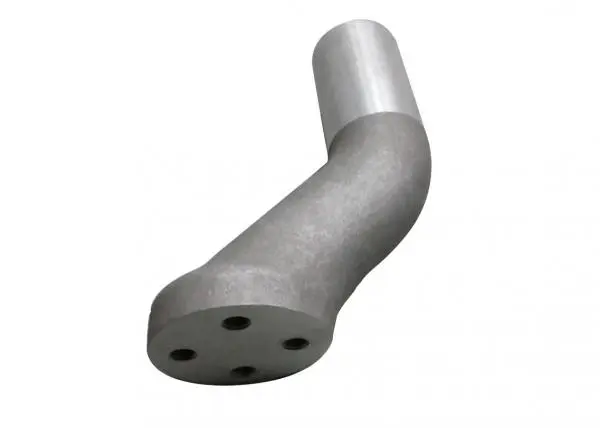
Gravity Casting and Sand Casting Processes
It is helpful to know how each method works on the shop floor before comparing them.
How Gravity Casting Works
In gravity casting, molten metal, usually an aluminium alloy like ZL101A, is put straight into a fixed metal die that can be used again and again. The fill is only moved by gravity; no outside power is used. The die stays the same shape over thousands of rounds because it is made of polished steel. As a result, the casting has a smooth surface, walls that are all the same thickness, and tight tolerances on the sizes. It usually doesn't need much post-processing. At Rongbao Enterprise, fire pump housings made from ZL101A through this route weigh about 4 kg and are machined with CNC and shot-blasted before being sent out in strong wooden boxes.
How Sand Casting Works
In sand casting, the permanent die is swapped out for a disposable mould that is packed around a reusable pattern. When the molten metal hardens, the sand mould is broken away to release the finished casting. The process supports oversized and highly complex components, such as engine blocks, manifold bodies and structural housings, as each pouring cycle uses a new custom mould. It is compatible with diverse materials including grey iron, ductile iron, carbon steel and aluminium. While pattern manufacturing costs are low, the process delivers inferior surface finish and dimensional accuracy compared with gravity casting.
Key Differences Between Gravity Casting and Sand Casting
Getting procurement teams to use the right process for their budget, volume, and quality goals requires them to understand how the two methods work differently.
Dimensional Accuracy and Surface Finish
Gravity casting part achieves consistent dimensional tolerances within the CT5–CT7 range per ISO 8062 standards, while sand casting typically falls in the CT10–CT13 range. This precision gap is critical for core fire pump components like impellers and valve bodies, where a 0.1 mm dimensional deviation can cause assembly failure or hydraulic leakage. Post-shot-blasting gravity cast parts feature a surface roughness of Ra 3.2–6.3 µm, greatly reducing subsequent finishing workload and costs.
Tooling Investment and Production Volume Economics
Gravity casting adopts reusable metal dies with high upfront tooling costs, but the cost advantage becomes prominent in medium and high-volume production. Industry practice proves that gravity casting is more cost-competitive than sand casting for batch sizes of 500 to 1,000 pieces and above. In contrast, sand casting with low-cost patterns is ideal for small-batch prototypes, customized parts and oversized components unfit for die manufacturing.
Here's a quick look at the differences between the two ways based on the factors that mean most to B2B procurement teams:
-
Dimensional tolerance: Gravity casting delivers CT5–CT7 accuracy; sand casting typically achieves CT10–CT13, making gravity casting the preferred choice wherever tight assembly fits are non-negotiable.
-
Surface roughness: Gravity cast surfaces average Ra 3.2–6.3 µm after shot blasting; sand cast surfaces average Ra 12.5–25 µm, often requiring additional finishing operations.
-
Tooling cost: Permanent metal dies carry higher initial investment, while sand patterns are inexpensive to fabricate, making sand casting economical for one-off or very low-volume runs.
-
Defect profile: Gravity casting parts produces lower porosity levels due to the controlled, laminar fill; sand casting is more susceptible to gas entrapment and sand inclusion if mold preparation is inconsistent.
-
Cycle time per piece: Gravity casting cycles are shorter because the permanent die retains heat uniformly, whereas sand molds must be rebuilt every cycle, adding labor time.
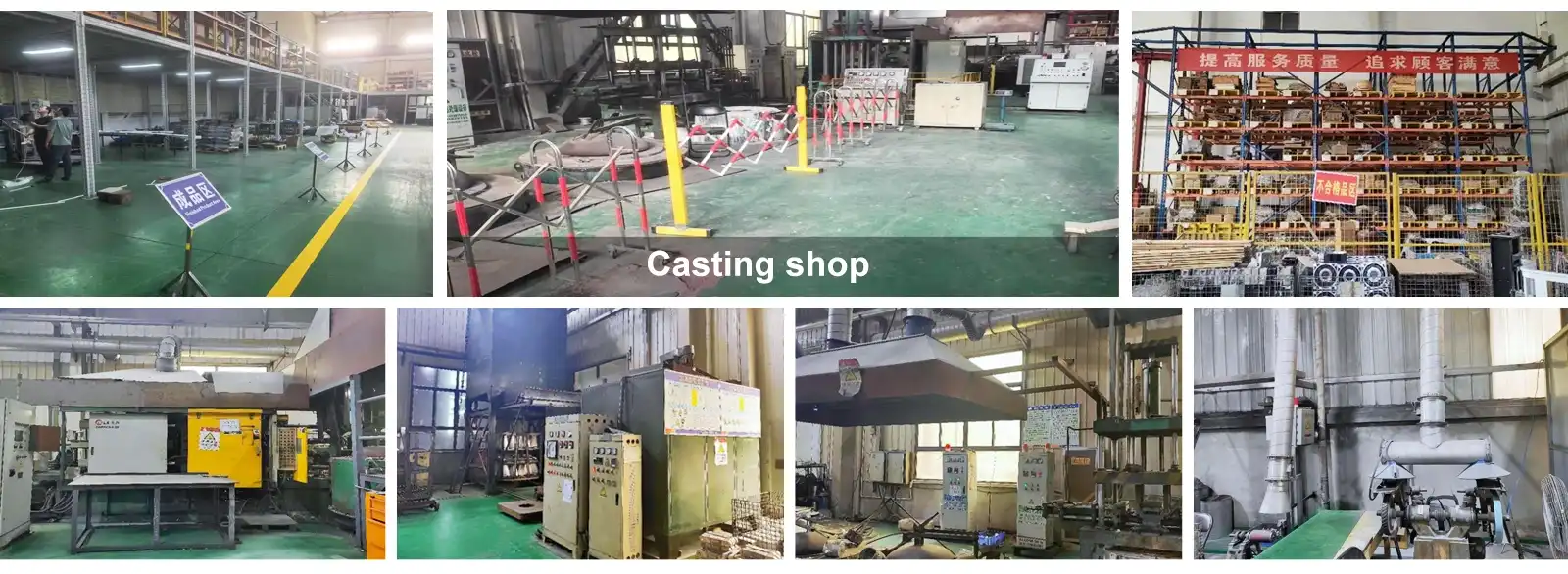
Performance and Application Suitability
Where Gravity Casting Excels
Gravity casting parts stand out for standardized, medium-to-high-volume industrial components that demand consistent precision, smooth surface quality, and stable mechanical performance. Thanks to reusable polished steel dies and gravity-driven laminar metal filling, the process minimizes internal porosity and dimensional deviation, delivering repeatable part quality across thousands of production cycles. Its short cycle time and low post-processing requirements significantly improve production efficiency and reduce overall operational costs for mass production scenarios.
After T6 heat treatment, ZL101A and other mainstream aluminum alloy gravity cast parts attain tensile strengths of 200–280 MPa, delivering stable pressure resistance and structural rigidity. These properties make the process perfect for core fire pump components including pump housings, impeller housings, tee-pipe connections and drainage valves, which endure fluctuating hydraulic pressure and long-term continuous operation. It is also widely applied to mass-produced industrial and automotive standard parts requiring reliable dimensional consistency.
Where Sand Casting Remains Indispensable
Sand casting cannot be replaced for customized, oversized, or special-material industrial components. Unlike gravity casting limited by die size and material adaptability, sand casting uses disposable customizable sand molds, supporting the production of ultra-large parts (over 50 kg), complex structural components with deep inner cavities, and irregular-shaped parts that cannot be demolded with fixed metal dies.
Moreover, the process is compatible with ferrous metals including grey iron, ductile iron, and carbon steel — materials that cannot be processed via gravity casting due to their high melting temperatures that damage steel dies. For low-volume prototypes, customized non-standard parts, and heavy-duty structural equipment components such as large pump volute cases, industrial valve bodies, and machine base supports, sand casting remains the most cost-effective and feasible production solution.
Procurement Considerations for B2B Clients
Selecting the optimal casting process is only the first step in reliable component sourcing. Supplier qualification and standardized quality management are core guarantees of consistent product quality and stable supply. For fire pump and industrial equipment casting procurement, compliance with international management system standards is a key evaluation indicator for qualified suppliers.
ISO 9001:2015 is the globally authoritative quality management system standard, defining complete specifications for the establishment, implementation and continuous optimization of enterprise quality management. Certified suppliers implement standardized whole-process control, including process supervision, internal audit and performance improvement, effectively reducing defective rates and production inefficiencies. For fire safety equipment, ISO 9001:2015 certification is a recognized basic qualification by Chinese national fire approval authorities and most Southeast Asian market regulators, ensuring product compliance with industry safety and quality norms.
Professional qualified suppliers should also hold ISO 14001 environmental management system certification and ISO 45001 occupational health and safety management system certification to achieve standardized control of production environmental protection and workplace safety. Rongbao Enterprise fully complies with these three major international system standards, implementing standardized management throughout all processes including casting, CNC precision machining, and surface treatment at its Xi'an production base, providing traceable, stable, and high-quality casting components for B2B clients.
In addition, one-stop multi-process production capability is a critical advantage for procurement optimization. A complete fire pump system usually requires multiple casting processes: large flanged structural parts adopt sand casting, precision pressure-bearing pump housings adopt gravity casting, and high-precision impellers adopt investment casting. Choosing a supplier with integrated multi-process capabilities simplifies supply chain coordination, unifies quality standards, synchronizes delivery cycles, and effectively reduces procurement management costs and supply risks.
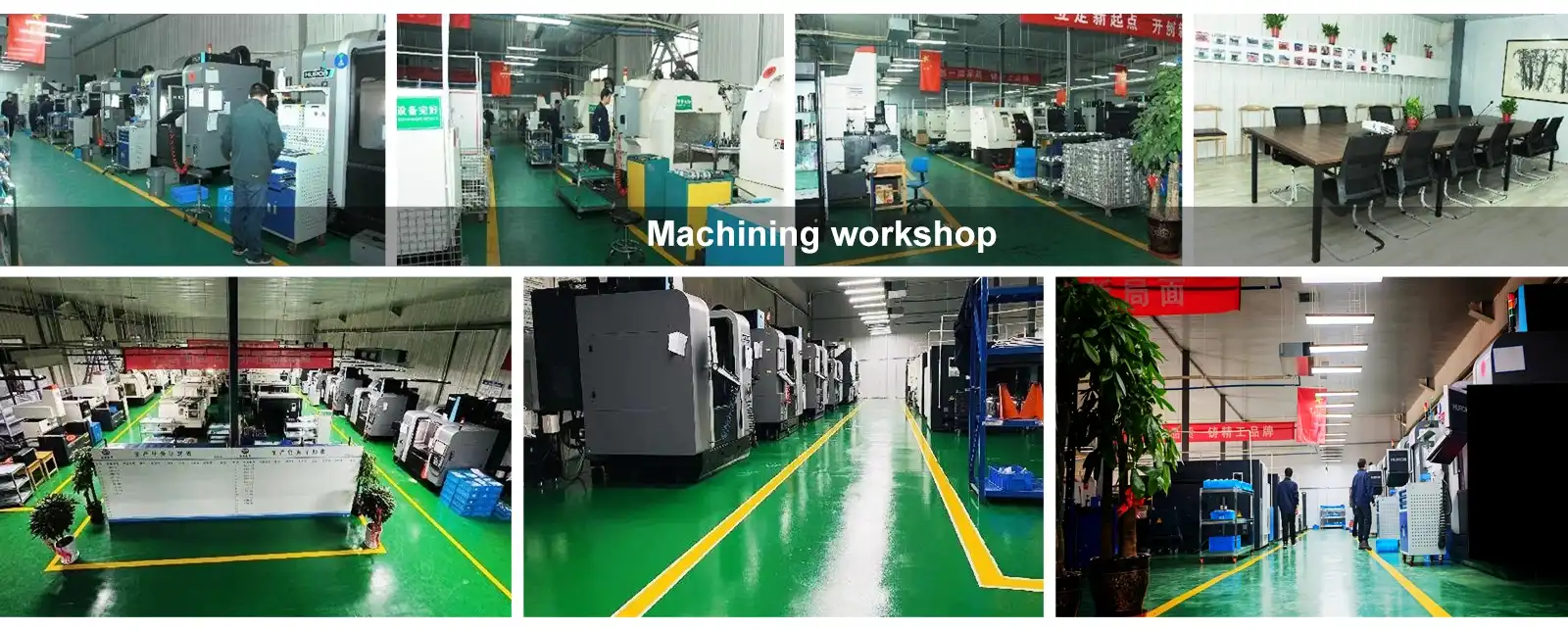
Mitigating Risks and Ensuring Quality in Casting Procurement
The core quality risks of casting components affecting fire pump and industrial equipment operation concentrate on internal porosity and dimensional drift. Porosity defects will directly lead to hydraulic pressure test failure, causing fluid leakage and reducing equipment operational safety and service life. Cumulative dimensional tolerance errors caused by dimensional drift will result in unqualified assembly gaps of core components such as impellers, affecting equipment hydraulic efficiency and even causing operational failures.
To mitigate these risks, procurement teams should establish standardized supplier evaluation and incoming inspection mechanisms. First, prioritize suppliers with valid ISO 9001:2015 quality system certification and complete process management systems to ensure standardized production control. Second, verify suppliers' process capability for targeted products: strict mold temperature control and filling process management for gravity casting to reduce porosity; standardized sand mold preparation and pouring parameter control for sand casting to avoid sand inclusion and gas entrapment defects. Third, require suppliers to provide mechanical performance test reports and dimensional inspection reports for batch products, and conduct random incoming inspections to ensure batch consistency.
Conclusion
Gravity casting and sand casting each have unique advantages and applicable scenarios in the production of fire pump and industrial equipment components. Gravity casting is the optimal choice for medium-to-high-volume, standardized, high-precision, high-surface-quality aluminum alloy parts, with outstanding advantages in production efficiency, dimensional stability, and post-processing cost control. Sand casting is irreplaceable for oversized, complex-structured, special-material, and low-volume customized parts, with flexible process adaptability and low prototype tooling costs.
For B2B procurement engineers, the optimal sourcing strategy is to match the casting process with product application scenarios, batch volume, and quality requirements. Meanwhile, selecting certified, multi-process integrated professional suppliers is the key to avoiding quality risks, stabilizing supply cycles, and reducing comprehensive procurement costs.
FAQ
What metals can be used in gravity casting?
Gravity casting is primarily suitable for low-melting-point, non-ferrous metals with good casting fluidity. The most widely used materials are aluminum alloys including ZL101A, A356, and A380, which feature low density, excellent corrosion resistance, and superior casting performance, fully meeting the mechanical and anti-corrosion requirements of fire pump components and industrial parts. In addition, copper alloys and zinc alloys are also commonly used in gravity casting for manufacturing high-precision valve fittings, electrical connection components, and small structural parts. Ferrous metals such as iron and steel are not applicable to gravity casting due to their ultra-high melting temperatures that damage reusable steel dies.
How does lead time compare between the two processes?
Gravity casting has obvious lead time advantages for repeat bulk orders. Benefiting from reusable fixed metal dies, the process eliminates repeated mold production links. A standard batch of 1,000 fire pump housings can be completed within 10–15 working days from raw material feeding to finished product delivery, with stable and predictable delivery cycles.
Sand casting lead times are more variable and order-dependent. For new customized parts, the process requires pattern making and sand mold debugging, resulting in longer pre-production preparation cycles. For mature, recurring sand casting parts with existing patterns, the lead time will be shortened significantly, but the cyclic sand mold making and mold breaking processes still lead to longer single-piece production cycles and lower overall efficiency compared with gravity casting.
At what volume does gravity casting become more cost-effective than sand casting?
Gravity casting requires higher upfront investment in steel die fabrication, making it uneconomical for ultra-low-volume orders. As verified by industrial production data, when the single-batch quantity reaches 500–1,000 pieces, the amortized tooling cost, lower post-processing expenditure and higher production efficiency of gravity casting offset its initial cost premium, surpassing sand casting in overall cost performance. Sand casting remains the better choice for batches below 500 pieces, while gravity casting boasts obvious comprehensive advantages for mass production over 1,000 pieces.
Partner with Rongbao Enterprise for Certified Gravity Casting Parts
Rongbao Enterprise is a professional manufacturer focusing on high-quality gravity casting, sand casting, precision CNC machining, and surface treatment for fire pump and industrial equipment components. We hold complete ISO 9001:2015 quality management, ISO 14001 environmental management, and ISO 45001 occupational health and safety management system certifications, implementing full-process standardized quality control.
We support customized production of multiple casting processes, covering high-precision gravity cast aluminum alloy parts and large complex sand cast structural parts. With mature production lines, strict quality inspection systems, and stable delivery capabilities, we provide one-stop customized sourcing solutions for global B2B clients, helping enterprises optimize procurement costs and ensure product quality stability.
Contact email: steve.zhou@263.net
References
[1] International Organization for Standardization. (2015). ISO 9001:2015 Quality Management Systems — Requirements.
[2] International Organization for Standardization. (2021). ISO 8062-3: Geometrical product specifications — Dimensional and geometrical tolerances for moulded parts.
[3] American Foundry Society. (2020). Casting Source Directory and Metalcasting Industry Overview.
[4] ASM International. (2004). ASM Handbook, Volume 2: Properties and Selection — Nonferrous Alloys and Special-Purpose Materials.
[5] Beeley, P. (2001). Foundry Technology (2nd ed.). Butterworth-Heinemann.
[6] Campbell, J. (2015). Complete Casting Handbook: Metal Casting Processes, Metallurgy, Techniques and Design (2nd ed.). Butterworth-Heinemann.
Learn about our latest products and discounts through SMS or email