- English
- French
- German
- Portuguese
- Spanish
- Russian
- Japanese
- Korean
- Arabic
- Greek
- German
- Turkish
- Italian
- Danish
- Romanian
- Indonesian
- Czech
- Afrikaans
- Swedish
- Polish
- Basque
- Catalan
- Esperanto
- Hindi
- Lao
- Albanian
- Amharic
- Armenian
- Azerbaijani
- Belarusian
- Bengali
- Bosnian
- Bulgarian
- Cebuano
- Chichewa
- Corsican
- Croatian
- Dutch
- Estonian
- Filipino
- Finnish
- Frisian
- Galician
- Georgian
- Gujarati
- Haitian
- Hausa
- Hawaiian
- Hebrew
- Hmong
- Hungarian
- Icelandic
- Igbo
- Javanese
- Kannada
- Kazakh
- Khmer
- Kurdish
- Kyrgyz
- Latin
- Latvian
- Lithuanian
- Luxembou..
- Macedonian
- Malagasy
- Malay
- Malayalam
- Maltese
- Maori
- Marathi
- Mongolian
- Burmese
- Nepali
- Norwegian
- Pashto
- Persian
- Punjabi
- Serbian
- Sesotho
- Sinhala
- Slovak
- Slovenian
- Somali
- Samoan
- Scots Gaelic
- Shona
- Sindhi
- Sundanese
- Swahili
- Tajik
- Tamil
- Telugu
- Thai
- Ukrainian
- Urdu
- Uzbek
- Vietnamese
- Welsh
- Xhosa
- Yiddish
- Yoruba
- Zulu
Gravity Casting vs. Low Pressure Die Casting Used in Robotic Arm Bracket
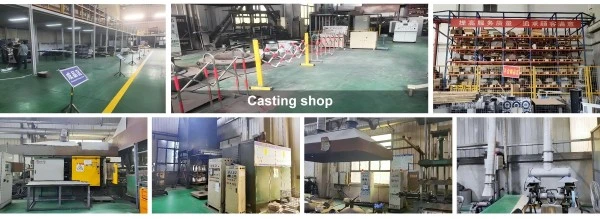
In the rapidly evolving fields of robotics and automation, the manufacturing processes used to produce critical components like low pressure casting robotic arm brackets play a crucial role in determining the overall performance, reliability, and cost-effectiveness of the final product. Two widely used casting methods for producing robotic arm brackets are gravity casting and low pressure die casting.

Process Principles
To understand the advantages and limitations of gravity casting and low pressure die casting for robotic arm brackets, it's essential to first examine the fundamental principles behind each process.
Gravity Casting
Gravity casting, also known as permanent mold casting, is a traditional metal casting process that relies on gravitational force to fill the mold cavity with molten metal. The process involves the following steps:
- Mold preparation: A permanent mold, typically made of metal (often steel or cast iron), is prepared and preheated.
- Pouring: Molten metal is poured into the mold cavity from the top, allowing gravity to fill the mold.
- Solidification: The metal is allowed to cool and solidify within the mold.
- Ejection: Once solidified, the cast part is removed from the mold.
Gravity casting is widely used due to its relatively simple setup and lower equipment costs compared to more advanced casting methods. However, it has limitations in terms of achievable complexity and consistency, particularly for parts with thin walls or intricate geometries.
Low Pressure Die Casting
Low pressure die casting (LPDC) is a more advanced casting process that uses controlled pressure to fill the mold cavity. The key steps in LPDC include:
- Mold preparation: A split die (usually made of tool steel) is prepared and preheated.
- Pressurization: Molten metal in a sealed furnace below the mold is pressurized, typically using inert gas.
- Mold filling: The pressure forces the molten metal up through a feed tube and into the mold cavity.
- Solidification: The metal solidifies under controlled pressure.
- Ejection: The solidified part is removed from the mold.
LPDC has a number of benefits over gravity casting, including as better control over the filling process, less turbulence, and the ability to make components with thinner walls and more complicated shapes with better uniformity.
Key Differences In The Application Of Robotic Arm Brackets
When making robotic arm brackets, choosing between gravity casting and low-pressure die casting can have a big effect on the quality, performance, and cost-effectiveness of the finished product. Let's look at the main differences between these two strategies in this case:
1. Dimensional Accuracy and Surface Finish
Robotic arm brackets require high dimensional accuracy to ensure precise movements and positioning of the robotic arm. Low pressure die casting generally provides superior dimensional accuracy compared to gravity casting. The controlled filling process in LPDC reduces the likelihood of defects such as shrinkage porosity and improves overall part consistency.
Additionally, low pressure casting robotic arm brackets typically produces parts with better surface finish, which can be crucial for robotic arm brackets that may require minimal post-casting machining or surface treatment. This can lead to reduced manufacturing costs and improved aesthetics of the final product.
2. Complexity and Design Freedom
Modern robotic arm brackets often incorporate complex geometries to optimize weight, strength, and functionality. Low pressure die casting offers greater design freedom compared to gravity casting, allowing for the production of more intricate shapes, thinner walls, and internal cavities.
This increased design flexibility enables engineers to create robotic arm brackets that are lighter, stronger, and more efficient in their use of material. Gravity casting, while capable of producing simpler bracket designs, may struggle with more complex geometries or thin-walled sections.
3. Material Properties and Mechanical Performance
The mechanical properties of robotic arm brackets are critical to their performance and durability. Low pressure die casting generally produces parts with more consistent and often superior mechanical properties compared to gravity casting. This is due to the controlled filling and solidification process, which results in a finer grain structure and reduced porosity.
For robotic arm brackets, which may be subjected to repetitive stress and dynamic loads, the improved strength, ductility, and fatigue resistance offered by LPDC can lead to enhanced long-term reliability and performance.
4. Production Efficiency and Cost-effectiveness
While gravity casting may have lower initial tooling costs, low pressure die casting often proves more cost-effective for medium to high volume production of robotic arm brackets. LPDC can save total production costs by a lot by speeding up cycle times, lowering scrap rates, and making parts more consistent.
Also, LPDC products don't need as many secondary procedures, such machining or surface treatment, which may save even more money and make production more efficient.
Low-Pressure Casting: More Suitable For Robotic Arm Brackets
Given the unique requirements of robotic arm brackets and the comparative advantages of low pressure die casting, it's clear that LPDC is often the more suitable choice for this application. Let's delve deeper into why this is the case:
1. Precision and Consistency
Robotic arm brackets serve as critical components in the overall robotic system, directly influencing the accuracy and repeatability of the robot's movements. The superior dimensional accuracy and consistency offered by low pressure die casting ensure that each bracket meets the stringent tolerances required for precise robotic operations.
In fields like automobile manufacturing, aerospace, and medical equipment manufacture, where even little changes in the size of parts can have big effects on the quality and function of the final product, this degree of accuracy is very crucial.
2. Weight Optimization
In robotics, weight is a crucial factor affecting energy efficiency, speed, and payload capacity. Low pressure die casting allows for the production of robotic arm brackets with optimized designs that minimize weight while maintaining necessary strength and stiffness.
The ability to create thinner walls and more complex internal structures through LPDC enables engineers to design brackets that use material more efficiently, resulting in lighter yet robust components. This weight reduction can lead to improved robot performance, reduced energy consumption, and increased payload capacity.
3. Material Versatility
Low pressure die casting is compatible with a wide range of aluminum alloys, including those specifically engineered for high-performance applications. This versatility allows manufacturers to select the optimal material for robotic arm brackets based on specific requirements such as strength-to-weight ratio, corrosion resistance, or thermal properties.
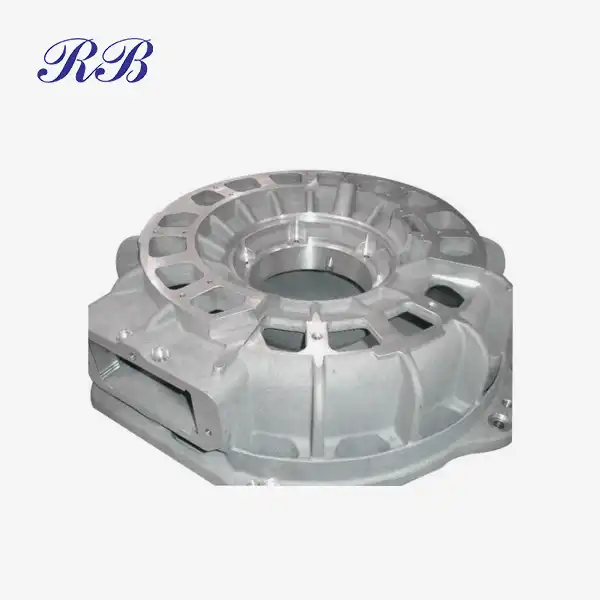
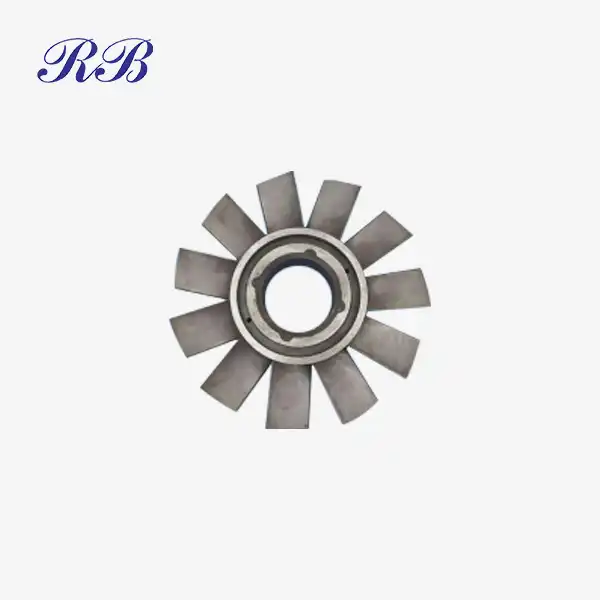
For instance, Rongbao Enterprise, a leading manufacturer of low pressure casting robotic arm brackets, utilizes the ZL101A aluminum alloy, known for its excellent castability and mechanical properties. This weight loss can make robots work better, use less energy, and carry more weight.
4. Reduced Post-Processing
The superior surface finish and near-net-shape capabilities of low pressure die casting significantly reduce the need for extensive post-casting operations. This is particularly advantageous for robotic arm brackets, which often require high-precision surfaces for assembly and operation.
By minimizing machining and surface treatment requirements, LPDC not only reduces production costs but also maintains the integrity of the cast microstructure, preserving the optimal mechanical properties of the bracket.

Rongbao Enterprise: A Leader in Low Pressure Casting Robotic Arm Brackets
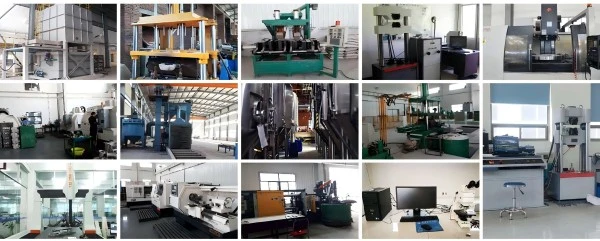
Rongbao Enterprise has become one of the best makers of low-pressure casting robotic arm brackets by using the benefits of LPDC to provide high-quality parts for the robotics industry.
Rongbao is a trusted supplier for robotic arm makers throughout the world because they are dedicated to quality and new ideas in low pressure die casting. Their robotic arm brackets fulfill the strict demands of current robotics applications since they can make unique solutions and follow international quality standards.
While both gravity casting and low pressure die casting have their places in manufacturing, the unique demands of robotic arm brackets make low pressure die casting the superior choice in most cases. The precision, consistency, design flexibility, and material properties achievable through LPDC align perfectly with the critical requirements of robotic arm components.
For more information on low pressure casting robotic arm brackets and Rongbao's offerings, interested parties can contact them at zhouyi@rongbaocasting.com or steve.zhou@263.net.
References
- Campbell, J. (2015). Complete Casting Handbook: Metal Casting Processes, Metallurgy, Techniques and Design. Butterworth-Heinemann.
- Zheng, J., Wang, Q., Zhao, P., & Wu, C. (2009). Optimization of high-pressure die-casting process parameters using artificial neural network. The International Journal of Advanced Manufacturing Technology, 44(7-8), 667-674.
- Bonollo, F., & Gramegna, N. (2015). The MUSIC guide to key-parameters in high pressure die casting. AIM-Associazione Italiana di Metallurgia.
- Andresen, B. (2005). Die casting engineering: a hydraulic, thermal, and mechanical process. CRC Press.
- Vinarcik, E. J. (2003). High integrity die casting processes. John Wiley & Sons.
- Lumley, R. (Ed.). (2018). Fundamentals of aluminium metallurgy: Recent advances. Woodhead Publishing.
Learn about our latest products and discounts through SMS or email