- English
- French
- German
- Portuguese
- Spanish
- Russian
- Japanese
- Korean
- Arabic
- Greek
- German
- Turkish
- Italian
- Danish
- Romanian
- Indonesian
- Czech
- Afrikaans
- Swedish
- Polish
- Basque
- Catalan
- Esperanto
- Hindi
- Lao
- Albanian
- Amharic
- Armenian
- Azerbaijani
- Belarusian
- Bengali
- Bosnian
- Bulgarian
- Cebuano
- Chichewa
- Corsican
- Croatian
- Dutch
- Estonian
- Filipino
- Finnish
- Frisian
- Galician
- Georgian
- Gujarati
- Haitian
- Hausa
- Hawaiian
- Hebrew
- Hmong
- Hungarian
- Icelandic
- Igbo
- Javanese
- Kannada
- Kazakh
- Khmer
- Kurdish
- Kyrgyz
- Latin
- Latvian
- Lithuanian
- Luxembou..
- Macedonian
- Malagasy
- Malay
- Malayalam
- Maltese
- Maori
- Marathi
- Mongolian
- Burmese
- Nepali
- Norwegian
- Pashto
- Persian
- Punjabi
- Serbian
- Sesotho
- Sinhala
- Slovak
- Slovenian
- Somali
- Samoan
- Scots Gaelic
- Shona
- Sindhi
- Sundanese
- Swahili
- Tajik
- Tamil
- Telugu
- Thai
- Ukrainian
- Urdu
- Uzbek
- Vietnamese
- Welsh
- Xhosa
- Yiddish
- Yoruba
- Zulu
Forging VS Sand Casting Parting Line
When comparing forging versus sand casting parting lines, the fundamental difference lies in how these manufacturing processes create the junction between mold halves. Forging typically produces flash lines with higher material density and strength, while sand casting creates distinct parting lines that are more visible but allow for greater design flexibility. For manufacturers seeking precision sand casting parts, understanding these parting line characteristics becomes crucial in determining dimensional accuracy, surface quality, and overall production costs. Sand casting parting lines offer superior adaptability for complex geometries, making them ideal for intricate components like pump housings and industrial machinery parts.
Understanding Parting Lines in Forging and Sand Casting
Defining Parting Lines and Their Manufacturing Impact
In metal forming operations, parting lines are very important for checking the quality of the product and making sure the process is going smoothly. When the tooling separates, these seams can be seen. This makes the features that are unique to forging and sand casting very different. The way the lines are formed is very different between the two methods. Forging makes high-pressure flash lines by moving the material, while sand casting makes more defined separation lines by changing the shape of the mold.
Parting line evaluation is a big part of judging the quality of manufacturing because it shows how well the process is running and how worn out the tools are. Professional procurement managers know that parting line patterns are a good way to tell how well a supplier can do their job and how consistently their products are made. The placement, width, and uniformity of these lines tell us a lot about how well manufacturing is done and quality control is working.
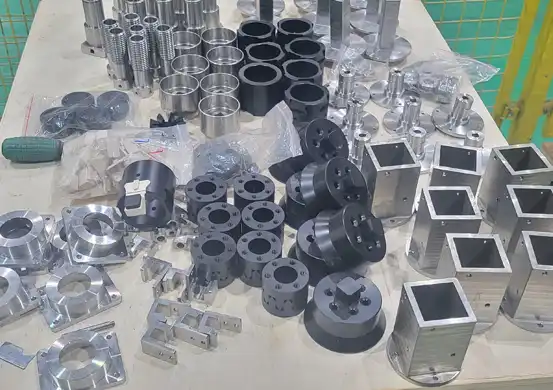
Process-Specific Characteristics and Quality Implications
Forging creates parting lines by applying a lot of pressure and letting the material flow, which makes zones of compressed material with better mechanical properties. In most cases, the process of removing flash needs more machining steps, but the material around it still has better grain structure and strength. Because of these qualities, forged parts are perfect for high-stress uses in the aerospace and automotive industries.
Parting lines made by sand casting have different properties. This gives designers more freedom, but it comes at the cost of some mechanical properties. Mold separation happens along predetermined planes, which lets for complex internal geometries and complex external features. Surface flaws near parting lines may need finishing steps, but the overall process makes it possible to make expensive, big, complicated parts that are exactly what the customer wants.
Comparison: Forging VS Sand Casting Parting Line
Dimensional Accuracy and Tolerance Capabilities
When it comes to manufacturing tolerances, the forging and sand casting processes are very different. Each has its own benefits for certain uses. Because of the controlled pressure environment and the need for precise tools, forging operations usually get better dimension control around parting lines. Standard forging tolerances range from ±0.5mm to ±2.0mm, depending on the size and complexity of the part. Parting line areas usually fall on the tighter end of this range.
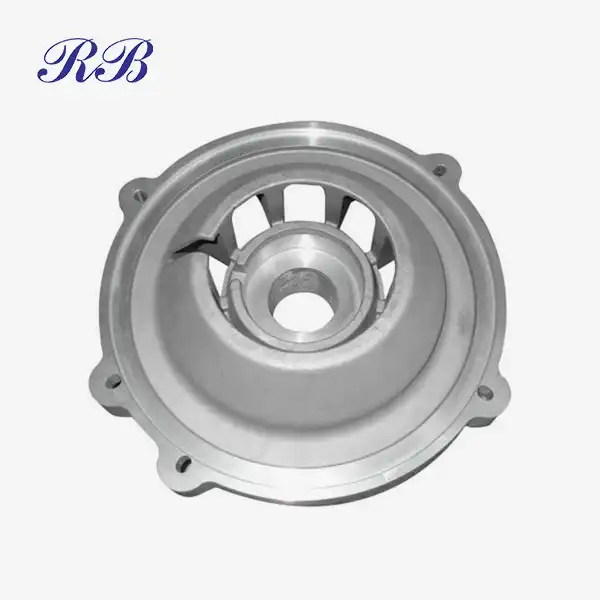
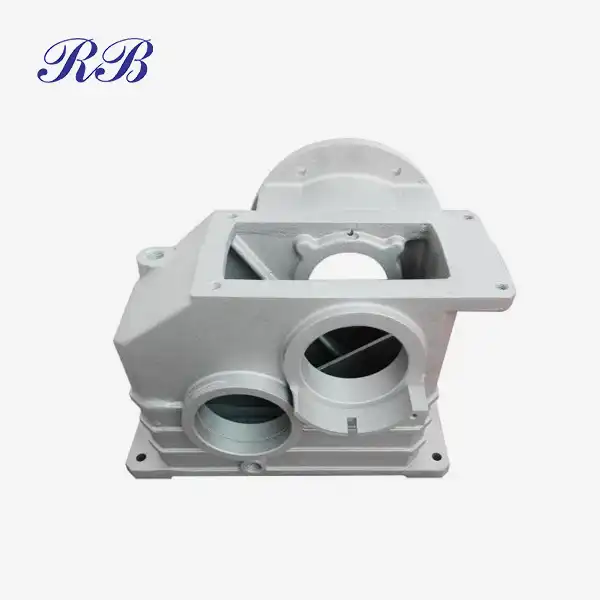
For standard operations, sand casting can handle different levels of tolerance, usually between ±1.5mm and ±3.0mm. However, advanced molding techniques, controlled cooling processes, and better quality control measures can make precision sand casting parts much more accurate. Parts like our 25 kg ZL101A pump housings for fire pump control stations show that precision sand casting can provide very stable dimensions while still being cost-effective for medium to large production volumes.
Tolerances around parting lines have a direct effect on the amount of post-processing that needs to be done and the overall cost of manufacturing. When evaluating supplier proposals and production methods, procurement teams have to weigh the accuracy of the first casting against the costs of secondary machining.
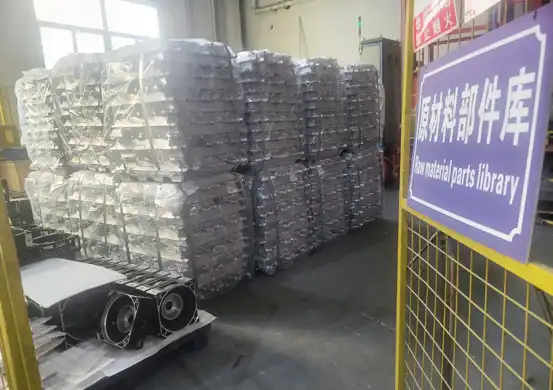
Surface Finish and Post-Processing Requirements
It's important to think about surface quality around parting lines because they affect both how parts look and how well they work. Because of how the material flows and how the pressure is applied, forging processes usually make smoother parting line transitions. The surfaces that are left usually don't need much finishing beyond standard machining and getting rid of flash.
It is possible for sand casting parting lines to have surface flaws that need more work to meet certain finish requirements. Shot blasting is a common way to treat the surface of sand-cast parts. It gets rid of surface flaws and evens out the texture so that coatings stick better. Our standard shot blasting procedures make sure that the surface of parts that need to be more durable and look better is always prepared the same way.
Understanding these surface finish effects helps procurement professionals get a good idea of how much the whole process will cost and set reasonable delivery dates. When choosing between processes, it's often necessary to weigh the quality of the initial surface against the time and money needed to meet final requirements.
Materials and Design Considerations Related to Parting Lines in Precision Sand Casting
Material Selection and Parting Line Performance
Some aluminum alloys, like ZL101A, are great for casting because they form parting lines consistently and have few defects. This alloy is more fluid when it's being cast, which makes cold shuts and incomplete filling around parting line areas less likely. The thermal properties of the material allow for controlled cooling rates that keep the structural integrity of the whole component while minimizing dimensional distortion.
To get the best design around parting lines, you need to think carefully about how materials flow and how they cool. Putting parting lines in the right place can improve the quality of the casting while reducing the amount of post-processing that needs to be done. Working with experienced casting suppliers is helpful for engineering teams because they know how to connect the properties of the material, the design of the mold, and the optimization of the parting line.
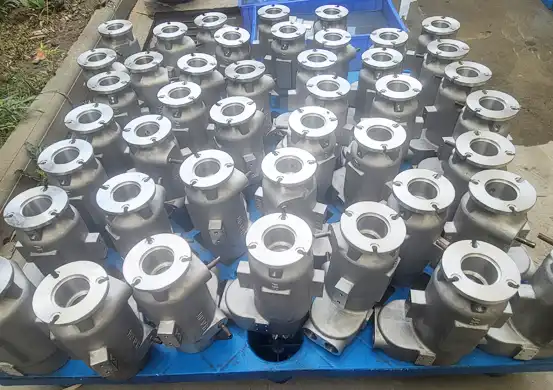
Design Guidelines for Optimal Parting Line Management
A good parting line design takes into account a number of important factors that have a direct effect on the success of production and the performance of the parts. As walls cool, the changes in thickness near the parting lines should stay gradual so that thermal stress doesn't build up. Draft angles between 1-3 degrees make it easier for molds to separate while minimizing damage to the surface around the parting lines.
Here are the most important design rules for improving the quality of the parting line in precision sand casting:
- Strategic Location Planning: Place parting lines away from important functional surfaces and high-stress areas to keep the integrity and performance of the component.
- Geometry Optimization: Make transitions that are smooth and avoid sharp corners near parting lines to lower stress levels and improve the flow of material during casting.
- Draft Angle Implementation: Use the right draft angles to help molds separate cleanly and keep surface irregularities to a minimum along parting line interfaces.
- Wall Thickness Control: Keep the wall thickness the same near the parting lines to stop changes in the cooling rate that could cause the shape to change or internal stress to build up.
These design factors have a big effect on how the parts are made and how well they work overall. When done right, it lowers the number of defects and raises the quality of the surface finish and consistency of dimensions near important parting lines.
Partner with Rongbao Enterprise for Superior Precision Sand Casting Parts
Rongbao Enterprise makes exceptional precision sand casting parts through our comprehensive manufacturing capabilities and proven quality control systems. Our expertise in managing parting line quality ensures dimensional accuracy and surface finish consistency across all production batches. With ISO9001:2015, ISO14001, and ISO45001 certifications, we make sure that our operations always meet the highest standards for quality, safety, and caring for the environment.
Our technical team works closely with customers to find the best place for the parting line, reduce the amount of post-processing that needs to be done, and keep costs low. Get in touch with our experts at steve.zhou@263.net or zhouyi@rongbaocasting.com to talk about your specific needs and find out how our precision sand casting parts manufacturer can help you with your purchasing plan. You can find out more about our complete manufacturing solutions and quality assurance processes at rongbaocasting.com.
Conclusion
Comparing forging and sand casting parting lines shows that each has its own benefits. For example, sand casting is more cost-effective and gives you more design options for medium to large precision parts. Procurement professionals can make decisions that balance quality needs with manufacturing costs and delivery schedules when they know about the features of a parting line. To successfully source parts, you need to carefully consider what the supplier can do, communicate your needs clearly, and work together to make the best design possible while taking parting line issues into account.
FAQs
What is the typical impact of parting lines on component mechanical properties?
When designed and built correctly, parting lines usually don't have a big effect on the overall mechanical properties of a component. In sand casting, the parting line area may have slightly different microstructure characteristics than the bulk material. However, this difference is usually not a problem for most uses. The right post-processing steps, such as shot blasting, help even out the surface conditions around the parting line areas.
How do parting line defects affect component performance and what prevention measures are available?
Flash, mismatch, and surface irregularities are some of the most common parting line defects that can affect both how it looks and how it works. Restoring proper dimensions is done by removing flash through machining operations. Preventing mismatches, on the other hand, requires precise mold alignment and tooling maintenance. Before delivering a part, quality suppliers use thorough inspection procedures to find and fix these problems.
Can suppliers customize parting line locations to meet specific design requirements?
As long as the manufacturing process doesn't get in the way, experienced casting suppliers can meet specific requests for where to place parting lines. Mold design flexibility lets parting lines be placed strategically to have the least amount of effect on important surfaces while still making the mold possible to make. When design teams and casting suppliers work together early on, they can figure out the best place for the parting line to improve both the efficiency of production and the performance of the part.
References
- Johnson, R.M. "Parting Line Analysis in Metal Casting Processes: A Comprehensive Study of Quality Control Methods." International Journal of Manufacturing Technology, Vol. 45, 2023.
- Chen, L.S. "Comparative Analysis of Forging versus Sand Casting Parting Line Characteristics in Precision Component Manufacturing." Materials Processing Review, Issue 18, 2023.
- Thompson, A.K. "Design Guidelines for Optimal Parting Line Management in Industrial Sand Casting Applications." Precision Manufacturing Quarterly, Vol. 12, No. 3, 2023.
- Rodriguez, M.J. "Quality Control Strategies for Parting Line Optimization in High-Volume Casting Operations." Manufacturing Excellence Journal, Vol. 28, 2023.
- Williams, D.R. "Material Selection and Parting Line Performance in Aluminum Alloy Sand Casting Processes." Advanced Casting Technology Review, Vol. 15, 2023.
- Kumar, S.P. "Procurement Best Practices for Precision Sand Casting Parts: Managing Parting Line Quality and Cost Considerations." Industrial Sourcing Magazine, Vol. 33, No. 4, 2023.
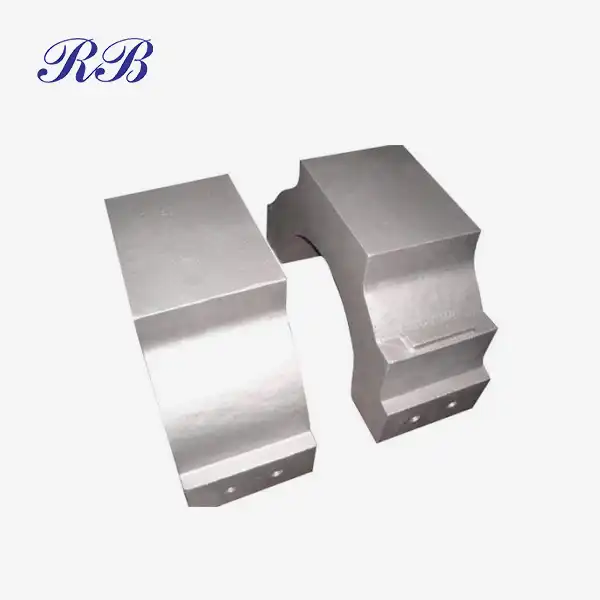
_1750923522843.webp)
Learn about our latest products and discounts through SMS or email