- English
- French
- German
- Portuguese
- Spanish
- Russian
- Japanese
- Korean
- Arabic
- Greek
- German
- Turkish
- Italian
- Danish
- Romanian
- Indonesian
- Czech
- Afrikaans
- Swedish
- Polish
- Basque
- Catalan
- Esperanto
- Hindi
- Lao
- Albanian
- Amharic
- Armenian
- Azerbaijani
- Belarusian
- Bengali
- Bosnian
- Bulgarian
- Cebuano
- Chichewa
- Corsican
- Croatian
- Dutch
- Estonian
- Filipino
- Finnish
- Frisian
- Galician
- Georgian
- Gujarati
- Haitian
- Hausa
- Hawaiian
- Hebrew
- Hmong
- Hungarian
- Icelandic
- Igbo
- Javanese
- Kannada
- Kazakh
- Khmer
- Kurdish
- Kyrgyz
- Latin
- Latvian
- Lithuanian
- Luxembou..
- Macedonian
- Malagasy
- Malay
- Malayalam
- Maltese
- Maori
- Marathi
- Mongolian
- Burmese
- Nepali
- Norwegian
- Pashto
- Persian
- Punjabi
- Serbian
- Sesotho
- Sinhala
- Slovak
- Slovenian
- Somali
- Samoan
- Scots Gaelic
- Shona
- Sindhi
- Sundanese
- Swahili
- Tajik
- Tamil
- Telugu
- Thai
- Ukrainian
- Urdu
- Uzbek
- Vietnamese
- Welsh
- Xhosa
- Yiddish
- Yoruba
- Zulu
Does sand casting produce intricate detailed parts with high precision?
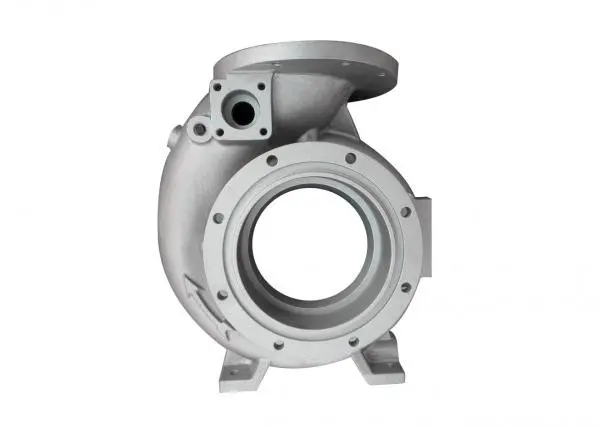
When advanced techniques are used, sand casting can make parts with a lot of small details that fit together perfectly. Precision sand casting parts are very accurate in terms of their dimensions thanks to special molding materials, better pattern engineering, and tightly controlled process parameters. Traditional sand casting might not be able to reproduce fine details as well as modern precision sand casting does. This is because it uses better sand mixtures, more accurate temperature control, and better mold-making methods. Because of these improvements, complex geometries can be made with tolerances that are similar to investment casting. This makes it a good choice for demanding industrial uses in the aerospace, heavy machinery, and automotive sectors.
Can Sand Casting Achieve Intricate and High-Precision Components?
Due to the size of the sand grains and the unevenness of the mold surface, traditional sand casting has had trouble making fine details in the past. Modern precision sand casting techniques, on the other hand, have gotten around these problems by improving both the process and the materials used.
Process Improvements and Advanced Materials
Modern precision sand casting has a number of important improvements that make it much better at reproducing details and keeping accurate measurements. Modern molding materials, like resin-coated sands and shell molding systems, give you better control over the size and finish of the part. These materials make it possible to capture intricate details and complex geometries that were hard to do with traditional sand casting methods.
Temperature control systems make sure that mold conditions stay the same and that metal flows smoothly. Automated pouring systems make it easier to control fill rates and metal distribution precisely while reducing the variation caused by human error. With these improvements in technology, precision sand casting parts can now compete with other ways of making things when it comes to surface quality and accuracy of size.
Real-World Applications and Success Stories
Precision sand casting has been used successfully in the auto industry to make complicated engine parts, transmission housings, and suspension parts. It is clear from these uses that modern sand casting can meet the strict tolerances and high quality surface standards needed for high-demand automotive uses. Precision sand casting is also used in the construction and heavy machinery industries to make pump housings, valve bodies, and other hydraulic parts that need to be strong and fit perfectly.
Another area where precision sand casting has shown its worth is in aerospace applications. Advanced sand casting techniques are often used to make engine parts and structural parts with complicated internal passages and tight dimensional tolerances. These examples show how sand casting has changed over time from a rough-casting process to a precise manufacturing method that can make high-quality parts for important uses.
Advantages and Quality Control of Precision Sand Casting Parts
Manufacturers looking for cost-effective ways to make complex parts will find that precision sand casting has a lot of benefits. Because the design is naturally flexible, it's possible to make parts with complex internal geometries and external features that would be hard or impossible to make with other methods.
Cost Efficiency and Design Flexibility
When production volumes are medium to high, the cost savings of precision sand casting become very clear. Compared to die casting or injection molding, tooling costs stay low, and the ability to make complex shapes in one operation cuts down on the need for secondary machining. Because of how much they cost, precision sand casting parts are a good choice for companies that need to balance quality needs with budget concerns.
Another big benefit is that design flexibility lets engineers make sure that the shape of a part is best for its function rather than how it will fit into the manufacturing process. The design can include complicated internal passages, different wall thicknesses, and complicated external features without having to pay a lot more. This flexibility encourages the creation of new products and lets manufacturers make sure that their parts have the best performance characteristics.
Quality Control Measures and Standards
Tough quality control rules make sure that the quality of the parts and their measurements stay the same from one production run to the next. Modern precision sand casting facilities use a wide range of inspection methods, such as measuring dimensions, testing without damaging the metal, and metallurgical analysis. These quality control steps help find and fix problems before they affect the quality of the production.
For example, ISO9001:2015, ISO14001, and ISO45001 are certification standards that help keep quality and process control consistent. These international standards make sure that manufacturing processes meet quality standards around the world and give customers faith in the abilities of suppliers. The surface treatment with shot blasting and CNC machining make the parts even better and make sure they meet the required dimensions and surface finish.
How to Source Reliable Precision Sand Casting Parts Suppliers?
When looking for suppliers, it's important to carefully consider a number of things, such as their technical skills, quality systems, and cost. Precision sand casting is very complicated, so suppliers need to have a lot of knowledge and a strong manufacturing infrastructure.
Supplier Evaluation Criteria
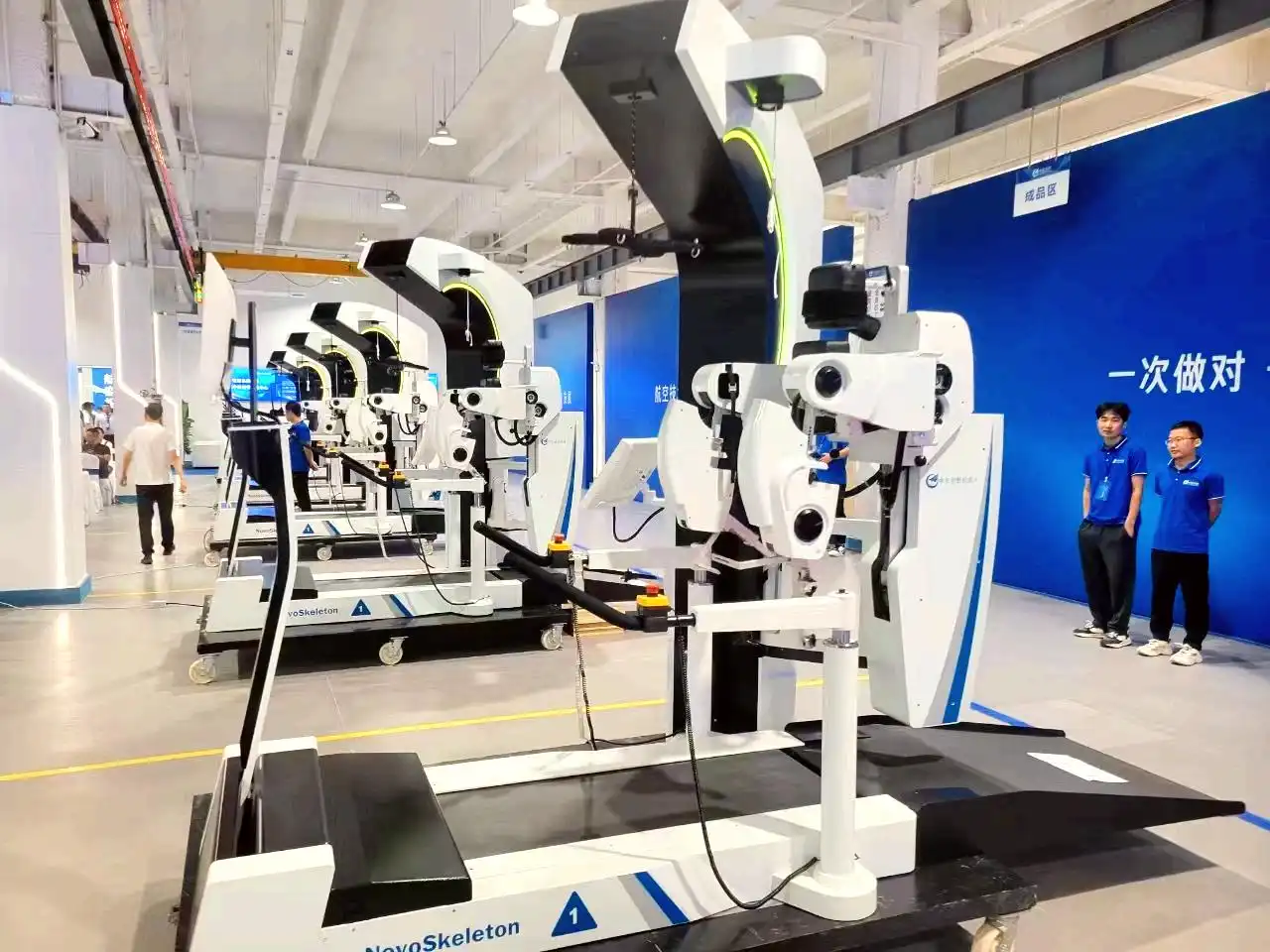
When evaluating a company's manufacturing capabilities, it should look at its equipment, process control systems, and quality assurance protocols. Suppliers must show that they can handle the whole manufacturing process, from making the patterns to finishing the work and treating the surface. Analysis of production capacity helps suppliers make sure they can meet demand while keeping quality standards high.
Verification of certification is still important to make sure that suppliers follow international rules. ISO certifications give people basic peace of mind about the quality of management systems and the ability to control processes. If the application and end-use needs are different, you may need to get more industry-specific certifications.
Geographic and Logistical Considerations
Global supplier networks give you access to specialized skills and prices that are competitive. Suppliers who are based in well-known manufacturing areas often offer a wide range of services, such as helping with design, making tools, and managing logistics. When shipping things internationally, using wooden boxes for transportation keeps costs low and protects parts during transit.
Communication skills and technical support services are very important for getting along with suppliers. Suppliers that offer OEM/ODM customization services add value by suggesting ways to improve the manufacturing process and make designs better. A production capacity of 5,000 pieces or more means that the company is big enough to handle large manufacturing programs while still keeping prices low.
Conclusion
Precision sand casting has grown into an advanced manufacturing method that can make complex, high-precision parts for a wide range of industrial uses. Modern techniques and materials make it possible to get surface finishes and dimensional accuracy that are on par with other precision manufacturing methods. This is done while keeping the cost benefits and design flexibility that come with sand casting. With their advanced process control, special materials, and thorough quality systems makes precision sand casting parts a viable solution for manufacturers seeking reliable, cost-effective components. To make precision sand casting work, you need to carefully choose your suppliers, make sure you have the right quality control measures in place, and know what the process can and can't do.
Partner with Rongbao Enterprise for Premium Precision Sand Casting Solutions
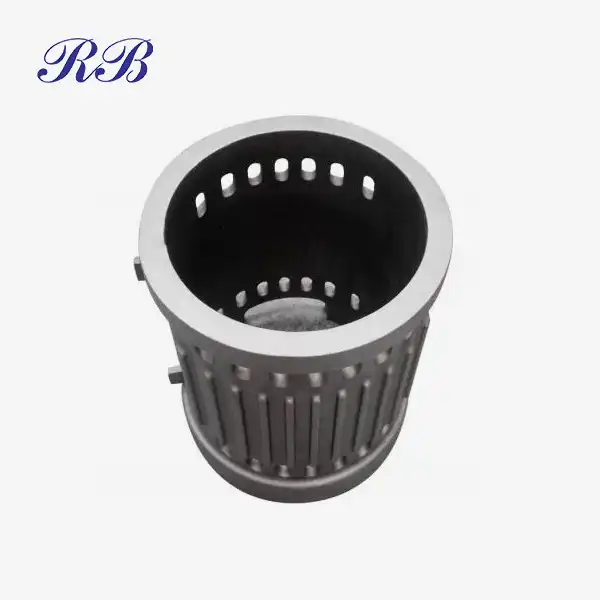
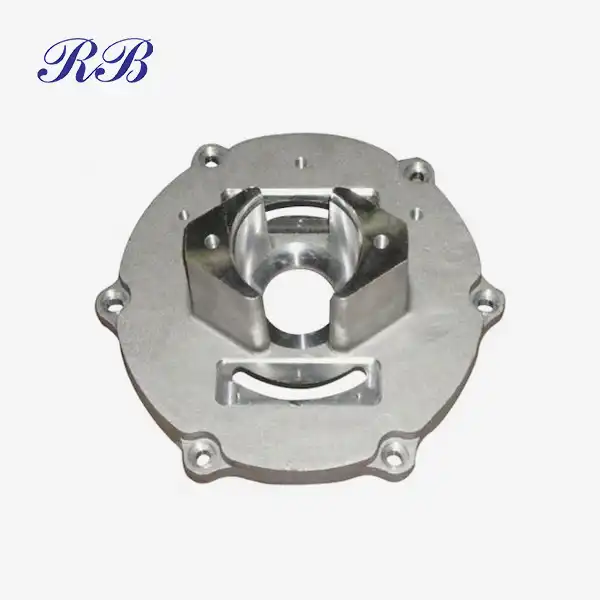
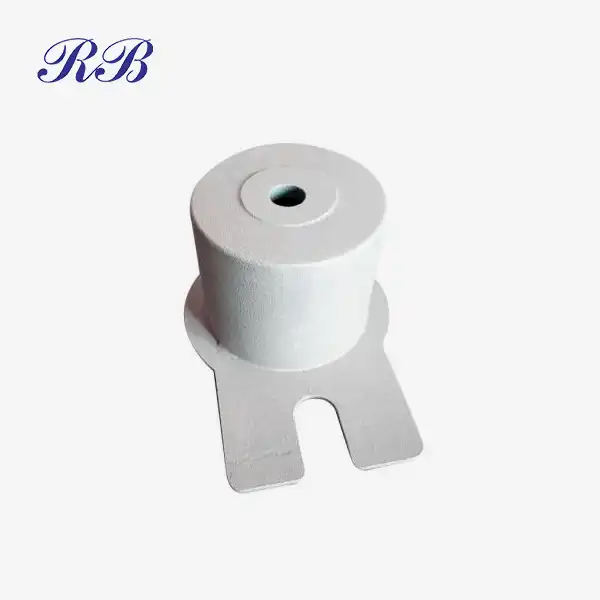
Rongbao Enterprise is your reliable source for precision sand casting parts. With 20 years of experience making high-quality products, they can handle all stages of the production process. Our Xi'an factory can keep up with production of 5,000 pieces and has ISO9001:2015, ISO14001, and ISO45001 certifications to make sure quality is always maintained. We are experts at making complicated parts like pump housings out of ZL101A materials and offer full CNC machining and shot blasting services.
Our integrated approach combines pattern making, casting, machining, and surface treatment all under one roof. This keeps costs low while getting rid of the complexity of the supply chain. Most of what we make goes to international markets, like North America and Europe. This shows that we are dedicated to meeting quality standards around the world. You can talk about your precision sand casting needs with steve.zhou@263.net or zhouyi@rongbaocasting.com and get detailed quotes that are made just for you.
FAQ
What materials are most suitable for precision sand casting?
For precise sand casting, aluminum alloys like ZL101A have great mechanical properties and can be cast easily. These materials are easy to work with and can capture small details well. They also stay stable in size when they harden. Metals like steel and iron alloys are also often used, especially when stronger properties are needed. When choosing a material, it's important to think about its mechanical properties, resistance to corrosion, and the temperature conditions where it will be used.
How does precision sand casting accuracy compare to investment casting?
Dimensional accuracy in precision sand casting is usually within ±0.3 to 0.8 mm, but this depends on the size and complexity of the part. Investment casting usually gives tighter tolerances of ±0.1 to 0.3mm, but it costs a lot more. When you look at how much cheaper sand casting is, the difference in accuracy may not matter for many uses. The quality of the surface finish varies as well. For most industrial uses, sand casting is good enough, while investment casting gives a better finish.
What are typical lead times and pricing for bulk orders?
Depending on the complexity of the component, the need for tooling, and the volume of production, lead times for precision sand casting parts typically range from 4 to 8 weeks. Prices for bulk orders get more competitive as the number of items ordered rises, and prices drop significantly for orders of 1000 or more items. Costs of materials, amortization of tools, machining needs, and surface treatment requirements are some of the things that affect prices. Customized requirements might need more time for development, but they can be worked into normal production schedules.
References
- Campbell, John. "Complete Casting Handbook: Metal Casting Processes, Metallurgy, Techniques and Design." Second Edition, Butterworth-Heinemann Publishing, 2015.
- Beeley, Peter R. and Smart, Richard F. "Investment Casting: Precision Sand Casting Methods and Applications in Modern Manufacturing." Institute of Materials Publishing, 2019.
- ASM International Handbook Committee. "ASM Handbook Volume 15: Casting Technologies and Precision Manufacturing Methods." ASM International Materials Park, 2018.
- Stefanescu, Doru Michael. "Science and Engineering of Casting Solidification: Advanced Sand Casting Techniques." Third Edition, Springer Publishing, 2020.
- Brown, John R. "Foseco Foundryman's Handbook: Facts, Figures and Formulae for Precision Sand Casting." Eleventh Edition, Elsevier Science Publishing, 2017.
- Viswanathan, Srinivasan and Apelian, Diran. "Casting Processes and Precision Manufacturing: Sand Casting Applications in Industrial Components." TMS Publishing, 2021.
Learn about our latest products and discounts through SMS or email