- English
- French
- German
- Portuguese
- Spanish
- Russian
- Japanese
- Korean
- Arabic
- Greek
- German
- Turkish
- Italian
- Danish
- Romanian
- Indonesian
- Czech
- Afrikaans
- Swedish
- Polish
- Basque
- Catalan
- Esperanto
- Hindi
- Lao
- Albanian
- Amharic
- Armenian
- Azerbaijani
- Belarusian
- Bengali
- Bosnian
- Bulgarian
- Cebuano
- Chichewa
- Corsican
- Croatian
- Dutch
- Estonian
- Filipino
- Finnish
- Frisian
- Galician
- Georgian
- Gujarati
- Haitian
- Hausa
- Hawaiian
- Hebrew
- Hmong
- Hungarian
- Icelandic
- Igbo
- Javanese
- Kannada
- Kazakh
- Khmer
- Kurdish
- Kyrgyz
- Latin
- Latvian
- Lithuanian
- Luxembou..
- Macedonian
- Malagasy
- Malay
- Malayalam
- Maltese
- Maori
- Marathi
- Mongolian
- Burmese
- Nepali
- Norwegian
- Pashto
- Persian
- Punjabi
- Serbian
- Sesotho
- Sinhala
- Slovak
- Slovenian
- Somali
- Samoan
- Scots Gaelic
- Shona
- Sindhi
- Sundanese
- Swahili
- Tajik
- Tamil
- Telugu
- Thai
- Ukrainian
- Urdu
- Uzbek
- Vietnamese
- Welsh
- Xhosa
- Yiddish
- Yoruba
- Zulu
Electric Motor Housing Manufacturing Process
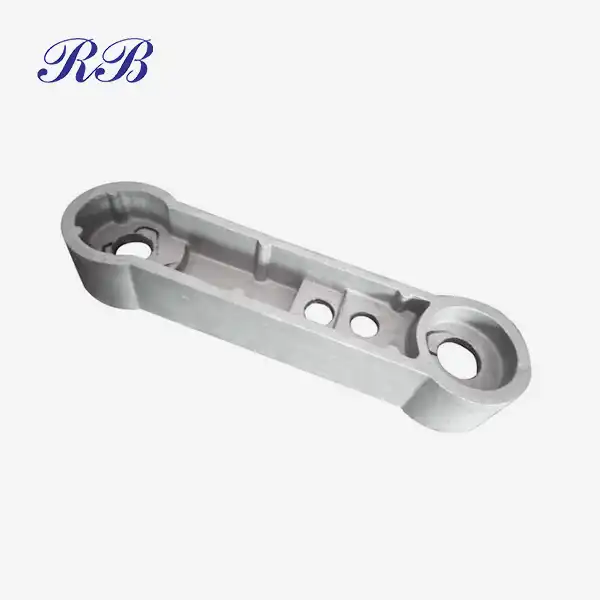
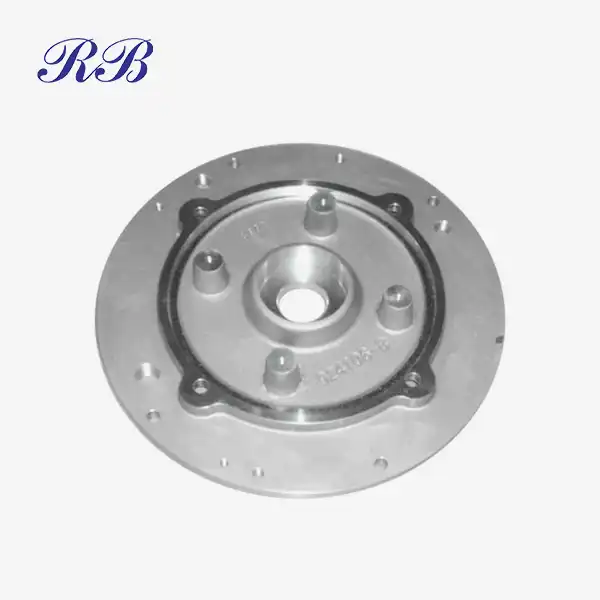
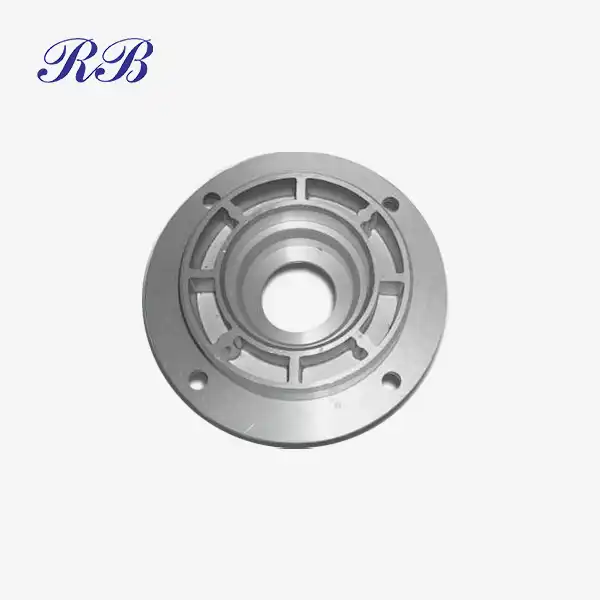
In the world of making electric motors, the motor housing is very important since it protects and supports the parts inside. We'll look at the most important stages, materials, and quality issues that go into making these important parts.
High-Pressure Die Casting: The Foundation of Motor Housing Production
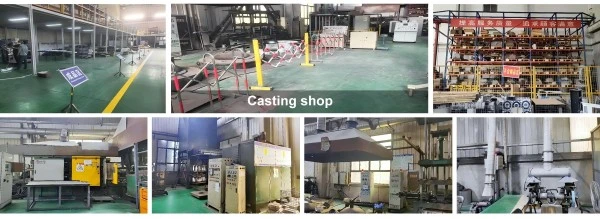
High-pressure die casting is the primary method used in manufacturing electric motor housings. This process offers several advantages, including high production rates, excellent dimensional accuracy, and the ability to create complex shapes. Let's examine the key steps involved in high-pressure die casting of motor housings:
- Material Selection: The choice of material is critical for the performance and durability of the motor housing. Rongbao Enterprise primarily uses ADC12 aluminum alloy, known for its excellent castability, good mechanical properties, and corrosion resistance.
- Die Preparation: A precision-engineered die is created based on the specific design requirements of the motor housing. The die is typically made from high-grade tool steel to withstand the high pressures and temperatures involved in the casting process.
- Melting and Injection: The ADC12 aluminum alloy is melted in a furnace and then injected into the die cavity under high pressure (typically between 10,000 to 20,000 psi). This high pressure ensures that the molten metal fills even the smallest details of the die.
- Solidification and Cooling: Once injected, the molten metal begins to solidify rapidly. The die is designed with cooling channels to control the solidification process, ensuring uniform cooling and minimizing defects.
- Ejection: After the casting has solidified sufficiently, the die is opened, and the part is ejected using ejector pins. The freshly cast housing is then allowed to cool further before undergoing subsequent processing.
Rongbao Enterprise's state-of-the-art high-pressure die casting facilities can produce up to 1000 pieces of motor housings per production run, ensuring efficient and timely delivery to meet customer demands.
CNC Machining: Precision Finishing for Motor Housings
While high-pressure die casting provides an excellent foundation for motor housings, CNC machining is often necessary to achieve the required dimensional accuracy and surface finish. Rongbao Enterprise employs advanced CNC machining centers to perform various operations on the cast housings:
- Surface Milling: The outer surfaces of the housing are milled to achieve the specified dimensions and ensure flatness. This step is crucial for proper fitment with other motor components.
- Boring: Precise boring operations are performed to create accurate holes for shaft bearings and other internal components. The tolerance levels for these features are often very tight to ensure proper motor alignment and performance.
- Threading: Where necessary, threads are cut or tapped into the housing for mounting bolts or other fasteners.
- Finishing: Final finishing operations may include deburring, polishing, or surface texturing to meet specific aesthetic or functional requirements.
The combination of high-pressure die casting and CNC machining allows Rongbao Enterprise to produce motor housings with exceptional accuracy and consistency. Each housing undergoes rigorous quality control checks to ensure compliance with ISO9001:2015, ISO14001, and ISO45001 standards.

Surface Treatment and Final Processing
After CNC machining, the motor housings undergo additional processing steps to enhance their performance and appearance:
- Cleaning: After the machining process is complete, the motor housings undergo a rigorous cleaning procedure designed to eliminate all residues that could compromise performance or longevity. This includes the removal of cutting fluids, metal chips, microscopic burrs, and airborne dust particles that may have adhered during processing. Rongbao Enterprise utilizes high-pressure air blowers, ultrasonic cleaning systems, and environmentally safe degreasing solutions to ensure every surface, groove, and cavity is thoroughly cleaned. This meticulous cleaning not only ensures a flawless finish but also prevents potential issues during assembly, such as poor sealing or premature component wear.
- Surface Treatment: Once cleaned, the housings are prepared for surface treatment tailored to the application’s functional and aesthetic requirements. At Rongbao Enterprise, spraying is offered as a standard surface treatment method, applying an even, protective coating that enhances corrosion resistance and extends the component's service life. Depending on customer specifications, specialized coatings such as powder coating, anodizing, or electrophoretic painting can also be provided. These treatments not only protect against environmental factors like moisture, salt, and industrial pollutants but also improve the overall appearance, enabling the motor housing to complement the end product's design.
- Inspection: Every motor housing is subjected to a comprehensive final inspection to ensure it meets or exceeds dimensional and performance requirements. Advanced metrology equipment, including coordinate measuring machines (CMMs), laser scanners, and surface profilometers, is employed to verify precise tolerances, flawless surface finishes, and exact geometry. This process also includes visual inspection under controlled lighting conditions to detect micro-defects such as scratches, pits, or coating irregularities. By adhering to stringent ISO9001:2015 quality management standards, Rongbao guarantees that only housings meeting the highest benchmarks leave the facility
- Packaging: The finished motor housings are carefully packaged in environmentally friendly boxes to protect them during transportation and storage.
Rongbao Enterprise's commitment to quality extends beyond manufacturing. They offer comprehensive after-sales service and support to ensure customer satisfaction and address any concerns that may arise during the use of their products.

Customization and OEM/ODM Services
Recognizing that different industries and applications may require unique motor housing designs, Rongbao Enterprise offers customization and OEM/ODM services. Their team of experienced engineers works closely with clients to develop motor housings tailored to specific requirements, whether it's for automotive applications, aerospace components, medical equipment, or other specialized uses.
The ability to customize extends to various aspects of the motor housing, including:
- Dimensions and geometry
- Material selection (beyond the standard ADC12 aluminum alloy)
- Surface treatments and finishes
- Integration of additional features or mounting points
- Production volume adjustments
This flexibility, combined with Rongbao's expertise in high-pressure die casting and CNC machining, makes them an ideal partner for companies seeking high-quality, custom motor housing solutions.
About Rongbao Enterprise
Material science, engineering, and modern production techniques all work together in a complicated way to make things. Every step, from high-pressure die casting to precision CNC machining and surface treatments, is very important for making housings that can handle the tough needs of current electric motors.
For more information about Rongbao Enterprise's motor housing manufacturing capabilities or to discuss your specific requirements, please contact them at zhouyi@rongbaocasting.com or steve.zhou@263.net. Their team of experts is ready to assist you in finding the perfect solution for your needs.
References
- Zhang, J., & Zhang, H. (2019). Advances in high-pressure die casting of aluminum alloys. Materials Today: Proceedings, 16, 1401-1406.
- Rao, P. N. (2018). Manufacturing technology: metal cutting and machine tools. McGraw-Hill Education.
- Groover, M. P. (2020). Fundamentals of modern manufacturing: materials, processes, and systems. John Wiley & Sons.
- Totten, G. E., & MacKenzie, D. S. (Eds.). (2003). Handbook of Aluminum: Vol. 1: Physical Metallurgy and Processes. CRC press.
- Kalpakjian, S., & Schmid, S. R. (2014). Manufacturing engineering and technology. Pearson.
- ASM International. (2008). ASM Handbook, Volume 15: Casting. ASM International.
Learn about our latest products and discounts through SMS or email