A380 Aluminum Alloy: Key Properties
The A380 aluminum alloy, a member of the 3xx.x series of aluminum casting alloys, has gained significant traction in the high pressure die casting industry.The unusual combination of qualities that make it perfect for many uses is the root of its popularity:
- Excellent Castability: A380 exhibits superior fluidity and die-filling capabilities, crucial for producing intricate parts with thin walls and complex geometries.Fast mold filling is crucial in high pressure die casting, where this trait is very useful.
- High Strength-to-Weight Ratio: With a tensile strength ranging from 300-350 MPa and yield strength of 160-185 MPa, A380 offers robust mechanical properties while maintaining the lightweight nature inherent to aluminum alloys.
- Good Machinability: Post-casting operations are often necessary to achieve final dimensions and surface finish. A380's good machinability facilitates these secondary processes, reducing production time and costs.
- Corrosion Resistance: While not as corrosion-resistant as some other aluminum alloys, A380 still offers decent protection against environmental degradation, especially when suitable surface treatments are applied.
- Dimensional Stability: A380 exhibits low shrinkage rates during solidification, contributing to excellent dimensional accuracy in the final cast parts.
These properties make A380 a go-to choice for many manufacturers employing high pressure die casting. However, it's worth noting that the exact properties can vary slightly depending on the specific casting conditions and any heat treatment applied post-casting.
Applications of A380 Aluminum Alloy in High Pressure Die Casting
The versatility of A380 aluminum alloy, coupled with the advantages of high pressure die casting, has led to its widespread adoption across various industries:
- Automotive Industry: A380 is extensively used in the production of engine components such as transmission cases, oil pans, and cylinder heads.The automobile industry is always striving to lower vehicle weight and increase fuel economy, and this material's excellent strength-to-weight ratio helps with that.
- Aerospace: While not as common in primary structures, A380 finds applications in non-critical aerospace components where weight savings and complex geometries are crucial.
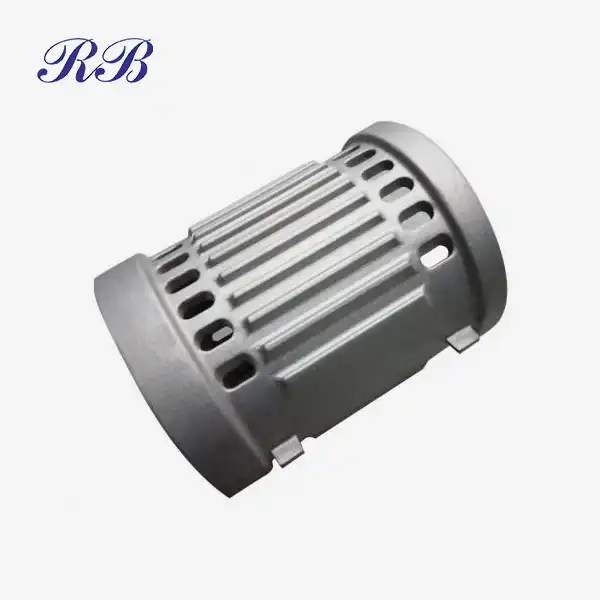
- Electronics: The alloy's good thermal conductivity makes it suitable for heat sinks and enclosures in electronic devices. Companies like Dell and HP have utilized A380 in laptop chassis and other computer components.
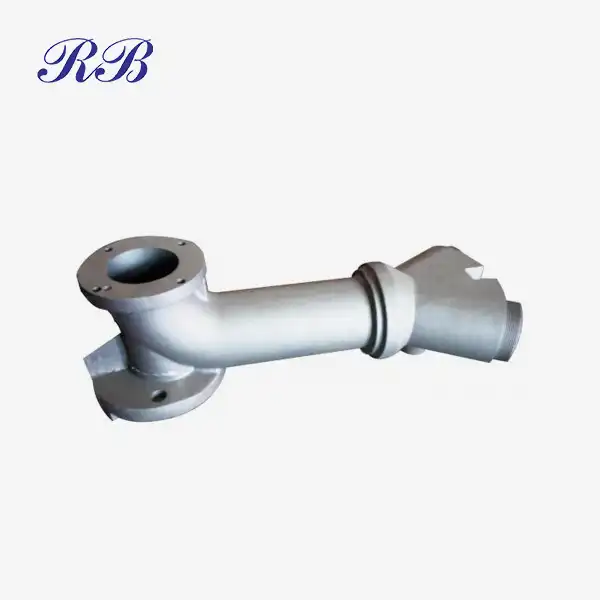
- Industrial Machinery: A380 is often the material of choice for pump housings, valve bodies, and other components in industrial equipment where strength and corrosion resistance are paramount.
- Consumer Goods: From power tool casings to kitchen appliances, A380's combination of strength and aesthetics makes it popular in consumer product manufacturing.
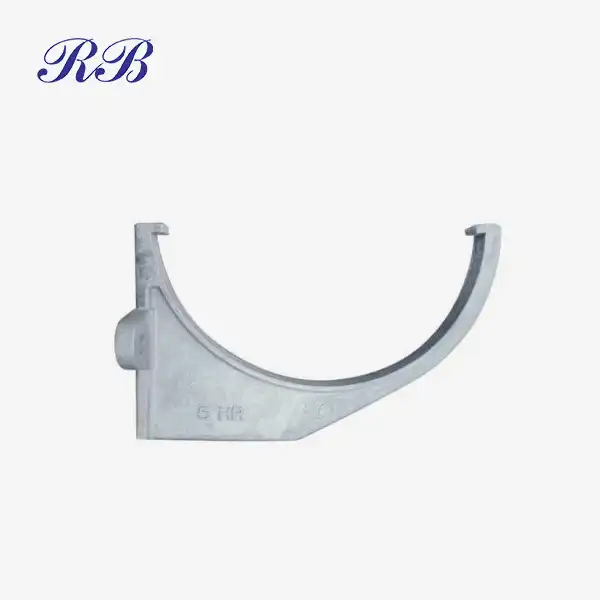
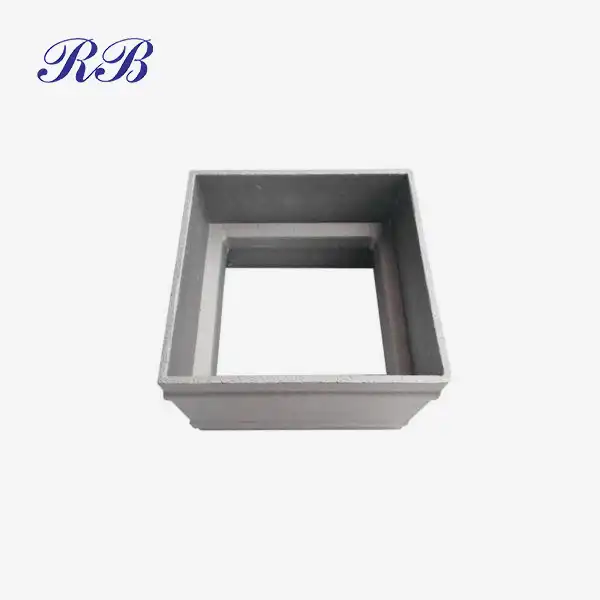
One notable application of A380 in high pressure die casting is in the production of casting agitator base parts. These components are made by the industry-leading Rongbao Enterprise utilizing the aluminum alloy die casting method.Their casting agitator base parts, made from ADC12 (a Japanese equivalent to A380), weigh approximately 2kg and are produced through a high-pressure die casting process that ensures excellent dimensional accuracy and surface finish.

Other High-Strength Alternatives for High Pressure Die Casting
While A380 is a popular choice, the field of high-strength aluminum alloys for high pressure die casting is diverse and ever-evolving.A few noteworthy substitutes include these:
- A413: This alloy offers excellent fluidity and is often used when superior pressure tightness is required, making it ideal for hydraulic components.
- ADC12 (Japanese Standard): Similar to A383, ADC12 is widely used in Asia for applications requiring good castability and moderate strength.
- Silafont-36 (AlSi9MgMn): Developed by Rheinfelden Alloys, this alloy offers improved ductility and is particularly suitable for structural components in the automotive industry.
- Castasil-37: Another Rheinfelden Alloys product, Castasil-37 is designed for thin-walled, complex castings and offers excellent surface quality.
- Magsimal-59: This alloy, containing magnesium and manganese, offers higher strength and improved corrosion resistance compared to traditional Al-Si alloys.
The particular needs of the application dictate the selection of one of these alloys over another due to their distinct sets of characteristics.Factors such as mechanical properties, corrosion resistance, thermal conductivity, and cost all play a role in alloy selection for high pressure die casting.
The choice between A380 and these alternatives often depends on the specific requirements of the application. For instance, while A380 might be preferred for its overall balance of properties, Silafont-36 could be chosen for automotive structural components where ductility is crucial. Similarly, Magsimal-59 might be selected for applications requiring higher corrosion resistance.
Improvements in heat treatment methods and new aluminum alloy compositions have resulted from persistent research. Recent efforts on high pressure die casting methods have mostly focused on improving castability, strength, and application suitability.

Contact Rongbao
When it comes to high pressure die casting, the A380 aluminum alloy is indispensable due to its exceptional combination of strength, castability, and adaptability.Its widespread adoption across various sectors, from automotive to consumer electronics, is a testament to its effectiveness. On the other hand, high-strength aluminum alloys are constantly developing and available in a vast array of shapes to cater to the demands of many sectors.Silafont-36 and Magsimal-59 are two examples of these alternatives that provide tailored qualities.
As industries continue to demand lighter, stronger, and more complex components, the role of high pressure die casting and high-strength aluminum alloys will only grow in importance. If engineers and manufacturers want to make the most of these materials and technologies, they need to keep up with the latest innovations.
Rongbao's commitment to quality is evident in their ISO9001:2015, ISO14001, and ISO45001 certifications. Surface treatments, like as spraying, may improve aesthetics or corrosion resistance, and CNC machining ensures tight tolerances; both are available as customized options. With a production capacity of 5000 pieces, Rongbao can meet the demands of various industries requiring high-quality, high-strength aluminum components. For more information or to discuss your specific needs, you can contact them at steve.zhou@263.net or zhouyi@rongbaocasting.com.
References
1. Davis, J.R. (Ed.). (1993). Aluminum and Aluminum Alloys. ASM International.
2. Kaufman, J.G., & Rooy, E.L. (2004). Aluminum Alloy Castings: Properties, Processes, and Applications. ASM International.
3. Street, A.C. (1986). The Diecasting Book. Portcullis Press.
4. Rheinfelden Alloys. (2021). Alloy Data Sheets. Retrieved from https://www.rheinfelden-alloys.eu/en/alloys/
5. Lumley, R. (Ed.). (2018). Fundamentals of Aluminium Metallurgy: Recent Advances. Woodhead Publishing.