- English
- French
- German
- Portuguese
- Spanish
- Russian
- Japanese
- Korean
- Arabic
- Greek
- German
- Turkish
- Italian
- Danish
- Romanian
- Indonesian
- Czech
- Afrikaans
- Swedish
- Polish
- Basque
- Catalan
- Esperanto
- Hindi
- Lao
- Albanian
- Amharic
- Armenian
- Azerbaijani
- Belarusian
- Bengali
- Bosnian
- Bulgarian
- Cebuano
- Chichewa
- Corsican
- Croatian
- Dutch
- Estonian
- Filipino
- Finnish
- Frisian
- Galician
- Georgian
- Gujarati
- Haitian
- Hausa
- Hawaiian
- Hebrew
- Hmong
- Hungarian
- Icelandic
- Igbo
- Javanese
- Kannada
- Kazakh
- Khmer
- Kurdish
- Kyrgyz
- Latin
- Latvian
- Lithuanian
- Luxembou..
- Macedonian
- Malagasy
- Malay
- Malayalam
- Maltese
- Maori
- Marathi
- Mongolian
- Burmese
- Nepali
- Norwegian
- Pashto
- Persian
- Punjabi
- Serbian
- Sesotho
- Sinhala
- Slovak
- Slovenian
- Somali
- Samoan
- Scots Gaelic
- Shona
- Sindhi
- Sundanese
- Swahili
- Tajik
- Tamil
- Telugu
- Thai
- Ukrainian
- Urdu
- Uzbek
- Vietnamese
- Welsh
- Xhosa
- Yiddish
- Yoruba
- Zulu
Does casting fixed connector need CNC machining after casting?
If a cast fixed connector needs CNC machining after the casting process, the answer depends on the needs of the product and the level of accuracy needed. As-cast connections usually have flaws on the surface, differences in size, and irregular shapes that make it hard to put them together and keep them working well over time. CNC machining gets around these problems by improving important features like threaded holes, mounting surfaces, and interface dimensions. This makes sure that parts meet the strict tolerance requirements needed in industries like automotive, construction machinery, and industrial equipment where dependability can't be compromised.
Understanding Casting Fixed Connectors and Their Production Process
What Are Casting Fixed Connectors
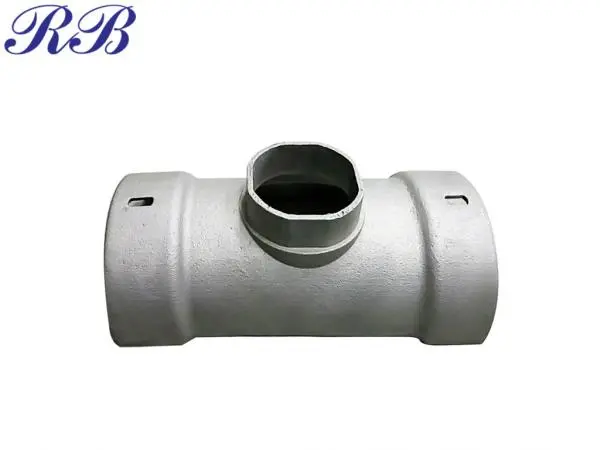
As structural joining parts in piping systems, machinery units, and building projects, casting fixed connectors are used. Most of the time, high-grade aluminium metals like ZL101A are used to make these heavy-duty parts because they have good strength-to-weight ratios and don't rust. There are different ways to make things, like gravity casting and high-pressure die casting. Each has its own benefits based on the batch size, complexity, and properties of the material.
When buying things from other businesses, three-way pipe connectors are often used where managing the flow of fluids or gases needs strong, leak-proof connections. Industries that use these parts, like those that make energy equipment or industrial vehicles, put quality and size accuracy at the top of their list of priorities to avoid expensive delays in construction or problems in the field.
Common Casting Techniques and Their Limitations
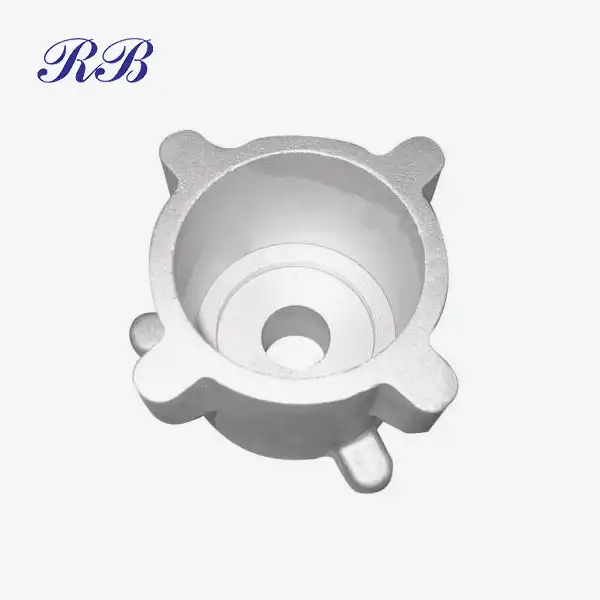
Our 0.57 kg ZL101A three-way pipe connectors are made using a process called gravity casting, which lets molten aluminium flow naturally into moulds using the force of gravity. This method creates solid internal structures with few holes, which makes it perfect for parts that need to have stable mechanical qualities. The process can handle complicated shapes without spending a lot of money on tools, so it can be used in a wide range of situations with specific needs.
As-cast surfaces, on the other hand, aren't naturally smooth or precise enough for critical mating interfaces. In gravity casting, the surface roughness is usually between 6.3 and 12.5 micrometres, and the dimensional limits are between ±0.5mm and ±1.0mm, based on the thickness and shape of the section. These differences make it hard for connectors to line up perfectly with pipes that fit together or mounting brackets.
When it comes to initial tolerances, investment casting and die casting are better, but the cost of the tools is much higher. For large parts, sand casting is still the most cost-effective method, but the surface finish is the roughest. Each way has trade-offs between how much it costs to start, how good the surface is, and how many can be made.
Does Casting Fixed Connector Need CNC Machining After Casting?
Typical Defects in As-Cast Components
Casting processes introduce flaws that lower the performance of the assembly. Surface porosity, which is usually below the surface in gravity casting, can weaken the structure over time as parts go through changes in temperature or mechanical stress. Even when the gates are designed correctly, shrinkage cavities can form in thick parts, which can lead to failure places when the structure is loaded.
Different section thicknesses contract at different rates when the metal cools, which causes warping in the dimensions. A three-way pipe casting fixed connector with uneven wall distribution could deviate up to 1.5 degrees from its normal shape, making it impossible for pipe systems to be properly aligned. Direct installation without extra operations is made even harder by flash lines and splitting plane mismatches.
How CNC Machining Resolves Precision Challenges
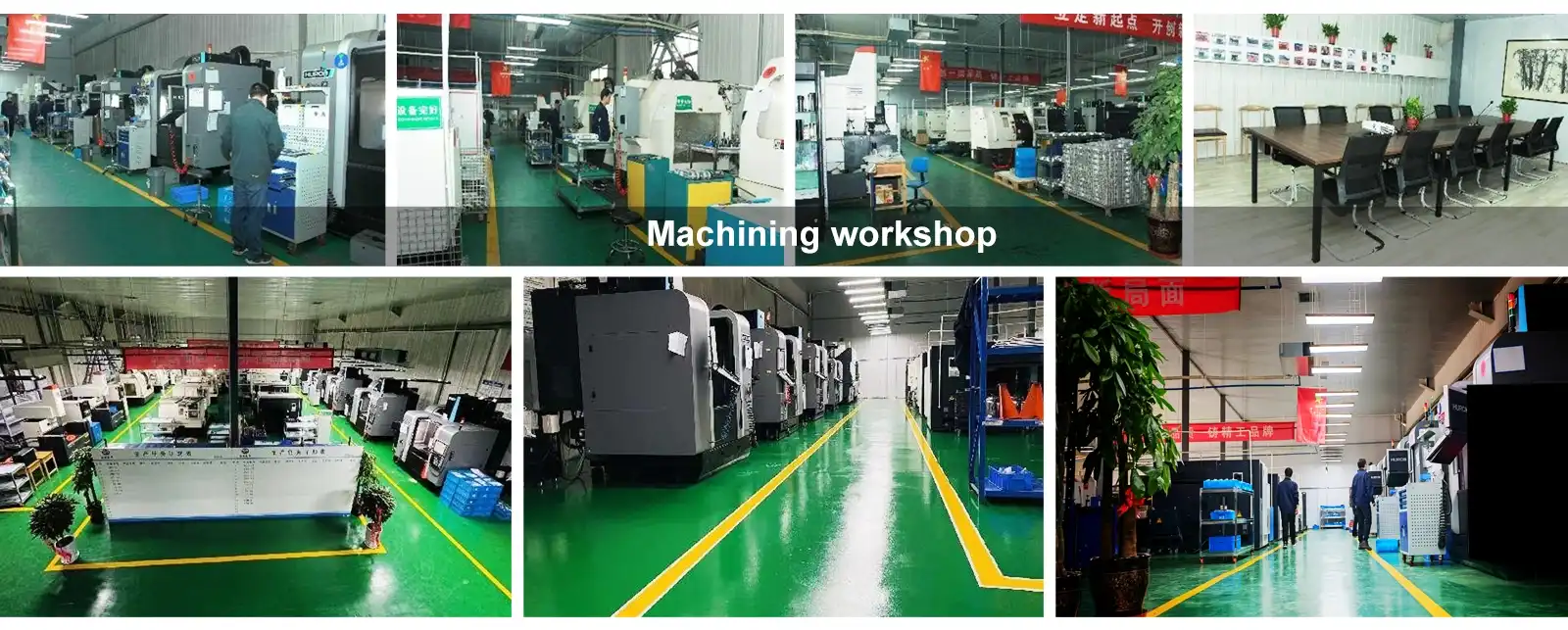
By controlling the removal of material, CNC machining gets rid of these flaws. Precision tooling on multi-axis machining centers lets them hold tolerances of as little as ±0.02mm on important features, making sure that the same level of accuracy in dimensions is maintained across production batches. When you use the right sealing methods with thread milling processes, you can be sure that the thread quality is Class 2A or better, which means that the links will not leak.
Face milling processes that set up reference planes that are flat within 0.02mm across the full contact area are very helpful for mating surfaces. This level of accuracy stops stress concentrations that speed up gasket failure or cause joints to separate when they vibrate. When mounting holes are reamed to a H7 tolerance, fasteners can be properly engaged without cross-threading or not tightening all the way.
As a surface treatment before machining, shot blasting gets rid of oxide scale and sand particles that are embedded in the material. This shows any flaws in the material before expensive machining time is spent on them. This method, which includes casting for net shape economy and then machining for accuracy, gives the best mix between cost and performance.
Real-World Impact on Component Reliability
Automotive gearbox housings show how important CNC cutting is. As-cast mounting boss surfaces that aren't flat cause clamping forces to be uneven, which causes fasteners to come loose when the engine shakes. Accelerated life testing data shows that machined surfaces spread loads evenly, which increases service life by 40%.
Port flatness requirements for construction equipment hydraulic pipes must be less than 0.03 mm so that internal leaks can't get past O-ring seals. Gravity-cast manifolds that are machined to these tolerances keep their seals intact for 10,000+ pressure cycles, while alternatives that aren't machined fail early at 3,000 cycles because the seals push out into surface imperfections.
Comparison of Casting Fixed Connector Manufacturing Approaches
Casting Plus Machining Versus Alternative Methods
Welded fabrications give designers more options, but they also create heat-affected zones that change the qualities of the material in unpredictable ways. Inspections of weld seams raise the cost of quality control, and heat treatment after welding makes wait times longer. Casting fixed connectors with machined interfaces get rid of the risk of defects caused by welding while keeping the dimensions stable.
Using bolted plates in mechanical fastener systems makes them easier to repair, but it also means more parts and more work to put them together. Each extra clip adds a possible point where it could come loose, which needs to be checked on a regular basis. Even though they cost more per unit, integrated cast connections make assembly simpler, which lowers the total cost of installation.
Adhesive bonding doesn't work well in places where the temperature regularly goes above 150°C, like under the hood of a car or on industrial equipment. In temperatures ranging from -40°C to +200°C, cast aluminium connectors keep their structural integrity without losing any of their performance.
Material Selection and Machining Compatibility
The ZL101A aluminium metal is both easy to cast and easy to machine. It makes long, reasonable chips during CNC operations without wearing out the tools too quickly. A silicon content of about 7% makes the metal more fluid during casting while still being hard enough for thread-forming. Adding copper makes the material stronger, which is useful for uses that need tensile strength above 180 MPa.
High-strength types of aluminium, like A356 or 7075, have better mechanical properties, but they need to be machined more aggressively and with special tools. When making a purchase choice, the higher cost of the material must be weighed against the strength needs of the product and the cost of machining.

Cost-Benefit Analysis for Buyers
Depending on how complicated the mould is, the initial cost of gravity casting tools can range from $3,000 to $8,000. This cost is spread out over the number of castings that are made. Depending on the complexity of the feature and the amount of material removed, adding CNC cutting raises the cost of each piece by $2 to $6. Field failures that cost hundreds or thousands of dollars in warranty claims, equipment downtime, and damage to the company's image can be avoided with this extra cost.
The manufacturing approach is affected by the amount of production. When making less than 500 pieces, gravity casting plus machining is better because the cost of the tools is less. When the number of units sold goes over 5,000, high-pressure die casting may be a better option than secondary machining. However, the higher initial investment in tools means that the volume commitment needs to be carefully considered.
Conclusion
After casting, CNC machining turns functional parts into precision-engineered solutions that meet the most stringent industrial standards. As cast fixed connectors work well in non-critical situations where variations in size are acceptable, but most car, building, and industrial equipment needs the accuracy, surface quality, and dependability that can only be provided by post-casting machining. When choosing between machined and as-cast options, procurement teams must look at the tolerances needed for the application, the production volume, and the total cost. They must also keep in mind that investing in machining up front saves a lot of money in the long run by preventing costly failures and maintenance.
FAQ
1. What tolerance levels can CNC machining achieve on cast connectors?
Dimensional errors on made features can be as close as ±0.02mm with modern CNC equipment, which is much better than the ±0.5mm that is common in gravity casting. Specifications for flatness of less than 0.02 mm across matching surfaces make sure that the seal works properly, and the quality of the threads meets ISO 2A standards or higher. These levels of accuracy meet the needs of Tier-1 suppliers in the car industry as well as important infrastructure applications that must ensure proper assembly and long-term dependability.
2. How does material choice affect post-casting machining needs?
ZL101A aluminium alloy is easy to machine and doesn't wear down tools quickly, so it's a good choice for parts that need a lot of secondary operations. More aggressive cutting parameters and carbide tools are needed for higher-strength alloys like A356, which drives up the cost of machining. When choosing materials, engineers should weigh the needs for mechanical properties against the cost of machining them. When optimising specs, buying teams should look at the total cost of making the product instead of just the price of the raw materials.
3. Can suppliers provide both casting and machining services?
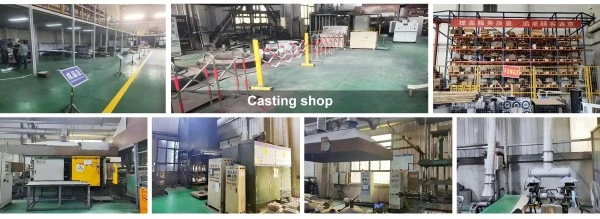
Integrated makers that offer full process chains are much better than buying from multiple vendors. Single-source responsibility makes it easier to solve quality problems, and coordinated planning for production cuts down on wait times. Rongbao Enterprise has both casting and CNC machining facilities on-site. This means that parts can go from being molten metal to being finished, inspected, and ready to be installed without having to wait for coordination or pay for transportation between facilities.
Partner With Proven Casting Fixed Connector Manufacturer
Rongbao Enterprise offers combined casting and machining options that cover all of a manufacturer's needs for making casting fixed connectors. Our Xi'an production facility combines advanced CNC machining skills with expertise in gravity casting. It makes parts like ZL101A three-way pipe connectors that meet international quality standards. Our ISO9001:2015, ISO14001, and ISO45001 certifications show that we are dedicated to quality management, protecting the environment, and keeping the workplace safe at all times during production.
We work with OEM and ODM partners and offer full customisation options, from the initial design meeting to large-scale production and safe foreign shipping in wooden boxes. Our scalable capacity and 20 years of experience in the field make sure that we can deliver on time, whether you need 500 pieces to test a prototype or 5,000 units for mass production. Get in touch with our team at steve.zhou@263.net or zhouyi@rongbaocasting.com to talk about your needs with a reliable casting fixed connector supplier.
References
1. Campbell, J. (2015). Complete Casting Handbook: Metal Casting Processes, Metallurgy, Techniques and Design. Butterworth-Heinemann.
2. Kalpakjian, S., & Schmid, S. R. (2014). Manufacturing Engineering and Technology (7th ed.). Pearson Education.
3. ASM International. (2008). Casting Design and Performance. ASM International Handbook Committee.
4. Groover, M. P. (2020). Fundamentals of Modern Manufacturing: Materials, Processes, and Systems (7th ed.). Wiley.
5. International Organization for Standardization. (2015). ISO 9001:2015 Quality Management Systems – Requirements. ISO Publications.
6. Davis, J. R. (Ed.). (1993). Aluminum and Aluminum Alloys. ASM International Specialty Handbook.
Learn about our latest products and discounts through SMS or email