- English
- French
- German
- Portuguese
- Spanish
- Russian
- Japanese
- Korean
- Arabic
- Greek
- German
- Turkish
- Italian
- Danish
- Romanian
- Indonesian
- Czech
- Afrikaans
- Swedish
- Polish
- Basque
- Catalan
- Esperanto
- Hindi
- Lao
- Albanian
- Amharic
- Armenian
- Azerbaijani
- Belarusian
- Bengali
- Bosnian
- Bulgarian
- Cebuano
- Chichewa
- Corsican
- Croatian
- Dutch
- Estonian
- Filipino
- Finnish
- Frisian
- Galician
- Georgian
- Gujarati
- Haitian
- Hausa
- Hawaiian
- Hebrew
- Hmong
- Hungarian
- Icelandic
- Igbo
- Javanese
- Kannada
- Kazakh
- Khmer
- Kurdish
- Kyrgyz
- Latin
- Latvian
- Lithuanian
- Luxembou..
- Macedonian
- Malagasy
- Malay
- Malayalam
- Maltese
- Maori
- Marathi
- Mongolian
- Burmese
- Nepali
- Norwegian
- Pashto
- Persian
- Punjabi
- Serbian
- Sesotho
- Sinhala
- Slovak
- Slovenian
- Somali
- Samoan
- Scots Gaelic
- Shona
- Sindhi
- Sundanese
- Swahili
- Tajik
- Tamil
- Telugu
- Thai
- Ukrainian
- Urdu
- Uzbek
- Vietnamese
- Welsh
- Xhosa
- Yiddish
- Yoruba
- Zulu
Do most valves have flow direction arrow cast on body?
Most valves used in industrial pipelines do have a flow direction arrow cast directly onto the valve body, though this practice varies by valve type, application standard, and manufacturer specification. Check valves, globe valves, and control valves almost universally carry these markings because directionality is critical to their function. Ball valves and gate valves, which are bidirectional by design, often omit them. In special valve body casting — particularly for fire pipe control systems — these arrows are not decorative; they are precision-engineered features that guide correct installation and prevent catastrophic system failures during hydraulic pressure events.
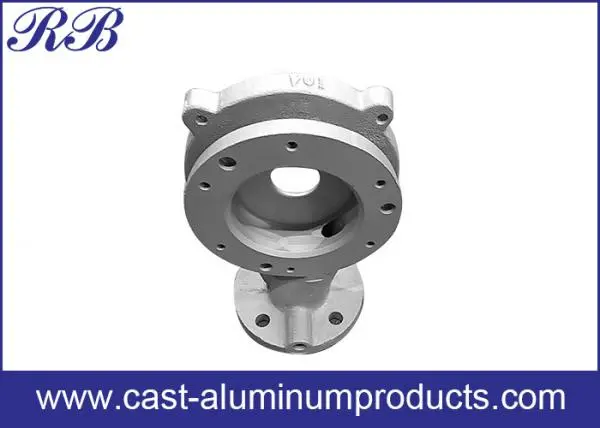
Flow Direction Arrows on Valve Bodies
Flow direction signs on valve bodies have a clear purpose: they stop mistakes during installation. In fire control systems, a check valve that isn't in the right place can lead to backflow, which stops the whole pump circuit just when it's needed the most. NFPA 20 (Standard for the Installation of Stationary Pumps for Fire Protection) says that all directional control valves in fire pump systems must be placed in strict accordance with flow direction. This means that cast-in arrows are not just a comfort; they are required by law.
The casting method used to make these arrows is very important. When a foundry adds flow marks to the mold design process instead of stamping them after production, the arrow can be read for the entire service life of the valve, even after it has been treated on the outside and under a lot of pressure. A clearly cast directional symbol is a visible sign of the foundry's mold accuracy and quality culture for procurement engineers looking at fire pipe control valve parts.
Special Valve Body Casting: Materials and Processes
The choice of material affects all of a special valve body casting's downstream performance traits. As a hypoeutectic Al-Si-Mg alloy, A356 aluminum alloy has become a popular choice for fire pipe control valve casts because it has a high tensile strength of about 228 MPa, great corrosion protection, a low density of 2.68 g/cm³, and great casting properties. Its silicon content helps it fill the mold cleanly, which is what gravity casting needs.
In gravity casting, also known as permanent mold casting, the die hole is filled with controlled gravitational flow instead of applied pressure. This makes a structure that is denser and has fewer holes than sand casting, but it doesn't have the risk of trapped gas that comes with high-pressure die casting. Gravity casting gives a 3.6 kg fire pipe control valve body the stability in dimensions needed to keep hole specs tight. It also makes sure that cast-in features, like flow direction arrows, stay sharp throughout every production cycle.
CNC cutting smooths out important sitting surfaces and port shapes after casting, and shot blasting gets rid of the oxide skin and gets the surface ready for coating or direct assembly. The steps of gravity casting, CNC milling, and shot blasting are all part of a mature, tried-and-true process for making high-reliability valve parts.
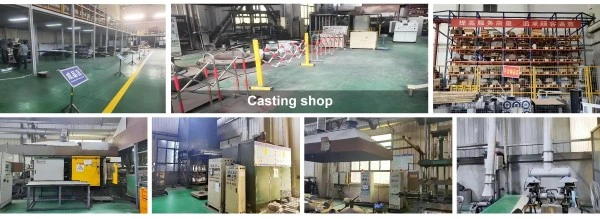
Comparing Valve Body Casting to Machined and Forged Valve Bodies
Each way of making something has its own performance and cost structure, which buying teams must carefully consider.
Special valve body casting is the most cost-effective way to make parts with complex internal geometries, markings that are built in, and production that is close to net-shape. With the right process controls, gravity-cast A356 parts often have internal flaw rates below 2%. This makes them a good choice for fire system parts that need to pass hydrostatic pressure tests.
Machined valve bodies, which are made by cutting away material from block stock, have very accurate dimensions but lose a lot of material and cost many times more than casting for the same level of complexity. They are usually only used in specialty applications with very low volumes and high pressures, where controlling the dimensions to the micron level is very important.
Because the forging process smooths out the grain structure in a certain direction, forged valve bodies have high tensile and wear strengths. Complex internal pathways and interwoven surface lines like flow arrows, on the other hand, are hard to forge in a single operation. They need to be done in two steps, which increases the cost. Gravity casting is still the best way to make fire valves in medium quantities because it balances quality, cost, and lead time.
Quality Control and Common Defects in Valve Body Casting
Gas porosity and shrinkage porosity are the two most common flaws in aluminum gravity casting. When dissolved hydrogen flees during solidification, it leaves behind circular holes called gas porosity. Shrinkage porosity happens when a cooling part doesn't get enough liquid metal, leaving holes that aren't round. Both flaws make the pressure less reliable, and if they happen close to the valve body, they can change or erase the cast flow direction arrows.
Responsible foundries deal with these risks by controlling the rate of cooling, removing gas from the melt, and keeping an eye on the process in real time. Inspecting after casting usually includes:
- Dimensional verification using a CMM to make sure that the port sizes, flange smoothness, and arrow feature depth are all within the acceptable range.
- Hydrostatic pressure testing can find leaky spots inside that an X-ray or visual inspection might miss.
- Surface inspection after shot blasting, the surface should be checked to make sure that the directional markings are still clear and sharp.
Not only do ISO 9001:2015, ISO 14001, and ISO 45001 standards verify paperwork, they also require written corrective action systems, environmental process controls, and worker safety measures that work together to lower process variation. When buying fire valves, where a malfunctioning part could kill someone, these three licenses are the bare minimum for trustworthiness, not a nice-to-have extra.

Practical Buying Guide for Special Valve Body Casting with Flow Direction Arrows
Finding a supplier for a special valve body casting is more than just comparing prices per unit. Engineers who have been through fire pump certification cycles know that the real cost of a casting that isn't up to par shows up during hydraulic testing, not when the pump is bought. Here are the main rating factors that should be given the most weight:
- Multi-process capability: A provider with a facility that can do precision CNC machining, low-pressure casting, and gravity casting all in one place gets rid of the need for cross-vendor tolerance accumulation and makes quality responsibility easier.
- OEM/ODM flexibility: Fire pump designs change as they go through different approval processes. Your new product approval timeline will be shorter if you work with a foundry that can accommodate unique specs, such as placement of flow arrows, port configurations, and material grades.
- Proven production capacity: A confirmed capacity of 5,000 pieces per production run shows that the infrastructure can handle both test orders and a monthly supply that is built up without affecting the regularity of delivery.
- Packaging for transit integrity: Putting cast valve parts in wooden boxes protects them from transit damage that costs a lot more for machined castings that need to be inspected again or replaced.
These features directly address the most serious buying risks that companies that make fire equipment face, such as batches with different sizes, failed pressure tests, and delays in tooling that cause approval dates to slip. Your supply chain risk exposure is really cut down when you work with a provider that has all of these qualities in one place and has certifications to back up every claim.
Conclusion
Flow direction arrows that are cast onto valve bodies are functionally necessary for directional valve types and can be used to measure the quality of the casting. As important as the arrow itself are the raw materials, the process, and the quality checks that go into making it. Fire pipe control applications need special valve body casting made of gravity-cast A356 aluminum. These bodies are supported by CNC machining, shot blasting, and an entire ISO-certified quality system. When purchasing teams look at providers based on process skill instead of just price, they always get better hydrostatic pass rates and more reliable delivery dates.

FAQ
Do all valves require flow direction arrows cast on the body?
No, bidirectional valves like ball valves and gate valves don't usually need signs to show which way the fluid should move because they don't affect performance in either direction. Check valves, globe valves, and control valves are all examples of unidirectional valves that need directional signs to make sure they are installed correctly.
What casting process produces the sharpest flow direction arrows?
The most readable surface features are made by gravity casting and investment casting. This is because both allow controlled, low-turbulence metal fill that correctly copies fine mold details. You can also get sharp edges with high-pressure die casting, but the chance of gas porosity is higher in bigger wall sections.
How do I verify that a valve body casting meets fire system standards?
Ask the seller for their ISO 9001:2015 license, material test reports (MTRs) for the specific batch of metal, and records of their hydrostatic tests. For fire pump assemblies that meet NFPA 20, make sure that the valve body sizes match the listed pump configurations.
What is A356 aluminum alloy, and why is it used in fire valve castings?
A356 is an alloy made of aluminum, silicon, and magnesium. It is easy to make, has a modest tensile strength, and doesn't rust. Its stable flow behavior during gravity casting keeps pores to a minimum, which makes it a good choice for control valve bodies for pressured fire pipes.
Partner with Rongbao Enterprise for Precision Valve Body Castings
For more than 20 years, Rongbao Enterprise has sold gravity-cast A356 fire pipe control valve bodies that have been fully CNC machined, shot blasted, and triple ISO-certified to businesses in North America, Europe, and Southeast Asia. We are a reliable special valve body casting source that can make OEM/ODM changes, send samples quickly, and confirm that we can make 5,000 pieces per run. To get a quote right away, email our tech team at steve.zhou@263.net or zhouyi@rongbaocasting.com, or go to rongbaocasting.com.
References
- National Fire Protection Association. NFPA 20: Standard for the Installation of Stationary Pumps for Fire Protection. NFPA, 2022.
- American Society for Testing and Materials. ASTM B26/B26M: Standard Specification for Aluminum-Alloy Sand Castings. ASTM International, 2021.
- International Organization for Standardization. ISO 9001:2015 Quality Management Systems — Requirements. ISO, 2015.
- Kaufman, J.G., and Rooy, E.L. Aluminum Alloy Castings: Properties, Processes, and Applications. ASM International, 2004.
- Metals Handbook Editorial Committee. Casting, Vol. 15. ASM International, 2008.
- Valve Manufacturers Association of America. Valve Industry Fundamentals: Flow Direction and Installation Standards. VMA, 2020.
Learn about our latest products and discounts through SMS or email