- English
- French
- German
- Portuguese
- Spanish
- Russian
- Japanese
- Korean
- Arabic
- Greek
- German
- Turkish
- Italian
- Danish
- Romanian
- Indonesian
- Czech
- Afrikaans
- Swedish
- Polish
- Basque
- Catalan
- Esperanto
- Hindi
- Lao
- Albanian
- Amharic
- Armenian
- Azerbaijani
- Belarusian
- Bengali
- Bosnian
- Bulgarian
- Cebuano
- Chichewa
- Corsican
- Croatian
- Dutch
- Estonian
- Filipino
- Finnish
- Frisian
- Galician
- Georgian
- Gujarati
- Haitian
- Hausa
- Hawaiian
- Hebrew
- Hmong
- Hungarian
- Icelandic
- Igbo
- Javanese
- Kannada
- Kazakh
- Khmer
- Kurdish
- Kyrgyz
- Latin
- Latvian
- Lithuanian
- Luxembou..
- Macedonian
- Malagasy
- Malay
- Malayalam
- Maltese
- Maori
- Marathi
- Mongolian
- Burmese
- Nepali
- Norwegian
- Pashto
- Persian
- Punjabi
- Serbian
- Sesotho
- Sinhala
- Slovak
- Slovenian
- Somali
- Samoan
- Scots Gaelic
- Shona
- Sindhi
- Sundanese
- Swahili
- Tajik
- Tamil
- Telugu
- Thai
- Ukrainian
- Urdu
- Uzbek
- Vietnamese
- Welsh
- Xhosa
- Yiddish
- Yoruba
- Zulu
Difference between aluminum gravity casting and high pressure die casting?
When looking for metal parts, it's important to know the main differences between high pressure die casting and aluminum gravity casting. Aluminum gravity casting parts have better mechanical qualities and fewer internal flaws because they are made by putting molten aluminum into a fixed mold using only gravity. In high pressure die casting, on the other hand, liquid metal is injected at a very high speed and pressure. This makes production processes faster and allows for thinner wall sections. The two ways of making things are different, and picking the right one will affect the quality of your product, your total cost of ownership, and your ability to make more of it.
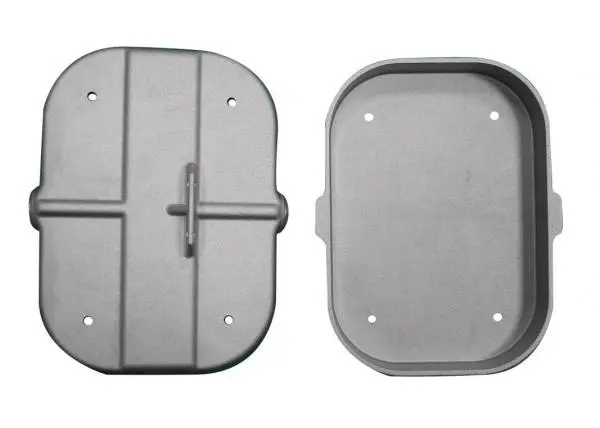
Introduction to Aluminum Gravity Casting and High Pressure Die Casting
Casting technology needs to be carefully thought through when making precise parts. Aluminum gravity casting has been used for decades in fields like aerospace and automotive because it is a good balance between cost and performance. To do this, aluminum alloy is heated until it becomes liquid, and then it is left to flow freely into metal molds that can be used again and again. This controlled filling lowers turbulence and keeps gases from getting trapped, making parts with great structural integrity.
The way high pressure die casting works is different. At pressures higher than 10,000 psi, molten aluminum is pushed into steel dies, filling even the smallest holes in milliseconds. This fast injection makes thin-walled parts with tight standards, which is why it's the best choice for making a lot of consumer electronics, car housings, and light structure parts.
The casting methods used by B2B buying teams must be in line with the project's requirements. Volume needs, wall thickness requirements, mechanical strength needs, and price limits all play a role in this choice. You can communicate better with suppliers and get the most out of your sourcing strategy if you fully understand each process.
Detailed Comparison Between Aluminum Gravity Casting and High Pressure Die Casting
Process Mechanics and Equipment Requirements
Gravity casting is based on basic physics that work well. Once the molten aluminum is poured into the mold, it will fill up completely on its own without any help from outside. The slower fill rate—which usually takes a few seconds—lets gases escape naturally, which lowers the porosity. Molds are usually made of steel or iron, and if they are taken care of, they can last for thousands of casting cycles.
For high pressure die casting, you need complex mechanical or hydraulic filling devices. From injection to ejection, the whole cycle is often over in less than 60 seconds, which allows for a huge amount of production. Die sets are carefully made from strengthened tool steel, which requires a big investment up front but produces very consistent parts over millions of rounds.
Material Compatibility and Alloy Selection
Both methods can work with different aluminum metals, but they make different best choices for each. Alloys like A356 and ADC12 work well for gravity casting because they have great flow and strength after being heated. ADC12 is often found in electronic housings and covers for power supplies because it is moderately strong and doesn't rust. It's perfect for uses that weigh around 0.24 kg and need to be stable in terms of size.
Most of the time, alloys that solidify quickly, like A380 and ADC12, are used in high pressure die casting. It is possible to fill thin parts with these alloys, and they are strong enough for most industrial uses. But because die casting cools quickly, there aren't as many post-casting heat treatment options, which could affect the final tensile strength compared to gravity cast choices.
Quality Characteristics and Defect Management
The quality of the product shows up differently in each of these ways. Aluminum gravity casting parts with better mechanical qualities because the solidification process is slower and more even. The new grain structure is better at elongation and impact resistance, which are important for parts that are subjected to dynamic loads or thermal cycling. The surface finish is usually smooth, but not as smooth as die casting that doesn't need any extra steps.
Die casting is the best way to get precise measurements and a smooth surface. Parts come out with almost perfect shape accuracy and often don't need much machining. But the high-speed injection can catch gases, making holes inside the material that makes it hard to use for pressure-tight uses or welding after casting. When setting up inspection methods and acceptance standards, quality engineers need to think about these trade-offs.
Cost Structure and Lead Time Analysis
Investing in tools is very different. Gravity casting molds are 40–60% less expensive than die casting dies, which makes them a good choice for making between 500 and 5,000 pieces a year. The simpler equipment also means lower operating costs per hour, but longer cycle times mean that more labor is needed to make each part.
Die casting's higher cost of tools is justified by its higher output. Once production starts, the cost of each part drops by a huge amount, and when more than 10,000 units are made, the cost often drops to half of what it would be for gravity casting. Lead times for first samples are 8 to 12 weeks for both methods, but die casting's complexity can sometimes make development take longer when complicated geometries need a lot of die optimization.
Environmental Impact and Sustainability
Environmental concerns are becoming more and more important in procurement decisions. Gravity casting usually uses less energy per turn because it needs less tools and works more slowly. About 85 to 90 percent of the materials are used, and runners and risers can be easily recycled back into the melting furnace.
Die casting uses more energy overall because the cycles are so fast, but new machines have energy recovery systems built in. Once it is optimized, the process produces very little waste, and closed-loop aluminum recycling systems, which are standard in certified facilities, make sure that the material will last. Manufacturers with ISO14001 approval show they care about environmental management, which is important for businesses that have to be sustainable.
Selecting the Right Casting Method Based on Application Needs
Evaluating Design Requirements and Production Volume
Before you can choose between these technologies, you need to take an honest look at the specs of your components. Gravity casting works well for parts with walls that need to be thicker than 4 mm and a modest level of complexity. The method can handle complicated internal pathways and different section widths without the risks of porosity that come with high-pressure injection. Between 1,000 and 5,000 units per year is the best production volume for gravity casting because the lower costs of the tools make up for the longer cycle times.
When the wall width is less than 3 mm and more than 10,000 pieces are made each year, high pressure die casting is the best method. The technology makes parts that are very light but also very strong, which is important for automotive uses where every gram counts. Tight tolerances—often within ±0.1mm without machining—remove the need for extra steps, which lowers the overall cost of production.
Design Optimization Strategies
Design-for-manufacturing thought is needed to do gravity casting well. Having walls that are all the same thickness stops different cooling rates that cause warping in aluminum gravity casting parts. Draft angles that are just right—usually between 2 and 3 degrees—allow parts to be ejected without damage. Strategically placing parting lines cuts down on flash and finishing work. Before committing to production tooling, quality engineers should work with suppliers to validate the design and use their knowledge to find possible problem areas.
Die making calls for even stricter design rules. Thin, even walls help keep the temperature stable. Stress doesn't build up when diameters are large. Vents that are placed in the right places let air flow freely. Gate locations have a big effect on fill patterns and need to be optimized through simulations before the die is made. Suppliers with a lot of experience will often give design feedback that makes the product easier to make while still meeting useful requirements.
Practical Application: Power Supply Cover Case Study
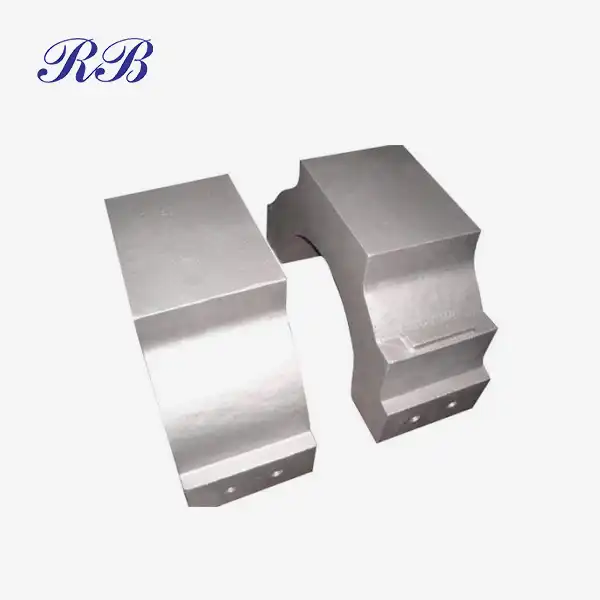
Take a look at a power supply cover made from ADC12 alloy that weighs 0.24 kg. This part needs to be stable in its shape, strong enough, and resistant to rust. For the first few production runs, gravity casting is a good way to achieve these goals. The moderate level of complexity makes it easy to design the mold, and the production capacity of 5,000 pieces fits within the economic zone for gravity casting.
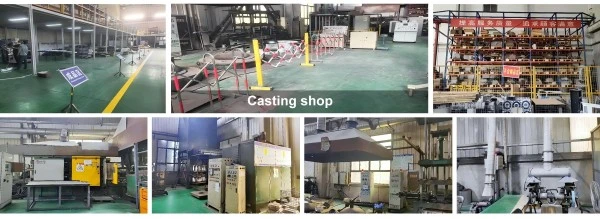
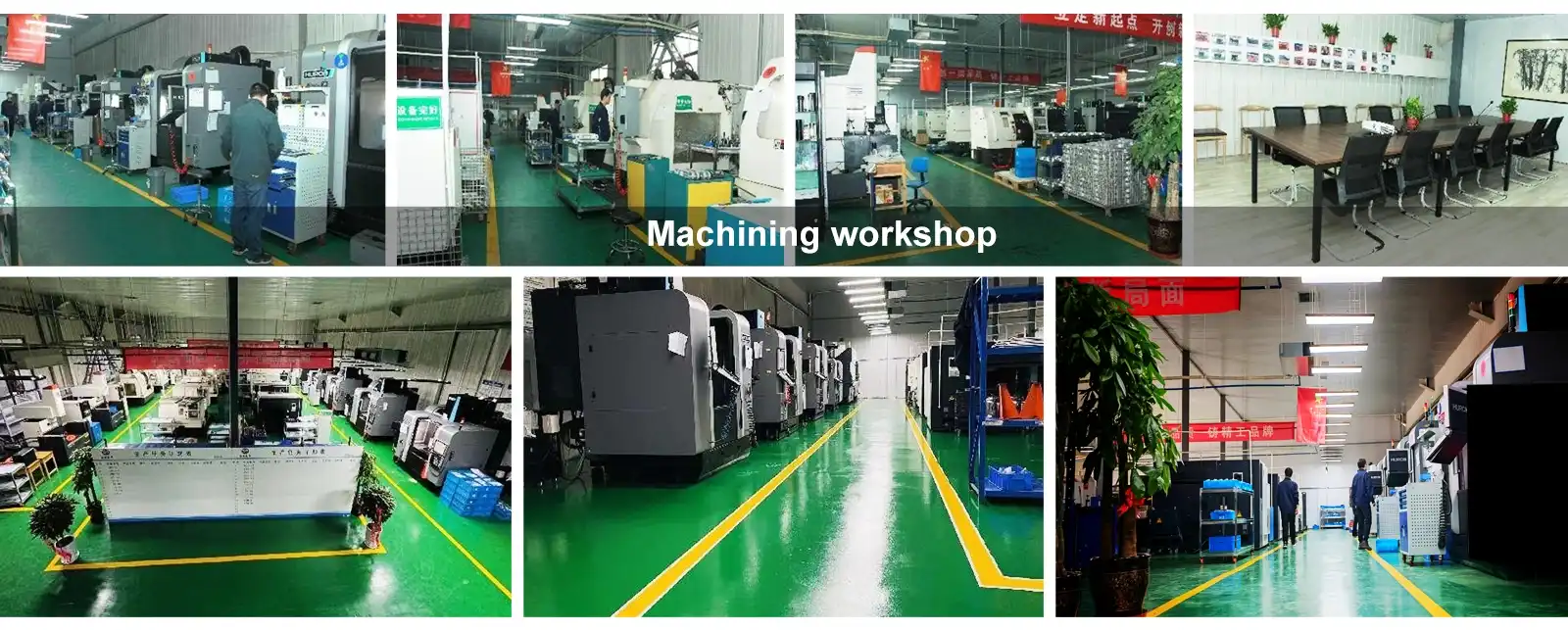
Casting, CNC machining for important mounting features, and shot blasting for a uniform surface roughness are all steps in the production process. Parts are kept safe during foreign shipping in wooden boxes. This method gives you good parts at a good price and lets you make changes to the design, which happens a lot during the product development stages.
When the number of units needed each year goes over 10,000, switching from aluminum gravity casting parts to high pressure die casting becomes a good financial idea. The same ADC12 metal works well in die casting, so the material stays the same no matter how it is made. This scalability makes it easy for buying teams to go from making a sample to making a lot of them without having to requalify the materials.
Aluminum Gravity Casting vs Other Casting Methods (Brief Overview)
Knowing where gravity casting fits in the bigger picture of casting helps buying teams make smart choices. Sand casting has the cheapest tools and can make very large parts, but the surface finish and accuracy of the dimensions are not as good as with gravity casting. The process works well for small jobs where extra cutting is already planned.
The gravity method and the high pressure method are both good, but low pressure casting is better. Under controlled low pressure (0.7 to 1.5 bar), molten metal is pushed into molds. This makes it easier to fill the molds while keeping the same mechanical properties as gravity casting. This mixed method works well for car wheels and other uses that need both accuracy and strength.
Through clay mold methods, investment casting gives a better surface finish and more accurate measurements, but because each part costs more, it can only be used for medical devices and parts for spacecraft. When you combine casting with forging pressure, you get parts with great mechanical properties that cost a lot.
Gravity casting is still a very useful method for OEM manufacturing that needs to balance performance, cost, and production freedom. The technology is mature enough that results can be predicted, and ongoing improvements in mold materials and process control keep making it more useful.

Conclusion
Choosing between high pressure die casting and aluminum gravity casting has a big impact on the quality, cost, and flow of your supply chain. Gravity casting works best when you need high-quality mechanical properties, low production volumes, and design freedom, making it a reliable method for producing aluminum gravity casting parts. When there are a lot of parts to make, tight standards, thin walls, and short production runs, high pressure die casting is the best way to go. To do successful procurement, you need to match the casting method to the needs of the application, look at suppliers in a way that goes beyond price, and build relationships with them that encourage continuous improvement. The right casting partner will have the technical know-how, certified quality systems, and manufacturing capacity that can grow with your business.
FAQ
1. What defects commonly occur in aluminum gravity casting?
Common flaws include shrinkage porosity in thick parts, cold shuts from solidifying too quickly, and inclusions from treating metal incorrectly. These problems can be avoided by using the right gates, keeping the filling temperature steady, and following the right degassing steps. Process controls put in place by reputable providers keep failure rates below 2%, which can be proven by X-ray or ultrasonic testing.
2. How do lead times compare between the two methods?
Initial molding and sampling both take about eight to twelve weeks, but the complexity of die casting can sometimes make development take longer. Die casting has much shorter production wait times than gravity casting. Cycle times of 30 to 60 seconds compared to 3 to 5 minutes for gravity casting mean that big orders can be filled faster. Gravity casting is still better for smaller batches where setup time is more important than total throughput.
3. Can gravity cast parts meet standards for accuracy?
Of course. Modern gravity casting can get dimensional accuracy to within 0.3 mm for important parts, and CNC machining can get it down to within 0.05 mm when needed. This combination meets most requirements in the automotive and industrial worlds. As-cast limits for die casting are tighter (±0.1mm), but the performance gap between the two methods gets smaller when machining is added.
Partner with Rongbao Enterprise for Superior Aluminum Casting Solutions
Rongbao Enterprise can help you with your procurement problems because they have 20 years of experience in casting. Our Xi'an plant has high-pressure die casting, low-pressure casting, and gravity casting all under one roof. This gives you the most freedom as your volume needs change. We've made parts like power supply covers out of ADC12 alloy for customers in the energy, industrial equipment, and automotive industries. Our ISO9001:2015, ISO14001, and ISO45001 certifications show that we consistently provide high quality products. We offer turnkey solutions that make your supply chain easier because we can do everything in-house, from making molds to CNC machining and surface treatment. Since 70% of our production goes to North America, Europe, and Japan, we know what high standards and ways of communicating are expected around the world. Our expert team works together to make sure that plans are the best they can be in terms of cost, performance, and ease of production, whether you need 500 test castings or 50,000 production aluminum gravity casting parts every year. Contact our experts at steve.zhou@263.net or zhouyi@rongbaocasting.com to talk about your needs for gravity casting parts and find out how our wide range of manufacturing services can help you stay ahead of the competition.
References
1. American Foundry Society. (2021). Aluminum Casting Technology Handbook. Des Plaines: AFS Publications.
2. Campbell, J. (2015). Complete Casting Handbook: Metal Casting Processes, Metallurgy, Techniques and Design. Oxford: Butterworth-Heinemann.
3. Kaufman, J.G., & Rooy, E.L. (2004). Aluminum Alloy Castings: Properties, Processes, and Applications. Materials Park: ASM International.
4. North American Die Casting Association. (2020). Product Specification Standards for Die Castings. Arlington Heights: NADCA Publications.
5. Shapiro, A.E. (2019). "Process Selection in Metal Casting: Comparing Gravity and Pressure Methods." Journal of Manufacturing Processes, 45(3), 234-248.
6. Zhao, H., & Zhang, L. (2018). "Quality Control in Aluminum Gravity Casting for Automotive Applications." International Journal of Metalcasting, 12(4), 789-803.
_1751074553490.webp)
Learn about our latest products and discounts through SMS or email