- English
- French
- German
- Portuguese
- Spanish
- Russian
- Japanese
- Korean
- Arabic
- Greek
- German
- Turkish
- Italian
- Danish
- Romanian
- Indonesian
- Czech
- Afrikaans
- Swedish
- Polish
- Basque
- Catalan
- Esperanto
- Hindi
- Lao
- Albanian
- Amharic
- Armenian
- Azerbaijani
- Belarusian
- Bengali
- Bosnian
- Bulgarian
- Cebuano
- Chichewa
- Corsican
- Croatian
- Dutch
- Estonian
- Filipino
- Finnish
- Frisian
- Galician
- Georgian
- Gujarati
- Haitian
- Hausa
- Hawaiian
- Hebrew
- Hmong
- Hungarian
- Icelandic
- Igbo
- Javanese
- Kannada
- Kazakh
- Khmer
- Kurdish
- Kyrgyz
- Latin
- Latvian
- Lithuanian
- Luxembou..
- Macedonian
- Malagasy
- Malay
- Malayalam
- Maltese
- Maori
- Marathi
- Mongolian
- Burmese
- Nepali
- Norwegian
- Pashto
- Persian
- Punjabi
- Serbian
- Sesotho
- Sinhala
- Slovak
- Slovenian
- Somali
- Samoan
- Scots Gaelic
- Shona
- Sindhi
- Sundanese
- Swahili
- Tajik
- Tamil
- Telugu
- Thai
- Ukrainian
- Urdu
- Uzbek
- Vietnamese
- Welsh
- Xhosa
- Yiddish
- Yoruba
- Zulu
Designing Custom Casting Bracket for a Radar Mounting Bracket
Mounting solutions that are both accurate and long-lasting are in great demand due to the ever-changing nature of radar technology. The stability and lifespan of these complex systems are greatly influenced by custom casting brackets, especially those made for radar installation. This article explores the details of making a specialized casting bracket for a radar mounting bracket using ZL101A aluminum alloy in sand casting, with a tight tolerance of ±0.2mm.
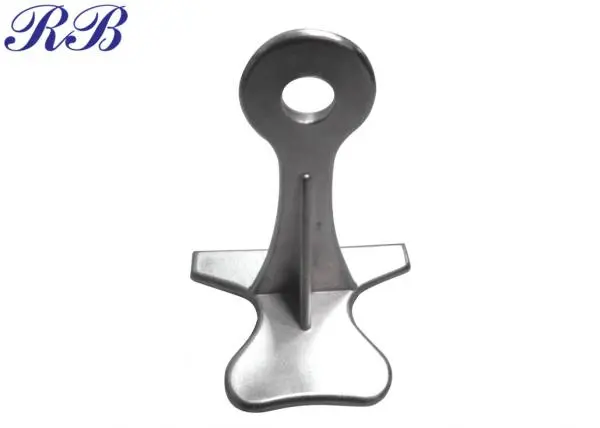
The Importance of Custom Casting Brackets in Radar Systems
From military defense to weather forecasting, radar systems are essential. The mounting bracket that secures these devices in place has to be built to endure extreme weather conditions while consistently delivering support. In order to meet the specific needs of each radar system, custom casting brackets provide a specialized solution.
Material selection is of utmost importance when it comes to design. An outstanding choice is ZL101A aluminum alloy because of its amazing combination of strength, lightweight characteristics, and resistance to corrosion. Since it will inevitably be exposed to a wide range of environmental conditions in outdoor applications, this alloy is perfect for such tasks.
Sand Casting: The Preferred Method for Complex Designs
When it comes to manufacturing custom casting brackets, sand casting emerges as the preferred method, especially for complex geometries often required in radar mounting applications. This versatile process allows for the creation of intricate shapes and varying wall thicknesses, which are often necessary to optimize the bracket's performance.
Sand casting offers several advantages for producing custom casting brackets:
- Complexity of design that is adaptable
- Practicality for small to medium production runs
- Able to cast substantial components
- Great possibility for a flawless surface
The first step is to make a template of the bracket you want. Then, use that mold to make a sand casting. when pouring molten ZL101A aluminum into the mold, it is carefully withdrawn when it has solidified. This manufacturing process enables the fabrication of brackets with complex exterior features and interior channels that would be very difficult, if not impossible, to do using other methods.
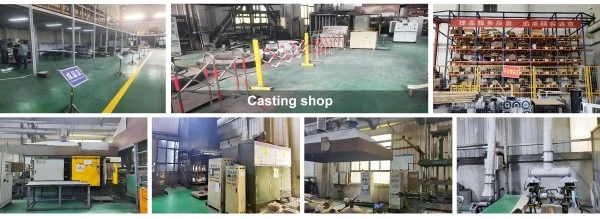
Achieving Precision Control to ±0.2mm
Ensuring exact dimensional control is of utmost importance when creating a custom casting bracket for radar attachment. A sand casting method with an extremely tight tolerance of ±0.2mm necessitates painstaking attention to detail all the way through the production process.
This degree of accuracy requires meticulous management of several variables:
- Designing and creating patterns: Making precise patterns using cutting-edge CAD software and precision machining.
- To guarantee the stability and dimensional correctness of the mold, it is necessary to prepare it using certain sand combinations and compaction processes.
- Methods for regulated pouring that reduce turbulence and guarantee uniform solidification are known as pouring techniques.
- The final dimensions are achieved by post-casting processing, which involves the use of computer numerical control machining and other precision finishing procedures.
The combination of these techniques allows for the production of custom casting brackets that meet the exacting standards required for radar mounting applications.
Integrating Design Features for Optimal Performance
To get the most out of a custom casting bracket you're making for radar installation, you need to think about these things:
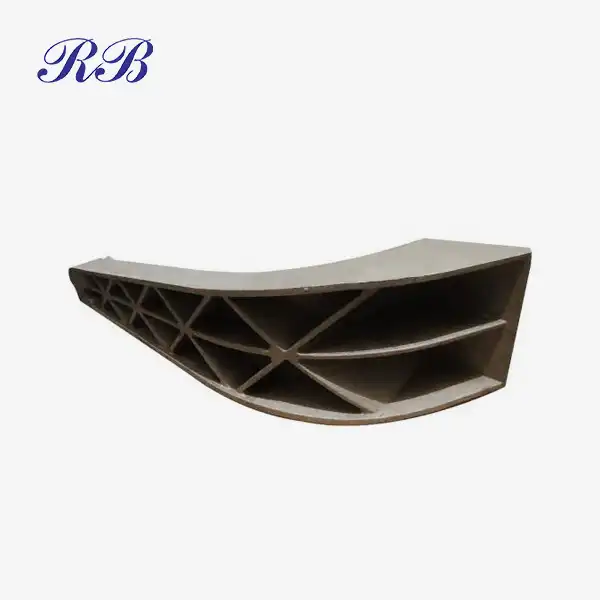
- Ribs for reinforcement: Ribs placed strategically may greatly increase the strength-to-weight ratio of the bracket.
- Attaching the radar system is a breeze with the help of the precisely constructed mounting points.
- Improve the bracket's and the radar system's lifespan with thermal management features that allow heat dispersion.
- Surface treatments may further strengthen the corrosion resistance of ZL101A aluminum alloy, which already has this quality.
When used correctly, these design components provide a one-of-a-kind casting bracket that excels in the field while still satisfying the specified dimensions.
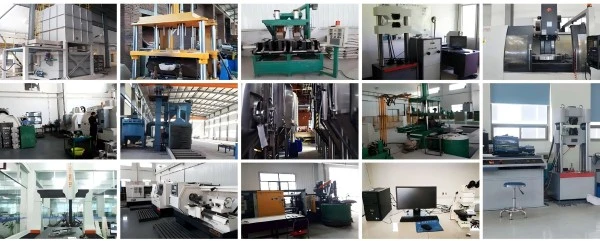
Quality Assurance and Testing
To ensure that each custom casting bracket meets the stringent requirements for radar mounting applications, a comprehensive quality assurance process is essential. The usual components of this are:
- Internal integrity may be confirmed using non-destructive testing methods including X-ray and ultrasonic examination.
- To verify compliance with the ±0.2mm tolerance, coordinate measuring machines (CMMs) are used for dimensional inspection.
- Testing the material entails confirming the ZL101A alloy's composition and performance via chemical analysis and mechanical property testing.
- To guarantee the bracket will last in different operating settings, it must undergo environmental tests that mimic harsh circumstances.
Each bespoke casting bracket is tested to the highest standards to guarantee it will work as expected in radar mounting scenarios, and if not better.
FAQ
1. What are the advantages of using ZL101A aluminum alloy for custom casting brackets?
ZL101A aluminum alloy offers an excellent combination of strength, lightweight properties, and corrosion resistance. This makes it ideal for outdoor applications like radar mounting brackets, where durability and weather resistance are crucial. The alloy's composition allows for good castability, enabling the creation of complex shapes through sand casting while maintaining structural integrity.
2. How does sand casting compare to other manufacturing methods for custom casting brackets?
Sand casting is often preferred for custom casting brackets due to its versatility in creating complex geometries and its cost-effectiveness for low to medium production volumes. Compared to die casting, sand casting allows for larger parts and more design flexibility. While CNC machining can achieve higher precision, it's generally more expensive and time-consuming for complex shapes. Sand casting strikes a balance between design freedom, cost, and production efficiency, making it an excellent choice for radar mounting brackets.
Custom Casting Bracket Supplier: Rongbao Enterprise
A leader in innovation and quality, Rongbao Enterprise produces precision-engineered custom casting brackets for radar mounting applications. Rongbao has been a pioneer in the precise processing and casting of aluminum alloys since its founding in 2003. Every one of their custom casting brackets is up to the rigorous requirements needed for radar systems because of their mastery of sand casting and cutting-edge CNC machining skills.
Certifications in ISO9001:2015, ISO14001, and ISO45001 attest to Rongbao Enterprise's dedication to quality. Shot blasting is one of their quality control procedures that ensures their custom casting brackets made of ZL101A aluminum alloy have a better surface polish and are precisely controlled to within ±0.2mm. Rongbao is prepared to fulfill the varied demands of the radar sector with its 1000-piece manufacturing capacity and ability to handle OEM/ODM requirements.
For those seeking a reliable partner in custom casting bracket manufacturing, Rongbao Enterprise offers unparalleled expertise and customer service. Their dedication to environmental sustainability and innovation has solidified their position as a trusted supplier to markets in the United States, Europe, and Japan. To explore how Rongbao can elevate your radar mounting bracket solutions, reach out to their expert team at steve.zhou@263.net or zhouyi@rongbaocasting.com. Experience the precision and quality that sets Rongbao apart in the world of custom casting brackets.
References
1. ASM International. (2019). Aluminum-Silicon Casting Alloys: Atlas of Microstructures and Properties. ASM International.
2. Campbell, J. (2015). Complete Casting Handbook: Metal Casting Processes, Metallurgy, Techniques and Design. Butterworth-Heinemann.
3. Davis, J. R. (Ed.). (1993). Aluminum and Aluminum Alloys. ASM International.
4. Groover, M. P. (2020). Fundamentals of Modern Manufacturing: Materials, Processes, and Systems. John Wiley & Sons.
5. Srinivasan, M. (2013). Science and Technology of Casting Processes. BoD – Books on Demand.
Learn about our latest products and discounts through SMS or email