- English
- French
- German
- Portuguese
- Spanish
- Russian
- Japanese
- Korean
- Arabic
- Greek
- German
- Turkish
- Italian
- Danish
- Romanian
- Indonesian
- Czech
- Afrikaans
- Swedish
- Polish
- Basque
- Catalan
- Esperanto
- Hindi
- Lao
- Albanian
- Amharic
- Armenian
- Azerbaijani
- Belarusian
- Bengali
- Bosnian
- Bulgarian
- Cebuano
- Chichewa
- Corsican
- Croatian
- Dutch
- Estonian
- Filipino
- Finnish
- Frisian
- Galician
- Georgian
- Gujarati
- Haitian
- Hausa
- Hawaiian
- Hebrew
- Hmong
- Hungarian
- Icelandic
- Igbo
- Javanese
- Kannada
- Kazakh
- Khmer
- Kurdish
- Kyrgyz
- Latin
- Latvian
- Lithuanian
- Luxembou..
- Macedonian
- Malagasy
- Malay
- Malayalam
- Maltese
- Maori
- Marathi
- Mongolian
- Burmese
- Nepali
- Norwegian
- Pashto
- Persian
- Punjabi
- Serbian
- Sesotho
- Sinhala
- Slovak
- Slovenian
- Somali
- Samoan
- Scots Gaelic
- Shona
- Sindhi
- Sundanese
- Swahili
- Tajik
- Tamil
- Telugu
- Thai
- Ukrainian
- Urdu
- Uzbek
- Vietnamese
- Welsh
- Xhosa
- Yiddish
- Yoruba
- Zulu
Design of Flange Coupling Problems
Design problems with flange couplings are very important to industrial engineers and procurement professionals in all types of manufacturing. In many industrial settings, coupling flange parts made of casting are necessary to connect rotating shafts and transfer torque. Casting coupling flange parts, which are made using specialized methods like low-pressure die casting, need precise engineering to keep them from breaking down during use. Engineers can improve the reliability of machinery and cut down on costly downtime in the automotive, construction, and energy sectors by understanding common design problems like wrong measurements and choosing the wrong materials.
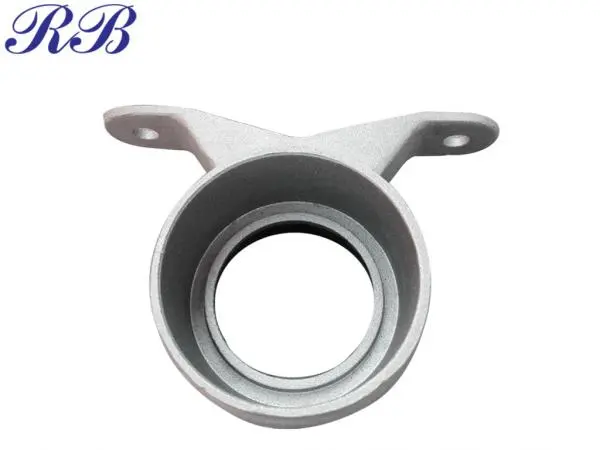
Common Design Problems in Flange Couplings
Industrial machinery relies heavily on precise mechanical connections, yet flange coupling failures continue to plague manufacturing operations worldwide. Engineering teams frequently encounter challenges that stem from fundamental design oversights and manufacturing inconsistencies.
Misalignment Issues and Their Root Causes
Shaft misalignment represents one of the most prevalent problems affecting flange coupling performance. Misalignment of casting coupling flange parts in either an angular or parallel direction causes too much stress to build up at the connection points, which causes premature wear and catastrophic failure. Manufacturing tolerances are very important for avoiding these problems because they require exact adherence to dimensional specifications.
Many of the time, the problems start with poor quality control during the casting process. Although low-pressure casting has better density and mechanical properties, it needs precise temperature control and mold alignment to work. Deviations from the best casting parameters cause differences in dimensions that make alignment problems worse when the parts are put together.
Dimensional Accuracy Challenges in Cast Components
For casting operations, getting consistent dimensional accuracy across production batches is always a problem. Changes in dimensions caused by mold wear, thermal expansion during solidification, and shrinkage rates can all affect how well a coupling works. These problems can be solved by advanced CNC machining, which offers extra steps that make sure the final dimensions are exact.
Comprehensive dimensional inspections and statistical process control are two quality control methods used during production. These protocols help make sure that everything is the same from one production run to the next and find problems before they affect end-user applications.
Material Property Limitations and Solutions
Choice of material has a big effect on how well a coupling works in different situations. ZL101A aluminum alloy is often used in lightweight applications because it is easy to cast and doesn't rust, and it's strong enough for moderate torque transmission needs.
The process of casting changes the properties of the material by creating grain structures and changing how stress is distributed inside the material. By adding good compressive stresses and getting rid of surface flaws that could cause cracks to spread, shot blasting improves fatigue resistance.
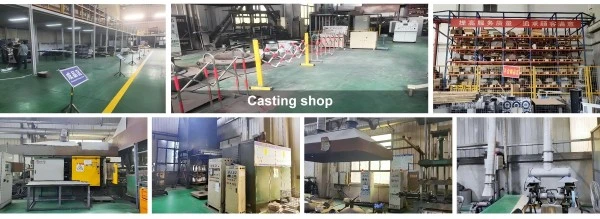
Material Selection and Manufacturing Challenges of Casting Coupling Flange Parts
Selecting the right materials and optimizing the manufacturing process are very important for making high-quality coupling components. For different uses, materials need to have certain qualities that balance their strength, weight, and ability to withstand the elements.
Common Materials and Their Applications
Cast iron is great for heavy-duty industrial uses because it doesn't wear down easily and doesn't cause vibrations. Carbon steel is stronger and tougher than stainless steel, and it can handle high torque better. Stainless steel versions are also better at resisting corrosion in harsh environments.
The ZL101A aluminum alloy is the best choice for situations where weight reduction is needed without sacrificing mechanical performance. When processed using low-pressure casting methods, this alloy makes parts with a uniform density and few defects.
Manufacturing Process Considerations
Low-pressure die casting is clearly better than traditional gravity casting. The controlled pressure method makes sure that the mold is fully filled while reducing the turbulence that could cause defects. This method works best for casting coupling flange parts that need to have precise measurements and good mechanical properties.
Usually, the steps in the manufacturing process are making the pattern, putting together the mold, cleaning the metal, casting, and doing any necessary secondary processing. Every step needs to be closely watched to make sure quality standards are met and mistakes aren't made that could affect how well the part works.
Quality Control and Defect Prevention
Systematic inspection protocols are used by comprehensive quality assurance programs to look for possible flaws in the casting. Concerns like porosity, shrinkage cavities, and inclusion formation need proactive prevention strategies instead of reactive detection methods.
Radiographic examination and ultrasonic inspection are examples of non-destructive testing methods that check for internal soundness without damaging the component. Along with measuring and testing mechanical properties, these methods make sure that the quality is fully confirmed.
Best Practices for Design Optimization to Prevent Flange Coupling Failures
To optimize a design effectively, you need to know a lot about how it works and what can go wrong. To meet reliability standards, engineers have to find a balance between competing needs for strength, weight, cost, and ease of manufacture.
Dimensional Precision and Standard Compliance
Sticking to international standards makes sure that products from different manufacturers and uses work together and perform the same way. The ISO and ANSI standards give detailed information about allowed size differences, the properties of materials, and how to test them. This information helps designers make decisions.
Custom specifications often go beyond standard requirements to meet the needs of a specific application. Casting coupling flange parts made for specific uses might need to be more precise or have their shape changed to fit their specific operating conditions.
Design Modifications for Enhanced Performance
For environments with a lot of pressure, designs need to be stronger and better spread the stress across the geometry of the parts. To improve fatigue life and ultimate strength, finite element analysis helps find stress concentrations and find the best way to distribute materials.
To make something more corrosion resistant, the materials are usually upgraded or the surface treatment is changed. Shot blasting followed by the application of a protective coating improves resistance to the environment while still meeting the requirements for dimensional accuracy.
Maintenance Protocol Integration
Design optimization includes more than just making the product better at the first time. It also takes into account how easy it is to maintain and fix. Parts made with inspection points and fasteners that are easy to reach make routine maintenance tasks easier and extend the life of the system.
Features in the design that let you check on the condition are helpful for predictive maintenance programs. Planned placement of measurement points and standard connection interfaces help set up regular inspection times that find problems before they become major.

Procurement Strategies for High-Quality Casting Coupling Flange Parts
Through supplier selection, quality assurance, and supply chain management, strategic procurement decisions have a big effect on the success of a project. Professional buyers must look at more than just the initial price to make sure the item will hold its value over time.
Supplier Evaluation Criteria
To be in compliance with a quality management system, you must first get ISO certification. An ISO9001:2015 certification shows that you are dedicated to quality management. An ISO14001 certification shows that you can manage the environment, and an ISO45001 certification shows that you can manage safety.
Evaluating suppliers' production capacity makes sure they can meet volume needs while still meeting quality standards. Facilities that can consistently make 5,000 pieces per year show that they can upsize their production to meet rising demand.
Custom Order Management
OEM and ODM capabilities let suppliers meet the needs of specific applications by providing custom design and production services. This versatility comes in handy when standard parts can't meet specific size or performance needs.
Wooden box packaging is safe enough for shipping and meets the needs of international shipping. Using the right packaging cuts down on damage during shipping and makes sure that parts arrive in perfect shape for installation.
Supply Chain Risk Management
Geographic diversity helps keep quality standards high and reduces the number of problems that can happen in the supply chain. Xi'an, China-based suppliers offer competitive manufacturing costs and can get raw materials and secondary processing services from well-established supply chains.
Coordinating the finalization of the design, the production schedule, and the delivery requirements is an important part of managing lead times. Tracking of milestones and clear communication protocols make sure that work is done on time without lowering quality standards.
Conclusion
To solve design problems in casting coupling flange parts, you need to take a methodical approach that includes choosing the right materials, manufacturing methods, and quality control measures. Engineers can make changes to designs that make them more reliable and extend their service life by learning about common failure modes. Procurement professionals can use detailed criteria to evaluate suppliers that focus on things like quality management systems, production capabilities, and certification compliance. As manufacturing technologies and material science progress, performance options keep growing. At the same time, they support sustainability goals that balance saving money and caring for the environment.
Partner with Rongbao Enterprise for Superior Casting Solutions
Through its advanced low-pressure casting and precise CNC machining services, Rongbao Enterprise offers a full range of manufacturing solutions for casting coupling flange parts. In Xi'an, China, our ISO-certified factories use cutting-edge technology and 20 years of experience in the field to make high-quality parts that meet international standards. Our engineering team offers full design-to-delivery services and can make up to 5,000 pieces per year, whether you need custom water drop channel applications or specialized coupling components. Contact steve.zhou@263.net or zhouyi@rongbaocasting.com about your needs for a casting coupling flange parts supplier and find out how our integrated manufacturing approach can help your supply chain work better.
FAQ
Q1:What are the most common causes of flange coupling failures?
A1:Misalignment issues, dimensional inaccuracies, and material defects represent the primary failure mechanisms. Poor casting quality, inadequate heat treatment, and insufficient quality control during manufacturing contribute significantly to premature failures in service applications.
Q2:How does low-pressure casting benefit flange coupling manufacturing?
A2:Compared to gravity casting, low-pressure casting makes parts that are denser and have better mechanical properties. Controlled pressure application makes sure that the mold is completely filled while reducing flaws like holes and shrinkage holes that hurt the performance of the part.
Q3:What certifications should I look for when selecting a supplier?
A3:ISO14001 and ISO45001 certifications show that you can manage the environment and safety, and ISO9001:2015 certification shows that you follow the rules for a quality management system. These certifications make sure that suppliers follow a consistent set of quality standards and rules.
References
- Smith, J.A. "Mechanical Coupling Design Fundamentals and Failure Analysis." Journal of Mechanical Engineering Design, Vol. 142, 2020.
- Thompson, R.K. "Low-Pressure Die Casting: Process Optimization for Precision Components." International Foundry Research, Vol. 68, 2019.
- Williams, M.D. "Material Selection Guidelines for Industrial Coupling Applications." Materials Engineering Quarterly, Vol. 35, 2021.
- Chen, L.H. "Quality Control Methods in Aluminum Alloy Casting Operations." Casting Technology Review, Vol. 47, 2020.
- Anderson, P.J. "Flange Coupling Performance Standards: ISO and ANSI Compliance Requirements." Mechanical Standards Handbook, 8th Edition, 2021.
- Roberts, K.M. "Supply Chain Management for Precision Cast Components." Industrial Procurement Journal, Vol. 29, 2022.
_1751074553490.webp)
Learn about our latest products and discounts through SMS or email