- English
- French
- German
- Portuguese
- Spanish
- Russian
- Japanese
- Korean
- Arabic
- Greek
- German
- Turkish
- Italian
- Danish
- Romanian
- Indonesian
- Czech
- Afrikaans
- Swedish
- Polish
- Basque
- Catalan
- Esperanto
- Hindi
- Lao
- Albanian
- Amharic
- Armenian
- Azerbaijani
- Belarusian
- Bengali
- Bosnian
- Bulgarian
- Cebuano
- Chichewa
- Corsican
- Croatian
- Dutch
- Estonian
- Filipino
- Finnish
- Frisian
- Galician
- Georgian
- Gujarati
- Haitian
- Hausa
- Hawaiian
- Hebrew
- Hmong
- Hungarian
- Icelandic
- Igbo
- Javanese
- Kannada
- Kazakh
- Khmer
- Kurdish
- Kyrgyz
- Latin
- Latvian
- Lithuanian
- Luxembou..
- Macedonian
- Malagasy
- Malay
- Malayalam
- Maltese
- Maori
- Marathi
- Mongolian
- Burmese
- Nepali
- Norwegian
- Pashto
- Persian
- Punjabi
- Serbian
- Sesotho
- Sinhala
- Slovak
- Slovenian
- Somali
- Samoan
- Scots Gaelic
- Shona
- Sindhi
- Sundanese
- Swahili
- Tajik
- Tamil
- Telugu
- Thai
- Ukrainian
- Urdu
- Uzbek
- Vietnamese
- Welsh
- Xhosa
- Yiddish
- Yoruba
- Zulu
Custom Titanium Parts: Medical Devices and Aerospace Fields
When engineers and procurement directors search for reliable titanium alloy machined parts, they are not simply buying metal components — they are sourcing critical building blocks for devices that keep people alive and aircraft airborne. Titanium alloys, particularly Ti-6Al-4V, deliver an exceptional strength-to-weight ratio, outstanding corrosion resistance, and proven biocompatibility. These properties make precision-machined titanium the preferred material across orthopedic implants, rehabilitation robotics, and aerospace structural assemblies. This article walks through what you need to know before sourcing custom titanium components for high-stakes applications.
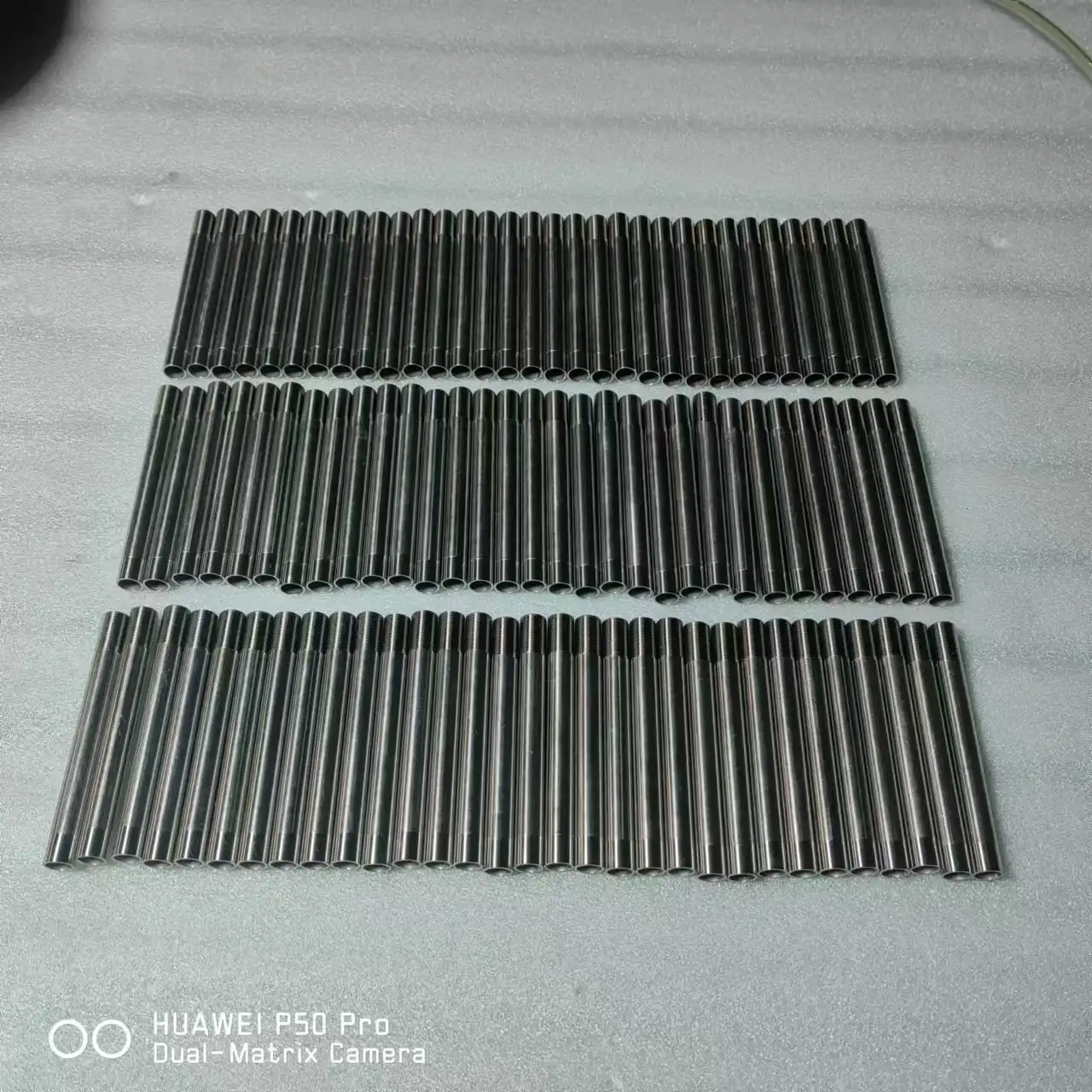
Titanium Alloy Machined Parts for Medical and Aerospace Use
Titanium is not an upgrade that can be used on any car; it has to earn its place in the specs. ASM International says that Ti-6Al-4V makes up about half of all titanium alloys used in the world. This is because it has a good mix of tensile strength (about 950 MPa), low density (4.43 g/cm³), and good wear resistance. In medical settings, this alloy meets ISO 10993 biocompatibility standards, which means it doesn't react with body fluids and doesn't cause cytotoxic reactions. This is a must for devices used in surgery and rehabilitation.
Steel made of stainless steel is heavier and can rust in biological environments high in salt over time. Even though aluminium alloys are light, they don't have the wear strength needed for structural or orthopaedic parts that have to hold weight. Titanium metals are in the middle. They are lighter than steel, stronger than aluminium, and don't react chemically in controlled settings. When buying teams look at how long a material lasts and how much it costs over its whole life, titanium always comes out on top. It needs to be replaced less often and costs less in the long run for upkeep.
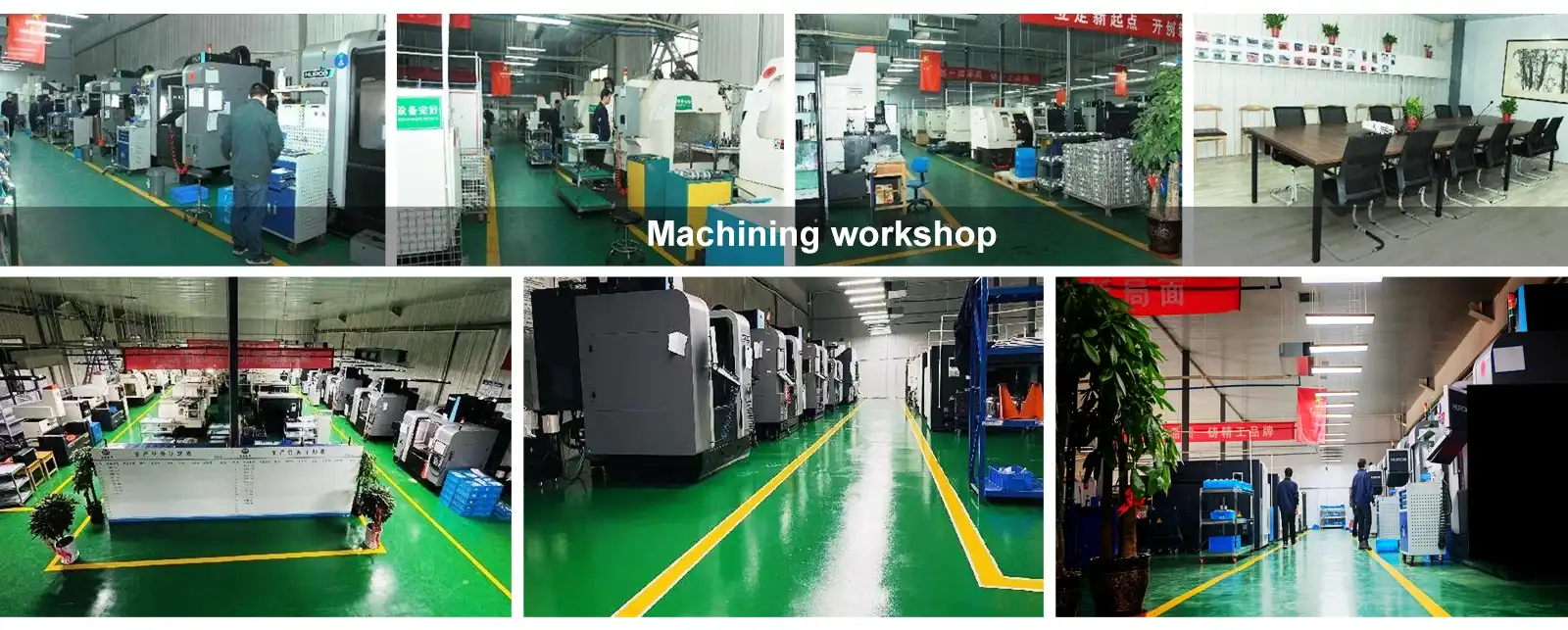
Titanium Alloy Machining Process and Best Practices
It is really hard to machine titanium. The low thermal transfer of the material keeps heat at the cutting contact, which speeds up the wear on the tools. Because it tends to get harder while being cut, it needs exact feed rates and cutting speeds, which are usually between 30 and 60 m/min for normal milling. Skipping these parameters leads to changes in dimensions and flaws on the surface that can't pass medical-grade inspection.
Recommended Grades and Heat Treatment Protocols
Extra Low Interstitial (ELI) Ti-6Al-4V is the best grade for implant-contact parts because it has less iron and oxygen, which makes it harder to break. After CNC cutting, annealing at 700–850°C removes any remaining stress and stabilises the final shape. When it comes to aircraft fasteners and brackets, basic Ti-6Al-4V works well enough and costs less. Choosing the right grade before starting to machine directly affects the accuracy of the dimensions and the consistency of the surface throughout the whole production run.
Achieving CT4–CT6 Casting Tolerances Through Precision CNC
For medical device assemblies, especially titanium alloy machined parts in rehabilitation robots, casting tolerances in the CT4–CT6 range are common. To get final dimensional compliance, CNC machining is needed after casting. Multi-axis CNC machining centers with live tools can keep their positions accurate to within ±0.01 mm. This makes it possible to make complex shapes like internal cooling channels, threaded inserts, and contoured bearing surfaces that aren't possible with flat-plane cutting.
Comparing Titanium Alloy Machined Parts with Alternatives
When buying something, you have to make trade-offs. Here is an honest review of the materials that are most often looked at with fine titanium parts:
Titanium vs. Stainless Steel: Stainless steel parts cost 30–50% less per kilogram of raw material, but weigh approximately 56% more for the same geometry. In wearable rehabilitation devices, that weight penalty translates directly into patient fatigue and device rejection rates.
Titanium vs. Aluminum Alloy: Aluminum is easier to machine and cheaper to process, but its fatigue limit (~96 MPa for 6061-T6) falls short of titanium's (~515 MPa for Ti-6Al-4V). For dynamic-load aerospace brackets or prosthetic joint interfaces, aluminum is a liability, not a saving.
CNC-Machined vs. Cast Components: Investment castings can approximate complex shapes, but achieving CT4-level accuracy typically still requires finish machining. Combining precision casting with CNC post-processing—as Rongbao Enterprise does—delivers the dimensional integrity of machined parts at a production cost closer to casting.
The above analysis clearly shows that titanium metals are worth the extra cost when looking at total lifetime cost, following the rules, and patient or passenger safety.

Applications of Custom Titanium Parts in Medical Devices and Aerospace
Custom titanium parts show up in places where failure is not an option. When making medical products, the most difficult tasks are:
Orthopedic and spinal implants requiring long-term biocompatibility and fatigue resistance under cyclic physiological loading.
Rehabilitation robot joint housings demanding CT4–CT6 dimensional tolerances, medical-grade surface finish (Ra ≤ 0.8 μm), and full material traceability documentation.
Surgical instrument bodies benefiting from titanium's autoclaving durability and radiolucent properties during imaging-guided procedures.
Rehabilitation robot joint housings need to be within CT4–CT6 limits in terms of size, have a medical-grade surface finish (Ra ≤ 0.8 μm), and have full paperwork on how the materials were made.
In aerospace, too, custom-machined titanium alloy machined parts are a big part of important assemblies. Titanium is used for structural bolts, engine mount parts, airframe braces, and the bodies of hydraulic actuators because it is strong and doesn't melt at high temperatures. Parts that work near jet engine escape zones have to stay mechanically sound at temperatures up to 300°C, which is above which aluminium metals start to break down.
How to Choose the Right Titanium Alloy Machining Partner?
For medical device parts that want to go through the FDA 510(k) or CE-mark processes, they need to have paperwork that follows ISO 13485 standards, material certificates with chemical composition data, and dimensional inspection reports made by a coordinate measuring machine. Aerospace parts often need to be compliant with AS9100 Rev D and have process controls that are recognised by NADCAP. If a titanium alloy machined part supplier can't provide these records when asked, it puts OEM customers at risk of being audited and delays in product registration.
How to Pick the Best Partner for Machining Titanium Alloy
Quality system certifications: ISO 9001:2015, ISO 13485, and ISO 14001 form a credible compliance baseline. AS9100 is essential for aerospace supply chains.
CMM inspection capability: Dimensional verification on a coordinate measuring machine is the standard for confirming CT4–CT6 tolerance compliance — not manual gauging.
Prototyping flexibility and NDA readiness: Medical device development cycles iterate frequently. Suppliers must accommodate small-batch prototype orders and sign non-disclosure agreements before receiving CAD files.
Material traceability documentation: Full material certificates from raw stock to finished part protect your regulatory audit trail and simplify incoming inspection.
Surface treatment capability: Shot blasting, anodizing, and passivation should be available in-house or through validated sub-tier partners to avoid handoff quality gaps.
Conclusion
Custom titanium parts continue driving innovation in medical devices and aerospace applications where performance excellence defines success. The unique combination of strength, biocompatibility, and corrosion resistance makes titanium indispensable for critical components. As technology advances, demand for precision titanium machining will continue growing. Successful projects require partnerships with experienced manufacturers who understand both material science and application requirements. The investment in quality titanium components pays dividends through enhanced performance, extended service life, and improved safety margins that protect both equipment and lives.
Partner with Rongbao Enterprise for Premium Titanium Solutions
Rongbao Enterprise stands as your trusted titanium alloy machined parts supplier, delivering precision components that exceed industry standards. Our comprehensive manufacturing capabilities span the complete production chain from initial design consultation through final component delivery. With 20 years of industry experience and ISO9001:2015, ISO14001, and ISO45001 certifications, we provide the reliability and quality assurance your critical applications demand. Contact us at steve.zhou@263.net and zhouyi@rongbaocasting.com to discuss your custom titanium machining requirements.
FAQs
Q1: What makes titanium ideal for medical device applications?
A: Titanium's biocompatibility, corrosion resistance, and strength-to-weight ratio make it perfect for medical devices. The material integrates well with human tissue and resists body fluid corrosion, ensuring long-term implant success and patient safety.
Q2: How do titanium machining tolerances compare to other materials?
A: Titanium can achieve tolerances as tight as ±0.001 inches with proper machining techniques. While more challenging to machine than aluminum, skilled manufacturers can produce components with precision matching or exceeding steel capabilities.
Q3: What certification standards apply to aerospace titanium components?
A: Aerospace titanium parts must meet AS9100 quality standards along with specific material certifications like AMS specifications. Traceability documentation and material test reports ensure compliance with aviation safety requirements throughout the supply chain.
References
- Boyer, R.R., "An overview on the use of titanium in the aerospace industry," Materials Science and Engineering A, Vol. 213, pp. 103-114, 1996.
- Geetha, M., et al., "Ti based biomaterials, the ultimate choice for orthopaedic implants - A review," Progress in Materials Science, Vol. 54, pp. 397-425, 2009.
- Peters, M., et al., "Titanium alloys for aerospace applications," Advanced Engineering Materials, Vol. 5, pp. 419-427, 2003.
- Niinomi, M., "Mechanical properties of biomedical titanium alloys," Materials Science and Engineering A, Vol. 243, pp. 231-236, 1998.
- Donachie, M.J., "Titanium: A Technical Guide, 2nd Edition," ASM International, Materials Park, OH, 2000.
- Veiga, C., et al., "Properties and applications of titanium alloys: A brief review," Reviews on Advanced Materials Science, Vol. 32, pp. 133-148, 2012.
Learn about our latest products and discounts through SMS or email