- English
- French
- German
- Portuguese
- Spanish
- Russian
- Japanese
- Korean
- Arabic
- Greek
- German
- Turkish
- Italian
- Danish
- Romanian
- Indonesian
- Czech
- Afrikaans
- Swedish
- Polish
- Basque
- Catalan
- Esperanto
- Hindi
- Lao
- Albanian
- Amharic
- Armenian
- Azerbaijani
- Belarusian
- Bengali
- Bosnian
- Bulgarian
- Cebuano
- Chichewa
- Corsican
- Croatian
- Dutch
- Estonian
- Filipino
- Finnish
- Frisian
- Galician
- Georgian
- Gujarati
- Haitian
- Hausa
- Hawaiian
- Hebrew
- Hmong
- Hungarian
- Icelandic
- Igbo
- Javanese
- Kannada
- Kazakh
- Khmer
- Kurdish
- Kyrgyz
- Latin
- Latvian
- Lithuanian
- Luxembou..
- Macedonian
- Malagasy
- Malay
- Malayalam
- Maltese
- Maori
- Marathi
- Mongolian
- Burmese
- Nepali
- Norwegian
- Pashto
- Persian
- Punjabi
- Serbian
- Sesotho
- Sinhala
- Slovak
- Slovenian
- Somali
- Samoan
- Scots Gaelic
- Shona
- Sindhi
- Sundanese
- Swahili
- Tajik
- Tamil
- Telugu
- Thai
- Ukrainian
- Urdu
- Uzbek
- Vietnamese
- Welsh
- Xhosa
- Yiddish
- Yoruba
- Zulu
Custom Sand Casting Services for High Precision Industrial Parts
Custom sand casting services for high precision industrial parts represent a specialized manufacturing approach that transforms complex engineering requirements into dependable metal components. This advanced manufacturing process utilizes expendable sand molds to create intricate parts with enhanced dimensional accuracy, meeting the stringent demands of automotive, aerospace, and heavy machinery sectors. Modern sand casting techniques combine traditional foundry expertise with cutting-edge quality control systems, delivering components that exceed conventional casting limitations while maintaining cost-effectiveness for both prototype development and production runs.
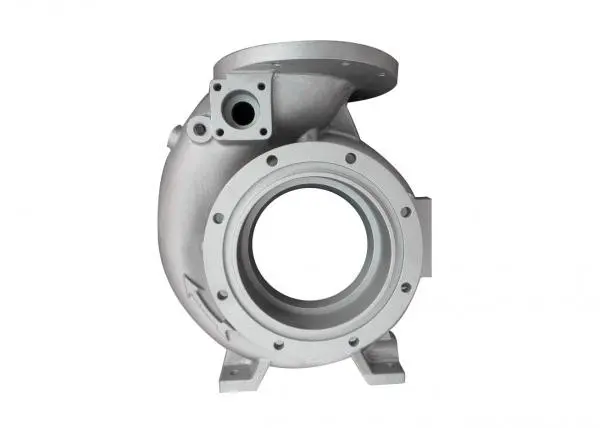
Understanding the Challenges in Producing High Precision Industrial Parts
When it comes to important uses in the automobile, aircraft, and heavy machinery industries, high precision industrial parts need to be very good at adhering to tight tolerances and having smooth surfaces. When standard casting methods don't meet these strict requirements, manufacturing engineers always have to deal with big problems.
Dimensional Accuracy Limitations in Traditional Methods
When using traditional casting methods, parts often have problems with inconsistent dimensions that make them less useful. Changes in thermal expansion during cooling cycles cause unpredictable patterns of shrinking, which leads to parts that don't fit within the standards that were set. Limits on the flow of material inside normal molds lead to incomplete filling, which creates irregularities in size that need a lot of secondary cutting.
Material Defects and Quality Consistency Issues
Quality engineers often find flaws like porosity, shrinking holes, and inclusions that weaken the structure. These flaws in the material are caused by bad degassing methods, badly designed gates, and unstable temperature control during the solidification process. Changes from batch to batch make these problems even worse, making it hard to keep quality standards consistent across production runs.
Process Control and Monitoring Deficiencies
Not having enough process tracking tools makes it harder for producers to find and fix quality problems in real time. Changes in temperature, mold moisture content, and uneven pouring methods all lead to unpredictable results that make the parts less reliable. Without detailed process paperwork and control tools, fixing quality problems is more of a reactive process than a proactive one.
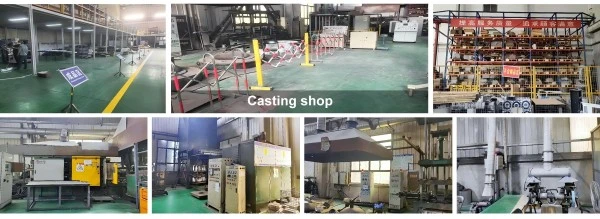
Advanced Custom Sand Casting Solutions to Overcome Precision Challenges
Modern sand casting uses more advanced techniques to get around the limited accuracy of older methods. These include new materials, better process controls, and complete quality management systems. Because of these improvements, producers can now get the level of accuracy in dimensions that was once only possible with more expensive casting methods.
Innovative Sand Systems and Molding Technologies
These days, more advanced casting shops use resin-coated sand methods that give better shape stability and surface finish quality. These specific sand mixes have better flowability and compaction, which makes it easier to make mold holes that show more detail and have smoother surfaces. Automated casting equipment makes sure that the sand density stays the same and gets rid of the human error that used to cause measurement errors.
Real-Time Process Monitoring and Control Systems
Modern foundries use full tracking systems that keep an eye on important process variables like the temperature of the pour, the rate of cooling, and the conditions of the mold. During the casting process, automated temperature control systems keep exact thermal management throughout, reducing changes in shrinkage and improving stability in dimensions.
Enhanced Quality Assurance and Testing Protocols
Modern quality control programs have many review steps, from checking the materials that come in to making sure the end parts are safe. X-ray inspection, acoustic testing, and magnetic particle inspection are all examples of non-destructive testing methods that find flaws inside a component that could affect how well it works.
Comprehensive Guide to Selecting the Right Sand Casting Service for Your Industrial Needs
To find the right casting partner, you need to carefully look at their technical skills, quality control systems, and operational ability to make sure they meet your unique manufacturing needs. When you choose the right provider, you can lower the risks in the supply chain while also improving the quality of the parts and their delivery.
Technical Capability Assessment
When looking at possible casting providers, the first thing that should be done is a full analysis of their technical skills and available tools. Manufacturing experts should check to see if the provider can work with certain materials, meet tolerances, and handle complicated shapes within the limits of their current method.
Quality Management and Certification Standards
Evaluation of the quality system makes sure that providers follow consistent procedures and record-keeping methods that meet your quality standards and legal responsibilities. International approval guidelines give you a way to measure how mature your supplier's quality management is. Getting ISO 9001 approval shows that you are dedicated to documenting processes and making improvements all the time.

Cost Analysis and Value Optimization
When choosing a supplier, it's important to weigh the original cost of the parts against the total cost of ownership, which includes quality risks, delivery performance, and the value of a long-term relationship. Even if their unit prices are higher, suppliers who offer a wide range of services may offer better total value because they don't have to coordinate as much and the quality is more consistent.
Step-by-Step Process of Custom Sand Casting for High Precision Parts
To make sure that parts meet exact specs at every stage of production, the precision sand casting process uses careful planning, cutting-edge manufacturing methods, and thorough quality checks.
Design Consultation and Engineering Analysis
Precision casting projects that go well start with joint design reviews that find the best part shape for manufacturing efficiency while still meeting the needs of the project's function. Engineering teams look at the shape of the part, the properties of the material, and the tolerance standards to come up with the best ways to make it.
Precision Mold Preparation and Core Manufacturing
Advanced pattern tools and automatic molding systems are used in mold preparation to make sure that all production runs have the same exact dimensions. CNC-machined models make sure that the cavities are exactly the right size and get rid of the human error that can affect quality consistency.
Controlled Melting and Pouring Operations
Protocols for preparing metal make sure that the chemical makeup and temperature are always the same, which is important for getting the best casting results. Automated melting systems keep exact temperature profiles, and degassing steps get rid of dangerous inclusions that could weaken the casting.

Quality Verification and Finishing Operations
In-depth checking procedures make sure that the product's dimensions, material properties, and surface quality meet the requirements set by engineers. Coordinate measuring tools make sure that the dimensions are correct, and non-destructive testing finds problems inside the product.
Future Trends and Innovations in High Precision Sand Casting Services
Automation integration, digital process optimization, and sustainable manufacturing practices that improve both quality performance and environmental responsibility are some of the ways that manufacturing technology is changing the possibilities of precision sand casting.
Automation and Industry 4.0 Integration
Smart manufacturing systems use monitors, data analysis, and automated controls to make casting processes better all the time. Machine learning systems look at past process data to find the best mixtures of parameters that improve quality while reducing cycle times.
Sustainable Manufacturing and Environmental Innovation
Environmental sustainability programs encourage the creation of reusable sand systems and melting technologies that use less energy and lessen the damage that production does to the environment. Modern filtering systems catch pollution, and sand reclamation methods cut down on trash production.
Conclusion
Custom sand casting services for very precise industrial parts have grown into complex ways to make things that can handle the tough needs of modern industrial uses. Manufacturers can get the same level of accuracy in measurements and surface quality as more expensive casting methods while still keeping costs low for a wide range of production numbers by using advanced process controls, new materials, and thorough quality management systems.
Partner with Rongbao Enterprise for Superior Custom Sand Casting Solutions
Rongbao Enterprise offers top-notch precision casting services backed by 20 years of manufacturing success and deep technical knowledge. Our advanced casting facilities use cutting-edge tools and strict quality control systems to make parts that are more accurate in size and made of solid materials than the industry standard.
We can do everything from high-pressure die casting to low-pressure die casting to gravity casting and precision milling. This means that we can work with a wide range of materials and meet your specific production needs. Our experience in the foreign market helps us serve customers in Europe, the United States, and Asia. Our ISO 9001, ISO 14001, and ISO 45001 certifications make sure that our management practices are uniform and meet global quality standards.
Get in touch with our expert team at steve.zhou@263.net or zhouyi@rongbaocasting.com to talk about your precision casting needs and find out how our all-in-one industrial solutions can help your supply chain work better. You can see our full list of sand casting manufacturer services at rongbaocasting.com, and you can also get a price on a unique part right away.
FAQ
What tolerances can be achieved with precision sand casting?
With modern precise sand casting methods, margins are usually between ±0.005" and ±0.030", but this depends on the shape and size of the part. Tighter tolerances for key measurements are possible with advanced process controls and specialized sand systems. For smaller parts, these tolerances can often get close to ±0.003" with the right design optimization.
How does custom sand casting compare to investment casting for precision parts?
Compared to investment casting, custom sand casting is cheaper for larger parts and has shorter lead times. Investment casting has a better surface finish and tighter tolerances, but sand casting gets similar results in many situations with much lower tooling costs, making it perfect for prototype development and medium-volume production.
What materials are suitable for precision sand casting applications?
Precision sand casting can be done with a lot of different materials, such as aluminum alloys, steel, stainless steel, brass, bronze, and specialized alloys. The choice of material depends on the needs of the application, such as how strong it needs to be, how well it handles high temperatures, and how resistant it needs to be to corrosion.
What lead times are typical for custom sand casting projects?
Lead times depend on the complexity of the part and the need for new tools. Usually, it takes between 2 and 4 weeks to make simple parts that use existing tools, and 6 to 12 weeks to make complex parts that need a new pattern to be made. Using rapid tooling techniques, prototype parts can often be made in just one to two weeks.
How can I ensure quality consistency across production batches?
Quality consistency requires suppliers to have complete process controls, written procedures, and statistical quality monitoring systems. To ensure reliable batch-to-batch consistency in your industry, look for suppliers with the right certifications, established quality metrics, and a track record of success in your specific application.
References
1. Campbell, John. "Complete Casting Handbook: Metal Casting Processes, Techniques and Design." Butterworth-Heinemann, 2015.
2. Brown, John R. "Foseco Foundryman's Handbook: Facts, Figures and Formulae." Elsevier Science & Technology, 2000.
3. Stefanescu, Doru Michael. "Science and Engineering of Casting Solidification." Springer International Publishing, 2015.
4. Beeley, Peter R. "Foundry Technology." Newnes, 2001.
5. Heine, Richard W., Carl R. Loper, and Philip C. Rosenthal. "Principles of Metal Casting." McGraw-Hill Education, 1967.
6. ASM International Handbook Committee. "ASM Handbook Volume 15: Casting." ASM International, 2008.
Learn about our latest products and discounts through SMS or email