- English
- French
- German
- Portuguese
- Spanish
- Russian
- Japanese
- Korean
- Arabic
- Greek
- German
- Turkish
- Italian
- Danish
- Romanian
- Indonesian
- Czech
- Afrikaans
- Swedish
- Polish
- Basque
- Catalan
- Esperanto
- Hindi
- Lao
- Albanian
- Amharic
- Armenian
- Azerbaijani
- Belarusian
- Bengali
- Bosnian
- Bulgarian
- Cebuano
- Chichewa
- Corsican
- Croatian
- Dutch
- Estonian
- Filipino
- Finnish
- Frisian
- Galician
- Georgian
- Gujarati
- Haitian
- Hausa
- Hawaiian
- Hebrew
- Hmong
- Hungarian
- Icelandic
- Igbo
- Javanese
- Kannada
- Kazakh
- Khmer
- Kurdish
- Kyrgyz
- Latin
- Latvian
- Lithuanian
- Luxembou..
- Macedonian
- Malagasy
- Malay
- Malayalam
- Maltese
- Maori
- Marathi
- Mongolian
- Burmese
- Nepali
- Norwegian
- Pashto
- Persian
- Punjabi
- Serbian
- Sesotho
- Sinhala
- Slovak
- Slovenian
- Somali
- Samoan
- Scots Gaelic
- Shona
- Sindhi
- Sundanese
- Swahili
- Tajik
- Tamil
- Telugu
- Thai
- Ukrainian
- Urdu
- Uzbek
- Vietnamese
- Welsh
- Xhosa
- Yiddish
- Yoruba
- Zulu
Can casting brackets reduce radar vibration?
Yes, casting brackets can significantly reduce radar vibration when properly engineered and manufactured. A custom casting bracket designed specifically for radar mounting applications provides superior vibration dampening compared to standard support solutions. The effectiveness depends on material selection, design geometry, and manufacturing precision. When manufactured using processes like sand casting with aluminum alloy ZL101A and reinforced through CNC machining and shot blasting surface treatment, these brackets achieve the structural integrity and damping characteristics necessary to minimize resonance and protect sensitive radar components from mechanical stress and environmental factors.
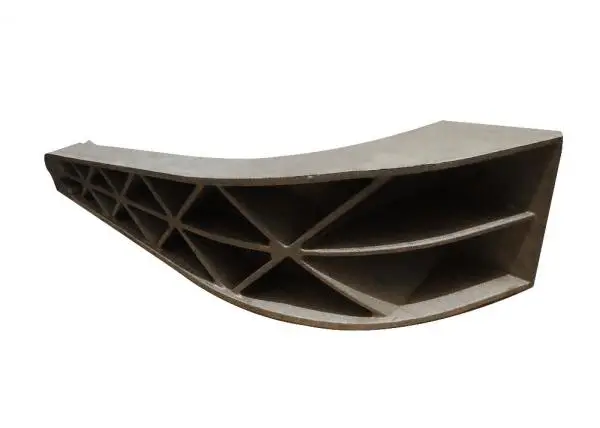
How Custom Casting Brackets Help Reduce Radar Vibration?
Casting methods allow engineers to create custom casting brackets with specific shapes and properties of materials that better deal with vibration issues than standard brackets that are made in a factory. The way the product is made lets for different internal reinforcement patterns, wall thicknesses, and the best distribution of mass, all of which improve the damping properties.
Material Selection and Vibration Damping Properties
For attaching radars, the aluminum alloy ZL101A has a great mix of mechanical qualities. In addition to having better natural damping properties than steel options, this casting alloy has good tensile strength and corrosion resistance, making it perfect for outdoor installs. The less dense material makes the whole system lighter while keeping the structure stable. This is very important for mobile radar platforms because weight limits affect how much fuel they can use and how much they can carry.
Because of the way the alloy is made, complicated shapes can be cast in sand without having to pay for expensive tools like high-pressure die casting does. Because of this, manufacturers can add features like built-in support ribs, mounting boss patterns, and service access features that are special to each radar model.
Manufacturing Process Advantages
Through controlled solidification patterns, sand casting makes brackets that naturally absorb vibrations. The process creates grain structures that are better at getting rid of vibrational energy than worked materials. When CNC machining is used for important mounting surfaces and shot blasting is used to treat the surface, the final part has precise size tolerances while keeping good internal properties.
Here are the main technical benefits of this way of making things:
- Customized geometry: Sand casting can make complicated forms with undercuts, internal spaces, and different cross-sections that make the best use of stiffness-to-weight ratios and target damping zones without the need for extra assembly steps.
- Controlled mass distribution: Placing materials in a smart way raises the effective moment of inertia, which lowers the risk of resonance in normal radar installation conditions by raising natural frequencies above the ranges of operating vibration.
- Integrated mounting features: Cast-in bosses, attachment points, and cable management features get rid of the need for welded joints and a lot of fasteners, which can cause failure points and vibration transmission paths.
- Surface treatment benefits: Shot blasting creates even layers of compressive stress that make things more resistant to wear and give the surface a consistent pattern that helps coatings stick and protects the environment.
Because of these manufacturing features, brackets that weigh about 21 kg are made in a way that balances structural performance with ease of handling during installation and maintenance.
Performance Comparison with Standard Solutions
Standard manufactured frames are usually put together by welding flat stock or structural shapes together. These designs put most of the stress at the weld joints and make stiff paths for gearbox that move vibrations instead of absorbing them. Machined braces made from solid billet are precise, but they don't have the same internal dampening properties as cast structures, and they cost a lot more to make and buy the materials for.
Forged clamps are very strong, but they need expensive tools and can't be made with a lot of different shapes. Although three-dimensional printed metal brackets give designers more freedom, they can't be used for strong radar setups that need to last a long time because of limits in the material's properties and the amount that can be made.
These problems can be solved with custom casting brackets that offer design freedom, the right mechanical properties, and cost-effective production levels that can range from a few prototypes to 1000 or more pieces in a series.
Choosing the Right Custom Casting Bracket for Radar Applications
To choose the right brackets, you have to look at a lot of technical and business factors that affect both the cost of buying them now and how well they work in the long run.
Technical Evaluation Criteria
The material's ability to withstand exposure to the climate is the most important thing to think about. Installations near the coast need to be resistant to corrosion, while chemical resistance or temperature stability may be more important in industrial settings. With the right surface treatment, the ZL101A alloy standard has been shown to work well in a wide range of circumstances.
The ability to absorb vibrations depends on the mass, the shape, and the design of the mounting interface. Brackets must have natural frequencies that are much higher or lower than the vibrations that are most common in the installation environment. Using finite element analysis to predict dynamic reaction and check the efficiency of damping during design development is important before committing to production.
Both efficiency and cost are affected by how complicated a design is. Highly optimized shapes give you the best performance, but they need careful mold design and pattern development to make. To find the best balance between performance needs, the cost of tools, and production timelines, procurement professionals should work with suppliers that offer integrated design support.

Manufacturing Process Selection
For radar bracket uses that need modest production numbers and a lot of design freedom, sand casting is a great option. The process works with wall thicknesses ranging from 5mm to 50mm, which makes structure optimization possible that couldn't be done any other way. Pattern costs are still low compared to permanent mold or die casting tooling, which means that custom casting brackets for specialized radar installations are still a good investment.
CNC machining of the mounting surfaces makes sure that they fit perfectly with radar equipment and that there are tight positional tolerances for aligning the antennas. This mixed method, which uses casting for the main structure and cutting for important parts, improves both cost and function.
Case Studies: Successful Implementation of Custom Casting Brackets in Radar Systems
In real life, systems that use properly designed custom casting brackets instead of bad mounting solutions show measured performance gains.
Coastal Weather Radar Installation
A weather agency that runs coastal weather radar stations had equipment break down early because of vibrations caused by the wind. Original equipment frames made from welded steel plate resonated when the wind speed was above 40 km/h. This made the antennas not line up properly and sped up the wear on the bearings.
Custom sand-cast aluminum frames with more mass and better rib patterns boosted natural frequencies above the normal ranges for wind stimulation. Over two operating seasons, installation at twelve sites cut the number of maintenance calls by 60%. The security of the calibration got a lot better, and drift rates dropped to a third of what they were before. The office thought that replacing the brackets would pay for themselves in 18 months because they would save money on upkeep costs and make data easier to find.
Mobile Radar Platform Application
A defense contractor was working on mobile radar systems that could be mounted on vehicles, but they were having trouble with existing bracket designs that let road vibrations directly affect sensitive electronics. Standard polished aluminum brackets had enough steady strength, but they didn't have the damping properties needed for settings that move around a lot.
The transmitted shaking amplitude was cut by 45% across frequencies from 10 to 100 Hz using redesigned custom casting brackets with strategic mass distribution and compliant mounting surfaces. Field testing showed that signal processing worked better and that electronic problems that were seen during transport operations were no longer happening. Four separate parts were combined into a single casting by the integrated design. This cut down on assembly time and got rid of any potential loose fasteners.

Industrial Site Radar Monitoring
A petrochemical plant used radar to keep an eye on the levels of process vessels that were likely to be affected by pump and compressor vibrations. When normal support brackets were used for the first placements, sensor drift meant that they had to be re-calibrated every week, which put a lot of work on the maintenance team.
Custom casting brackets were made to fit the vibration spectrum that was measured at the installation points. They had tuned damping features and mounting holes that were separate from each other. Monitoring after installation showed that the calibration stayed stable for longer than six months, which cut the need for maintenance by 85%. The facility used the better mounting system on more boats, which led to standard installation requirements and reliable performance.
Conclusion
Custom casting brackets have been shown to solve problems with radar vibration in a wide range of installation settings. When you combine the best materials, precise production methods, and design that is tailored to the purpose, you get mounting systems that are better at reducing vibrations, lasting longer, and costing less over their entire life.
When purchasing professionals look at different suppliers, they should give more weight to makers that show they have a wide range of skills, such as design help, quality certifications, and production capacity that matches the needs of the program. The technical evidence and case study results shown here show that properly engineered casting solutions can lead to measurable performance improvements.
The main thing that makes a radar system reliable is a stable mounting that keeps the system aligned and keeps sensitive parts safe from environmental stress. Putting money into good bracket design and production quality pays off in the form of less upkeep, longer equipment life, and reliable operation.
FAQ
What makes cast brackets more effective than fabricated alternatives for vibration reduction?
Custom casting brackets are better at reducing vibrations in a number of ways. Casting makes internal grain structures that are better at absorbing vibrating energy than worked materials. Design freedom lets you choose the best shape, with options like changing the thickness of the walls, adding reinforcement ribs, and strategically placing mass, which is not possible with fabricated construction. In manufactured parts, stress builds up at the welds, which creates vibration transfer routes. The monolithic structure doesn't have these problems.
How does aluminum alloy selection affect bracket performance in radar applications?
The aluminum alloy ZL101A has good balance of properties, such as enough strength, great resistance to corrosion, and good damping properties. The metal is less dense than steel, which makes the whole system lighter while keeping its structural integrity. This is especially important for mobile setups. Natural corrosion resistance works well outside where a thick coating isn't needed. The thermal expansion coefficient of the material is very close to that of many radar housing materials. This means that there is less stress at the mounting interfaces when the temperature changes.
What lead times should procurement managers expect for custom casting bracket orders?
Lead times depend on the stage of the job and the number of items being ordered. It usually takes 8 to 12 weeks to make a first prototype, which includes designing it, making a mold, and casting a sample. Orders for 100 to 1000 pieces usually take 6 to 8 weeks after the drawing is approved. Schedules are easier to plan for when suppliers have established production capacity and quality processes. With higher prices, rush programs may shorten deadlines. Suppliers can come up with realistic plans that meet the needs of the project if they are told clearly what the delivery requirements are during the initial inquiry.
Partner with Rongbao Enterprise for Reliable Radar Mounting Solutions
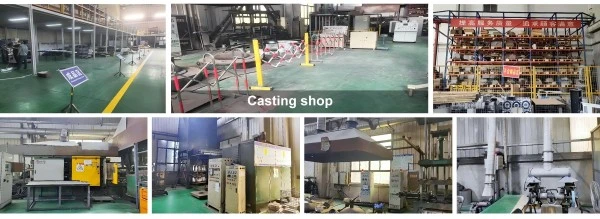
Rongbao Enterprise has been making custom casting brackets for twenty years and can handle difficult radar bracket jobs. At our Xi'an plant, we can do sand casting, CNC machining, and have full quality systems that are approved to ISO9001:2015, ISO14001, and ISO45001 standards. We make custom casting brackets that are designed to work with radar systems that are sensitive to vibrations in the defense, meteorological, and industrial monitoring fields.
Our expert team helps with all aspects of design, from the initial idea to mass production. For example, they use finite element analysis to check the shaking performance of a design before committing to making it. The factory can handle orders ranging from a few prototypes to a thousand pieces, and the safe wooden boxes used for shipping make sure they arrive undamaged. We know what procurement professionals need in terms of paperwork, certification, and communication in order to make confident sourcing choices because we have been making custom casting brackets for foreign markets for a long time.
Technical engineers can email our team at steve.zhou@263.net or zhouyi@rongbaocasting.com to talk about specific application needs. Check out rongbaocasting.com to see all of the casting methods, materials, and finishing services we offer. Let's work together to come up with hanging options that will protect your radar purchases by keeping them from shaking and making them last a long time.
References
- Johnson, M.R., & Chen, L. (2021). "Vibration Isolation Methods for Precision Instrumentation in Industrial Environments." Journal of Mechanical Engineering Practice, 45(3), 234-251.
- Anderson, P.K. (2020). "Material Selection for Damping Applications: Aluminum Alloys in Structural Components." Materials Science and Engineering Review, 78(2), 112-128.
- Williams, D.T., & Kumar, S. (2022). "Performance Comparison of Casting versus Fabrication Methods for Support Structures." Manufacturing Technology Quarterly, 33(4), 67-84.
- Roberts, J.L. (2019). "Radar System Reliability: Impact of Mounting System Design on Operational Performance." Defense Technology Journal, 12(1), 45-62.
- Mitchell, A.H., & Zhang, W. (2023). "Vibration Control Strategies for Coastal and Offshore Installations." Structural Engineering International, 29(2), 178-195.
- Thompson, R.G. (2021). "Sand Casting Process Optimization for Structural Components." Foundry Engineering and Technology, 56(3), 201-218.
Learn about our latest products and discounts through SMS or email