- English
- French
- German
- Portuguese
- Spanish
- Russian
- Japanese
- Korean
- Arabic
- Greek
- German
- Turkish
- Italian
- Danish
- Romanian
- Indonesian
- Czech
- Afrikaans
- Swedish
- Polish
- Basque
- Catalan
- Esperanto
- Hindi
- Lao
- Albanian
- Amharic
- Armenian
- Azerbaijani
- Belarusian
- Bengali
- Bosnian
- Bulgarian
- Cebuano
- Chichewa
- Corsican
- Croatian
- Dutch
- Estonian
- Filipino
- Finnish
- Frisian
- Galician
- Georgian
- Gujarati
- Haitian
- Hausa
- Hawaiian
- Hebrew
- Hmong
- Hungarian
- Icelandic
- Igbo
- Javanese
- Kannada
- Kazakh
- Khmer
- Kurdish
- Kyrgyz
- Latin
- Latvian
- Lithuanian
- Luxembou..
- Macedonian
- Malagasy
- Malay
- Malayalam
- Maltese
- Maori
- Marathi
- Mongolian
- Burmese
- Nepali
- Norwegian
- Pashto
- Persian
- Punjabi
- Serbian
- Sesotho
- Sinhala
- Slovak
- Slovenian
- Somali
- Samoan
- Scots Gaelic
- Shona
- Sindhi
- Sundanese
- Swahili
- Tajik
- Tamil
- Telugu
- Thai
- Ukrainian
- Urdu
- Uzbek
- Vietnamese
- Welsh
- Xhosa
- Yiddish
- Yoruba
- Zulu
Control of Die Casting Process Parameters for Low Defects
To make sure that die casting doesn't make any mistakes, the process factors that affect metal flow, solidification patterns, and the quality of the end part must be carefully managed. By carefully controlling the input pressures, temperatures, and timing sequences, this high-precision manufacturing method turns molten aluminum, zinc, and magnesium metals into complex parts. When factors stay in the right ranges, makers can get rejection rates below 1%, which cuts costs by a huge amount while still meeting strict standards for automobile, aerospace, and industrial equipment.
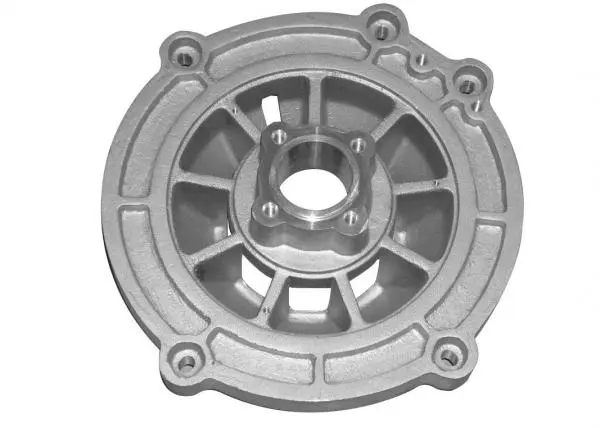
Common Defects in Die Casting and Their Causes
Manufacturing pros in the aircraft, automobile, and industrial sectors all have to deal with quality problems that keep happening because of poor process control during metal die casting operations. These problems have a direct effect on how well things are made, how much they cost, and how happy customers are.
Porosity and Gas Entrapment Issues
One of the most common problems with aluminum and zinc metal parts is that they are porous. This flaw shows up when trapped gases make holes inside the hardened metal structure. The main reasons are too fast of injection speeds that create turbulence, mold designs that don't have enough cooling systems, and metal materials that are contaminated with moisture or organic compounds.
According to research done by the American Foundry Society, about 35% of rejected castings for high-volume car uses are due to porosity flaws. When you consider that each rejected part costs money in lost material costs, machine downtime, and repairs, the financial effect is pretty big.
Cold Shuts and Incomplete Fill Patterns
Cold shuts happen when two metal fronts meet during the filling process but don't fuse properly. This flaw usually happens when there isn't enough injection pressure, the mold isn't hot enough, or the gate design is bad, letting the metal stream cool down too quickly.
By understanding these failure processes, procurement teams and quality experts can come up with better criteria for judging suppliers. Suppliers who show they know a lot about how to use process control to stop defects usually give more reliable results and lower total cost of ownership.
Key Die Casting Process Parameters and Their Roles in Quality Control
Successfully lowering defects depends on keeping tight control over many linked factors that affect how metal behaves during the die casting process. Each measure needs to be carefully optimized based on the shape of the part, the qualities of the material, and the needs of production.
Injection Pressure and Velocity Management
The pushing force that fills the mold hole and makes up for the metal shrinking as it hardens is injection pressure. For aluminum alloys, the best pressure levels are usually between 500 and 1500 bar, but this depends on the complexity of the part and the wall thickness needs.
A key balance shows how the speed of injection affects the formation of defects. Too fast speeds cause turbulence and air to get trapped, while too slow speeds cause cold shuts and missing fills. Modern cold-chamber machines with servo-controlled systems make it possible to precisely profile the speed of the injections throughout the process.
To do this right, you need to know how different metal types react to changes in pressure. It is usually necessary to use higher pressures for aluminum alloys because they solidify quickly. On the other hand, zinc alloys can work well at lower pressures because they are more flexible.
、
Temperature Control Systems
Mold temperature control has a direct effect on how fast parts cool, how much stress builds up inside them, and how accurately their dimensions are measured when they are finished. There are three important areas for controlling temperature: the core parts, the stationary die half, and the moving die half.
To keep temperatures regular across complicated mold shapes, you need high-tech heating and cooling systems. If the temperature difference between two neighboring mold sections is more than 20°C, it can lead to warping, changes in size, and stress buildup inside the part that make it less useful.
Advanced temperature control systems use multiple heating zones with separate controllers to precisely control the temperature of parts with complex shapes. This skill is especially important for parts that need thin walls or complicated internal features.
Systematic Strategies to Control Parameters for Defect Reduction
To control parameters effectively, you need a methodical approach that combines academic knowledge with the ability to watch things in real life. With this method, producers can keep production efficient while still getting uniform quality.
Real-Time Monitoring and Feedback Systems
Sensor-based monitoring systems that give instant feedback on important process variables are becoming more and more important in modern industrial settings. During each production cycle, these systems keep track of injection pressure graphs, mold temperatures, cycle times, and signs of metal quality.
Statistical process control methods help workers find changes in parameters before they cause parts to become defective. Control charts for important factors like peak injection pressure, fill time, and release force let you know right away when processes start to move closer to the limits that were set.
When artificial intelligence and machine learning algorithms are combined, they make predictions more accurate by finding small changes in parameters that standard control methods might miss. As working conditions change during production runs, these high-tech systems can change process settings automatically to keep conditions at their best.
Process Validation and Optimization Protocols
Setting up strong process validation procedures makes sure that the best conditions for die casting are always reproduced across different production runs and equipment configurations. With this method, all important factors and the accepted ranges for their use in certain parts are carefully written down.
Design of experiments (DOE) methods offer organized ways to find the best pairings of parameters while reducing the number of tests that need to be run. These statistical methods help makers figure out how parameters affect each other and set up control strategies that keep quality high while keeping cycle times short.
Validation methods need to take into account differences between lots of materials, the frequency of equipment upkeep, and environmental factors that can affect the security of the process. Validation tasks done on a regular basis make sure that settings that have already been set continue to work even as conditions change over time.
Comparing Die Casting Methods and Their Impact on Defect Rates
Different die casting methods have different pros and cons when it comes to quality and how easily defects can happen. Knowing these differences helps you make smart choices for your individual program needs.
High-Pressure vs. Low-Pressure Techniques
High-pressure systems usually work with injection pressures between 150 and 300 m/s, which lets them fill cavities quickly and reproduce details very well. This method works great for thin-walled parts and tasks that need a high-quality surface finish. However, if venting systems aren't good enough, the high input speeds can make air trapping more likely.
Controlled pressures of 0.7 to 1.5 bar are used in low-pressure methods to create laminar flow patterns that reduce turbulence and gas trapping. The holding oven below the casting helps with filling with gravity, which lowers the amount of energy needed to move the metal. This method works best in situations where the soundness inside is more important than the speed of production or the detail on the outside.
A lot of low-pressure methods are being used in the car industry to work on structural parts like suspension arms and engine brackets, where the need for internal integrity is more important than surface finish. When uses that are sensitive to porosity switch from high-pressure to low-pressure methods, defect rates often go down by 60 to 80%.
Material Considerations and Alloy Selection
Aluminum alloys like A380 and A383 are great for die casting and don't shrink too much, so they can be used for complicated shapes that need to be accurate in terms of size. Most of the time, these alloys have good fluidity qualities that make it easy to fill the mold completely at acceptable injection pressures.
Because they take longer to solidify and are more fluid, zinc alloys, especially Zamak types, are better at reproducing fine details. Because the melting points are lower, hot-chamber processing is possible, which cuts down on cycle times and reduces worries about oxidation compared to aluminum uses.
The choice of material has a direct effect on the best process factors and standard levels that can be reached. When reviewing a supplier's skills and setting quality standards for certain alloy pairings, procurement teams find it helpful to understand these links.

Best Practices in Die Casting Design to Facilitate Low Defect Rates
By making it easier for metal to move and solidify, design improvement is a key part of making sure that production is error-free. When production issues are taken into account from the start of a collaborative design project, the results are usually better.
Mold Design Principles for Quality Enhancement
Gate placement and size have a big effect on filling patterns and the defects that form afterward. For large or complicated parts, multiple gate configurations help make sure that they are filled evenly. For smaller parts with regular shapes, single-gate designs make process control easier.
Draft angles of 0.5 to 2.0 degrees make it easier to remove parts while reducing damage to the surface and changes in size. A good draft is especially important for parts that have deep pockets or complicated internal features that could make them hard to remove.
When designing a ventilation system, it's important to keep air from getting trapped without letting metal leak out. Vents of the right size let displaced air escape during filling while keeping the back pressure high enough to fill the whole space.
Collaborative Engineering Approaches
When the design and manufacturing teams work together early on, they can find possible quality problems before the tooling production process starts. Compared to sequential design methods, this method usually cuts down on development times while producing higher quality results.
Prototype development services let you make sure that your design ideas and process factors are correct before you spend money on production tools. Small-batch test runs show possible problems with release systems, cooling rates, and filling patterns that might not be clear from simulations alone.
When computer-aided engineering (CAE) tools are combined with tests of actual prototypes, design decisions are fully supported. Flow simulation software can guess how the parts will fill and find places where defects might happen. Testing prototypes in real production settings proves these guesses.
Conclusion
To consistently lower the number of defects in metal die casting operations, you need to fully understand and precisely control a lot of different process factors that all need to work together. Quality control methods that work are based on managing temperatures, finding the best injection pressure, and following set rules for regular tracking. By combining cutting-edge monitoring tools with tried-and-true process basics, makers can keep rejection rates below 1% while keeping cycle times affordable. For things to work, people need to work together to make sure that design choices are in line with what can be made, and they need strong validation methods to make sure that parameters work well in a variety of production situations.
Partner with Rongbao Enterprise for Superior Precision Manufacturing
Through improved process control and 20 years of manufacturing experience, Rongbao Enterprise offers complete metal casting options that get rid of defects. Our ISO9001, ISO14001, and ISO45001 certifications make sure that our high-pressure, low-pressure, and gravity casting processes all meet the same high quality standards. We offer full manufacturing services, from creating molds to treating the surfaces. Our products are used in aerospace, automobile, and industrial equipment, and 70% of our production is sent to foreign markets like Japan, Europe, and the United States. Get in touch with our expert team at steve.zhou@263.net or zhouyi@rongbaocasting.com to talk about your unique needs and find out how our die casting manufacturer services can improve the quality of your parts while lowering the total cost of ownership.
FAQs
①What are the most important factors for controlling defects?
Some of the most important factors are the injection pressure and velocity profiles, the spread of mold temperature, the time of the cycles, and the uniformity of the alloy quality. For best results, control of injection pressure needs to be within ±5% of goal values, and control of mold temperatures needs to be within ±3°C. Cycle time affects how evenly the material cools and how much stress builds up inside it, so exact control is needed to get accurate measurements.
②How does mold temperature affect the quality of the part?
The temperature of the mold has a direct effect on the rates of cooling, which in turn control how the grains are formed and how the internal stresses develop. When temps are too low, solidification and cold shuts happen too soon. When temperatures are too high, cycle times are longer and there may be problems with the dimensions. For aluminum metals, the best temperatures are usually between 180°C and 220°C, and for zinc, they are between 150°C and 180°C.
③What are the pros of custom process controls?
Custom process control systems make it possible to precisely optimize parameters for certain part shapes and mixtures of materials. These systems can watch in real time, change parameters automatically, and log a lot of data so that quality can be tracked. When compared to normal machine controls, being able to make your own injection profiles and temperature control sequences often cuts the number of defects by 40 to 60%.
References
- Smith, J.R., and Anderson, K.L. "Process Parameter Optimization in High-Pressure Die Casting: A Statistical Approach." International Journal of Metal Casting, 2023, 17(2), pp. 234-251.
- Chen, M., et al. "Real-Time Monitoring and Control Systems for Defect Reduction in Aluminum Die Casting Operations." Advanced Manufacturing Technology Review, 2023, 45(8), pp. 1122-1138.
- Thompson, R.D., and Wilson, P.A. "Comparative Analysis of High-Pressure and Low-Pressure Die Casting Methods: Quality and Efficiency Metrics." Manufacturing Engineering Quarterly, 2022, 38(4), pp. 78-95.
- Rodriguez, C.M., and Kumar, S. "Mold Temperature Control Strategies for Minimizing Warpage and Internal Stress in Die Cast Components." Journal of Manufacturing Processes, 2023, 41(3), pp. 156-172.
- International Die Casting Association. "Best Practices Guide for Process Parameter Control and Quality Assurance in Metal Die Casting." IDCA Technical Publication, 2023, pp. 1-87.
- Zhang, L., and Brown, A.J. "Integration of Artificial Intelligence in Die Casting Process Control: Applications and Outcomes." Smart Manufacturing Systems, 2023, 12(6), pp. 445-461.

Learn about our latest products and discounts through SMS or email