- English
- French
- German
- Portuguese
- Spanish
- Russian
- Japanese
- Korean
- Arabic
- Greek
- German
- Turkish
- Italian
- Danish
- Romanian
- Indonesian
- Czech
- Afrikaans
- Swedish
- Polish
- Basque
- Catalan
- Esperanto
- Hindi
- Lao
- Albanian
- Amharic
- Armenian
- Azerbaijani
- Belarusian
- Bengali
- Bosnian
- Bulgarian
- Cebuano
- Chichewa
- Corsican
- Croatian
- Dutch
- Estonian
- Filipino
- Finnish
- Frisian
- Galician
- Georgian
- Gujarati
- Haitian
- Hausa
- Hawaiian
- Hebrew
- Hmong
- Hungarian
- Icelandic
- Igbo
- Javanese
- Kannada
- Kazakh
- Khmer
- Kurdish
- Kyrgyz
- Latin
- Latvian
- Lithuanian
- Luxembou..
- Macedonian
- Malagasy
- Malay
- Malayalam
- Maltese
- Maori
- Marathi
- Mongolian
- Burmese
- Nepali
- Norwegian
- Pashto
- Persian
- Punjabi
- Serbian
- Sesotho
- Sinhala
- Slovak
- Slovenian
- Somali
- Samoan
- Scots Gaelic
- Shona
- Sindhi
- Sundanese
- Swahili
- Tajik
- Tamil
- Telugu
- Thai
- Ukrainian
- Urdu
- Uzbek
- Vietnamese
- Welsh
- Xhosa
- Yiddish
- Yoruba
- Zulu
Complete Guide to Prototype Aluminum Casting for Robot Shell
If you're developing robot housings and need parts that balance lightweight properties and precise structural performance, prototype aluminum casting stands out as the most feasible and cost-effective solution. This comprehensive guide covers full-cycle key points for robot shell development, including alloy selection, casting process differentiation, standardized production workflows, mainstream process comparison, design optimization strategies and supplier evaluation criteria. Whether you are a technical leader verifying new robot structure designs or a supply chain manager sourcing precision structural components, mastering the core logic of this prototyping method will help you accelerate product iteration, reduce rework rates, and build a stable and scalable mass production pipeline.
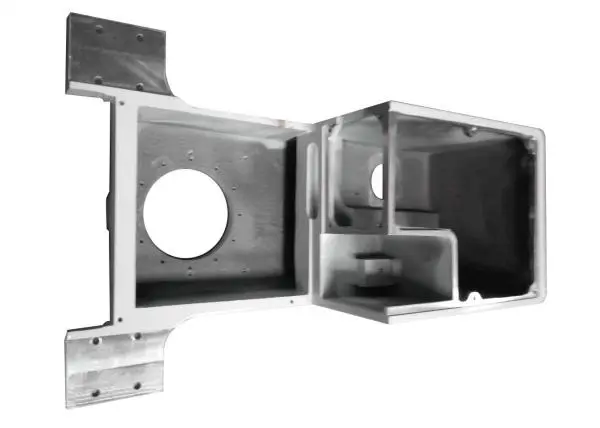
Prototype Aluminum Casting for Robot Housings
Core Differences Between Prototyping and Mass Production Casting
Many manufacturers confuse trial production with formal mass casting, yet the two models serve completely different R&D and production purposes. Prototype aluminum casting focuses on design verification, dimensional accuracy, structural feasibility and rapid iteration, rather than high output efficiency. Engineering teams leverage this process to test wall strength, assembly tolerance fit and load-bearing stability of robot shells before launching full-scale tooling and mass production, avoiding huge cost losses caused by design defects in the later stage.
This iterative verification capability is particularly critical for robot housing components. A standard 16.7 kg robot shell acts as the core structural protective part, undertaking internal electronic component protection, robotic arm connection fixing and operating vibration damping functions. Accurate geometric structure and stable mechanical performance are essential prerequisites for subsequent equipment assembly and stable operation, making prototype verification an indispensable link in robot product development.
A356-T6 Alloy: Optimal Material for Robot Shell Prototypes
A356 aluminum alloy is the most mainstream and reliable material for robot shell prototyping in the automation industry. After standard T6 heat treatment, the material achieves a yield strength of ≥230 MPa, perfectly meeting the dual demands of robot structural rigidity and lightweight design. Compared with ordinary aluminum alloys, A356 features low porosity, excellent molding performance and superior CNC machinability.
As documented in the ASM Handbook on Casting (ASM International, 2008), A356-T6 aluminum alloy delivers outstanding physical stability and wear resistance in long-term structural service scenarios. These core properties enable robot housings to maintain stable dimensional accuracy and structural integrity during frequent startup, vibration and load changes, making it the preferred material for high-precision automation equipment shell prototypes.
Prototype Aluminum Casting Process & Standardized Quality Control
Full Process Workflow: From Design Drawing to First Article Validation
High-quality robot shell prototypes rely on standardized and complete process procedures. Skipping or simplifying any link will lead to dimensional deviation, surface defects or assembly mismatch, delaying product verification progress. Formal qualified suppliers strictly follow the full-process production flow below to deliver compliant finished parts for prototype aluminum casting projects.
Design Review and DFM Analysis: Professional engineers conduct in-depth verification of 3D design models before tooling development, identifying unreasonable structural designs such as ultra-thin walls, undercuts and insufficient draft angles. Targeted optimization suggestions are proposed in advance, which can effectively avoid weeks of repeated revision work in the later stage and greatly improve prototyping efficiency.
Permanent Mold Development: Custom metal molds are precisely machined and performance-validated for low-pressure casting processes. For complex curved surfaces and multi-structure integrated robot housings, mold development usually takes 4–6 weeks. The high-precision permanent mold ensures consistent molding accuracy for subsequent prototype and batch production parts.
Precision Low-Pressure Casting: Different from traditional gravity casting, low-pressure casting stably injects molten A356 aluminum alloy into the mold cavity through uniform upward pressure from the bottom furnace. The controllable filling method effectively reduces internal porosity and shrinkage cavity defects, significantly improving internal compactness and surface flatness of parts — a mature and reliable process widely verified in aerospace and robot manufacturing fields.
High-Precision CNC Finishing: Key functional areas such as assembly mating surfaces, mounting holes and bearing bores are precisely processed to CT6–CT8 high-precision tolerance standards. Secondary CNC finishing is a necessary procedure for robot housings, as accurate fitting dimensions directly determine the assembly precision and overall stability of the complete robot equipment.
Shot Blasting and Surface Finishing: Professional shot blasting treatment removes surface oxide scales and casting burrs, optimizing surface flatness. The treated surface provides excellent adhesion foundation for subsequent anodizing, spraying and other surface treatments, ensuring consistent appearance and durable corrosion resistance of robot shells.
Standardized Quality System Support
Process standardization relies on perfect quality management systems. Rongbao Enterprise holds ISO 9001:2015 quality management certification, as well as ISO 14001 environmental management and ISO 45001 occupational safety management certifications. The whole-process inspection mechanism covering raw material incoming inspection, in-process production monitoring and finished product full inspection ensures stable and consistent quality of each batch of prototype parts, realizing seamless docking from prototype verification to formal mass production.
Process Comparison: Prototype Casting vs. 3D Printing vs. CNC Machining
Selecting a mismatched prototyping method will lead to excessive cost consumption, prolonged cycles and unqualified part performance. For robot shell development, each mainstream process has obvious applicable scenarios, and targeted selection according to product iteration stage can maximize development efficiency.
3D Printing: It features fast single-piece production and is suitable for ultra-small-batch rapid appearance verification. However, it has obvious shortcomings such as poor structural compactness, low mechanical strength and inconsistent batch performance, making it unable to meet the long-term load-bearing and vibration-resistant requirements of industrial robot shells, and cannot be directly converted to mass production processes.
Pure CNC Machining: It boasts high dimensional accuracy and good surface quality, but has high material waste, long processing cycle and high single-piece cost. For complex hollow integrated robot shell structures, pure CNC machining has low molding efficiency and poor scalability, which is not conducive to subsequent batch production conversion.
Prototype Aluminum Casting: This process achieves a perfect balance between performance, cost and scalability. It can stably realize thin-wall uniform molding (wall thickness error ≤1mm) and adapt to various complex hollow integrated structures. The most core advantage is scalable production: it can meet 100–500 small-batch prototype verification, and can be directly upgraded to 5,000+ large-scale mass production with the same mold and process, eliminating repeated tooling and re-qualification work, which is the exclusive advantage for robot shell iterative development.
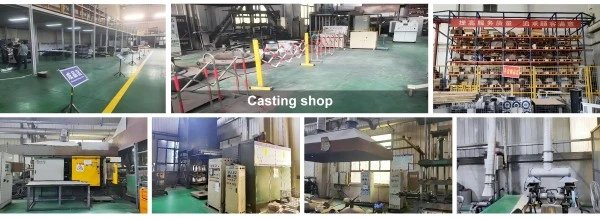
Key Design Optimization Tips for Robot Shell Casting Prototypes
Core Design Rules for Improved Castability and Structural Performance
Reasonable structural design in the prototype stage can fundamentally reduce casting defects, simplify subsequent processing procedures and optimize overall part performance. For conventional robot arm brackets, connecting frames and base housings, the following design optimization principles are universally applicable for prototype aluminum casting projects.
Integrating functional structures such as mounting bosses, wiring grooves and heat dissipation ribs in the initial casting design stage avoids secondary milling and processing in the later stage. This integrated molding design not only reduces processing steps and comprehensive production costs, but also improves the overall structural integrity and stress uniformity of robot shells, avoiding structural weakness caused by secondary processing.
In addition, matching reasonable draft angles and uniform wall thickness transition designs can effectively eliminate casting stress and avoid deformation and cracking problems in heat treatment and finishing processes. Early intervention and design optimization cooperation between OEM engineering teams and casting suppliers can significantly shorten prototype verification cycles and reduce first-article rejection rates.
Cost and Cycle Trade-Off Strategy
It is necessary to rationally view the upfront investment of casting molds. The mold development cost for robot shell prototypes ranges from $4,000 to $15,000, affected by structural complexity. Although there is a certain upfront investment, the marginal cost of single parts drops significantly after the mold is verified to be qualified. More importantly, the consistent process from prototype to mass production realizes zero threshold conversion, which can save a lot of time and cost for subsequent formal mass production of equipment.
B2B Supplier Evaluation & Procurement Guidelines
Key Evaluation Indicators for Prototype Service Suppliers
Different from ordinary mass production part procurement, robot shell prototype projects focus more on supplier's R&D cooperation capability, small-batch service flexibility and process iteration ability. Most bulk-oriented casting factories lack the willingness and capability to serve small-batch prototype verification projects, so targeted screening is required.
Excellent professional suppliers can flexibly support 100–500 small-batch prototype orders with reasonable and transparent pricing, taking prototype cooperation as the starting point for long-term strategic partnership. This flexible small-batch service capability is the core standard for robot OEMs to select prototype aluminum casting suppliers.
In terms of project cycle, the full-cycle delivery of robot shell prototypes (including mold development, casting molding, CNC finishing and surface treatment) is stably controlled at 8–10 weeks after drawing confirmation. Early docking with suppliers to complete DFM optimization and tooling authorization can further compress the iteration cycle and accelerate product launch progress.
Design File and IP Protection Mechanism
Robot shell structural design belongs to core enterprise intellectual property. Formal professional suppliers will establish complete confidential management systems and NDA agreements to ensure that customer 3D drawings, structural parameters and design data are not leaked or misused, providing safe and reliable guarantee for OEM product R&D and iteration.
Conclusion
For robot housing R&D and mass production iteration, prototype aluminum casting is the most balanced solution that takes into account structural performance, verification efficiency, production scalability and comprehensive cost. Supported by high-performance A356-T6 alloy and mature low-pressure casting technology, it solves the pain points of poor performance consistency and non-scalable iteration of traditional prototyping processes. By cooperating with certified suppliers with complete quality systems and flexible small-batch service capabilities, robot equipment manufacturers can efficiently complete prototype verification, quickly realize mass production conversion, and build a more efficient and stable product development and supply system.
FAQ
What aluminum alloy works best for robot housing prototypes?
A356-T6 aluminum alloy is the most ideal choice for robot shell prototypes. It has excellent lightweight performance, high structural strength, good casting moldability and CNC machinability, as well as stable wear resistance and dimensional stability, fully adapting to the long-term operating environment of industrial robot equipment.
How long does mold development take for a robot housing prototype?
The mold development cycle is mainly determined by the structural complexity of the robot shell. Conventional standard structures take 4 weeks, while complex integrated curved surface and multi-functional structures take about 4–6 weeks, with stable and controllable overall progress.
Can I order prototype quantities below 500 pieces?
Professional precision casting suppliers support flexible small-batch prototype orders of 100–500 pieces. Small-batch verification can complete structural performance and assembly testing, laying a solid foundation for subsequent large-scale mass production, without the need for excessive inventory costs.
What surface treatments are compatible with A356 aluminum robot housings?
A356 aluminum castings support a variety of mature surface treatments, including shot blasting, anodizing, electrostatic spraying and passivation treatment. These processes can improve the corrosion resistance, wear resistance and appearance texture of robot shells to meet different industrial application scenarios.
How to protect my robot housing design when sharing files with a supplier?
You can sign a formal NDA confidentiality agreement with a professional supplier. Regular manufacturers have standardized file management and access control mechanisms to ensure that your core design drawings and structural data are strictly confidential and will not be leaked or used without authorization.
Prototype Aluminum Casting Supplier: Rongbao Enterprise
Rongbao Enterprise specializes in prototype aluminum casting solutions that accelerate robot shell development from concept through production transition. Our Xi'an, China facility combines low-pressure casting expertise with comprehensive secondary operations, delivering complete shell assemblies ready for integration into robotic systems. Since establishment, we have supported robotics manufacturers globally, producing shells that protect sophisticated electronics while maintaining the lightweight, thermally conductive characteristics essential for optimal performance.
Our robot shell casting capabilities center on A356 aluminum alloy processed through low-pressure methods that ensure exceptional quality and dimensional consistency. Typical shell weights reach substantial levels, accommodating both compact service robots and larger industrial automation platforms. The low-pressure process delivers superior surface quality and mechanical properties compared to traditional gravity casting while avoiding the tooling investments required for high-pressure die casting. This balance makes our approach ideal for prototype development and moderate production volumes bridging development to manufacturing.
Customized OEM and ODM services address unique client specifications across diverse robotic applications. Whether developing protective housings for mobile service robots, structural shells for industrial manipulators, or specialized enclosures for medical robotics, our engineering team collaborates directly with clients to optimize designs for castability and functionality. Production capacity reaching thousands of units supports bridge production requirements as programs transition from prototype to volume manufacturing.
Contact Rongbao Enterprise to discuss your robot shell prototype requirements. Our responsive team welcomes inquiries at steve.zhou@263.net or zhouyi@rongbaocasting.com. We provide detailed consultation clarifying capabilities, timelines, and costs specific to your application. Whether you require single prototype shells for initial concept validation or moderate quantities for comprehensive testing programs, Rongbao Enterprise delivers the quality, expertise, and service that accelerate robotics development success.
References
[1] ASM International. ASM Handbook, Volume 15: Casting. ASM International, 2008. Referenced for A356-T6 mechanical properties and dimensional stability in structural applications.
[2] Campbell, J. Complete Casting Handbook: Metal Casting Processes, Metallurgy, Techniques and Design. Butterworth-Heinemann, 2015. Referenced for low-pressure casting process mechanics and porosity reduction principles.
[3] International Organization for Standardization. ISO 9001:2015 Quality Management Systems — Requirements. ISO, 2015. Referenced for quality management certification standards applied in casting supplier evaluation.
[4] Kaufman, J.G., and Rooy, E.L. Aluminum Alloy Castings: Properties, Processes, and Applications. ASM International, 2004. Referenced for alloy selection guidance and casting process comparison relevant to robot structural components.
[5] Bonollo, F., and Odorizzi, S. Numerical Simulation of Foundry Processes. SGE Editoriali, 2001. Referenced for mold filling behavior and wall thickness uniformity in low-pressure aluminum casting.
[6] Society of Manufacturing Engineers. Tool and Manufacturing Engineers Handbook, Volume 2: Forming. SME, 1984. Referenced for design-for-manufacturability principles including draft angles, wall transitions, and CNC integration in cast aluminum parts.
Learn about our latest products and discounts through SMS or email