- English
- French
- German
- Portuguese
- Spanish
- Russian
- Japanese
- Korean
- Arabic
- Greek
- German
- Turkish
- Italian
- Danish
- Romanian
- Indonesian
- Czech
- Afrikaans
- Swedish
- Polish
- Basque
- Catalan
- Esperanto
- Hindi
- Lao
- Albanian
- Amharic
- Armenian
- Azerbaijani
- Belarusian
- Bengali
- Bosnian
- Bulgarian
- Cebuano
- Chichewa
- Corsican
- Croatian
- Dutch
- Estonian
- Filipino
- Finnish
- Frisian
- Galician
- Georgian
- Gujarati
- Haitian
- Hausa
- Hawaiian
- Hebrew
- Hmong
- Hungarian
- Icelandic
- Igbo
- Javanese
- Kannada
- Kazakh
- Khmer
- Kurdish
- Kyrgyz
- Latin
- Latvian
- Lithuanian
- Luxembou..
- Macedonian
- Malagasy
- Malay
- Malayalam
- Maltese
- Maori
- Marathi
- Mongolian
- Burmese
- Nepali
- Norwegian
- Pashto
- Persian
- Punjabi
- Serbian
- Sesotho
- Sinhala
- Slovak
- Slovenian
- Somali
- Samoan
- Scots Gaelic
- Shona
- Sindhi
- Sundanese
- Swahili
- Tajik
- Tamil
- Telugu
- Thai
- Ukrainian
- Urdu
- Uzbek
- Vietnamese
- Welsh
- Xhosa
- Yiddish
- Yoruba
- Zulu
Complete Guide to Gravity Casting Process for Exhaust Pipes in Miniature Fire Extinguisher Smoke Exhaust Pipe
Making small aluminium parts for fire extinguisher systems is not just pouring a mould with molten metal. The casting process should be capable of producing consistent dimensions, acceptable mechanical qualities, appropriate surface finish and reliable repeatability from batch to batch. This makes gravity casting a viable manufacturing alternative for some tiny exhaust pipe designs in which the geometry, alloy, wall thickness and production volume are suitable with the technique. For a cast exhaust pipe , The manufacturing process must be examined together with material selection, mould design, pouring control, solidification, heat treatment, machining, inspection and application requirements. A356 aluminium alloy is a very common material for parts requiring a combination of good castability, low weight, corrosion resistance and mechanical performance. However, the ultimate specification of materials and processes shall be determined according to the component design and relevant technical requirements. Knowledge of the gravity casting process is crucial to both producers and customers, as it has direct impact on the dimensional uniformity, internal quality, production efficiency and total cost of the finished part.
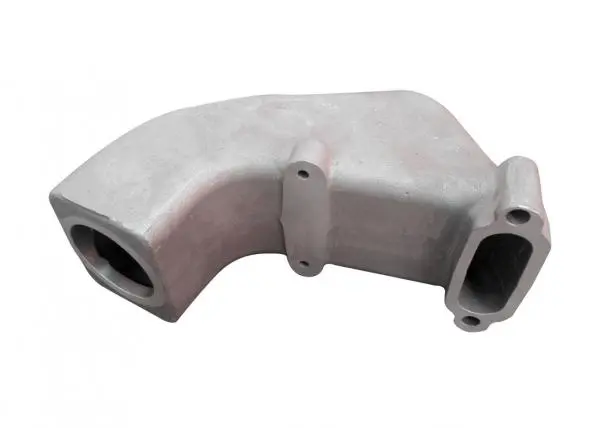
Understanding Gravity Casting for Miniature Exhaust Components
Gravity casting relies on the natural force of gravity to inject molten metal into a prepared mould. Unlike pressure-assisted casting techniques, the cavity filling is mainly dependent on the pouring mechanism, metal temperature, mould configuration and height and rate of entry of molten alloy into the cavity.
This procedure can be effective for small exhaust components where the geometry can be reliably filled without the need of extremely high injection pressure. The mould offers the basic shape with additional machining for closer dimensions on connecting regions, mounting surfaces, holes, threads or other functional characteristics.
The performance of the finished cast exhaust pipe is not just affected by gravity casting. The final result is dependent on mould design, alloy condition, melt cleanliness, pouring technique, solidification behaviour, heat treatment and machining. This is why a controlled manufacturing system is more significant than the simple selection of a certain casting procedure.
Why Process Control Matters?
Temperature is one of the most important variables during aluminium casting. The filling behaviour as well as solidification pattern of the molten metal can be changed outside the proper process range. Too much turbulence can also lead to an increased probability of oxide-related defects or entrained gas.
Therefore, it is common practice for manufacturers to set process parameters for melting, holding, pouring and mould preparation. Operators use temperature monitoring to make sure conditions can be repeated from one production batch to the next. Preheating the mould can also contribute to more predictable conditions for filling and solidification.
The goal is to make more than one suitable cast. In industrial production the most significant goal is to develop a process which produces components within the given parameters repeatedly. exhaust pipe casting
Selecting an Aluminium Alloy for the Application
The material selection should be determined by the real service circumstances and not the casting method. A356 has good castability and beneficial mechanical and corrosion resistant qualities making it attractive for many aluminium casting applications.
The casting qualities of the alloy are determined by the silicon concentration, while magnesium can contribute to the strength of the alloy after suitable heat treatment. These properties make A356 a good contender for a variety of lightweight aluminium parts.
But because an alloy is commonly used does not mean it should be chosen. Prior to confirmation of the material, the engineers should take into account the predicted temperature range, mechanical loads, connection requirements, dimensional stability, corrosive environment, surface treatment and the required parameters.
Thus the material specification of a cast exhaust pipe for a smoke exhaust assembly of a small fire extinguisher should be related to the whole system design.
A356 and Heat Treatment Considerations
The mechanical qualities of A356 castings can be dramatically affected by heat treatment. For the component, if requested by the client and appropriate, a T6 condition can be used to improve strength via solution treatment, quenching and artificial ageing.
The specific heat treatment cycle must not be considered as a general recipe. It has to be determined as per the alloy specification, casting shape, production method and desired qualities.
This distinction is crucial in procurement because two components of the same nominal alloy may not perform the same if their casting quality or heat treatment condition is different.
Therefore, aluminium casting purchasers should verify the alloy specified and temper condition shown on the technical paperwork rather than relying just on the material designation.
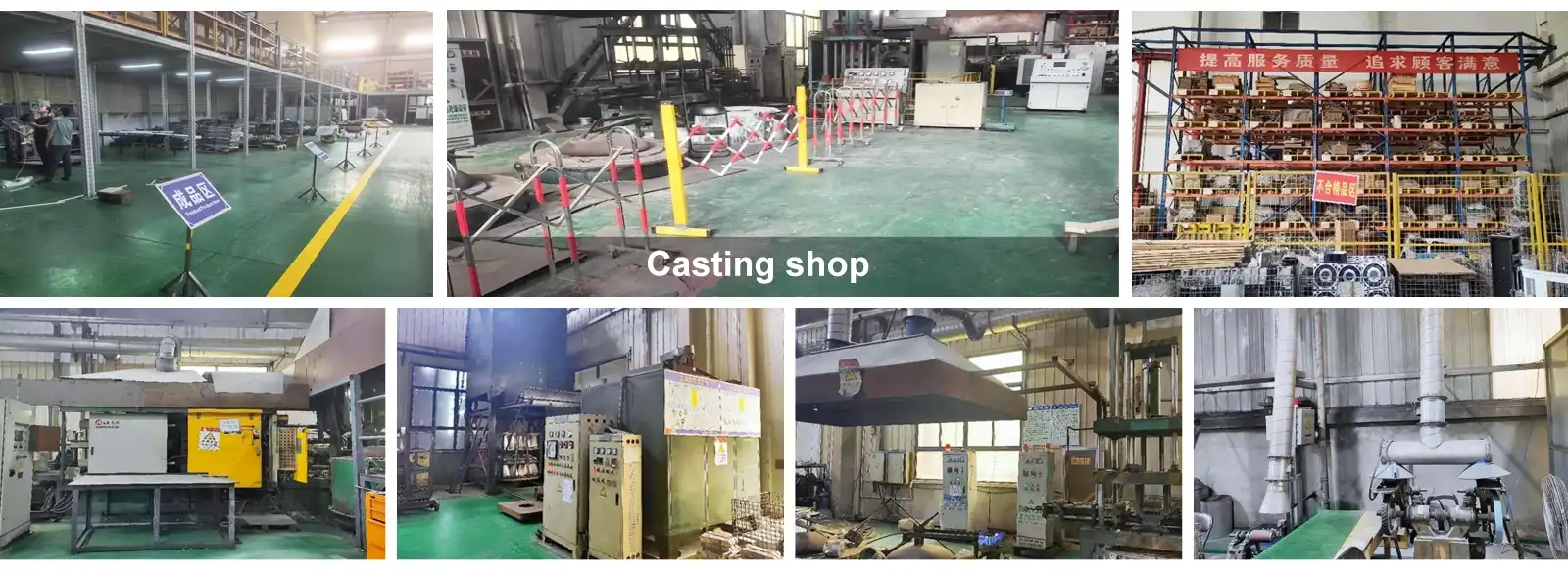
Gravity Casting Process from Mold Preparation to Finished Part
The quality of a gravity cast part starts before the molten metal contacts the mold. The mold preparation, melting, pouring, solidification, finishing, and machining should be viewed as interrelated stages and not as distinct operations.
Mold Preparation and Inspection
The cavity of the mold controls many of the basic properties of the casting. The mold should be inspected for damage, contamination, dimensional change, and surface quality before manufacturing starts.
Mould care is very crucial when making the part again and over. The dimensions and surface finish can be affected by gradual wear on the cavities, parting line, cores, or other key elements. Regular inspection helps detect these alterations before they cause a bigger batch of nonconforming items.
The design of the mold should also include the wall thickness, filling direction, shrinkage, parting lines, draft angles, and sections that will be machined later.
Melting and Molten Metal Treatment
The mold is prepared, and the appropriate aluminum alloy is melted under controlled conditions. It is crucial to keep the desired chemical composition, as variations in alloy chemistry might affect mechanical properties and casting behavior.
Molten aluminum can also absorb hydrogen, and manipulation can introduce oxide coatings and inclusions into the melt. Hence, proper melt treatment and process control are needed to minimize the chance of internal casting faults.
These restrictions are especially important when the finished part is a cast exhaust pipe, where the final part contains thin portions, enclosed parts, or dimensional aspects that provide little room for correction after casting.
Controlled Filling and Solidification
The pouring system is the method of getting the molten metal into the cavity. The gates and runners should be so designed as to give good filling with as little unwanted turbulence as possible.
Where required, risers may be provided to subtract the shrinkage during solidification. This is to help the casting to solidify in a regulated way and minimize the possibility of shrinkage-associated flaws in important locations.
The solidification behavior depends on the alloy, the mold temperature, the shape, the section thickness, and the cooling circumstances. Thus, the engineers must evaluate the overall casting design rather than assuming that one pouring configuration will work for all components.
Heat Treatment, Machining, and Surface Finishing
Additional processes may be necessary after the casting has cooled and been taken from the mold. These could be removing gates and risers, deburring, surface cleaning, heat treatment, CNC machining, and inspection.
CNC machining is very useful when some aspects require tighter tolerances than can be practically achieved directly by casting. Holes, connection interfaces, bores, sealing surfaces, and mounting places can be machined according to the authorized drawing.
For a more consistent surface appearance, shot blasting or another suitable surface-finishing method can be utilized. The choice of finishing procedure will depend on the application of the finished article, as excessive removal of material may influence the dimensions already defined by casting or machining.
Design Considerations Before Ordering a Cast Exhaust Pipe
The right component design is the first step to good casting results. A design that doesn't take the casting process into account can lead to excessive machining, filling issues, or higher tooling costs.
Wall thickness should be considered with attention. Very thin parts could be harder to fill evenly. Unnecessarily thick sections increase the material consumption, and solidification behavior is different.
Draft angles should also be taken into consideration so that the casting may be withdrawn from the mold without injuring the cavity or component. Check internal corners, transitions, bosses, holes, and other geometric characteristics during mold design.
Another crucial factor is the difference between cast dimensions and machined dimensions. Not all surfaces need to be as precise as others. The important dimensions are known in advance, and the maker knows which features should be controlled through the mold and which features should be finished through CNC machining.
Prototype Review Before Mass Production
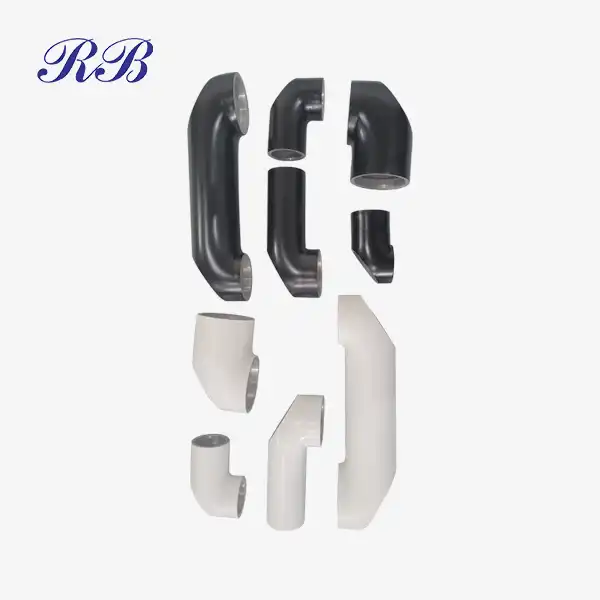
Prototype evaluation of custom cast exhaust pipe parts can help limit the possibility of finding design errors after production tooling has been finished.
The engineering team can analyze the overall geometry, installation interface, wall thickness, machining allowance, and appearance from a prototype or sample casting. Where applicable, 3D printing, or other rapid prototyping techniques, can also be utilized to verify the general design prior to commitment to permanent tooling.
This step is especially beneficial when the component is being produced for a new small fire extinguisher assembly or an existing part is being redesigned. [tailpipe]
Quality Control for Cast Aluminum Exhaust Pipes
Quality control should not be only a visual check at the end. A reliable provider should be able to set up inspection criteria based on the customer's drawing and application needs.
Material verification can help ensure the required aluminum alloy is being utilized. Dimensional inspection can then examine essential aspects such as overall length, diameter, wall dimensions, mounting positions, holes, and machined interfaces.
Visual examination is a good tool to detect surface defects, but it is not able to show all interior casting conditions. When internal defect assessment is required by the application, the selection of the appropriate non-destructive testing method should be done according to the component design and the client specification.
Records of heat treatment are also significant where a particular temper condition is specified. Batch production and inspection records are kept; this enables traceability and also facilitates the investigation of any quality problem that may develop in the future.
The challenge for purchasers is that quality assurance must be tied to measurable objectives. It is not as productive to ask a supplier if they supply "high-quality castings" as it is to verify what dimensions get tested, what material data is accessible, how batches are identified, and what inspection procedures are included.
OEM and ODM Manufacturing for Different Production Requirements
Not every customer wants the same configuration of cast exhaust pipe. For certain projects a whole new casting design is required, and for other projects an existing part has to be reproduced with controlled dimensional adjustments.
Both cases can be used for OEM and ODM production. During the initial engineering stage, the manufacturer can see the customer’s drawings or 3D models to determine if the suggested geometry would work for gravity casting.
Another key part of the process is tooling design. A good mold design should balance casting quality, machining needs, tooling life, and production efficiency. Simulation and engineering evaluation can uncover potential filling or solidification concerns prior to the mold being built.
Also, the production volume should be discussed at the beginning of the project. Rongbao Enterprise’s claimed production range means it can make batches from about 500 to 5,000 units so that the manufacturing method may be adapted to diverse order needs.
For repeat orders, it is crucial to keep tooling, material specifications, machining techniques, and inspection standards the same as customers usually require replacement parts to be compatible with previous production lots.
What Buyers Should Confirm with a Casting Supplier?
More than comparing unit prices goes into your choice of provider for a tiny fire extinguisher component. The supplier should be able to rationalize the planned manufacturing route and the method used to meet the important requirements in the customer’s drawing.
The first thing to check is the material specification. Buyers will need to determine the aluminum alloy, heat treatment condition, and any material documents required.
The second is the dimensional control. Critical dimensions must be determined before quoting so that the supplier may ascertain whether these will be attained by casting, CNC machining, or a combination of both.
The third is that documentation is good. Depending on the project, purchasers may ask for: Inspection records, material certificates, dimensional reports, batch identification, or any other document required by their internal quality system.
OEM initiatives should also address tooling ownership and upkeep. The quote must state whether tooling costs are separate from production costs and how tooling adjustments will be handled in the event of a design change.
And don’t forget packaging and delivery. Small aluminum castings shipped internationally might be damaged in transit by impact, dampness, or poor packaging. Use protective packaging, such as wooden crates where suitable, to assist in minimizing damage in transit.
Rongbao Enterprise's Manufacturing Capabilities
Rongbao Enterprise is a professional manufacturer of aluminum alloy casting and precise processing, with more than 20 years of production experience. Its Xi'an plant has the capability for gravity casting production of customized aluminum components, including micro components designed to customer drawings and specifications.
Rongbao is able to support the cast exhaust pipe manufacturing process from mold creation, gravity casting, CNC machining, surface finishing, inspection, and packing as specified in this application.
The company has the manufacturing capabilities for A356 aluminum alloy components with a typical component weight of about 0.8 kg for the relevant product. The production of batches of up to about 5,000 pieces can be organized according to the design and order requirements.
It also claims to have ISO9001:2015, ISO14001, and ISO45001 certifications, says Rongbao. The certifications are for quality management, environmental management, and occupational health and safety management accordingly. They should be viewed as part of the supplier evaluation process and not as a substitute for technical inspection of the individual product.
Rongbao has experience in dealing with international customers and their technical and paperwork requirements, with around 70% of its manufacturing going to customers in Europe, the United States, and Japan.
From Casting Tooling to Final Delivery
The supply of everything to make a product simplifies the procurement, as the customer does not have to coordinate several vendors for mold fabrication, casting, machining, surface treatment, and packaging.
For a new cast exhaust pipe, the process can start with a customer’s 2D drawing or 3D CAD model. The engineering team can then look at the design, negotiate material needs, find out about the casting structure, and construct the tooling.
Once the mold is ready, trial casting can be utilized to check the component before mass production. After the casting process is under control, parts that require additional dimensional control can be machined and finished by CNC.
Final inspection shall be as per the agreed drawing and requirements. When approved, parts are ready to be shipped around the world. Rongbao uses hardwood crates on demand for protective packing to keep completed components protected throughout delivery.
This integrated approach might be very helpful for customers who are seeking a custom aluminum part, not a generic replacement.

Conclusion
Gravity casting may be a suitable manufacturing route for tiny aluminium exhaust parts,provided the part geometry, alloy, production volume and performance parameters are compatible with this technique. Making a decent cast exhaust pipe involves much more than pouring molten aluminium into a mould. The last factor is determined by the design of the mould, the preparation of the melt, regulated filling and solidification, heat treatment, machining, and the surface finishing and inspection.
A356 aluminium alloy can provide a helpful combination of castability, weight saving, corrosion resistance and mechanical performance for some applications. The material condition required should always be assessed against the technical requirements of the component. Buyers should also grade suppliers on tooling capability, dimensional control, material traceability, inspection paperwork, production capacity, and packaging.
Rongbao Enterprise offers customised aluminium parts and services such as gravity casting, mould manufacturing, CNC machining, surface finishing, OEM/ODM customisation and global shipping. This is why it is important to discuss with the manufacturer about the drawing, material specification, important dimensions, expected quantity and inspection requirements before the production. This may provide buyers a better manufacturing path and avoid excessive manufacturing risk.
Join with Rongbao Enterprise to Get Customized Cast Exhaust Pipe Solutions
Rongbao Enterprise provides customers with tailor-made aluminium alloy castings and accurate processing for application-specific components. With over 20 years competence, the company covers the whole manufacturing process from mould development to gravity casting, CNC machining, surface finishing, inspection and final packing.
Customers purchasing cast exhaust pipe components for small fire extinguisher smoke exhaust systems can use the actual component drawing and application requirements as the basis of their engineering process rather than a traditional one-size-fits-all casting specification. A356 aluminium alloy is also an option if the properties of A356 aluminium alloy are appropriate and the technical requirement of the customer is achieved.
Rongbao says its management systems are ISO9001:2015, ISO14001 and ISO45001 certified and in terms of production, it serves consumers all throughout Europe, the United States, Japan and other overseas markets. Its production capacity supports different order numbers including batches of approx. 5.000 units depending on the product configuration.
OEM and ODM customers may provide designs, CAD files, material specifications, dimensional tolerances, surface-finish requirements and expected order numbers for engineering evaluation. Rongbao can then consider the casting structure and pick the optimal combination of tools, gravity casting, machining and finishing processes.
For bespoke aluminium cast exhaust pipe the most useful place to start is the part drawing and technical specification. These records assist the producer to evaluate the casting path, find critical dimensions, determine machining requirements and propose a more accurate manufacturing.
Professional packaging in wooden crates protects parts during shipping around the world. Our engineering team offers full OEM and ODM customization services, making your exact specifications a reality through precision manufacturing. Are you ready to improve your fire safety gear with high-quality cast exhaust pipe parts? Email us at steve.zhou@263.net and zhouyi@rongbaocasting.com to talk about your specific needs and find out how our experience can help you succeed faster.
References
- Smith, J.A. "Aluminum Casting Processes for Fire Safety Equipment Components." Journal of Fire Protection Engineering, Vol. 25, No. 3, 2023, pp. 145-162.
- Anderson, M.K. "Gravity Casting Technology in Safety Equipment Manufacturing." International Foundry Research, Vol. 41, No. 2, 2022, pp. 78-94.
- Chen, L.P. "Material Properties of A356 Aluminum Alloy in High-Temperature Applications." Materials Science and Engineering Review, Vol. 18, No. 4, 2023, pp. 201-218.
- Rodriguez, C.M. "Quality Control Methods in Precision Casting Operations." Manufacturing Technology Today, Vol. 33, No. 1, 2022, pp. 56-71.
- Thompson, R.D. "Fire Extinguisher Component Design and Manufacturing Standards." Fire Safety Engineering Quarterly, Vol. 12, No. 3, 2023, pp. 112-128.
- Williams, S.J. "Surface Treatment Technologies for Cast Aluminum Components." Surface Engineering International, Vol. 29, No. 2, 2022, pp. 89-105.
Learn about our latest products and discounts through SMS or email