- English
- French
- German
- Portuguese
- Spanish
- Russian
- Japanese
- Korean
- Arabic
- Greek
- German
- Turkish
- Italian
- Danish
- Romanian
- Indonesian
- Czech
- Afrikaans
- Swedish
- Polish
- Basque
- Catalan
- Esperanto
- Hindi
- Lao
- Albanian
- Amharic
- Armenian
- Azerbaijani
- Belarusian
- Bengali
- Bosnian
- Bulgarian
- Cebuano
- Chichewa
- Corsican
- Croatian
- Dutch
- Estonian
- Filipino
- Finnish
- Frisian
- Galician
- Georgian
- Gujarati
- Haitian
- Hausa
- Hawaiian
- Hebrew
- Hmong
- Hungarian
- Icelandic
- Igbo
- Javanese
- Kannada
- Kazakh
- Khmer
- Kurdish
- Kyrgyz
- Latin
- Latvian
- Lithuanian
- Luxembou..
- Macedonian
- Malagasy
- Malay
- Malayalam
- Maltese
- Maori
- Marathi
- Mongolian
- Burmese
- Nepali
- Norwegian
- Pashto
- Persian
- Punjabi
- Serbian
- Sesotho
- Sinhala
- Slovak
- Slovenian
- Somali
- Samoan
- Scots Gaelic
- Shona
- Sindhi
- Sundanese
- Swahili
- Tajik
- Tamil
- Telugu
- Thai
- Ukrainian
- Urdu
- Uzbek
- Vietnamese
- Welsh
- Xhosa
- Yiddish
- Yoruba
- Zulu
China Motor End Cover Castings Import Compliance Inspection Guide
When sourcing a casting motor end cover from China, understanding inspection protocols and compliance requirements becomes essential to maintaining motor reliability and avoiding production disruptions. Motor end covers serve as protective housings that secure internal motor components while managing thermal dissipation and structural alignment. These castings, typically manufactured using high-pressure die casting with materials like ADC12 aluminum alloy, must meet stringent dimensional tolerances and material specifications. Importers face challenges ranging from quality inconsistencies to regulatory compliance, making a comprehensive inspection guide vital for procurement managers, quality engineers, and supply chain directors seeking dependable overseas suppliers.
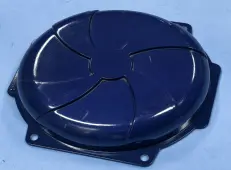
Motor End Cover Castings: Definitions and Key Features
What Are Motor End Cover Castings?
Casting motor end covers are protective housings that are put on the axial ends of electric motors. They tell the motor where to put the rotor shafts and keep the exact distance between the stator and rotor assemblies. These parts work with bearing systems and connect to the motor case to keep the machine stable while it's running. The component usually has mounting holes, ventilation slots, and cooling fin shapes that are specific to the motor design. In induction motors, end covers hold bearing housings that allow the motor to keep turning. On the other hand, synchronous motor uses need more strength to handle magnetic pull forces.
Material Selection and Performance Impact
ADC12 aluminum alloy is the most common material used to make casting motor end covers because it has a good strength-to-weight ratio, is easy to work with when casting, and conducts heat more efficiently than other materials. For standard motor uses, this material weighs about 0.6 kg per unit, which lowers the total mass of the motor while keeping its structural integrity. Cast iron alternatives are more resistant to wear, but they are much heavier, which makes them less energy efficient in applications like cars and factories. Corrosion resistance is directly related to the make-up of the material. For example, aluminum alloys naturally protect against oxidation, making them good for marine or outdoor settings. Material certifications must be specified by procurement teams to make sure that the chemical makeup meets performance standards across temperatures from -40°C to 150°C.
Manufacturing Processes in Chinese Foundries
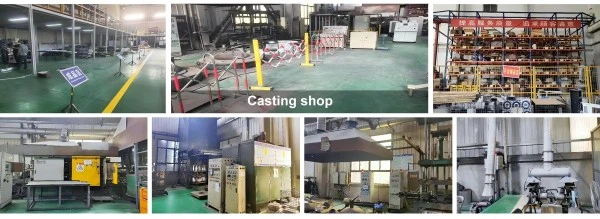
In China, casting motor end covers are mostly made by high-pressure die casting, which involves pouring liquid aluminum into steel molds at pressures higher than 10,000 psi. This method creates thin-walled pieces with dimensions accurate to within ±0.15mm, which reduces the need for further CNC cutting. When equipment costs need to be kept low, gravity casting is a good option for smaller orders. However, the surface finish and stability of dimensions are usually not as good as with high-pressure methods. Chinese producers are using automated casting cells with robotic extraction and real-time mold temperature tracking more and more. These cells can make more than 1,000 pieces per day. After casting, CNC machining is used to fine-tune the bearing bore sizes, mounting face flatness, and threaded holes to the final limits. Surface spraying processes protect against rust and give the part a nice look.
Import Inspection Essentials: Ensuring Quality and Compliance
Common Casting Defects and Detection Methods
Quality engineers have to carefully look for porosity flaws in casting motor end covers that weaken the structure and make it less resistant to pressure. Gas porosity looks like small circular holes made by trapped air or hydrogen during solidification. Shrinkage porosity, on the other hand, shows up in thicker parts that cool more slowly. X-ray radiography shows where defects are located inside parts without damaging them, but ultrasonic testing is faster for screening large shipments. Defects on the surface, like cold shuts, flow marks, and die soldering, must be seen under good lighting, and each flaw must be less than 2 mm in diameter in order to be accepted.
Dimensional warping is a persistent problem in thin-walled aluminum castings, mainly impacting the flatness of the mounting face and the centering of the bearing bore. Coordinate measuring machines (CMMs) check that important dimensions match up with engineering drawings, and statistical process control charts show how variations between batches affect the whole process. Inclusion defects from slag or oxide films mean that the material makeup has to be checked using spectrographic analysis. This proves that the specs for ADC12 alloy meet ASTM B85 standards.
Practical Inspection Checklist for Incoming Quality Control
Using a structured inspection procedure keeps importers from having to accept casting motor end covers that aren't up to par. The visual inspection should look at the quality of the surface finish, finding rough patterns, discoloration, or damage from handling. To check the dimensions, you need calibrated measuring tools like micrometers, calipers, and bore gauges to compare the approved drawings to the actual bearing pocket diameters, bolt hole locations, and overall envelope dimensions.
Nondestructive testing methods give you a better idea of the quality of something. Magnetic particle screening can find cracks that break the surface of ferrous materials, but dye penetrant testing is better for checking aluminum castings. For sealed motor designs, pressure testing checks the integrity of the housing by submerging it in water and applying compressed air at 1.5 times the operating pressure to find leak paths. Reviewing the documentation makes sure that there are material certifications, heat treatment records (if needed), and marks that can be used to connect parts to production runs.
International Standards and Certification Requirements
If a supplier has ISO 9001:2015 certification, it means they have quality management systems in place that cover things like design control, process validation, and corrective action procedures. This certification doesn't guarantee the quality of the product by itself, but it does show that the company is committed to using consistent manufacturing methods. ISO 14001 environmental certification covers controlling emissions and managing trash, which is becoming more important as demands for sustainability affect buying choices. Occupational health and safety certification ISO 45001 shows how to protect workers, which is a roundabout way of saying that operating discipline is linked to product quality.
Performance requirements and test methods for rotating electrical machines are set by motor-specific standards like IEC 60034. However, these standards mostly cover motor assembly rather than individual casting motor end covers. For car uses, IATF 16949 certification is needed, which requires advanced product quality planning (APQP) and production part approval methods (PPAP). To make sure that compliance claims are true, importers should ask for inspection reports from third parties like SGS or TÜV. This is especially important when source facilities don't allow direct audit access.
Customs Regulations and Environmental Compliance
Aluminum casting motor end covers are classified by U.S. customs under HTS code 8503.00.95, and they are subject to regular import taxes of 2.5% on average for most-favored-nation countries. To avoid delays in clearing, the right paperwork, such as business invoices, packing lists, and bills of lading, must correctly list the materials, quantities, and country of origin. Depending on current trade policies, Section 301 tariffs may apply to Chinese aluminum products. Importers need to keep an eye on Federal Register notices and CBP rulings.
Under TSCA's environmental rules, buyers must confirm that aluminum castings don't contain chemical substances that aren't allowed. However, metallic alloys usually don't have to do this. When motor parts join the European market, they have to follow RoHS rules that limit the amount of lead, mercury, and cadmium they contain to certain levels. Importers in the EU are responsible for REACH registration, not Chinese providers. Material safety data sheets (MSDS) make it easier to check compliance, though.

Navigating Procurement and Supplier Selection from China
Essential Supplier Evaluation Criteria
To find qualified casting motor end cover suppliers, you need to do more than just look at price quotes. Verification of certification is very important. Ask for copies of ISO 9001:2015, ISO 14001, and ISO 45001 certificates and check their validity in databases maintained by the granting bodies. When evaluating production capacity, you should look at equipment lists, shift operations, and present capacity utilization to make sure you have enough bandwidth for your volume needs without breaking your delivery promises.
The technical skills of providers decide whether they can meet your needs. Look over past projects that had similar levels of difficulty, material types, and tolerance needs. Ask for process flow models that show the steps for casting, cutting, inspecting, and finishing. Think about whether to do things in-house or hire someone else to do them. Facilities that are vertically merged offer better quality control and more reliable schedules. Tooling development skills are very important—experienced mold design teams find the best gate locations, cooling channels, and draft angles, all of which have a direct effect on the quality of the casting and how quickly it can be made.
Communication infrastructure affects the success of the project at every stage of the provider relationship. Check to see how well engineering and business partners speak English, how quickly they can answer technical questions, and how well they know Western engineering standards and drawing conventions. Because China and the US are in different time zones, they need structured ways to talk to each other, like weekly progress calls and shared project management tools that keep track of due dates and open problems.
Understanding MOQs, Lead Times, and Logistics
Custom casting motor end covers usually have a minimum order quantity of 500 to 2,000 pieces, but this can change based on how hard the tools are to make and how much the materials cost. Suppliers defend MOQs by pointing out the economics of mold amortization and the costs of setting up production, which includes buying materials, switching out equipment, and checking the quality of the work. You can get a lower MOQ if you can show that you can produce a lot of goods over a long period of time, or you can agree to higher unit prices for the first few sales and lower prices at certain volume levels.
Lead times are broken up into stages for making tools and making things. Mold making takes 6 to 10 weeks, which includes getting approval on the design, cutting, and testing the mold by putting something in it. For orders of less than 5,000 pieces, the usual production wait time is 4 to 6 weeks. This includes getting the materials, casting, CNC machining, surface treatment, inspection, and packing. Due to extra fees and priority ordering, rush orders can shorten lead times by 30 to 40 percent. However, quality risks rise when normal process controls are put under time pressure.
Shipping logistics have a big effect on both planning inventory and total landed costs. Ships carrying goods from Chinese ports to U.S. West Coast sites take 18–25 days to get to, plus another week for interior transportation and customs clearance. Air freight cuts travel time to 5–7 days, but it also increases the cost of shipping by 5–8 times. It's only worth it for urgent needs or expensive parts. Choosing the right Incoterms determines who is responsible for what. For example, FOB terms put the shipping risk on the buyer after the goods are loaded at the port, while DDP terms give logistics management and cost to suppliers who deliver to your warehouse door.
Managing Customization and OEM Requirements
Specifications for custom casting motor end covers need to be very clear about what functions are needed, what size limitations there are, and what kind of performance is expected. Give full engineering plans in PDF and CAD forms, with geometric dimensioning and tolerancing (GD&T) callouts that show important features. Use well-known measurements, such as Ra values for roughness, to describe material certifications, mechanical property requirements, and surface finish standards.
When an OEM works with a supplier early on in the planning process, the supplier can use the foundry's knowledge to make the casting easier to make. Design for manufacturing (DFM) reviews find features that aren't working well, like undercuts that need complicated tools, differences in wall thickness that cause defects due to shrinkage, and tight tolerances that need a lot of machining. Tooling costs can be cut by 20–35% through collaborative design changes that also improve casting rates and accuracy of dimensions.
Before spending money on production tools, sample approval methods set quality standards. Ask for T1 samples from test tools or finished billet to make sure that the motor assembly's shape, fit, and function are correct. Samples should come with records on their dimensions, material certifications, and the results of practical tests. Production validation samples from production tools show that the process works properly under normal manufacturing conditions. Statistical analysis should show that the critical dimension Cpk values are higher than 1.33 if possible.

Conclusion
When procurement professionals follow strict inspection processes and handle their suppliers well, importing casting motor end covers from China can save them a lot of money. Knowing how casting works, the features of materials, and quality standards helps you make smart choices that balance performance needs with business facts. To be successful as an importer, you need to make sure that your inspection procedures cover everything from eye assessment to dimensional proof and material approval. You also need to make sure that these procedures are in line with international standards and customs laws. You can build long-lasting, reliable supply chains for your motor manufacturing operations by working with qualified Chinese manufacturers who offer certifications like ISO 9001:2015, technical skills like high-pressure die casting and CNC machining, and open communication.
FAQs
What certifications should Chinese motor end cover suppliers possess?
As a minimum, reliable suppliers must show that they have ISO 9001:2015 quality management certification, which shows that they use systematic process controls and documentation practices. The ISO 14001 environmental certification shows that a company is making responsible products, which is becoming more and more important for companies that report on their sustainability. The ISO 45001 certification for workplace safety says that operational control and quality awareness are linked. For automotive uses, you need IATF 16949 certification, which requires advanced quality planning processes. Always check certificates through the databases of the granting bodies rather than taking copies at face value, because fake documents do get around.
How can I verify casting quality before shipment arrives?
Hiring third-party inspection companies lets you check the quality of the goods at the supplier's location before they leave China. Include in the inspection scope things like measuring sizes with calibrated tools, checking for visual flaws against acceptance criteria, reviewing the material certification, and taking pictures to record the process. Inspection reports are sent within 48 hours, so bad batches can be thrown away while it's still cost-effective to fix them. The costs of $300 to $600 per check are a good way to protect yourself against getting parts that can't be used that are worth thousands of dollars and take a long time to return.
What factors influence motor end cover pricing from Chinese suppliers?
Material costs for ADC12 aluminum alloy change with the price of commodities and usually make up 35 to 45 percent of the price of a component. Tooling amortization spreads the cost of the mold over a number of orders, which has a big effect on the cost per piece at smaller rates. Casting is harder and takes longer when there are complex features like thin walls, tight tolerances, and complicated geometries. Extra steps like CNC cutting and surface spraying cost more in terms of both labor and tools. Prices are directly affected by the number of items ordered because of how efficiently they are made and how the setup costs are spread out. Usually, prices drop at 1,000, 5,000, and 10,000 pieces.
Partner with Rongbao Enterprise for Reliable Casting Motor End Cover Solutions
Rongbao Enterprise has been a trusted casting motor end cover supplier for 20 years, working with the automobile, industrial equipment, and power generation industries in North America. Our factory in Xi'an has many certifications, such as ISO 9001:2015, ISO 14001, and ISO 45001, which make sure that quality control and legal compliance meet the high standards that your purchasing teams expect.
We can make complete casting motor end covers out of ADC12 aluminum alloy that meet exact specifications. Our manufacturing processes include high-pressure die casting, precise CNC machining, and protective surface spraying. Our production capacity is up to 1,000 pieces per day, and we can make the specs fit your motor designs. Our experienced engineering teams also offer DFM advice to make casting more easily made. Before being safely packaged and delivered to your facility, every part goes through a series of strict inspections.
We're committed to more than just supplying parts; we want to be a smart partner that helps you reach your long-term buying goals. You can email our team at steve.zhou@263.net or zhouyi@rongbaocasting.com to talk about your motor end cover needs, get technical specs, or set up a virtual tour of our facility. Let us show you how Rongbao Enterprise can give your supply chain the consistent quality, technical know-how, and quick service it needs from a qualified casting motor end cover provider.
References
- American Foundry Society. (2021). Aluminum Casting Technology and Quality Standards. Des Plaines: AFS Publications.
- International Organization for Standardization. (2020). ISO 9001:2015 Quality Management Systems - Requirements and Implementation Guidelines. Geneva: ISO Press.
- Zhang, H., & Liu, M. (2019). "High-Pressure Die Casting Process Optimization for Aluminum Alloy Motor Components." Journal of Manufacturing Processes, 45, 312-324.
- U.S. Customs and Border Protection. (2022). Importing Guide for Metal Components: Classification and Compliance Requirements. Washington: Department of Homeland Security.
- Chen, W. (2020). Quality Control in Chinese Manufacturing: Best Practices for International Procurement. Singapore: Industrial Press Asia.
- Society of Automotive Engineers. (2018). Material Specifications and Testing Methods for Aluminum Die Castings in Automotive Applications. Warrendale: SAE International.
Learn about our latest products and discounts through SMS or email