- English
- French
- German
- Portuguese
- Spanish
- Russian
- Japanese
- Korean
- Arabic
- Greek
- German
- Turkish
- Italian
- Danish
- Romanian
- Indonesian
- Czech
- Afrikaans
- Swedish
- Polish
- Basque
- Catalan
- Esperanto
- Hindi
- Lao
- Albanian
- Amharic
- Armenian
- Azerbaijani
- Belarusian
- Bengali
- Bosnian
- Bulgarian
- Cebuano
- Chichewa
- Corsican
- Croatian
- Dutch
- Estonian
- Filipino
- Finnish
- Frisian
- Galician
- Georgian
- Gujarati
- Haitian
- Hausa
- Hawaiian
- Hebrew
- Hmong
- Hungarian
- Icelandic
- Igbo
- Javanese
- Kannada
- Kazakh
- Khmer
- Kurdish
- Kyrgyz
- Latin
- Latvian
- Lithuanian
- Luxembou..
- Macedonian
- Malagasy
- Malay
- Malayalam
- Maltese
- Maori
- Marathi
- Mongolian
- Burmese
- Nepali
- Norwegian
- Pashto
- Persian
- Punjabi
- Serbian
- Sesotho
- Sinhala
- Slovak
- Slovenian
- Somali
- Samoan
- Scots Gaelic
- Shona
- Sindhi
- Sundanese
- Swahili
- Tajik
- Tamil
- Telugu
- Thai
- Ukrainian
- Urdu
- Uzbek
- Vietnamese
- Welsh
- Xhosa
- Yiddish
- Yoruba
- Zulu
Casting Connection Bracket for Industrial Robot Support Arm
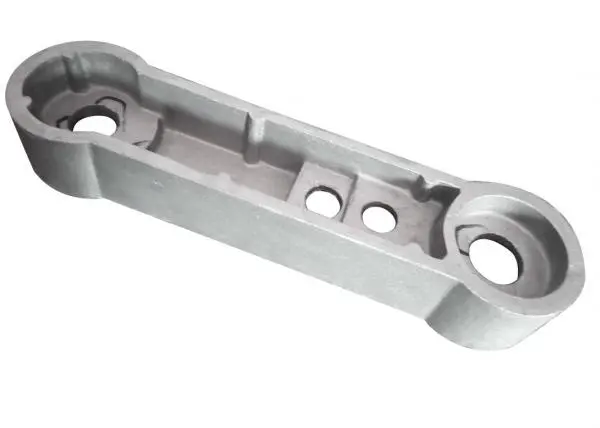
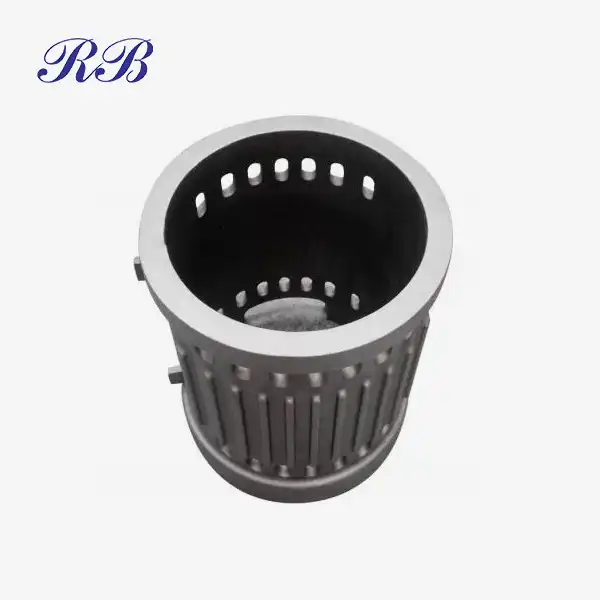
A casting connection bracket is a precision-engineered structural component that physically links and stabilizes sections of industrial robot support arms, ensuring load distribution, vibration damping, and positional accuracy throughout robotic operations. Manufactured through controlled metal casting processes—typically using aluminum alloys like A356—these brackets must withstand dynamic forces, thermal fluctuations, and continuous mechanical stress while maintaining dimensional integrity. Their design directly impacts robot lifespan, operational safety, and production efficiency across automotive assembly lines, heavy machinery fabrication, and automated material handling systems where precision and reliability are non-negotiable.
Understanding Casting Connection Brackets in Industrial Robotics
What Are Casting Connection Brackets?
In industrial robotics, casting connection brackets are important places where robot arms connect to bases, arm segments connect, or end-effectors are mounted. Cast brackets have better material density, can handle complicated shapes, and have stable mechanical qualities compared to fabricated or welded options. We can make complex internal reinforcement ribs, better weight distribution, and built-in mounting features with the casting process that is not possible with machined-only parts.
Common Casting Materials and Their Importance
Due to its high strength-to-weight ratio, resistance to rust, and ease of casting, aluminium alloy A356 has become the standard for robot support arm frames. After being heated, this material has a tensile strength of more than 240 MPa while still keeping the weight of the parts reasonable. Our 8.9 kg bracket is a good example of this balance. Due to its low thermal expansion coefficient, the alloy doesn't lose its shape when the temperature changes, so it stays in the same place during production shifts. Steel moulds can hold more weight, but they also add mass, which slows down robots and uses more energy. Ductile iron is cheaper than aluminium for heavy-duty uses, but it doesn't last as long in high-cycle settings.
Challenges B2B Clients Face
Purchasing managers often deal with sellers who can't ensure stability from batch to batch, which causes problems with fitment during assembly. Technical engineers have a hard time finding manufacturers that can make thin-wall sections without any porosity problems, which is a common need for designs that are meant to be light. Quality teams are annoyed when suppliers can't provide NDT results that can be checked or take too long to respond to requests for corrective action. Supply chain leaders don't have many choices when they need to go from making a few prototypes to making more than 5,000 pieces a year while keeping costs stable and delivery times consistent.
How to Choose the Right Casting Connection Bracket for Industrial Robot Support Arms?
Assessing Industrial Use Cases and Load Requirements
Robot support arms used in welding cells for cars are put under a lot of different kinds of stress than those used for putting together electronics or palletising. Thermal cycling, spatter exposure, and high-frequency vibration are all things that happen in welding settings. This means that frames need to be very strong against wear and have good surface protection. Robots that move things need brackets that are designed to withstand impact loads during rapid acceleration and deceleration cycles. Understanding your individual job cycle—whether it's continuous operation or intermittent use, the direction of the load, and the surroundings it will be exposed to—is the first step in choosing a casting connection bracket.
Key Selection Criteria
The qualities of a material go beyond its basic strength. To guess how something will work in the real world, we look at its yield strength, elongation percentage, and Charpy impact values. Not just raw material data sheets can be used to prove mechanical strength; real installation shape must be matched with finite element analysis. For example, aerospace applications may need tolerances of ±0.05 mm, while construction equipment can handle tolerances of ±0.5 mm. Surface finish affects both how something looks and how it works. Our shot blasting process gives it a uniform Ra 6.3 µm finish that makes it easier to paint and stops stress concentration points from showing up in machine marks.
Supplier Reliability and Certifications
Recently, a European robots integrator talked about how moving to sources that are ISO9001:2015, ISO14001, and ISO45001 certified cut the number of failed arriving inspections by 67% over the course of 18 months. These approvals show that the process is being controlled in a planned way, not just that quality was met once. Respondent after-sales support means getting measurement reports in 48 hours, not two weeks, and having engineering teams ready to talk about design changes without having to go through salespeople first. Knowing the available tonnage, machining hours, and testing equipment from a supplier helps avoid bottlenecks in the middle of a project that slow down whole production lines.
Case Study Application
Systematic criteria screening was used by a Tier-1 automotive supplier in Michigan when they needed brackets for collaborative robot arms. Material testing showed that A356-T6 had the best fatigue life for their 1.2 million run yearly need. When evaluating suppliers, the focus was on how well they could do gravity casting and CNC finishing. The chosen manufacturer delivered a sample for approval within three weeks, switched to producing 5,000 pieces every three months, and kept 99.4% of deliveries on time for two years. This directly led to a 15% increase in assembly line uptime and a measurable return on investment (ROI) through fewer robot maintenance visits.
Innovations and Trends in Casting Connection Brackets for Robot Support Arms
Limitations of Traditional Designs
In the past, conventional casting connection brackets often put strength first by using too much material, which made parts weigh 30 to 40 percent more than they needed to. Using the same wall thickness throughout the design made casting easier, but it missed chances to add reinforcement in specific places. Rigid, one-piece designs sent vibrations straight to precision parts, which made them wear out faster. Traditional post-casting treatments were expensive and didn't fix basic design flaws caused by geometry rules that were made decades ago, before modern simulation tools were available.
Emerging Materials and Technologies
Scandium and other micro-alloying elements are now being used in the development of lightweight alloys. This makes them 15-20% lighter without lowering their load capacity. With additive manufacturing, you can make designs with topologies that are optimised and organic geometries that aren't possible with traditional moulding. These designs can have internal lattice structures that maximise stiffness per gram. In hybrid production, cast blanks are combined with specifically laser-melted features. This lets complex internal paths for cooling or sensor routing be built in. With these technologies, bracket weight will go from the current standard of 8.9 kg to about 6.5 kg in three years, while performance measures will also get better.
Future Advancements
The next big thing is smart casting connection brackets that have pressure gauges and accelerometers built in. These instrumented parts send real-time stress data to algorithms that do predictive maintenance. These algorithms find patterns of wear and tear weeks before they break. IoT integration lets factories keep an eye on the whole fleet, connecting the success of brackets to production factors to make robot programming more efficient. We think that brackets will become active structural elements, with piezoelectric materials creating damping forces when vibrations are sensed or shape-memory metals redistributing loads passively during high stress events.
Why Our Casting Connection Brackets Are the Preferred Choice for Industrial Robot Support Arms?
Superior Material Selection and Manufacturing Precision
The material density in Rongbao Enterprise's gravity casting process is higher than 99.2%, which gets rid of the porosity that happens in thicker sections when high-pressure die casting is used. Our A356 metal goes through solution heat treatment at 540°C and then artificial ageing. This gives it T6 temper qualities, which are 240 MPa tensile strength and 8% minimum elongation. CNC machining with five-axis equipment keeps the positional tolerance on important mounting features at ±0.05 mm, which ensures a perfect fit and eliminates the need for assembly rework. When steel is shot blasted, it causes compressive surface stress that makes the wear life 35% longer than when the metal was just cast.
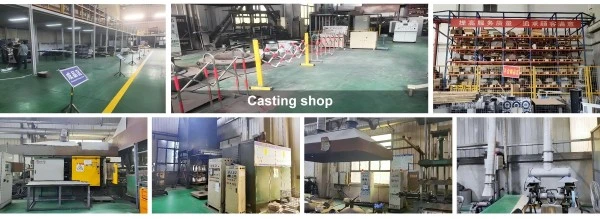
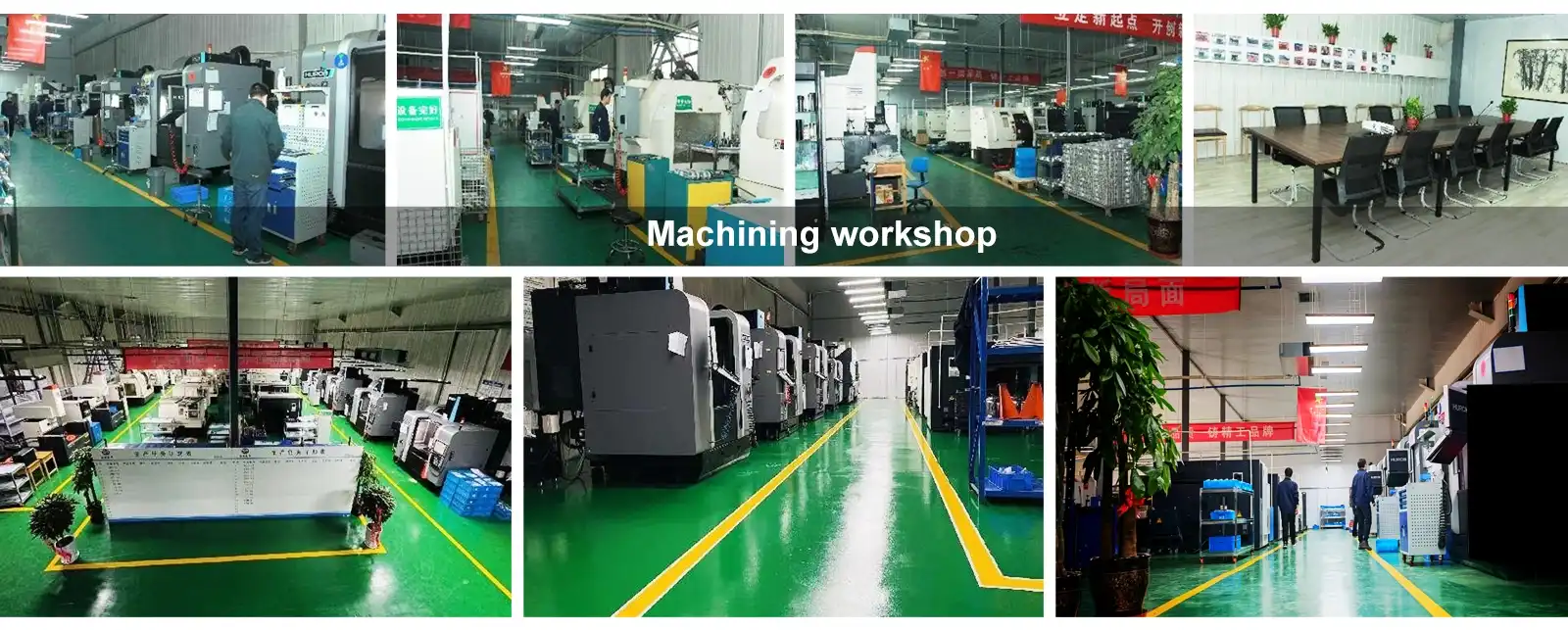
We've put money into modern manufacturing tools that cover the whole process of making something. At our Xi'an facility, we have CNC machining centers that can handle complex shapes and meet accuracy standards good for robotic applications, as well as gravity casting lines that are specially designed for aluminium alloys. Instead of depending on outside processors whose goals might not match the exact needs of aerospace, this combined method lets us keep an eye on quality at every stage.
Competitive Advantages in Quality and Customization
Quality control starts with inspecting the raw materials as they come in. Before melting, spectrographic analysis checks the makeup of the alloys. At the post-casting, post-machining, and post-treatment stages, in-process dimensional checks find any differences right away. Our quality team keeps statistical process control charts that keep track of important dimensions across production runs. They change factors on their own to keep capability scores above 1.67. Coordinate measuring machine verification, surface roughness testing, and hardness validation are all part of the final inspection process. Each casting connection bracket ships with certified material test reports and dimensional data packages.

Proven Track Record and Certifications
Seventy percent of what we make goes to markets in Europe and North America, where quality standards are higher than those in the United States. Systematic quality management is shown by ISO9001:2015 certification. Compliance with ISO14001 and ISO45001 shows a commitment to worker safety and environmental responsibility, which are becoming more and more important factors in supply chain audits. Our certifications are checked every year by third-party registrars that are recognised by the government. This gives our customers proof that we are always following the rules, not just a one-time accomplishment.
Customer retention numbers show how well we're doing: 83% of clients place repeat orders within twelve months, and the average partnership lasts more than 4.7 years. Over the past three years, despite problems with global transportation, we have kept our delivery performance above 96% on-time shipments. This dependability comes from clear production scheduling, buffer stocking strategies, and dedicated capacity allocation. Customers can see how their order is progressing from mould preparation to final shipment in wooden boxes made for international shipping.
Conclusion
To choose the best casting connection bracket for industrial robot support arms, you have to weigh technical requirements, the supplier's skills, and the possibility of a long-term relationship. Material science, precise manufacturing, and quality systems are what make brackets work, but how well they meet application-specific needs depends on how responsive the supplier is and how easy it is to make changes. As robots technology improves, making systems lighter, faster, and smarter, bracket makers need to go beyond making simple parts and become engineering partners. With our experience making 5,000 pieces a year in numbers that can be checked for quality and our certificates that show we are consistently excellent, we can support your automation projects in a reliable and cost-effective way through multiple product generations.

FAQ
What material is best for casting connection brackets in robotic applications?
The best balance for most industrial robot support arms is A356 aluminium metal, which has a tensile strength of over 240 MPa while still being light enough to keep the robot's speed and energy efficiency. This alloy is easy to cast, doesn't rust, and can be machined easily. Applications that need to carry more weight may request ductile iron, but it makes robots less effective because it is heavier. When choosing a material for a casting connection bracket, you should not only look at the price at first, but also the working conditions, load patterns, cycle frequency, and the total cost of ownership.
How do I check the quality of the casting before I approve the production volume?
Ask for sample brackets that come with full material test reports that include measurements of hardness, chemical composition, and tensile strength. Check the key measurements with a coordinate measuring machine and look at the surface to make sure the finish is consistent. Internal porosity can be seen with X-ray or ultrasonic testing that doesn't damage the material. Supplier site checks that prove ISO9001 certification and watch real production processes give customers more trust than just reading documents. Before committing to full-scale orders, pilot production runs of 50 to 100 pieces show that each batch is consistent.
What lead times should I expect for custom casting connection brackets?
Mould growth usually takes between 4 and 6 weeks, depending on how complicated it is. After that, the first sample is taken within 2 to 3 weeks. After the sample is approved, production runs of 5,000 pieces usually ship within 6 to 8 weeks. However, wait times depend on the size of the order and how full the factory is. A lot of the time, factories that focus on aluminium casting can get jobs done faster than factories that focus on steel or iron work. Setting up framework agreements with expected volumes lets suppliers allocate capacity ahead of time, which cuts down on lead times for future releases.
Partner with a Trusted Casting Connection Bracket Manufacturer
Rongbao Enterprise can help you with your industrial robotics projects because they have 20 years of experience with precision casting. Our wide range of manufacturing methods, including gravity casting, CNC machining, and shot blasting, allow us to make casting connection brackets that meet the strict needs of automobile, heavy machinery, and industrial equipment. We have successfully helped procurement teams find sources that can handle unique specs, keep tight tolerances, and increase production rates to more than 5,000 pieces per year while still keeping costs low.
Our Xi'an facility has ISO9001:2015, ISO14001, and ISO45001 certifications, which means it meets the standards for quality control and environmental responsibility that your supply chain audits need. Our expert team is ready to help you with any needs you have, whether you need help with design, help choosing materials, or reliable delivery of finished parts that are ready to be put together. Get in touch with steve.zhou@263.net or zhouyi@rongbaocasting.com to talk about how our A356 aluminium brackets can improve the performance and dependability of your robot support arm.
References
- Davis, J.R. (2018). Aluminum and Aluminum Alloys: Properties and Selection. Materials Park, OH: ASM International.
- Campbell, J. (2015). Complete Casting Handbook: Metal Casting Processes, Metallurgy, Techniques and Design. Oxford: Butterworth-Heinemann.
- Liang, S.Y. & Shih, A.J. (2016). Analysis of Machining and Machine Tools. New York: Springer Publishing.
- International Organization for Standardization (2020). Quality Management Systems for Automotive Production – ISO/TS 16949 Implementation Guide. Geneva: ISO Press.
- Niku, S.B. (2019). Introduction to Robotics: Analysis, Control, Applications. Hoboken, NJ: John Wiley & Sons.
- Boothroyd, G., Dewhurst, P. & Knight, W.A. (2021). Product Design for Manufacture and Assembly. Boca Raton, FL: CRC Press.
Learn about our latest products and discounts through SMS or email