- English
- French
- German
- Portuguese
- Spanish
- Russian
- Japanese
- Korean
- Arabic
- Greek
- German
- Turkish
- Italian
- Danish
- Romanian
- Indonesian
- Czech
- Afrikaans
- Swedish
- Polish
- Basque
- Catalan
- Esperanto
- Hindi
- Lao
- Albanian
- Amharic
- Armenian
- Azerbaijani
- Belarusian
- Bengali
- Bosnian
- Bulgarian
- Cebuano
- Chichewa
- Corsican
- Croatian
- Dutch
- Estonian
- Filipino
- Finnish
- Frisian
- Galician
- Georgian
- Gujarati
- Haitian
- Hausa
- Hawaiian
- Hebrew
- Hmong
- Hungarian
- Icelandic
- Igbo
- Javanese
- Kannada
- Kazakh
- Khmer
- Kurdish
- Kyrgyz
- Latin
- Latvian
- Lithuanian
- Luxembou..
- Macedonian
- Malagasy
- Malay
- Malayalam
- Maltese
- Maori
- Marathi
- Mongolian
- Burmese
- Nepali
- Norwegian
- Pashto
- Persian
- Punjabi
- Serbian
- Sesotho
- Sinhala
- Slovak
- Slovenian
- Somali
- Samoan
- Scots Gaelic
- Shona
- Sindhi
- Sundanese
- Swahili
- Tajik
- Tamil
- Telugu
- Thai
- Ukrainian
- Urdu
- Uzbek
- Vietnamese
- Welsh
- Xhosa
- Yiddish
- Yoruba
- Zulu
Casting Connecting Frame for the Industrial robot support arm purpose
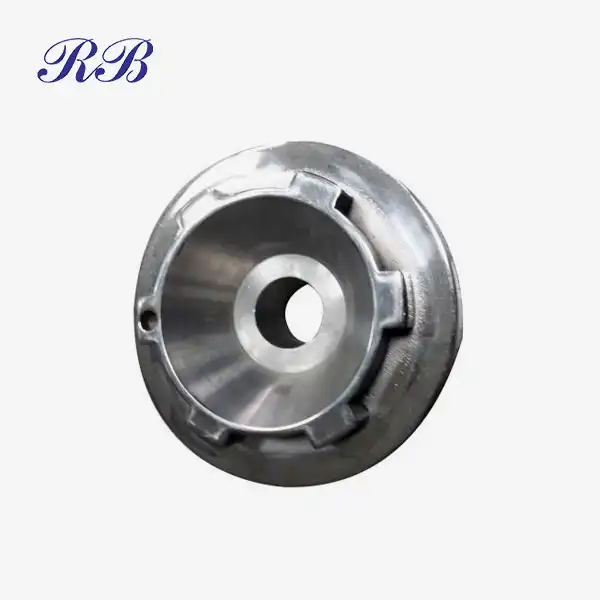
An industrial robot support arm needs more than a powerful motor and precise control system. The mechanical system connecting the robot base, support structure and moving arm must preserve its shape under repeated loads. A well-designed casting connecting frame offers the structural interface between these components and can be built with incorporated ribs, mounting bosses, bearing seats and other characteristics that would be difficult or costly to construct from a standard plate assembly. For robot makers and builders of automation equipment, the advantage of a cast connecting frame is not just the casting process. The selection of materials, structural design, casting quality, machining precision, surface treatment and inspection determine whether the finished component can meet the requirements of the robot assembly. A356 aluminum is a possible material option for this type of component, offering a reasonably low density along with strong castability and suitable mechanical qualities. However, the proper alloy and temper must always be chosen, according on actual load, environment, dimensional requirements and the appropriate standard.
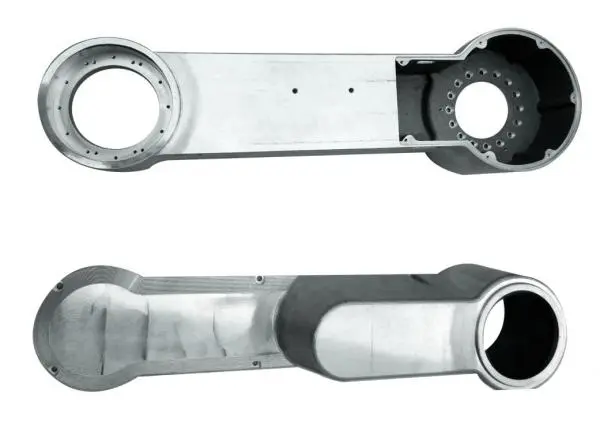
What a Connecting Frame Does in an Industrial Robot Support Arm?
The connecting frame is a structural transition between distinct portions of the robot assembly. In a robot architecture it may be used to connect a fixed base to a support arm, to connect two structural members, or to offer mounting interfaces for motors, reducers, bearings, coverings, or other components.
Its primary function is to hold these interfaces in relative location. If the frame is deformed under load, the motion of the connecting parts may be different from the intended geometry. This does not mean the robot will lose the ability to position immediately, but large deformations might cause problems with alignment, vibration, uneven loading, and faster wear of attached parts.
The frame must also tolerate repetitive mechanical loading. In the service life of industrial robots, the identical movement is performed dozens and millions of times. Therefore, a support element must have high static tensile strength, stiffness, and fatigue resistance for the duty cycle it is designed for.
The frame design is as important as the nominal material grade. Rib placement, wall thickness, mounting-hole positions, filet radii, thick/thin transitions, and machining datums can all affect the ultimate performance of the component. The casting design can put material where it is needed in the highly loaded places and provide a more practical structural solution than just raising the wall thickness everywhere.
Welding support robot arms may face a combination of static weight, acceleration and deceleration loads, vibration, and temperature exposure. Repeated movement of payloads may generate varied load patterns on a frame used in material handling. Therefore, the casting should be developed for the actual operating conditions and not as a generic bracket.
Why Casting Can Be Suitable for Robot Structural Components?
Casting is especially useful where a joining component has three-dimensional geometry with multiple incorporated structural characteristics. Instead of having to make each feature separately and link several pieces, a casting can be used to construct the fundamental geometry in one component and then machine the necessary surfaces.
It can reduce the number of individual pieces in an assembly. It can also allow more leeway for adding ribs and strengthening portions around mounting interfaces. For an industrial robot support arm, those characteristics can be crucial, because the part may need to stay relatively light and still be structurally rigid enough.
Gravity casting is one technology that could be looked at for aluminum connecting frames. The molten aluminum is poured into a mold under the influence of gravity. The casting is subsequently taken from the mold, cleaned, and inspected, and, if very precise dimensional tolerances are required, often a further machining operation is performed.
Casting itself should not be expected to create every final dimension directly. Often after casting, CNC machining is required for the interfaces, such as bearing seats, mounting faces, locating holes, and precise datum surfaces. This differentiation between near-net-shape casting and precision machining allows the maker to use casting for overall geometry and machining for those parameters that are critical to assembly.
This applies particularly to a casting connecting frame, as not all surfaces need to have the same dimensions. Large non-functional external surfaces may be acceptable to typical casting variation. A mounting face or locating bore may need considerably tighter control.
A356 Aluminum and the Material Selection Process
The Al-Si-Mg composition of A356 aluminum gives good castability, strength, and relatively low density, making it a popular material for cast components. Typical A356 chemistry has around 6.5–7.5% silicon and a controlled proportion of magnesium, with the balance comprised largely of aluminum and prescribed limitations for additional elements.
Silicon adds to the casting behavior of the alloy, and magnesium helps precipitation strengthening following appropriate heat treatment. The ultimate mechanical qualities depend on the alloy state and the processing technique. When mechanical qualities are crucial, the engineering drawing should specify the requisite material condition or applicable standard, rather than just “A356 aluminum.”
A356 is also substantially lighter than most steels. This density is roughly 2.7 g/cm³, which can be useful for engineers aiming to minimize the moving mass of a robotic construction. In applications with frequent acceleration and deceleration, a lower structural mass can be beneficial. However, the effect at the system level depends on the robot geometry, payload, driving system, and mass distribution.
Also thermal expansion must be taken into account. The linear thermal expansion coefficient of A356 is about 21.5 μm/m·K for published material data [23]. This does not mean that A356 is inevitably dimensionally stable with temperature fluctuations. Instead, engineers should consider thermal expansion when the robot is working near heat sources or when the component is interfacing with materials with considerably varying thermal expansion properties.
Another consideration is the corrosion behavior. Aluminum does generate a naturally occurring oxide surface layer, but that does not mean that it is corrosion resistant in all environments. Exposure to chemicals, salt, moisture, dissimilar metals, and surface damage can influence the corrosion behavior of an aluminum casting. If the robot is to work in a challenging environment, the material specification and surface treatment should be suitable.
Structural Design Considerations Before Casting
Good casting begins with a design that can be manufactured. The shape of the connecting frame should be reviewed by the supplier and buyer and the surfaces that truly need precision identified before the tooling is manufactured.
The first thing to look at is the load path. The engineer should know where the applied loads enter the frame and where they leave it. Often the stress is concentrated at the mounting bosses, bolt holes, bearing interfaces, and arm connections. These areas may require more material, larger filets, or strategically placed ribs.
Wall thickness should also be addressed in casting design. Large variances between thick and thin sections can influence solidification behavior and may increase the probability of shrinkage-related problems. It is easier to produce a casting when the section thickness is more uniform and the transitions and filets are enough.
Ribs can stiffen without increasing the overall thickness of the frame too much. But ribs should not be thrown in wherever there is room. Their shape should be suitable for the casting process, machining, and the expected distribution of stresses.
Another pragmatic consideration is draft angles. Easily removable parts from the mold can decrease tooling problems and assist in maintaining consistent output. If there are deep pockets, undercuts, or intricate internal features in the design, the supplier may suggest altering the mold design or even switching to another manufacturing process.
The functional datum structure should be defined by the buyer at the same time before the initiation of production. For example, if a CNC machine references one surface to machine another, the casting and machining datums must be coordinated. Or, a casting connecting frame may meet individual dimensions measurements and nevertheless result in an assembly alignment difficulty.
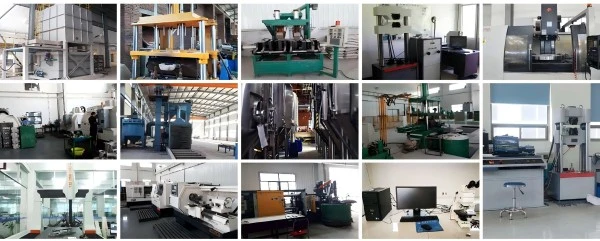
From Casting to CNC Machining
Normally after the initial casting, casting of a connecting frame is done in several phases. The steps should be viewed as a single manufacturing chain, not as discrete processes.
After casting, excess material, such as gates and risers, can be removed. The component is then cleaned, shot blasted, heat treated to specification, and visually examined. These operations are used to prepare the casting for machining and additional examination.
CNC machining produces dimensions relevant to assembly. Typical features can be mounting holes, threaded holes, bearing seats, locating surfaces, flat mounting faces, and connection interfaces.
The machining approach must be driven by the drawing datums and assembly needs. Such a tolerance of ±0.05 mm should never be taken as a generic property of the casting itself. If this type of tolerance is needed, the provider should state which machined feature it pertains to and how the measurement is taken.
This is a really important difference for purchasing. As a buyer, while reviewing a supplier quotation, ask if the quoted tolerance is for the dimensions as cast or the dimensions machined on a CNC machine. These two requirements can have a considerable impact on tooling, machining time, inspection equipment, and overall cost.
Inspection Requirements for a Precision Robot Frame
The inspection should be focused on those elements that affect function and not only provide a large number of measurements.
The dimensional assessment may be done using calipers, micrometers, gauges, or coordinate measuring equipment as per the tolerance and geometry. The CMM inspection is especially beneficial when dealing with a complex robot frame, as multiple datum relationships can be checked in a single measuring session.
- Define the key dimensions in the inspection plan before mass production. These may be bore diameter, flatness, perpendicularity, parallelism, distance between centers, placement of mounting holes, relation of machined interfaces, etc.
Another topic to look into is casting quality. Depending on the application, the buyer may require visual examination, dimensional inspection, material verification, dye penetrant testing, radiographic testing, or other non-destructive testing. The appropriate strategy depends on the material, geometry, risk level, and customer needs.
The material documentation is also rather important. Where A356 is mentioned, the purchaser may request a material certificate or report on the chemical composition of the supplied batch or melt, as applicable to the agreed quality requirements. Where heat treatment is specified, the supplier shall be able to show the necessary process records or certification as called for in the purchase specification.
Thus, a good inspection package may consist of the material certificate, dimensional inspection report, appropriate NDT records, heat-treatment documentation, and pictures of the finished component. These documents qualify the vendors. The buyer can rely on objective evidence of production instead of generalities of quality.
How to Specify a Casting Connecting Frame for Production?
The RFQ should contain all the technical specifics that the supplier needs to know about the manufacturing requirements.
The 2D engineering drawing for the casting connecting frame shall specify dimensions, tolerances, material, surface requirements, machining requirements, and applicable standards. 3D CAD models are especially helpful for complex geometries because they offer a more accurate representation of the overall contour.
The purchaser should additionally state the anticipated quantity per annum or in lots. A prototype need may require different tooling and process planning than a recurrent production requirement. For a new robot platform, initial prototype numbers may be minimal, but future production levels may justify dedicated tooling.
Also useful are operational information. The supplier should be informed of the approximate static load, the anticipated dynamic loading, the mounting arrangement, the operating temperature, the climatic exposure, and any particular fatigue or vibration requirements that would influence the design.
The buyer shall explicitly identify the interfaces where the frame will interface with bearings, reducers, motors, or other precision components. Instead, it is more necessary to specify what the functional relation is between the components. Instead of making a generic remark such as 'excellent precision.'
This data enables the casting provider to review manufacturability prior to tooling. And it might also reduce the likelihood of expensive changes once the first sample has been produced.
Rongbao Enterprise for Customized Aluminum Robot Components
Rongbao Enterprise offers specialized industrial robot parts casting and machining. Aluminum Robot Arm Components Product Data Material: A356 Casting: Gravity Casting, CNC Machining, Customized Specifications Certificate: ISO 9001:2015, ISO 14001, ISO 45001 For one A356 robot-arm product, the company has a flexible production capacity of 10,000 pieces. Different robot components may use different casting procedures and materials, according to its product literature.
The combination is more useful for a customized casting connecting frame than for using the casting as the final manufacturing process. The fundamental structural geometry can be built up by gravity casting. The accuracy interface is generated using CNC machining for assembly.
The present product information contains samples of robot-related cast parts. Its production services comprise CNC machining, surface treatment, specific requirements, and wooden box transportation packing.
Buyers should supply the latest drawing version, 3D model if available, material needs, target quantity, critical tolerances, inspection criteria, and intended use when requesting a new project. The supplier can then evaluate the casting geometry, machining allowance, tooling, and inspection procedures prior to production.
This way of approaching a project is better than choosing a service based on some generic claim like “high precision." The primary question is can the supplier consistently offer the specific interfaces, the material condition, the dimensional relationships, and the inspection documents needed for the robot assembly?
What Buyers Should Check Before Approving a Supplier?
Buyers should look for vendors with quantifiable manufacturing data before ordering a production run.
First, is the supplier experienced in structural aluminum castings, not only decorative or low-load parts? Secondly, if the drawing has precision interfaces, can the provider conduct the casting and the CNC machining together?
Check inspection capabilities, too. To increase the transparency of the qualification process, a supplier can give CMM inspection, material documentation, and appropriate non-destructive testing. For safety-critical items or parts requiring stringent customer approval, inspection strategy has to be defined before manufacture, not after the first batch is ready.
The supplier should also be willing to discuss tooling ownership, sample approval, drawing changes, production capacity, packing, and shipping protection. These business factors might directly affect the entire project cost and delivery time.
And lastly, buyers should not choose a material just because it is called “strong,” “lightweight,” or “corrosion resistant.” The correct casting connection frame is the one that has the right material, geometry, manufacturing process, and inspection standards for the practical robot support-arm application.
Conclusion
A cast connection frame is a structural component that can directly affect the alignment, stiffness, weight, and assembly performance of an industrial robot support arm. It depends significantly more upon the efficiency than upon the selection of aluminum or the method of casting. The frame needs proper structural design, correct alloy and material condition, regulated casting, suitable CNC machining, and an inspection plan centered on dimensions and material qualities related to the final assembly.
A356 aluminum can be a realistic selection for many custom robot structural components due to its low density, good castability, and heat-treatable mechanical properties. But to declare it the universal “best” material is incorrect without addressing load, temperature, environment, fatigue requirements, and dimensional stability.
A complete technical package with a clear quality agreement is the most trusted source of supply to a purchaser. Drawings, CAD data, material requirements, critical tolerances, inspection paperwork, and production statistics give the casting provider the information he needs to develop a repeatable process. Rongbao Enterprise has a framework for discussion of such projects with an engineering and procurement team built upon a platform of existing gravity casting, A356 aluminum components, CNC machining, customization, and quality-system certification.
Considering the casting method, machining strategy, and inspection requirements combined, a custom frame can be a practical structural solution for industrial robot support-arm applications, not just another cast metal item.
Experience the Rongbao difference for yourself. Contact our specialists today to discuss your project requirements. Reach us at steve.zhou@263.net or zhouyi@rongbaocasting.com.
References
1. International Federation of Robotics. (2022). World Robotics Report: Industrial Robots.
2. Aluminum Association. (2021). Aluminum Castings Engineering Manual. Washington, DC: Aluminum Association.
3. Journal of Manufacturing Science and Engineering. (2021). Comparative Study of Material Performance in Robotic Components, 143(8).
4. American Foundry Society. (2020). Casting Design and Application Handbook. Schaumburg, IL: AFS.
5. ISO 9001:2015 Quality Management Systems. (2015). Requirements. International Organization for Standardization.
The Essential Role of Casting Connecting Frame in Industrial Robot Support Arms
Learn about our latest products and discounts through SMS or email