- English
- French
- German
- Portuguese
- Spanish
- Russian
- Japanese
- Korean
- Arabic
- Greek
- German
- Turkish
- Italian
- Danish
- Romanian
- Indonesian
- Czech
- Afrikaans
- Swedish
- Polish
- Basque
- Catalan
- Esperanto
- Hindi
- Lao
- Albanian
- Amharic
- Armenian
- Azerbaijani
- Belarusian
- Bengali
- Bosnian
- Bulgarian
- Cebuano
- Chichewa
- Corsican
- Croatian
- Dutch
- Estonian
- Filipino
- Finnish
- Frisian
- Galician
- Georgian
- Gujarati
- Haitian
- Hausa
- Hawaiian
- Hebrew
- Hmong
- Hungarian
- Icelandic
- Igbo
- Javanese
- Kannada
- Kazakh
- Khmer
- Kurdish
- Kyrgyz
- Latin
- Latvian
- Lithuanian
- Luxembou..
- Macedonian
- Malagasy
- Malay
- Malayalam
- Maltese
- Maori
- Marathi
- Mongolian
- Burmese
- Nepali
- Norwegian
- Pashto
- Persian
- Punjabi
- Serbian
- Sesotho
- Sinhala
- Slovak
- Slovenian
- Somali
- Samoan
- Scots Gaelic
- Shona
- Sindhi
- Sundanese
- Swahili
- Tajik
- Tamil
- Telugu
- Thai
- Ukrainian
- Urdu
- Uzbek
- Vietnamese
- Welsh
- Xhosa
- Yiddish
- Yoruba
- Zulu
Casting Agitator Base Parts vs. Fabricated: Which Is Best?
When evaluating mixer base components, cast agitator base parts generally outperform fabricated alternatives in demanding industrial environments. Cast agitator base parts deliver superior structural integrity through uniform metal distribution, handle higher mechanical loads with fewer weak points, and offer extended service life in harsh chemical and thermal conditions. For procurement managers seeking reliable, long-lasting solutions, understanding these manufacturing differences for cast agitator base parts is essential to making cost-effective decisions that support continuous production operations.
Understanding Casting and Fabricated Agitator Base Parts
What Are Casting Agitator Base Parts?
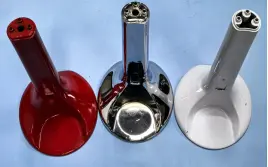
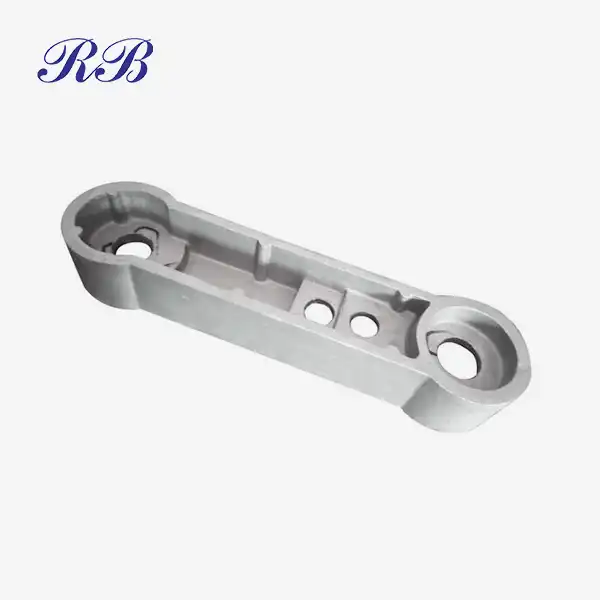
For cast parts, liquid aluminum alloy is poured into carefully designed molds, where it hardens into the shape that is needed. This method makes parts where the material qualities are the same all the way through the structure. Our company, Rongbao Enterprise, uses modern aluminum alloy die casting methods and mostly works with ADC12 material, which is very fluid during casting and stays the same size after it hardens. The casting method makes it possible to make complicated shapes, like mounting holes and internal structures with lots of small parts, without having to take multiple steps to put them together. Cast mixing bases usually weigh around 2 kg and can be used in a wide range of industrial settings that need strong support structures.
How Fabricated Parts Differ
Parts that have been fabricated are put together by welding, cutting, and shaping sheet metal or pieces that have already been made. This method lets companies quickly change designs and make small amounts without having to spend a lot of money on tools. Multiple pieces are joined together during the production process, which can lead to weak spots at the weld joints. Fabricated parts give you more design options, but they can cause material differences where different pieces meet, which could affect how long they last under the constant vibrating loads that happen in mixing operations.
Material Selection Impact
No matter how the part is made, the choice of material has a big effect on how well it works. Alloys made of aluminum, like ADC12, are very strong for their weight, don't rust, and carry heat well. Because of these qualities, aluminum die-cast parts are perfect for mixer bases that are in chemically diverse areas and that experience temperature changes. Controlled solidification in casting processes makes sure that the material properties stay the same. On the other hand, the material properties of manufactured parts may change in places where they are fused together and where heat has affected the material.
Comparing Performance and Durability: Casting vs Fabricated
Structural Integrity Differences
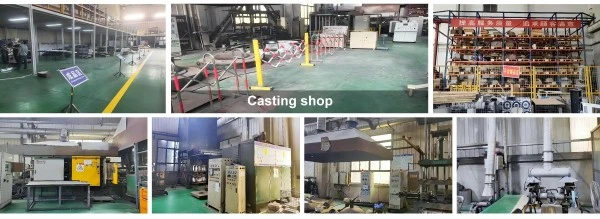
Because the whole part is made from a single pour of liquid metal, casting agitator base parts have better structural precision. This way of making things gets rid of internal gaps and makes a continuous metal matrix that spreads mechanical loads evenly throughout the structure. Fabricated assemblies, on the other hand, have many places where welded sections meet. When these joints are put under repeated mechanical stress, chemical exposure, or temperature changes, they often break. From our experience making mixer bases, we know that cast parts stay true to their dimensions longer and don't deform as easily under long-term working stresses as manufactured ones.
Resistance to Operating Conditions
Industrial mixing involves strong chemicals, shifting temperatures, and shaking. Cast aluminum parts withstand chemicals better than manufactured parts since they don't have weld line holes and fractures. Cast pieces conduct heat better due to their uniformity. This ensures heat distributes uniformly and no hot spots might harm the cloth. Fabricated parts may be protected by coatings and treatments, but structural variations remain. Our cast mixer bases' tops are treated with specific spraying processes to preserve them while preserving their natural qualities.
Maintenance and Longevity
Cast components usually need less upkeep because they have fewer places where something could go wrong. Not having any welded joints means there is no chance of the weld breaking down, cracking along heat-affected areas, or fasteners coming loose at assembly points. Cast metal mixer bases can work reliably for long periods of time with few inspections needed if they are made according to ISO9001:2015 quality standards. Fabricated systems often need to have their welds checked, their fasteners retightened, and their parts replaced more often because of wear and tear that builds up at the joints. Because of this difference in maintenance needs, operational costs will go down, and production will stop less often over the part's service life.
Cost Analysis and Procurement Considerations
Initial Investment Comparison
In order to use casting methods, you have to buy precise tools and molds up front, which can be a high cost for new designs. The cost of the tools, on the other hand, is quickly spread out over many production runs. When you buy more than 500 pieces, the price per unit of made parts becomes very competitive. We can efficiently meet both medium- and high-volume needs thanks to our production capacity of 5,000 pieces. Fabrication is a good way to make samples and small batches because it doesn't require special tools. This makes it appealing for situations where ideas change often or there aren't many of them.
Volume Economics
As the number of orders goes up, the economic edge clearly moves toward casting. Once the costs of the tools are taken into account, casting parts have short production cycles and require little work per unit. Automated die casting processes keep the quality of their work high while producing more parts than human or partially automated methods. Instead of just looking at the price of the first item, procurement managers who plan to keep supplying parts should figure out the total cost over all the orders they expect to receive. Depending on the complexity of the part and the design needs, the point at which casting starts to make economic sense is usually between 300 and 800 units.
Total Cost of Ownership
Maintenance and downtime should be included when calculating component costs in addition to the purchase price. ISO45001-certified cast aluminum mixer bases endure longer and cost less to replace. Increased reliability reduces unexpected equipment failures that disrupt productivity. Wooden crates safeguard overseas parts, reducing damage and shipping delays. Even though cast components cost more per unit, procurement teams that consider the total cost of ownership over three to five years invariably choose them over manufactured solutions.
How to Choose the Right Agitator Base Parts for Your Application
Evaluating Operational Requirements
First, write down the exact conditions that your mixer base will be in. Material and production method choices are affected by the amount of load that needs to be carried, the type of chemical exposure, the working temperature range, and the frequency of vibrations. Cast aluminum parts work well in places where corrosive chemicals are used, loads are moderate to heavy, and the casting agitator base parts need to work continuously. If you work with food processing, pharmaceutical production, or chemical making, the chemical resistance and structural stability of cast parts are big benefits for your mixing equipment. On the other hand, manufactured options might be enough for lighter-duty uses that don't happen very often and don't expose the metal to much corrosion.
Customization and Design Flexibility
Both methods may be customized, but they offer distinct advantages. Casting produces complex features like numerous mounting points, cooling channels, and stronger pieces from one piece. This combination eliminates assembly processes and failure points. Since we provide OEM/ODM customisation, we may modify designs to fit size, mounting, and interface requirements. CNC cutting adds threaded holes, tight-tolerance mating surfaces, and exact positioning after casting. Fabrication makes design modifications simpler during development, but it may need additional assembly processes to get the same functionality.
Supplier Quality and Certification
You can ensure that parts perform properly and that you obey the requirements by buying from merchants with quality control certificates. Find firms accredited to ISO9001:2015 for quality management, ISO14001 for environmental responsibility, and ISO45001 for workplace safety. These certifications demonstrate process controls, adequate documentation, and a commitment to improvement. Our Xi'an facility maintains all three certifications and ensures that every mixer base fulfills criteria by regulating materials, monitoring the process, and following tight final inspection methods. Verifying the supplier's license is crucial to purchasing since it influences tool dependability and product uniformity.
Advantages of Casting Agitator Base Parts Over Fabricated
Superior Structural Performance
Casting is a way of making things that gives it clear performance benefits that are useful in tough industrial settings. While aluminum is still liquid, it hardens in a precise mold, creating a smooth, crystal-like structure without any gaps like in soldered parts. This regular structure has the same mechanical features in all directions, so it can work reliably when loaded from different directions. Because complex geometries can be used without assembly joints, stress concentrations are designed out instead of being added through fabrication connections. These features of the structure directly translate into equipment that stays in line, doesn't bend, and works reliably over long repair intervals.

Process Integration Benefits
Modern aluminum die casting combines several of the greatest manufacturing methods. The regulated solidification environment reduces structural weaknesses like internal defects and holes. Our centralized heating removes contaminants and gases before casting. This prevents material flaws at the source. By paying attention to the essentials, thick, void-free molds that fulfill high-quality requirements are manufactured without much post-production effort. Fabrication requires cutting, shaping, welding, and finishing, but the integrated process reduces the number of operations. This standardizes manufacturing and reduces quality disparities.
Scalability and Repeatability
Because each part forms in the same controlled mold environment, the dimensions of cast parts stay the same over long production runs. This repeatability is very important when you need to provide replacement parts or oversee multiple setups of tools that need to stay interchangeable. Our automated casting processes get rid of variations that depend on the operator, so the specifications of the 500th part are the same as those of the first. Precision tools, process controls, and thorough testing protocols work together to make the supply chain work reliably. When purchasing cast parts, purchasing managers can be sure that future orders will match the initial samples, so they don't have to requalify or make fit changes as they do with fabricated pieces.
Conclusion
Your working demands, manufacturing quantities, and quality standards determine whether to cast or build agitator base components. Casting agitator base parts provides superior structural integrity, longer service life, and a lower total cost of ownership for moderate to large quantities for severe industrial usage. Die casting is the best technique to produce parts since it offers consistent material quality, complicated part forms, and high repeatability. Equipment producers prioritizing stability and performance pick it. Working with competent manufacturers that follow tight quality control procedures will provide you with long-lasting products.
FAQ
1. How long do cast aluminum mixer bases last compared to fabricated ones?
In industrial mixing uses, cast aluminum parts usually last 40 to 60 percent longer than fabricated units. The uniform structure of the material stops fatigue cracks from starting, and the lack of welded joints gets rid of a common way for things to fail. The actual lifespan depends on how it is used, but in settings where they are used all the time, cast parts often last longer than five years, while fabricated options need to be replaced every three years.
2. Can cast mixer bases handle corrosive chemical environments?
ADC12 aluminum alloy is very resistant to a wide range of industrial chemicals, such as organic molecules, weak acids, and alkaline solutions. When the right surface processes are used, like our special spraying process, cast mixer bases protect reliably in areas where food is processed, chemicals are made, and medicines are made. When choosing materials, they should always be checked against certain chemical exposure conditions.
3. Are custom designs available for unique mixing equipment?
Because we do OEM/ODM, we can meet your special needs when it comes to things like changing the sizes, mounting options, and built-in features that are unique to your equipment. The die casting method can make complicated shapes that would be hard or expensive to make any other way. This lets designers focus on performance rather than manufacturing limits when they're making something.
Partner with Rongbao Enterprise for Reliable Casting Agitator Base Parts
Rongbao Enterprise makes precise aluminum die-cast mixer bases that are designed to work in harsh industrial settings. We've been helping global equipment makers for 20 years, which has helped us get better at design optimization, material selection, and quality assurance. We keep our ISO9001:2015, ISO14001, and ISO45001 certifications up to date. Through documented process controls, we make sure that every part meets international standards. As part of our full-service approach, we create molds, make die castings, use CNC machines to finish the parts, and apply surface treatments so they are ready to be installed. We know what professional casting agitator base parts suppliers need in terms of quality and delivery reliability because 70% of our production goes to markets in Europe, the United States, and Japan. Get in touch with our team at steve.zhou@263.net or zhouyi@rongbaocasting.com to talk about your unique needs and get full technical specifications that are made just for your purpose.
References
1. Anderson, M. (2021). Industrial Casting Processes: Materials and Applications. Manufacturing Technology Press.
2. Chen, L., & Rodriguez, P. (2022). Comparative Analysis of Cast versus Fabricated Industrial Components. Journal of Materials Engineering, 45(3), 178-195.
3. European Industrial Equipment Association. (2023). Quality Standards for Mixing Equipment Components. EIEA Technical Publication Series.
4. Hoffmann, K. (2020). Aluminum Alloy Selection for Industrial Applications. Metalworking International, 28(2), 67-82.
5. International Organization for Standardization. (2015). Quality Management Systems: Requirements (ISO 9001:2015).
6. Zhang, W., Thompson, R., & Nakamura, H. (2023). Durability Assessment of Manufacturing Methods for Industrial Equipment. Proceedings of the International Conference on Manufacturing Excellence, 412-429.
Learn about our latest products and discounts through SMS or email