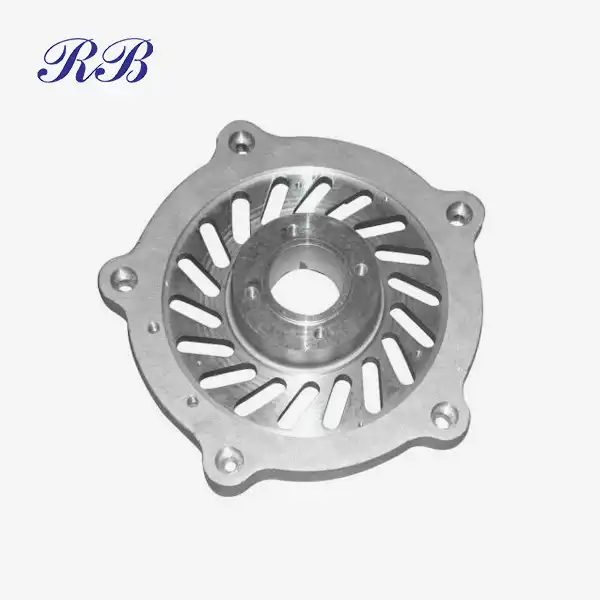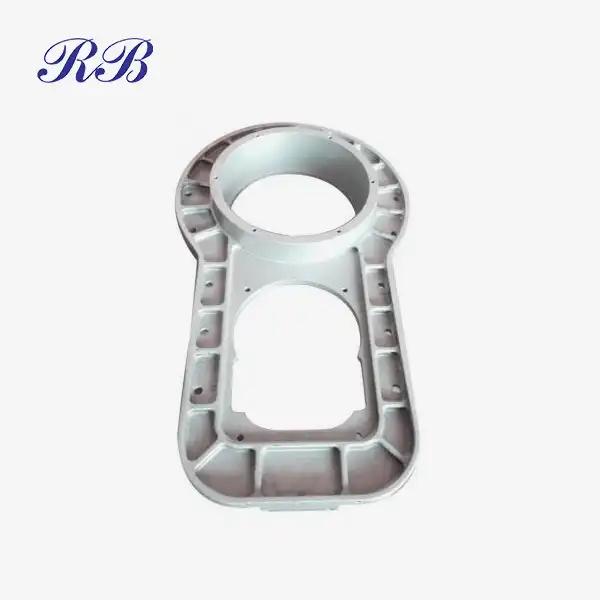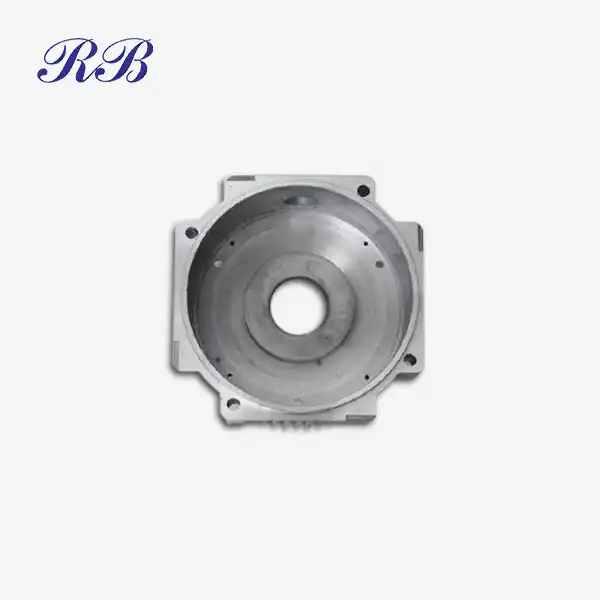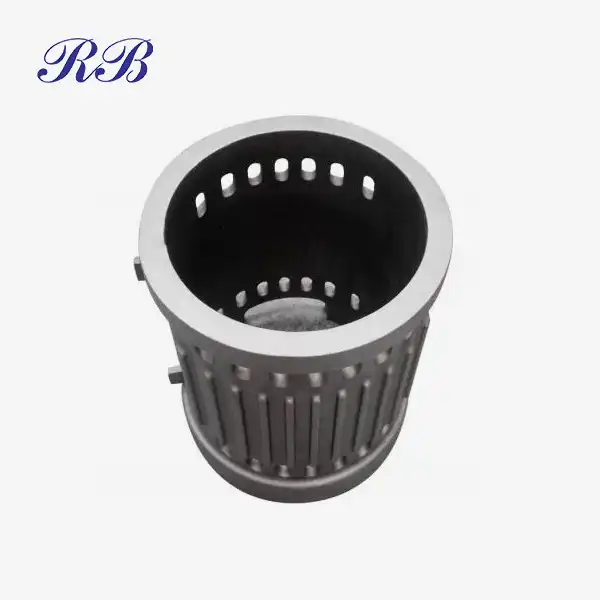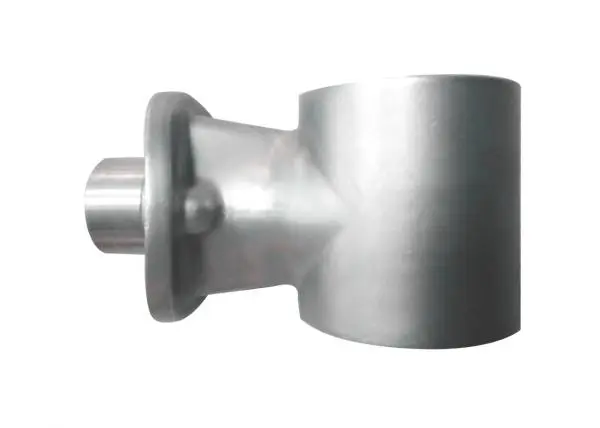
Material Selection: The Foundation of Durability
When it comes to casting agitator base parts, material selection is paramount. The product's performance, durability, and quality are all affected by the material choice. In the realm of kitchen appliances, where components are subjected to frequent use and potential exposure to moisture, heat, and various food substances, selecting the right material becomes even more critical.
Aluminum alloys, particularly ADC12, have emerged as a popular choice for casting agitator base parts. The alloy's weight, strength, and resistance to corrosion are all superbly balanced. One of the most important considerations in the design of small kitchen appliances is the thickness of the walls, and ADC12's exceptional fluidity during casting makes this possible.
The use of ADC12 in casting agitator base parts offers several advantages:
- Excellent strength-to-weight ratio, ensuring durability without adding unnecessary bulk
- Good thermal conductivity, which can be beneficial in certain appliance designs
- Resistance to corrosion, an essential feature in kitchen environments
- Recyclability, aligning with modern sustainability practices
However, material selection isn't a one-size-fits-all approach. Depending on the specific requirements of the appliance, other materials might be considered. For instance, some high-end appliances might opt for stainless steel bases for enhanced durability and a premium feel. The key lies in striking the right balance between performance, cost, and manufacturability.
Compact and Space-Saving: Designing for Modern Kitchens
There has never been a greater need for appliances that minimize wasted space than there is now, given the trend toward smaller living quarters. To keep up with this trend, casting agitator base component designers have been working to reduce size without sacrificing functionality.
Achieving a compact appliance design while making agitator base parts that are strong enough to resist the forces of mixing and blending is no easy feat. This is the intersection between engineering and the creative process.
Several strategies are employed to achieve this delicate balance:
- Optimized Geometry: Using advanced CAD software, designers can create complex geometries that maximize strength while minimizing material usage. This often involves the use of ribbing and other structural elements strategically placed to reinforce high-stress areas.
- Integration of Functions: By combining multiple functions into a single part, designers can reduce the overall number of components, leading to a more compact design. For instance, an agitator base might also incorporate mounting points for other internal components.
- Material Selection: As mentioned earlier, the choice of material plays a crucial role. High-strength alloys allow for thinner walls and smaller overall dimensions without sacrificing durability.
- Precision Manufacturing: Advanced manufacturing techniques, such as high-density die casting, enable the production of parts with tighter tolerances and finer details, contributing to more efficient space utilization.
The benefits of compact and space-saving designs extend beyond just saving counter space. They also contribute to reduced material usage, lower shipping costs, and potentially lower energy consumption during operation - all factors that align with modern sustainability goals.
Here at Rongbao Enterprise, we take great delight in our capacity to manufacture casting agitator base parts that are both efficient and small. In order to optimize the geometry of the part, our team uses state-of-the-art design software in conjunction with years of experience. The end product is an item that not only performs admirably and lasts a long time, but it also fits in with contemporary appliances that are tight on space.
High-Density Die Casting: Precision and Efficiency Combined
When it comes to manufacturing casting agitator base parts, the method of production is just as crucial as the design and material selection. With its unrivaled accuracy, productivity, and quality, high-density pass on casting has rapidly gotten to be a favorite innovation among producers.
An improved version of the classic die casting method is high-density die casting. Metal is injected into a mold cavity under pressure while it is still molten. Higher pressure is employed during the process, leading to components with superior mechanical qualities, finer surface polish, and higher density; this is what the "high-density" part is alluding to.
The benefits of high-density die casting for agitator base parts include:
- Enhanced Part Quality: The high pressure used in the process results in fewer defects, such as porosity or shrinkage cavities, leading to parts with superior structural integrity.
- Improved Dimensional Accuracy: The process allows for tighter tolerances, crucial for parts that need to fit precisely within an appliance assembly.
- Excellent Surface Finish: High-density die casting can produce parts with smooth surfaces, reducing or eliminating the need for secondary finishing operations.
- Ability to Create Complex Geometries: The process can produce parts with intricate details and thin walls, essential for compact and efficient designs.
- High Production Rates: Once set up, high-density die casting can produce parts quickly, making it suitable for high-volume production runs.
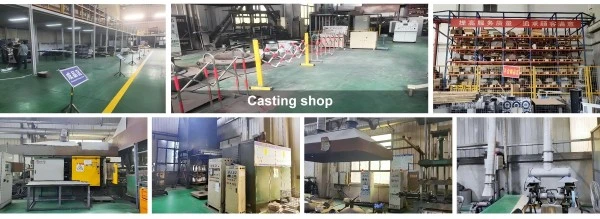
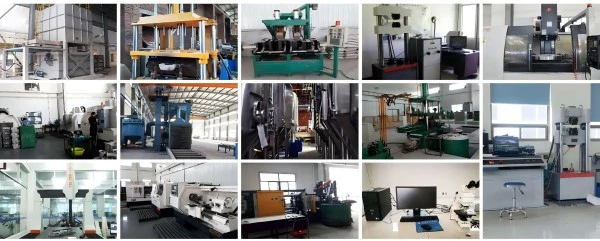
At Rongbao Enterprise, we have invested heavily in state-of-the-art high-density die casting equipment. Our facilities are capable of producing casting agitator base parts with weights ranging from a few grams to several kilograms, with a typical part weight of around 2kg. To guarantee constant, high-quality production, we keep rigorous quality control procedures, following ISO9001:2015, ISO14001, and ISO45001 standards.
Our commitment to exactness proceeds indeed after the casting handle has concluded. We too give supplementary administrations like shower wrapping up to move forward aesthetics and erosion resistance and CNC machining for imperative surfaces. Our capacity to give casting instigator base parts that fulfill the most requesting necessities of modern machine producers is a coordinate result of our exhaustive approach.
The world of casting agitator base parts is a fascinating blend of material science, design innovation, and advanced manufacturing techniques. From the careful selection of materials like ADC12 aluminum alloy to the implementation of space-saving designs and the use of high-density die casting, every aspect is optimized to create components that meet the demanding requirements of modern kitchen appliances.
These apparently little parts are playing an increasingly important role as we keep expanding the limits of what is feasible in appliance design. They are the unsung heroes that enable our mixers, blenders, and food processors to perform reliably day after day, year after year.
We at Rongbao Enterprise are pleased to be leaders in this industry, and we use state-of-the-art technology in conjunction with our extensive knowledge to make casting agitator base components that are unmatched in performance and quality. Whether you're an engineer trying to maximize the efficiency of your next design or a producer of home appliances in search of a trustworthy source, we can assist you.
Looking for High Pressure Die Casting Suppliers?
If you're in the market for high-quality casting agitator base parts or seeking expertise in high-pressure die casting, look no further than Rongbao Enterprise. We can handle indeed the most requesting fabricating errands much obliged to our cutting-edge offices, commitment to quality, and center on the client. Our staff is arranged to give you with arrangements that go over and past your desires, whether you require bespoke plans, mass generation, or particular surface medications. The execution of your item must not be compromised by utilizing low-quality components. Contact us today at steve.zhou@263.net or zhouyi@rongbaocasting.com to discuss how we can support your manufacturing goals and elevate your products to new heights of quality and reliability
References
1. ASM International. (2019). Aluminum-Silicon Casting Alloys: Atlas of Microfractographs. ASM International.
2. Lumley, R. (2018). Fundamentals of aluminium metallurgy: Recent advances. Woodhead Publishing.
3. Kaufman, J. G., & Rooy, E. L. (2004). Aluminum alloy castings: properties, processes, and applications. ASM International.
4. Campbell, J. (2015). Complete casting handbook: metal casting processes, metallurgy, techniques and design. Butterworth-Heinemann.
5. Street, A. C. (2017). The Diecasting Book. Lulu Press, Inc.