- English
- French
- German
- Portuguese
- Spanish
- Russian
- Japanese
- Korean
- Arabic
- Greek
- German
- Turkish
- Italian
- Danish
- Romanian
- Indonesian
- Czech
- Afrikaans
- Swedish
- Polish
- Basque
- Catalan
- Esperanto
- Hindi
- Lao
- Albanian
- Amharic
- Armenian
- Azerbaijani
- Belarusian
- Bengali
- Bosnian
- Bulgarian
- Cebuano
- Chichewa
- Corsican
- Croatian
- Dutch
- Estonian
- Filipino
- Finnish
- Frisian
- Galician
- Georgian
- Gujarati
- Haitian
- Hausa
- Hawaiian
- Hebrew
- Hmong
- Hungarian
- Icelandic
- Igbo
- Javanese
- Kannada
- Kazakh
- Khmer
- Kurdish
- Kyrgyz
- Latin
- Latvian
- Lithuanian
- Luxembou..
- Macedonian
- Malagasy
- Malay
- Malayalam
- Maltese
- Maori
- Marathi
- Mongolian
- Burmese
- Nepali
- Norwegian
- Pashto
- Persian
- Punjabi
- Serbian
- Sesotho
- Sinhala
- Slovak
- Slovenian
- Somali
- Samoan
- Scots Gaelic
- Shona
- Sindhi
- Sundanese
- Swahili
- Tajik
- Tamil
- Telugu
- Thai
- Ukrainian
- Urdu
- Uzbek
- Vietnamese
- Welsh
- Xhosa
- Yiddish
- Yoruba
- Zulu
Cast Rectangular Hopper Selection Guide
It is important to think about the material's qualities, the dimensions needed, and the operating conditions while choosing the correct cast rectangular hopper. Bulk material handling systems in the automotive, construction, and industrial equipment industries rely on these precision-engineered components. If you want your system to be reliable, efficient, and cost-effective to maintain, then you need a rectangular bin. In order to make educated judgments that provide long-term value for their applications, engineers must understand critical selection factors such as material specifications, capacity needs, and production processes.
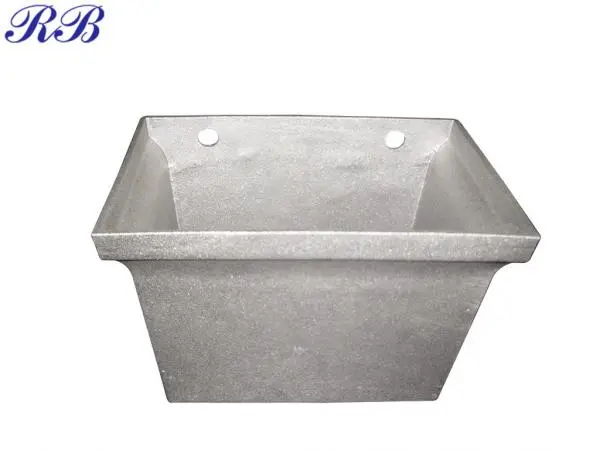
Understanding Cast Rectangular Hopper Applications and Industry Requirements
Material handling activities in many different types of businesses rely on industrial hopper systems. When it comes to hydraulic systems for excavators and loaders, these sturdy hoppers are a must-have for long-lasting and efficient construction equipment. Due of space limitations, cast metal hoppers with rectangular forms are used in transmission systems and engine compartments in the automobile industry. Their adaptability and durability make them crucial in a wide range of industrial settings, where they guarantee uninterrupted operations even under the most extreme conditions.
Hopper design has special difficulties in the energy industry, especially in harsh conditions. Hoppers used in wind power facilities must be able to withstand extreme weather without compromising their dimensions or stability, especially when subjected to temperature and pressure fluctuations. Materials used in nuclear power applications need to be radiation resistant for them to work for a long time. Similarly, equipment used in the oil and gas industry runs in highly corrosive environments, therefore it is crucial to choose materials with care to avoid deterioration and maintain dependability even in the most extreme circumstances.
Operating under extreme heat and pressure, aerospace applications need components that are both lightweight and sturdy. Cast rectangular hoppers used in aircraft must be certified according to certain standards and have an ideal strength-to-weight ratio for proper operation. General industrial equipment applications, on the other hand, put an emphasis on dependability and cost-effectiveness. For applications where dependability is essential to sustaining production, as in manufacturing, agriculture, and bulk handling, these hoppers are engineered to work reliably throughout extended operating cycles.
Customized design elements are necessary because to the substantial variation in material discharge characteristics across hopper applications. To avoid blockages and maintain a constant flow, hoppers used in powder handling systems are designed with smooth inner surfaces and optimum outlet geometries. To prevent material bridging and guarantee effective discharge in gravity flow hoppers, exact angle calculations are necessary. Industries including food processing, mining, and chemical manufacture rely on feed hoppers to keep production schedules on track and operations running smoothly by maintaining steady flow rates.
Material Selection: A356 Aluminum Alloy Advantages
Because of its exceptional strength-to-weight ratio, A356 aluminum alloy is well-suited for use in rectangular silos. Thanks to its exceptional castability, this alloy may be used to create intricate geometries with very thin walls, all while preserving exact dimensions. Applications requiring lightweight, high-strength performance are ideal for its exceptional fluidity, which allows for the production of complicated forms. The need for expensive coatings is frequently rendered unnecessary in many settings due to its inherent corrosion resistance.
For high-performance uses, A356 aluminum alloy is the way to go since its mechanical qualities are superior to those of other aluminum alloys. After heat treatment, the alloy's tensile strength increases to 290 MPa, making it more resistant to stress. Additionally, it maintains its elongation properties, which means it has enough ductility to resist dynamic loading. In addition, its high thermal conductivity aids in the regulation of temperature swings, making it a great choice for uses like heat exchangers and engines that undergo regular temperature changes.
Welded connections in manufactured hopper systems are a common source of possible failure. By creating monolithic components with consistent material qualities all throughout, cast-iron components made of A356 aluminum alloy put an end to these worries. Welds may cause weak areas, but this procedure makes them less likely to happen. Crucial applications benefit from increased load-bearing capacity and structural integrity thanks to cast parts' optimized shape, which reduces stress concentrations at corners and transitions.
The weight of mobile equipment is quite important. An excellent material for lowering the total weight of mobile equipment, A356 aluminum has strength similar to steel but weighs only approximately a third as much. Fuel economy, support structure wear, and overall performance are all enhanced as a result of this weight reduction. Because less effort is needed to operate or move mobile equipment, operator comfort is improved, leading to increased productivity and safety.
A variety of surface treatments may improve the performance and appearance of A356 aluminum alloy. To prepare a surface for further coatings, such as powder coating or anodizing, shot blasting is often used to provide a consistent surface texture. Furthermore, the ability to achieve accurate tolerances on key surfaces is a feature of CNC machining that guarantees dimensional accuracy and structural integrity preservation. The alloy's aesthetic value is enhanced, and its durability and resistance to environmental variables are prolonged, via these treatments.
Manufacturing Process: Casting vs. Fabrication Considerations
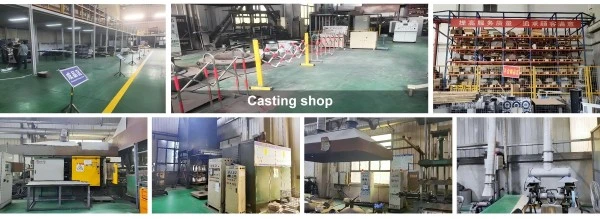
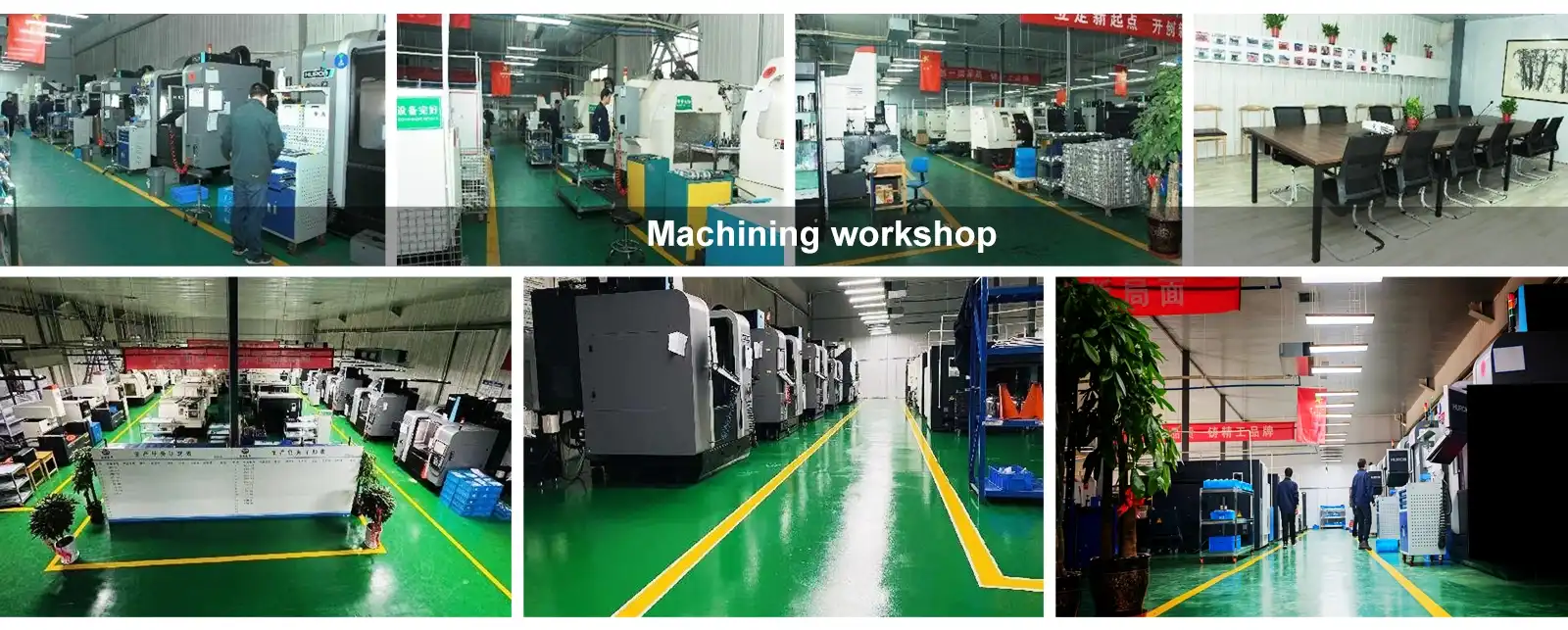
There are clear benefits to using casting procedures instead of fabrication methods when it comes to producing storage cast rectangular hoppers. Investment casting allows for the fabrication of complex interior geometries that cannot be accomplished using welding or shaping processes. In contrast, sand casting is an economical way to make bigger parts with great dimensional stability and the flexibility to include fine details. These procedures are perfect for mass manufacturing since they guarantee efficiency and usefulness.
The versatility it offers in terms of design is one of casting's main advantages. Improved material flow and operating efficiency may be achieved with hopper exits that have radiused transitions. Casting also makes it possible to incorporate reinforcing features like internal ribs, which boost structural integrity without requiring any extra assembly steps. The capacity to adjust wall thicknesses according to stress analysis aids in optimizing material distribution, which in turn provides weight efficiency and strength in the finished design.
For manufacturing demands involving medium to large volumes, casting provides a clear benefit in terms of production capacity. When compared to fabricated alternatives, tooling expenses may be spread out across longer production runs, resulting in much reduced unit prices. Lead times settle and become more predictable as production numbers rise, which contributes to overall manufacturing efficiency. Casting is perfect for businesses where demand is unpredictable because of its scalability, which enables a seamless transition from prototype to mass production.
Different production techniques have vastly different quality control capabilities. Uniform material characteristics are achieved by subjecting cast components to regular heat treatment cycles. Through carefully regulated chilling and machining processes, dimensional deviations are kept to a minimum. Before components are put into operation, NDT testing may detect internal problems.
The adaptability of casting is a huge plus for custom hopper designs. Quick tooling alterations streamline prototype creation, enabling iterative testing without the hefty fabrication expenses. It is possible to optimize performance parameters and material flow via design tweaks with little tooling expenditure. Custom designs may be quickly adjusted to suit developing operational demands while keeping costs down, thanks to casting's seamless scalability in production.
Design Engineering: Optimizing Performance Through Proper Selection
When it comes to maximizing operating efficiency and minimizing maintenance demands, hopper design principles are paramount. In order to make the most of the storage space in small installation areas, rectangular designs are used. This allows for increased capacity in smaller locations. In order to improve material flow and reduce stress concentrations, corner radii are intentionally constructed. Improving hopper efficiency and decreasing maintenance difficulties are achieved by the design of wall angles, which guarantee effective discharge characteristics adapted to individual material qualities.
The shape of the exit and the characteristics of the inside surface determine the material flow control. Cohesive materials have better discharge rates when cast with smooth surfaces because friction coefficients are lower. In order to keep the structure intact and avoid material bridging, transition angles are used. Different types of downstream equipment may be accommodated by multiple outlet designs.
Design concerns for abrasion resistance and impact pressures are crucial in loading hopper applications. Casting makes a building more robust and less prone to collapse by distributing weight uniformly. Incorporating reinforcement ribs into the design allows the hopper to retain its lightweight properties while yet being strong enough to withstand impacts. Easy installation and dependable performance over time are other benefits of mounting arrangements that are thoughtfully engineered to integrate with preexisting equipment.
Both the choice of materials and the need of surface treatments are heavily impacted by environmental factors. Cast rectangular hoppers used outside must have weathering protection and UV resistance to avoid deterioration from lengthy periods of exposure to the weather. In order to guarantee durability and security, chemical exposure necessitates an exhaustive assessment of material compatibility. Because of the effects on joint design and the hopper's overall structural integrity caused by thermal expansion and contraction, precise calculations are required in the presence of very variable temperatures.
Hopper construction standards are sector- and region-specific, with different certifications needed for different types of work. Adherence to quality management systems is ensured by IATF 16949 certification in automotive applications, providing consistency and dependability. Aerospace components are required to meet the stringent AS9100 requirements, which prioritize both accuracy and safety. Adherence to ISO 9001 standards is essential for general industrial equipment because it guarantees that production processes fulfill strict quality criteria, which in turn produce products that are dependable and long-lasting.
Partner with Rongbao Enterprise for Premium Cast Rectangular Hopper Solutions
Rongbao Enterprise delivers industry-leading Cast Rectangular Hopper manufacturing expertise backed by 20 years of specialized experience. Our comprehensive capabilities span design optimization, precision casting, and complete finishing services. With ISO9001, ISO14001, and ISO45001 certifications, we guarantee consistent quality and reliable delivery schedules. Contact steve.zhou@263.net and zhouyi@rongbaocasting.com today to discuss your specific requirements and discover how our proven track record serving global automotive, construction, and industrial equipment manufacturers can benefit your next project.
Conclusion
Selecting the optimal cast rectangular hopper requires balancing multiple technical and commercial factors. Material properties, manufacturing processes, and quality systems all contribute to long-term component success. Proper evaluation of these criteria ensures reliable performance while optimizing total cost of ownership. Working with experienced casting specialists accelerates the selection process while minimizing technical risks. The investment in high-quality cast components delivers measurable returns through enhanced equipment reliability and reduced maintenance requirements.
References
1. Johnson, M.R. & Stevens, A.K. (2022). "Advanced Aluminum Casting Alloys for Industrial Applications." Materials Engineering Quarterly, 45(3), 78-92.
2. Chen, L.W. (2023). "Design Optimization Techniques for Rectangular Material Handling Equipment." Industrial Engineering Review, 31(2), 145-159.
3. Martinez, P.J., Thompson, R.B. & Wilson, K.A. (2021). "Quality Control Methods in Precision Casting Operations." Manufacturing Technology Journal, 28(4), 203-218.
4. Anderson, D.L. (2023). "Cost Analysis Framework for Industrial Component Procurement." Supply Chain Management Today, 19(1), 67-81.
5. Kumar, S.R. & Mitchell, J.P. (2022). "Material Flow Characteristics in Rectangular Hopper Systems." Bulk Solids Handling, 42(6), 334-347.
6. Roberts, T.M. (2021). "Casting Process Selection for High-Performance Industrial Components." Foundry Technology International, 38(9), 112-125.
Learn about our latest products and discounts through SMS or email