- English
- French
- German
- Portuguese
- Spanish
- Russian
- Japanese
- Korean
- Arabic
- Greek
- German
- Turkish
- Italian
- Danish
- Romanian
- Indonesian
- Czech
- Afrikaans
- Swedish
- Polish
- Basque
- Catalan
- Esperanto
- Hindi
- Lao
- Albanian
- Amharic
- Armenian
- Azerbaijani
- Belarusian
- Bengali
- Bosnian
- Bulgarian
- Cebuano
- Chichewa
- Corsican
- Croatian
- Dutch
- Estonian
- Filipino
- Finnish
- Frisian
- Galician
- Georgian
- Gujarati
- Haitian
- Hausa
- Hawaiian
- Hebrew
- Hmong
- Hungarian
- Icelandic
- Igbo
- Javanese
- Kannada
- Kazakh
- Khmer
- Kurdish
- Kyrgyz
- Latin
- Latvian
- Lithuanian
- Luxembou..
- Macedonian
- Malagasy
- Malay
- Malayalam
- Maltese
- Maori
- Marathi
- Mongolian
- Burmese
- Nepali
- Norwegian
- Pashto
- Persian
- Punjabi
- Serbian
- Sesotho
- Sinhala
- Slovak
- Slovenian
- Somali
- Samoan
- Scots Gaelic
- Shona
- Sindhi
- Sundanese
- Swahili
- Tajik
- Tamil
- Telugu
- Thai
- Ukrainian
- Urdu
- Uzbek
- Vietnamese
- Welsh
- Xhosa
- Yiddish
- Yoruba
- Zulu
Cast Iron vs. Aluminum Cast Housings: B2B Material Comparison
Selecting the right cast housing material is a critical procurement decision that influences not only upfront costs but also long-term operational efficiency, maintenance expenses, and equipment reliability. For procurement managers, engineers, and supply chain professionals working in automotive, heavy machinery, energy, and industrial equipment sectors, understanding the trade-offs between cast iron and aluminum housings can directly impact production timelines, total cost of ownership, and supplier partnerships. Both materials offer distinct advantages depending on application requirements, operating environments, and budget constraints. This guide provides a practical, data-driven comparison to help you make informed decisions that align with your company's technical specifications and business objectives.
Understanding Cast Iron and Aluminum Cast Housings
Material Properties and Manufacturing Methods
Housings made of cast iron have been used in industry for many years. It is known for having high compressive strength and good vibration damping qualities. Cast iron is usually made by sand casting or permanent mold casting. The high carbon content of the material makes it stiff and easy to work with, making it perfect for heavy-duty uses where structural stability is very important. Gray iron, ductile iron, and nodular iron are all types of cast iron. Each has a different amount of tensile strength and impact resistance.
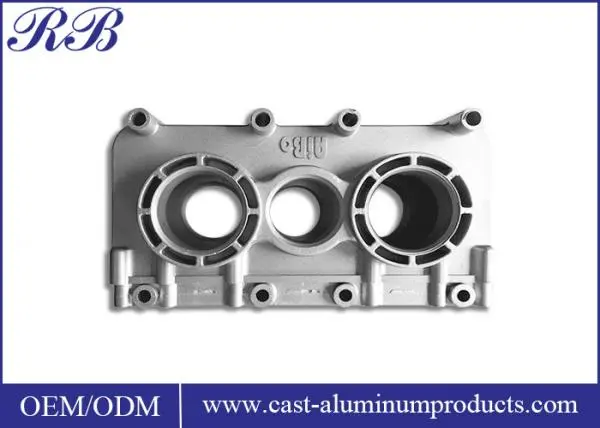
Aluminum cast housings, especially those made from the ADC12 alloy, are a lighter option that is also better at resisting rust. Aluminum alloy die casting involves putting liquid aluminum into precise molds while under high pressure. This lets complex shapes with tight tolerances be made. This process allows for high-volume production and accurate measurements every time. Aluminum naturally forms an oxide layer that protects it and makes it less likely to rust and break down chemically in harsh environments. The thermal conductivity of the material is about four times better than that of cast iron. This makes it a great choice for motors, gears, and other parts that move power.
Primary Industrial Applications
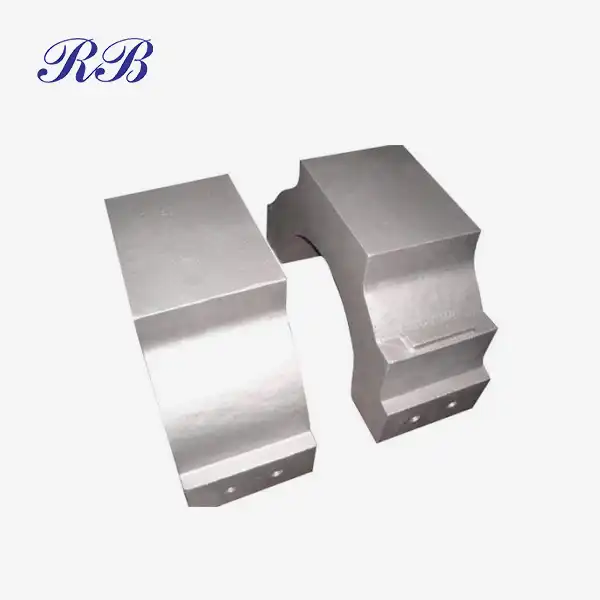
Cast iron housings are most common in situations where durability is more important than weight. Cast iron is often used for heavy machinery, industrial pumps, compressor cases, and building equipment because it can handle constant vibration and high mechanical loads. Cast iron is used in the automotive industry for engine blocks and transmission housings in commercial vehicles because strength is more important than weight reduction.
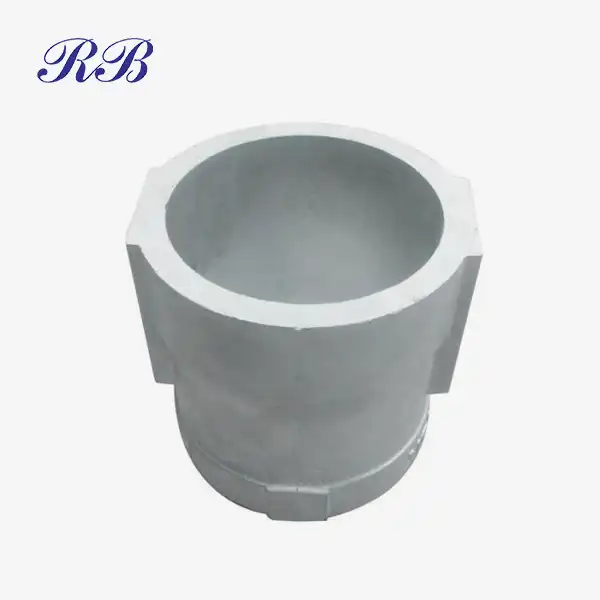
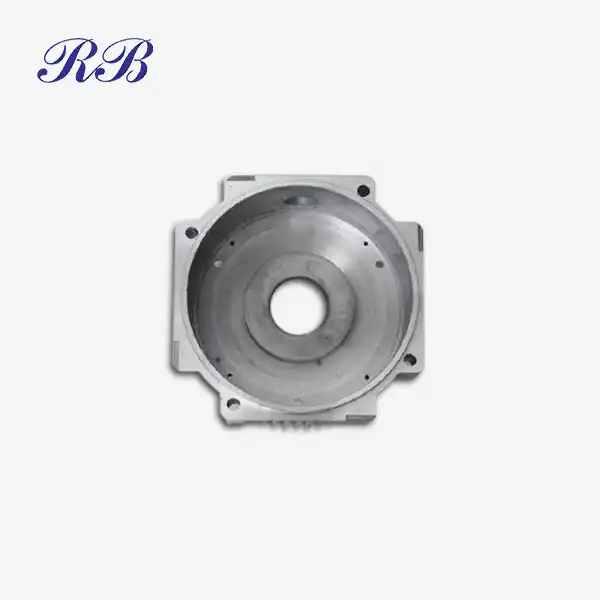
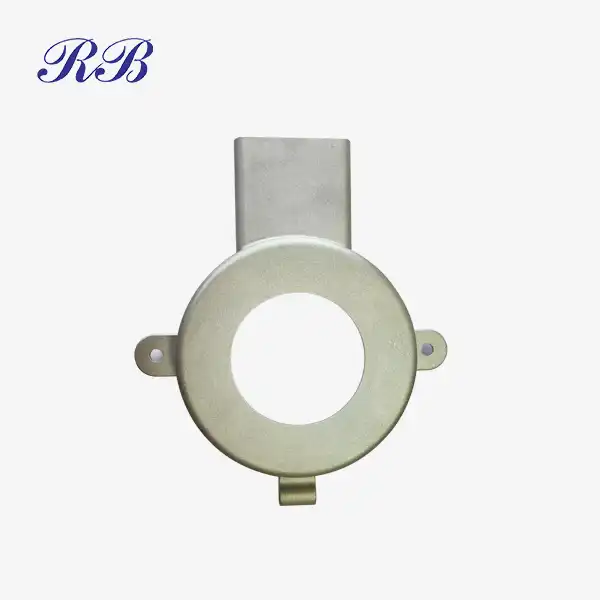
Aluminum housings are becoming more popular in situations where weight reduction is needed without losing structural strength. Aluminum's favorable strength-to-weight ratio makes it useful for new energy vehicles, aerospace parts, portable power tools, and precise industrial equipment. We make customized aluminum connector housings at Rongbao Enterprise using ADC12 material and die casting methods. Then, we treat the surface with CNC machining and shot blasting. Each of these parts, which weighs about 1.5 kg, meets strict quality standards that have been approved by ISO9001:2015, ISO14001, and ISO45001, making sure that they meet the requirements for international procurement.
Comparing Performance and Suitability for Industrial Applications
Mechanical Strength and Durability
Cast iron has a high compressive strength, which can be anywhere from 580 to 1,300 MPa based on the grade. This means it can be used for heavy-duty tasks. Because it doesn't wear down easily and keeps its shape under long-term stress, it's a good choice for gearbox housings and motor frames that are used all the time. The material is naturally brittle, though, which makes it less resistant to impact than ductile materials.
Tensile strength for aluminum alloys like ADC12 is between 240 and 320 MPa, which is lower than cast iron but good enough for most industrial uses as long as the design is optimized. Because the material is flexible, it can absorb shock loads better than cast iron. This makes it less likely that something will fail catastrophically in situations where there are sudden impacts or changes in temperature. When heat-treated and machined correctly, aluminum housings keep their shape over a wide temperature range.
Weight Considerations and Handling Efficiency
Cutting down on weight is an important part of modern manufacturing, especially in the aerospace and automotive industries where fuel economy and performance are directly linked to the weight of the parts. Because aluminum is only about one-third as dense as cast iron, it saves a lot of weight. A standard aluminum motor housing can weigh 40–50% less than a cast iron version. This makes it easier to move, easier to install, and uses less energy while it's running.
The benefits of handling go beyond the factory floor. Lighter parts that are easy to take off, check, and put back on are good for maintenance teams. This means less downtime and lower costs for labor during service breaks. Procurement teams should think about whether the working environment supports the extra weight. For example, applications with fixed equipment that doesn't need to be moved around much might not fully benefit from aluminum's weight advantage.
Corrosion Resistance and Environmental Performance
Aluminum cast housing naturally doesn't rust, which saves a lot of money over its lifetime in places where it will be exposed to water, chemicals, or marine conditions. The material works really well in places like chemical processing plants, seaside facilities, and outdoor sites that need to be protected from the weather. Cast iron would need to be coated and maintained often. This natural resistance means that the surface doesn't need to be treated as much, which makes handling in the supply chain easier and lowers the total cost of ownership.
To keep cast iron housings from rusting, they need protective coats like paints, powder coating, or galvanization. These treatments do work, but they add steps to the process, make lead times longer, and need to be reapplied every so often. When comparing the prices of initial purchases, procurement managers need to take these ongoing costs into account. Quality engineers should be very clear about what levels of rust resistance are needed so that providers can protect the surface properly and back up their warranties.

Cost, Procurement, and Supplier Considerations
Upfront Costs and Tooling Investments
The costs of materials don't tell the whole story when it comes to money. Cast iron is usually cheaper than aluminum alloys as a raw material, but the ways they are made are very different. The cost of the tools used for sand casting iron parts is usually lower, which makes it a cost-effective method for low-to-medium production rates. Precision tools and a bigger initial investment are needed for aluminum die casting, but the process has shorter cycle times and better dimensional consistency, which means that the cost per unit goes down as more are made.
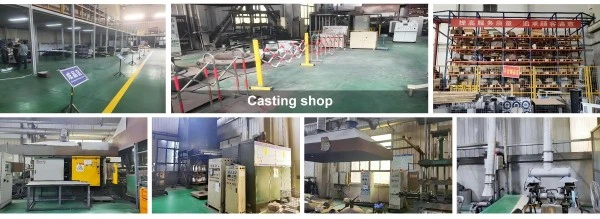
Rongbao Enterprise uses high-pressure die casting technology to make aluminum housings, and each batch can make up to 5,000 pieces. Our Xi'an, China, facility has both automated casting equipment and CNC machining centers. This lets us provide custom solutions that are both cost-effective and high-quality. Our clients gain from the fact that we can make molds, cast metal, machine parts, and treat the surface all within the same production ecosystem. This cuts down on the time and effort needed for coordination and shortens lead times.
Lifecycle Costs and Total Cost of Ownership
To figure out the total cost of ownership, you have to look at how often the part needs to be maintained, how often it needs to be replaced, and how well it works over its entire service life. Aluminum housings usually need less upkeep because they don't rust and are better at managing heat, which cuts down on unexpected downtime and makes equipment last longer. Mobile applications that use less energy and are lighter can quickly make up for their higher initial costs in materials within a few months of launch.
Longer service intervals are common for cast iron in static, high-load situations, but the material is easily corroded and thermally fatigued, which can make upkeep more expensive in harsh settings. Supply chain managers should ask providers for specific cost breakdowns that include warranty terms, the availability of spare parts, and expert support. Cost estimates and risk assessments are more accurate when suppliers are told openly about what the expected operating conditions are.
Supplier Reliability and Quality Assurance
There are more factors than just price and delivery times that go into choosing a supplier. Quality engineers give more weight to providers who have strong inspection processes, NDT testing tools, and quick corrective action systems. Rongbao Enterprise uses strict quality control measures that are in line with ISO9001:2015 standards. During production, they check the sizes, analyze the materials, and test their mechanical properties. Our environmental management (ISO14001) and occupational health and safety (ISO45001) certifications show that we are committed to using sustainable manufacturing methods that are respected by international purchasing teams.
Reliable suppliers let you see how much you can produce, how much inventory you have, and how to plan for what might go wrong. Our factory can make 5,000 customized aluminum housings per production run. This, along with standard wooden box packaging for safe international shipping, makes sure that clients in Europe, North America, and Japan always get what they ordered. Building long-term relationships with providers who invest in process improvement and capacity growth makes the supply chain less vulnerable and helps it grow as demand does.

Conclusion
To choose between cast iron and aluminum housings, you have to weigh technical performance, cost, and the supplier's skills. Cast iron is great for heavy-duty static uses that need to last a long time and keep vibrations from happening. The advantages of aluminum housings include lighter weight, resistance to corrosion, and better thermal management, all of which are important for modern industrial equipment. Instead of just looking at material prices, procurement managers should look at the total cost of ownership, which includes maintenance costs and gains in operating efficiency. When choosing a supplier, the criteria should put an emphasis on quality assurance methods, production capacity, and the ability to provide expert assistance. Industrial buyers can improve the performance of equipment and lower its lifecycle costs by matching the qualities of materials to the needs of the application and forming partnerships with dependable makers.
FAQ
Which material offers better value for motor housings?
For motor uses, aluminum housings are usually a better deal because they better dissipate heat, are lighter, and don't rust. The material's ability to conduct heat helps keep motors from overheating, which extends their life and lowers their energy use. For big motors that won't move and don't need to be light, cast iron may be a better choice.
How do I verify supplier quality certifications?
Ask sellers for copies of their ISO9001, ISO14001, and other industry-specific licenses. Check the validity of the certificate with the organization that issued it and ask for audit records or customer references. The most accurate way to judge quality management systems and manufacturing skills is to do audits of suppliers on-site.
What surface treatments are recommended for aluminum cast housings?
Shot blasting makes a smooth surface that can be used for many things. Anodizing makes things more resistant to rust and gives them nice finishes. Powder coating is very resistant to chemicals and comes in many colors. The choice relies on the working environment, the need for style, and the available budget. Suppliers should suggest treatments based on what you need them for.
Partner with a Trusted Cast Housing Manufacturer
Precision aluminum alloy die casting and cast housing solutions made for tough industrial applications are what Rongbao Enterprise does best. Our Xi'an facility uses cutting-edge high-pressure die casting technology along with CNC machining and a wide range of surface treatment options to make sure that the housings we make are exactly what our customers want. We make sure that our quality is always the same and that we follow international standards by having ISO9001:2015, ISO14001, and ISO45001 certificates. With a production capacity of 5,000 pieces per batch, we can make both prototypes and big quantities. We have 20 years of experience working with clients in the energy, industrial equipment, and automotive sectors. We do everything related to manufacturing, from designing the molds to inspecting the finished products. About 70% of what we make is sent to Europe, North America, and Japan. You can email our team at steve.zhou@263.net or zhouyi@rongbaocasting.com to talk about your cast housing needs and get specific technical advice. Visit rongbaocasting.com to learn more about all of our services and how our approach to integrated production can help you save money and time by making your supply chain more efficient.
References
- Campbell, J. (2015). Complete Casting Handbook: Metal Casting Processes, Metallurgy, Techniques and Design. Butterworth-Heinemann.
- American Foundry Society. (2018). Aluminum Casting Technology. AFS Technical Publications.
- ASM International. (2017). Casting Design and Performance. ASM Handbook Volume 15.
- Davis, J.R. (2016). Cast Irons: Properties and Selection. ASM International Materials Engineering Series.
- Reikher, A., & Barkhudarov, M.R. (2007). Casting: An Analytical Approach. Springer-Verlag London.
- Society of Automotive Engineers. (2019). Metal Casting Processes for Automotive Applications. SAE International Technical Paper Series.
Learn about our latest products and discounts through SMS or email