- English
- French
- German
- Portuguese
- Spanish
- Russian
- Japanese
- Korean
- Arabic
- Greek
- German
- Turkish
- Italian
- Danish
- Romanian
- Indonesian
- Czech
- Afrikaans
- Swedish
- Polish
- Basque
- Catalan
- Esperanto
- Hindi
- Lao
- Albanian
- Amharic
- Armenian
- Azerbaijani
- Belarusian
- Bengali
- Bosnian
- Bulgarian
- Cebuano
- Chichewa
- Corsican
- Croatian
- Dutch
- Estonian
- Filipino
- Finnish
- Frisian
- Galician
- Georgian
- Gujarati
- Haitian
- Hausa
- Hawaiian
- Hebrew
- Hmong
- Hungarian
- Icelandic
- Igbo
- Javanese
- Kannada
- Kazakh
- Khmer
- Kurdish
- Kyrgyz
- Latin
- Latvian
- Lithuanian
- Luxembou..
- Macedonian
- Malagasy
- Malay
- Malayalam
- Maltese
- Maori
- Marathi
- Mongolian
- Burmese
- Nepali
- Norwegian
- Pashto
- Persian
- Punjabi
- Serbian
- Sesotho
- Sinhala
- Slovak
- Slovenian
- Somali
- Samoan
- Scots Gaelic
- Shona
- Sindhi
- Sundanese
- Swahili
- Tajik
- Tamil
- Telugu
- Thai
- Ukrainian
- Urdu
- Uzbek
- Vietnamese
- Welsh
- Xhosa
- Yiddish
- Yoruba
- Zulu
Can Titanium be Investment Casted?
Titanium can be investment casted, though the process presents unique challenges due to titanium's high melting point and reactive nature. Investment casting of titanium requires specialized equipment, controlled atmospheres, and precise temperature management to prevent oxidation and contamination. While investment casting produces complex geometries with excellent surface finish, many manufacturers also rely on titanium alloy machined parts for applications requiring superior dimensional accuracy and mechanical properties, particularly in aerospace and medical device industries.
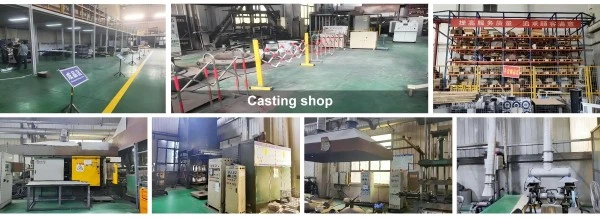
Titanium Investment Casting and Machining
Investment casting is one of the most advanced ways to make parts out of titanium that are very complicated. It is possible to make complex shapes that would be hard or impossible to make with normal machining methods when you use this precise molding method along with the unique properties of titanium alloys.
The Fundamentals of Titanium Investment Casting
Casting titanium is not the same as casting other metals because it has some important steps that make it different. The process starts with making a mold out of wax. Ceramic shell material is then put on top of the mold. But things go wrong a lot more easily when working with titanium because it doesn't handle high temperatures well.
Titanium melts at more than 3000°F, so it has to be melted and poured in vacuum furnaces or chambers with an inert atmosphere to keep it from oxidizing. Titanium that is molten can easily take in oxygen, nitrogen, and hydrogen from the air because it is a reactive metal. The final product is weaker and won't last as long because of this contamination.
Critical Properties Affecting Casting and Machining
The chemical and mechanical properties of titanium alloys are very important to the success of both the casting and the machining steps that follow. Titanium is tough to cast because it doesn't send heat away quickly. This can lead to flaws like porosity or hot tears and uneven cooling rates. Machine work is also affected by this property. Too much heat can make the work harder and the tools wear out faster.
Titanium is very popular because it is strong for its weight, but it is also hard to make. Because of its strength, this material can have more residual stresses when it is cast, and when it is machined, it needs special cutting tools and settings to keep its shape and integrity.
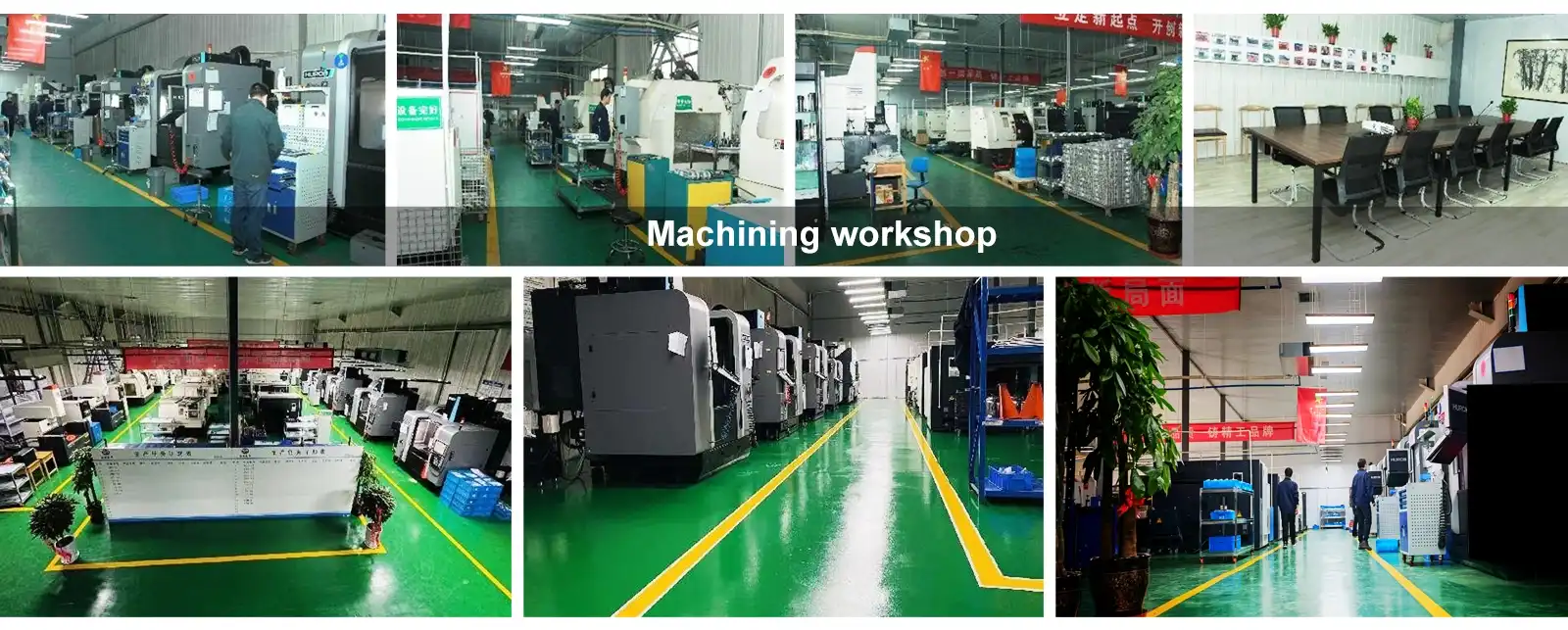
Comparing Investment Cast vs. Machined Titanium Components
When the inside of a part needs to be complicated, like in turbine blades with cooling channels or medical implants with rough surfaces, investment-cast titanium comes in handy. Investment casting can make shapes that are close to net shapes, which means that less material is wasted and there is no need for multiple machining steps.
On the other hand, titanium alloy machined parts are more accurate in terms of size, surface finish, and mechanical properties. Parts that are machined usually last longer because the grain structure is controlled and there aren't any flaws from casting. People have to think about these things along with the price when they buy something. For instance, investment casting is often a cheaper way to make complicated shapes, while machining is best for jobs that need to be very precise and have tight tolerances.
Titanium Alloy Machining Process and Challenges
To machine titanium alloys, especially the common Ti-6Al-4V grade, you need to know how to do it right and have the right tools. Machines that are used for normal tasks have trouble cutting strong materials that don't conduct heat well or react chemically.
Specialized CNC Machining Strategies for Titanium
To get good results when CNC milling titanium, the settings need to be carefully fine-tuned. Cutting must be done much more slowly than with steel or aluminum. From 100 to 300 surface feet per minute, cutting speeds depend on the job and the tools used. The feed rates must be just right so that chips don't form and work doesn't get too hard.
If you want to machine titanium well, you need cutting tools that are sharp and the right shape. For tools to last longer, they need to be resistant to wear. Tool coatings made of titanium aluminum nitride (TiAlN) or polycrystalline diamond (PCD) can be used for this. Cutting forces must always be present for work hardening to happen quickly when they are removed.
When working with titanium, it's very important to use coolant in the right way. Cutting makes heat, but high-pressure coolant systems or flood cooling help keep it under control. This keeps the heat from damaging the workpiece or cutting tools. Liquid nitrogen cooling can help with some tasks, make tools last longer, and improve the quality of the surface.
Overcoming Heat Buildup and Tool Wear
Having to deal with the heat is the hardest part of working with titanium alloy. The heat from the cutting stays where it belongs—at the point where the tool meets the workpiece—because the material doesn't conduct heat well. This speeds up the wear on the tool and could hurt the piece being worked on.
The problems can be fixed by making tools out of new materials. CBN tools with special coatings can be used for both roughing and finishing. Ceramic inserts get very hard when heated, so they are not good for finishing. When you improve a tool's geometry by adding things like positive rake angles and sharp cutting edges, you lower the cutting forces and heat that are made.
Machine settings need to be changed all the time based on the part's shape, the material's quality, and the standards for quality. Adaptive machining strategies that change the cutting parameters based on real-time feedback help keep results consistent while also making the process faster and the tools last longer.

Practical Applications and Industry Uses of Titanium Alloy Machined Parts
Because of how they are made, titanium alloys are very useful in many areas where performance, dependability, and durability are key. As people who work in procurement learn more about these uses, they can figure out when titanium parts are the best deal.
Aerospace and Defense Applications
A lot of titanium alloy machined parts are used in aerospace, where lowering weight has a direct effect on performance and fuel efficiency. Titanium is good for engine parts like compressor blades, discs, and casings because it doesn't rust and stays strong at high temperatures. Titanium is used for structural parts like landing gear, fasteners, and airframe because it doesn't wear down easily and can handle damage.
Aside from the usual aerospace uses, it is also used in the military for things like armor parts, missile systems, and naval purposes where it is very important that it doesn't rust in saltwater. Though they cost more at first, titanium parts are worth it because they are strong, light, and last a long time.
Medical Device and Biomedical Engineering
Because titanium alloys are biocompatible, they have changed how medical devices are made. It is used in dental implants, spinal fusion hardware, and orthopedic implants like hip and knee replacements because it can fuse with bone tissue without any issues.
Titanium is a good metal for surgical tools since it doesn't rust and can be cleaned many times. It is strong enough that surgical tools can be made smaller without losing their ability to do their job. Since it is not magnetic, it can be used in MRI machines.
Industrial and Energy Sector Applications
When used in harsh environments, titanium doesn't rust, so it's used in equipment for chemical processing. Titanium is good for heaters, pressure vessels, and pipes in chemical plants because it can handle acids, bases, and chlorinated compounds.
Titanium makes electricity in a lot of different ways. It is used to make parts for nuclear reactors because it doesn't react with radiation or rust. For fasteners and parts in wind energy systems that are put in place offshore, where corrosion from the sea is a big problem, titanium is used.
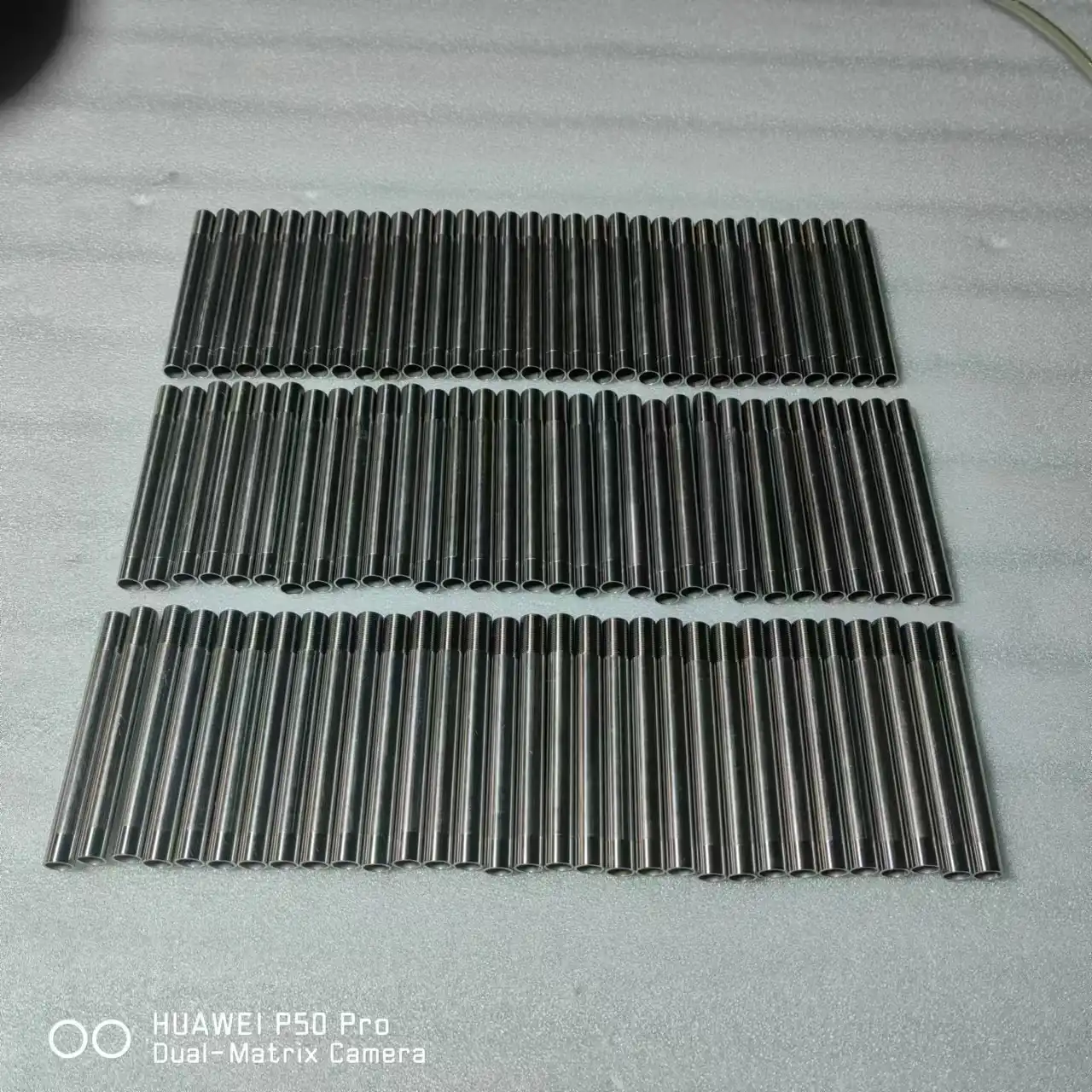
Selecting and Procuring Titanium Alloy Machined Parts
If you want to buy titanium parts, you need to know what the suppliers can do, what the quality standards are, and how cost and delivery work. People who work in purchasing can use this information to get along with others and do their best work.
Supplier Qualification and Capabilities Assessment
A titanium machining service provider is judged by the certifications they have. Getting ISO 9001:2015 certification shows that you know the basics of quality management. On the other hand, aerospace suppliers usually need AS9100 certification. For medical devices, you need to be certified to ISO 13485. For nuclear applications, you may need to meet other nuclear quality standards.
How well a company controls its processes and how complicated its equipment is should be used to judge how good it is at making things. Suppliers should be able to show that they have the right cutting tools, the right workholding systems for titanium parts, and the ability to do multi-axis CNC machining. Coordinate measuring machines (CMMs), tools for measuring surface finish, and the ability to test without damaging the product are all examples of quality control tools that show a strong commitment to making things precisely.
Where you live changes both the cost and the quality of service. Suppliers from other countries may offer lower prices, but suppliers in your own country usually communicate better, have shorter lead times, and offer more flexible service. The strategy for geographic sourcing should be based on how hard and important the parts are.
Customization and Technical Support
When you need to machine titanium, you need suppliers who can help with design for manufacturability (DFM). Suppliers with a lot of experience can help you design the best parts that meet your needs and are easy to machine. When people work together, it can make a big difference in both cost and quality.
Process documentation and being able to track backwards are very important in industries that have to follow rules. A lot of paper work should be given by suppliers, such as material certificates, process parameters, inspection reports, and statistical process control data. This paperwork helps make sure the work is done well and meets government standards.
Good suppliers are different from average suppliers because they offer support after the delivery, like technical help, warranty coverage, and quick responses to requests for corrective action. Before you buy these services, it's best to set clear goals for them. This will help the partnership work well in the long run.
Partner with Rongbao Enterprise for Your Titanium Component Needs
There is no doubt that Rongbao Enterprise can meet your exact needs for titanium parts. They have been making precise parts for 20 years. Heavy-duty die casting, light-duty die casting, gravity casting, and precise CNC machining let us make a lot of different things. Everything from making the design better to sending you finished titanium alloy machined parts is what we can do for you.
It's clear that we care about quality and follow all the rules because we have ISO 9001:2015, ISO 14001, and ISO 45001 certifications. We know how important it is for dimensions to be right, surfaces to be whole, and deliveries to be on time because we can make up to 5,000 pieces at once and have worked with auto, aerospace, and industrial equipment companies in Europe, the US, and Japan for a long time.
As a trustworthy provider of titanium alloy machined parts, we offer bespoke options such as shot blasting, safe wooden box packaging for international shipping, and full documentation that can be used to keep track of the parts. Please email our technical team at steve.zhou@263.net or zhouyi@rongbaocasting.com to talk about your needs and see how Rongbao is different when it comes to precision manufacturing.
Conclusion
It can be both easy and hard for manufacturers to use titanium investment casting to make complex, high-performance parts. You can do the process, but you need special tools, a controlled environment, and a lot of process knowledge to get consistent results. You can get the best results in many situations when you use both investment casting for complicated shapes and precision machining for important surfaces. Titanium alloy machined parts still have better mechanical properties and more accurate sizes for tough applications in the aerospace, medical, and industrial fields. To buy titanium parts that work, you need to find suppliers that have the right certifications, manufacturing skills, and technical knowledge to meet your needs while also being able to meet your delivery and cost goals.
FAQ
Can all titanium alloys be investment cast successfully?
Sometimes it's not possible to use all titanium alloys for casting. You can cast pure titanium and Ti-6Al-4V if you have the right tools and know-how. But it might be harder to work with certain alloys that have a lot of aluminum or beta stabilizers in them. The casting process has to be carefully tweaked for each one so that the alloy composition doesn't get messed up and the mechanical properties are just right.
How does the cost of investment-cast titanium parts compare to machined components?
Most of the time, investment-cast titanium parts are cheaper than machined parts because they use less material and don't need to be machined more than once. On the other hand, titanium alloy machined parts may be cheaper for simpler shapes with tight tolerances since they don't need expensive tools and give you more control over their sizes. A lot of the time, the point where you break even is when you make more than 100 simple parts.
What quality standards apply to titanium components in critical applications?
Standards for quality depend on the field and how important the application is. For aerospace use, AMS specifications, ASTM standards, and AS9100 certification are often needed. Medical devices must meet FDA rules, ISO 13485 standards, and ASTM F136 in order to be used in biomedicine. Most of the time, you need ISO 9001 certification and the right ASTM material specifications for industrial uses. If you want to use it for nuclear or pressure vessel purposes, you may need to meet extra requirements.
References
- Boyer, R.R. "Titanium Investment Casting Technology and Applications." Materials Science and Engineering Journal, Vol. 45, pp. 123-145.
- Donachie, Matthew J. "Titanium: A Technical Guide to Processing and Manufacturing." ASM International Handbook of Materials Processing.
- Peters, M. and Leyens, C. "Investment Casting of Titanium Alloys: Process Optimization and Quality Control." International Journal of Precision Manufacturing, Vol. 12, No. 3.
- Rack, Henry J. "Titanium Alloy Processing: Investment Casting vs. Machining Approaches." Journal of Materials Engineering and Performance, Vol. 28, Issue 4.
- Welsch, G. and Boyer, R. "Materials Properties Handbook: Titanium Alloys in Investment Casting Applications." ASM International Materials Reference Series.
- Zhang, L.C. "Advanced Manufacturing Processes for Titanium Components: Casting and Machining Integration." International Journal of Advanced Manufacturing Technology, Vol. 89, pp. 1567-1580.
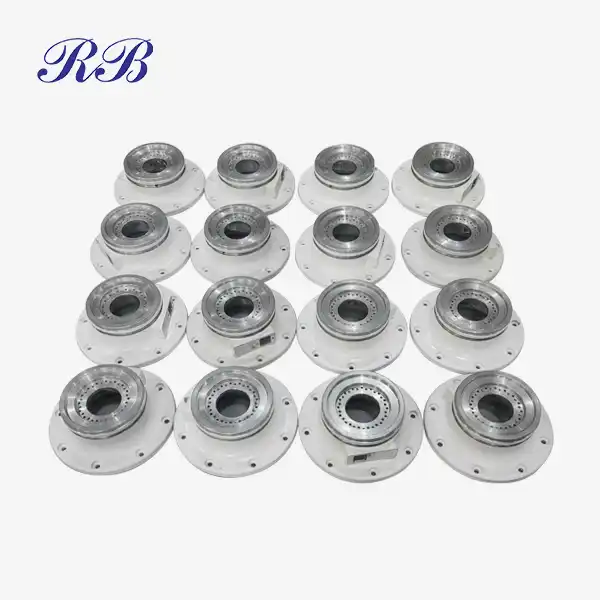
Learn about our latest products and discounts through SMS or email