- English
- French
- German
- Portuguese
- Spanish
- Russian
- Japanese
- Korean
- Arabic
- Greek
- German
- Turkish
- Italian
- Danish
- Romanian
- Indonesian
- Czech
- Afrikaans
- Swedish
- Polish
- Basque
- Catalan
- Esperanto
- Hindi
- Lao
- Albanian
- Amharic
- Armenian
- Azerbaijani
- Belarusian
- Bengali
- Bosnian
- Bulgarian
- Cebuano
- Chichewa
- Corsican
- Croatian
- Dutch
- Estonian
- Filipino
- Finnish
- Frisian
- Galician
- Georgian
- Gujarati
- Haitian
- Hausa
- Hawaiian
- Hebrew
- Hmong
- Hungarian
- Icelandic
- Igbo
- Javanese
- Kannada
- Kazakh
- Khmer
- Kurdish
- Kyrgyz
- Latin
- Latvian
- Lithuanian
- Luxembou..
- Macedonian
- Malagasy
- Malay
- Malayalam
- Maltese
- Maori
- Marathi
- Mongolian
- Burmese
- Nepali
- Norwegian
- Pashto
- Persian
- Punjabi
- Serbian
- Sesotho
- Sinhala
- Slovak
- Slovenian
- Somali
- Samoan
- Scots Gaelic
- Shona
- Sindhi
- Sundanese
- Swahili
- Tajik
- Tamil
- Telugu
- Thai
- Ukrainian
- Urdu
- Uzbek
- Vietnamese
- Welsh
- Xhosa
- Yiddish
- Yoruba
- Zulu
Can titanium be CNC machined?
Titanium alloy machined parts have become indispensable in industries demanding lightweight yet robust components. Yes, titanium alloys are highly suitable for CNC machining, though they require specialized techniques and equipment. Their exceptional strength-to-weight ratio, outstanding corrosion resistance, and ability to perform under extreme temperatures make them ideal for aerospace, medical, automotive, and energy applications. While machining titanium presents certain challenges—including rapid tool wear and heat generation—modern CNC technologies combined with experienced manufacturers like Rongbao Enterprise can reliably produce precision titanium components that meet stringent international standards.
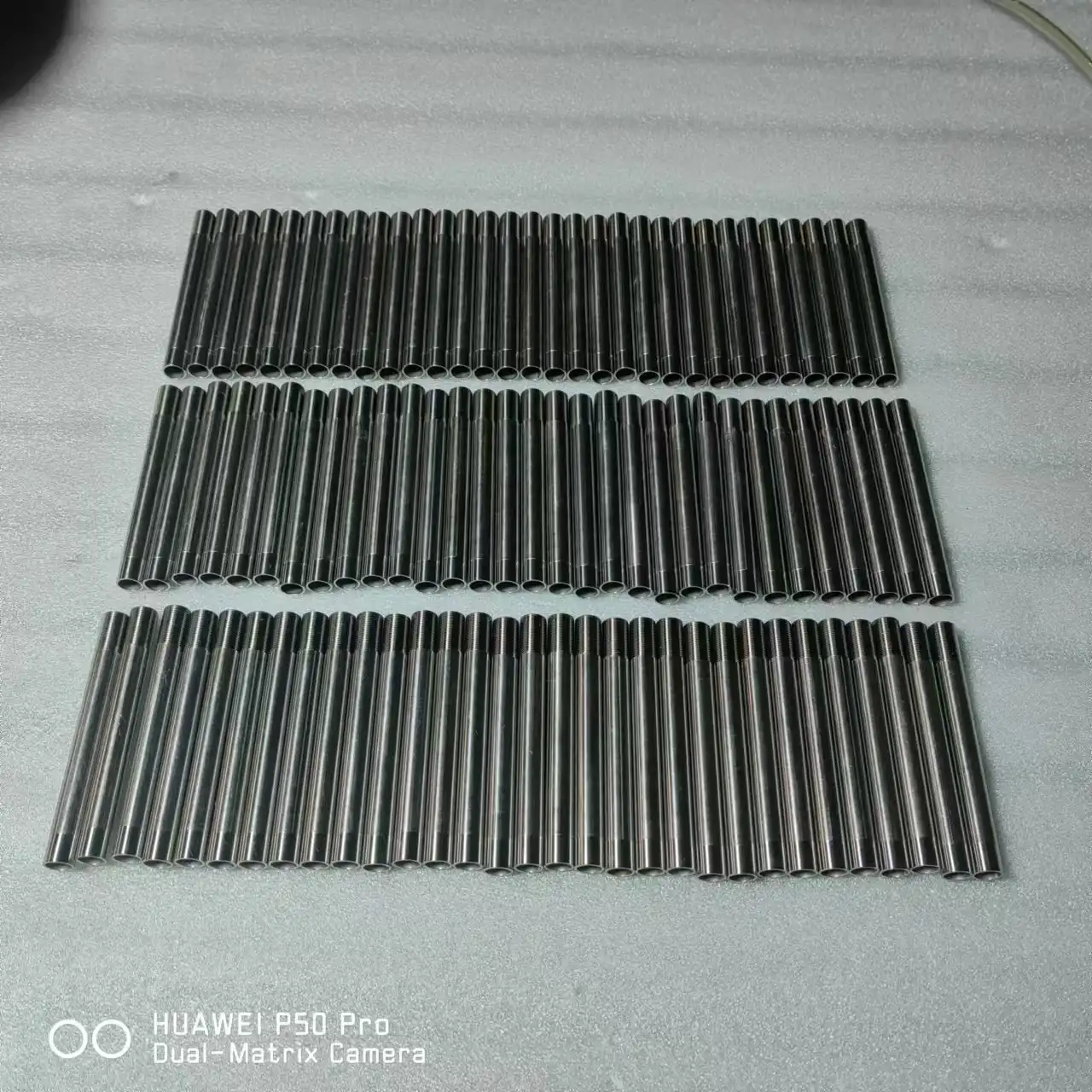
The CNC Machining Process of Titanium Alloys: Challenges and Methods
Common CNC Operations for Titanium
Rotary cuts are used in CNC milling to remove material and make complicated three-dimensional forms. These forms are used to make parts like the housings for medical devices and the brackets for spacecraft. Cylindrical titanium alloy machined parts like shafts, pins, and threaded screws are shaped on lathes that are managed by computers. When drilling titanium, you have to use special techniques because the cutting edge gets very hot and could damage both the tool and the piece being drilled. Titanium parts that need to be very precise can be made with multi-axis machining centers. For instance, the sizes of important parts can usually stay within ±0.05mm.
Overcoming Machining Challenges
Titanium tends to work harden, which means that it gets harder as it is cut. This can speed up tool wear and cause the material to shift. Heat can't leave the cutting zone when thermal conductivity is low. In other words, the point where the tool meets the workpiece can get hotter than 1000°C. Strong ways to cool down are needed because of this. For example, high-pressure coolant supply systems flood the cutting area and get rid of chips fast. Conditions that are too harsh can wear down tool materials. When working with titanium alloys, carbide inserts or tools made of polycrystalline diamond (PCD) last longer. Most of the time, cutting goes at 30 to 60 meters per minute, which is a lot slower than cutting metal. Feed rates are carefully picked to keep output high and keep the work from getting too hard.
Real-World Manufacturing Success
We recently teamed up with a company that makes titanium alloy machined parts for airplanes to make titanium landing gear brackets with a lot of different places to attach things. The project called for ±0.08mm of error in measurements for parts that were 300 mm long. With ceramic-coated carbide tools, adaptable machining techniques, and through-spindle coolant supply, we made sure that all 2,000 pieces in the run would be of the same high quality. It took several optimal finishing passes to get the surface finish to Ra 1.6µm, and an NDT analysis showed that there were no flaws inside. With the right skills, titanium machining can be turned from a tough job into a reliable way to make things.
Comparing Titanium Alloys with Other Metals for CNC Machining
Performance Advantages Over Alternatives
Because a titanium alloy machined part is more resistant to salt and weighs almost half as much, titanium is better than stainless steel for things that are likely to rust. This weight advantage is very important in aerospace and automotive applications where every kilogram changes how much fuel is used and how well the car runs. Titanium is stronger than aluminium when it comes to staying strong at high temperatures and when it comes to not wearing out after being loaded and unloaded many times. The tools last longer and the cutting process is faster with stainless steel, but the finished parts are heavier than those made from titanium.
Cost-Benefit Analysis for Procurement
Depending on the grade and the market, raw titanium metal can cost anywhere from $15 to $35 per kilogram. On the other hand, aluminium costs $2 to $5 per kilogram and stainless steel costs $3 to $8 per kilogram. But the cost of goods isn't the only thing that you have to pay to own something. Titanium parts tend to last two to three times longer than steel parts in acidic environments. This means they don't need to be changed out as often, which brings downtime costs down and saves money. Most of the time, it costs 1.5 to 2 times more to make titanium than stainless steel. The success and long-term value rewards must be weighed against this cost. The economics of each part get better when the cost of the tools is spread out over a larger number of parts.
Grade Selection Guidance
Ti-6Al-4V is still the most common alloy used for everyday tasks that need good mechanical properties and average ease of machining. Since they are easier to work with, commercially pure titanium types (Grade 2) are better for uses that care more about resistance to corrosion than strength. Because it stays stable at high temperatures, Ti-5Al-2.5Sn is used for parts of aeroplanes that get hot from the engines. Because they are strong and easy to work with, beta titanium metals are good for making screws and joints. The teams that are in charge of buying things should pick alloys that can work well in a range of places, temperatures, and stress levels.
Procurement Insights for Titanium Alloy CNC Machined Parts
Evaluating Potential Manufacturing Partners
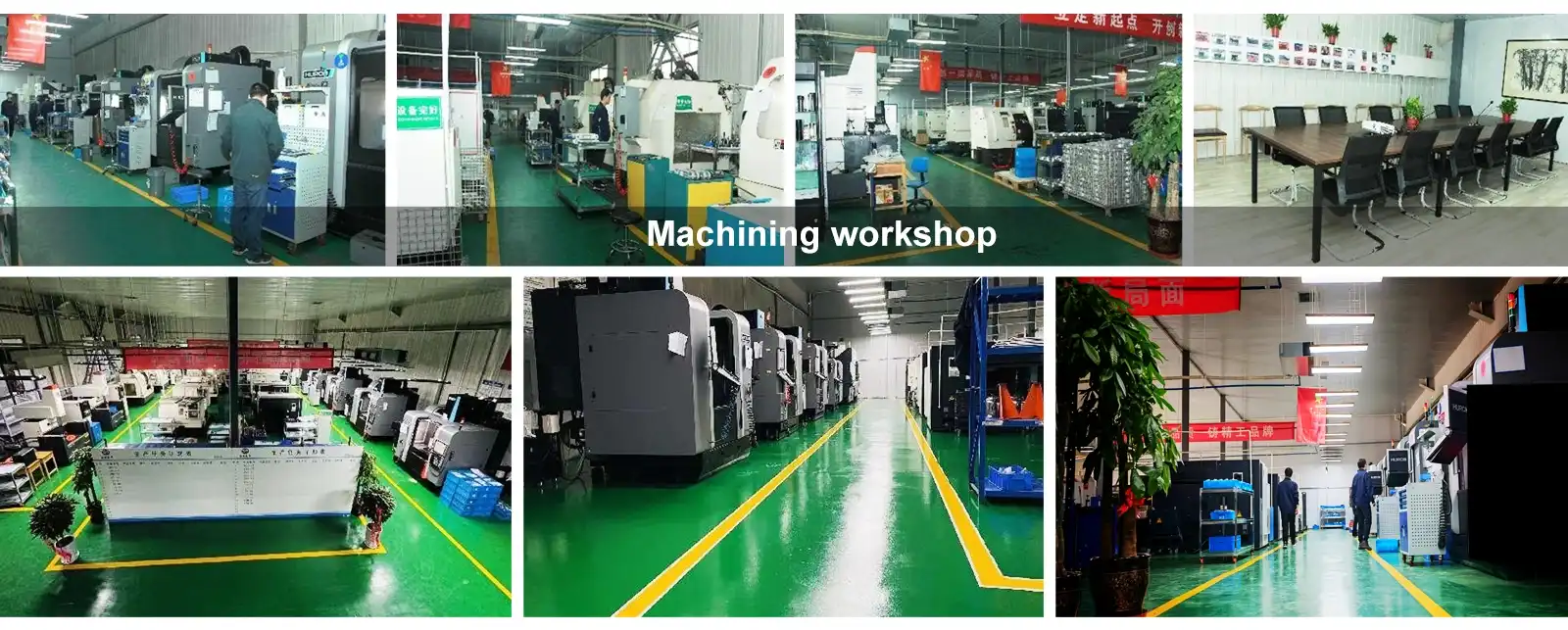
Certification skills are used to decide if a supplier is qualified. For instance, ISO9001:2015 makes sure that methods for managing quality meet international standards. ISO14001 and ISO45001, on the other hand, show a dedication to protecting workers' health and safety and the environment. Production capacity is very important when you are planning to take on big orders or when you expect volume to grow. Manufacturers who can make at least 5,000 pieces per month can meet your needs. There should be exact measuring tools, multi-axis CNC machines, and the ability to test the part without damaging it in the equipment. You can find out if a maker can meet your wants by reading reviews from people who have bought similar products.
Understanding Pricing and Lead Times
For handmade titanium alloy machined parts, the MOQ is usually between 50 and 100 pieces. This is because it costs money to make the moulds and set them up. MOQs change based on the maker and how complicated the part is. You can be sure that your ideas will work before you go ahead with full production with prototype services. It takes about two to three weeks to get your first models. It takes between 4 and 8 weeks to make a run, but it depends on how difficult they are and how many are needed. If you already work with a supplier, they can help you meet urgent needs faster. Most of the time, you can get better deals when you buy more. You might be able to get 15–25% off each item if you buy more than 500 of them every year. People who have bought from us before might be able to get better payment terms. Custom tools usually need a fee, and the rest is due when they are delivered.
Logistics and Quality Assurance
Things need to be covered when they are shipped abroad so they don't get broken in transit. For example, wooden boxes are a strong way to keep titanium alloy machined parts that have been precisely made safe. There should be an inspection record for every shipment that shows how accurate the measures are, what kind of finish is on the surface, and how certified the material is. Reliable manufacturers back up their quality claims by offering to re-machine any parts that don't meet standards. Communication lines are very important. Quick technical support helps answer questions quickly, which keeps delays from happening that cost a lot of money. Reviewing Design for Manufacturability (DFM) early in the development process can save time and make it less likely that problems will happen during production.
FAQs
What distinguishes titanium alloys from pure titanium in machining applications?
For some things, titanium alloys are better than pure titanium because they have extra parts that make them better. Pure titanium (types that are sold in stores) is the strongest and least likely to rust. It's also the simplest to make. Some alloys, such as Ti-6Al-4V, are almost twice as strong when pulled apart as pure titanium. This makes them good for building structures and easier to work with than other titanium compositions.
How do titanium machining costs compare to stainless steel and aluminum?
Stainless steel costs 50–100% less per hour to machine than titanium, which costs 150–200% more per hour. This is because it cuts more slowly, needs special tools, and tools break down more quickly. Even though it costs more to machine, the better properties generally make the investment worth it. So, the extra cost should be weighed against the benefits in performance and lifetime costs.
What tolerances can be achieved when CNC machining titanium components?
These days, CNC machines can regularly make titanium parts that are accurate to within ±0.05mm to ±0.1mm in size. With special steps, they can even get to ±0.02mm for important features. For precise tasks, a surface finish number of 0.8µm to 1.6µm is standard. These numbers are good enough for medical devices, aeroplane parts, and high-performance mechanical systems.
Partner with Rongbao Enterprise for Your Titanium Machining Needs
To find titanium alloy machined parts you can trust, you need to find a company that can make a lot of them and has quality systems that have been shown to work. Rongbao Enterprise has been making exact parts for 20 years. They have customers in the medical field, North America, Europe, and Asia. They also work with companies in the auto, military, and business worlds. We have ISO9001:2015, ISO14001, and ISO45001 certifications for our plant in Xi'an, China. This means that all of our parts meet the strictest quality standards around the world. We can do everything from making prototypes to making a lot of things at once because we can make more than 5,000 pieces per month and use full CNC cutting. Our engineering team can help you make your ideas better so that they can be made out of titanium more cheaply through full Design for Manufacturability consulting. This way of making things lets you get all the help you need, whether you need unique parts made of shot-blasted titanium or stainless steel. Contact our buying managers at steve.zhou@263.net or zhouyi@rongbaocasting.com to talk to a titanium alloy machined parts seller who wants to help you succeed about what you need.
Conclusion
CNC machining works well with titanium alloys when projects need materials that are strong for their weight, don't rust, and stay stable at both high and low temperatures. Machining has issues that can be fixed with the right tools, equipment, and knowledge of how to make things. Even though titanium is more expensive and harder to work with, it is worth it when its unique properties make it better for operations, last longer, and cost less to own overall. The key to successful procurement is working with certified makers who have the right output capacity, specific knowledge, and quality systems that have been shown to work. If you know what kinds of materials you need, how they should be machined, and what your industry needs, you can make smart decisions about where to get them. You can balance performance needs with price limits to get parts that meet important application needs.
References
- Ezugwu, E.O., Wang, Z.M. (1997). Titanium alloys and their machinability: A review. Journal of Materials Processing Technology, 68(3), 262-274.
- Boyer, R., Welsch, G., Collings, E.W. (1994). Materials Properties Handbook: Titanium Alloys. ASM International, Materials Park, OH.
- Donachie, M.J. (2000). Titanium: A Technical Guide, 2nd Edition. ASM International, Materials Park, OH.
- Veiga, C., Davim, J.P., Loureiro, A.J.R. (2012). Properties and applications of titanium alloys: A brief review. Reviews on Advanced Materials Science, 32(2), 133-148.
- Machai, C., Biermann, D. (2011). Machining of titanium alloys with ultrasonic assistance. CIRP Annals - Manufacturing Technology, 60(1), 121-124.
- Peters, M., Kumpfert, J., Ward, C.H., Leyens, C. (2003). Titanium alloys for aerospace applications. Advanced Engineering Materials, 5(6), 419-427.
_1751078338779.webp)
Learn about our latest products and discounts through SMS or email