- English
- French
- German
- Portuguese
- Spanish
- Russian
- Japanese
- Korean
- Arabic
- Greek
- German
- Turkish
- Italian
- Danish
- Romanian
- Indonesian
- Czech
- Afrikaans
- Swedish
- Polish
- Basque
- Catalan
- Esperanto
- Hindi
- Lao
- Albanian
- Amharic
- Armenian
- Azerbaijani
- Belarusian
- Bengali
- Bosnian
- Bulgarian
- Cebuano
- Chichewa
- Corsican
- Croatian
- Dutch
- Estonian
- Filipino
- Finnish
- Frisian
- Galician
- Georgian
- Gujarati
- Haitian
- Hausa
- Hawaiian
- Hebrew
- Hmong
- Hungarian
- Icelandic
- Igbo
- Javanese
- Kannada
- Kazakh
- Khmer
- Kurdish
- Kyrgyz
- Latin
- Latvian
- Lithuanian
- Luxembou..
- Macedonian
- Malagasy
- Malay
- Malayalam
- Maltese
- Maori
- Marathi
- Mongolian
- Burmese
- Nepali
- Norwegian
- Pashto
- Persian
- Punjabi
- Serbian
- Sesotho
- Sinhala
- Slovak
- Slovenian
- Somali
- Samoan
- Scots Gaelic
- Shona
- Sindhi
- Sundanese
- Swahili
- Tajik
- Tamil
- Telugu
- Thai
- Ukrainian
- Urdu
- Uzbek
- Vietnamese
- Welsh
- Xhosa
- Yiddish
- Yoruba
- Zulu
Can gravity casting covers be customized?
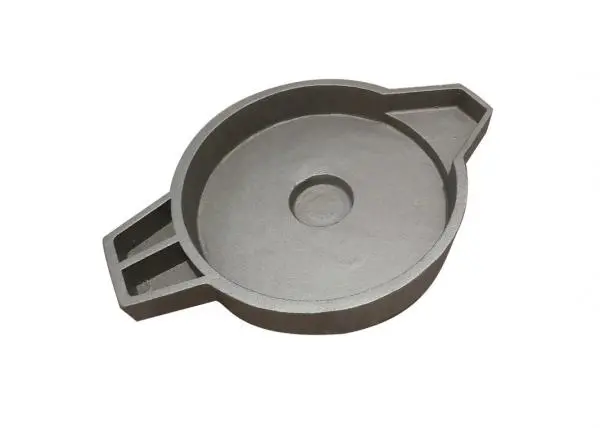
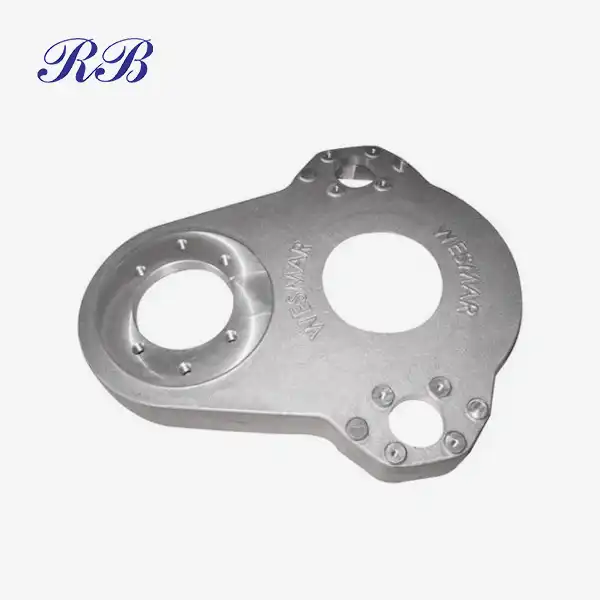
Absolutely, yes—gravity casting covers can be extensively customized. This versatile manufacturing process allows adjustments in size, shape, wall thickness, material selection, and surface finish to meet precise industrial requirements. Whether you need a lightweight aluminum casting cover for automotive applications or robust alloys for heavy machinery, the process supports full customization from mold design through final finishing. Suppliers equipped with advanced tooling and CNC machining capabilities can deliver bespoke covers that integrate seamlessly into your equipment while maintaining dimensional accuracy and mechanical integrity.
Understanding Gravity Casting Covers and Their Customization Possibilities
Gravity casting covers are used to protect important mechanical parts in a variety of industrial settings. Using only gravitational force—no outside pressure needed—molten metal is poured into permanent molds to make these precise metal parts. This easy-to-understand but effective method makes covers with great surface quality and strong structure.
What Makes Gravity Casting Covers Ideal for Customization?
Permanent mold casting is very flexible, so manufacturers can change any part of the cover design to fit their needs. Customization starts with mold making, where toolmakers make holes that are exactly what the customer wants. The choice of material is very important. For example, aluminum alloys like ZL101A are popular in the automotive and construction machinery industries because they are strong, light, and don't rust. Cast iron is strong and can be used for heavy-duty tasks, while brass is good for electrical enclosures that need to be able to conduct electricity.
Customization of dimensions allows for small housings that weigh less than 0.7 kg to bigger industrial covers that weigh more than several kilos. Changing the width of the walls strikes a mix between reducing weight and meeting structural needs. Surface processes like shot blasting make things look better and help paint stick better, and CNC machining makes mounting surfaces very precise. Because they can be customized in so many ways, procurement managers are choosing gravity-cast options more and more when normal parts can't meet performance standards.
Industries Relying on Customized Gravity Casting Covers
Tailored covers are important in manufacturing areas that have high standards for performance. OEMs and Tier-1 suppliers in the automotive industry use special aluminum covers for gearbox housings and engine parts. This saves weight, which has a direct effect on fuel economy. Covers for construction equipment hydraulic systems need to be strong enough to protect them from harsh working conditions. Covers for general industrial uses like pumps, valves, and compressors need to be reliable and cost-effective over thousands of hours of use. Covers for energy sector parts like wind turbines and oil extraction tools need to be able to withstand harsh circumstances without rusting.
Different industries have different standards for batch sizes, certification needs, and quality control procedures. Knowing these details helps suppliers like Rongbao Enterprise match their manufacturing skills with what their customers want.
Gravity Casting Cover Manufacturing Process & Customization Steps
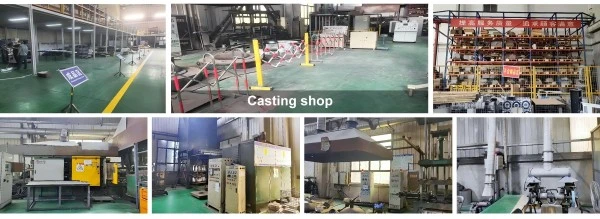
During the production process, carefully controlled steps turn liquid metal into precisely built gravity casting covers. When procurement professionals understand this process, they can see where customization takes place and how it affects prices and lead times.
Stage 1: Mold Preparation and Design
Gravity casting is based on permanent metal molds, which are usually made from long-lasting tool steel. Technical sketches are turned into three-dimensional spaces with gating systems, risers, and cooling paths by custom mold design. Skilled toolmakers take into account how much metal shrinks as it solidifies to make sure that the finished measurements are exactly what was asked for. Tooling costs and wait times are directly affected by how complicated the mold is. For example, simple geometric covers may take four to six weeks to finish, while complex designs with undercuts need longer development periods.
Stage 2: Casting Parameter Optimization
For each mix of metal and shape, the pouring temperature, fill rate, and cooling profiles are fine-tuned. ZL101A aluminum alloy is often used for moderate-strength tasks, but it needs to be kept at an exact temperature to avoid flaws like holes or gaps caused by shrinking. Engineers change the speed of the pouring to make sure that the mold is completely filled while reducing the noise that could trap air bubbles. Controlled cooling stops thermal stress that could cause thin-walled parts to bend.
Stage 3: Post-Casting Enhancement
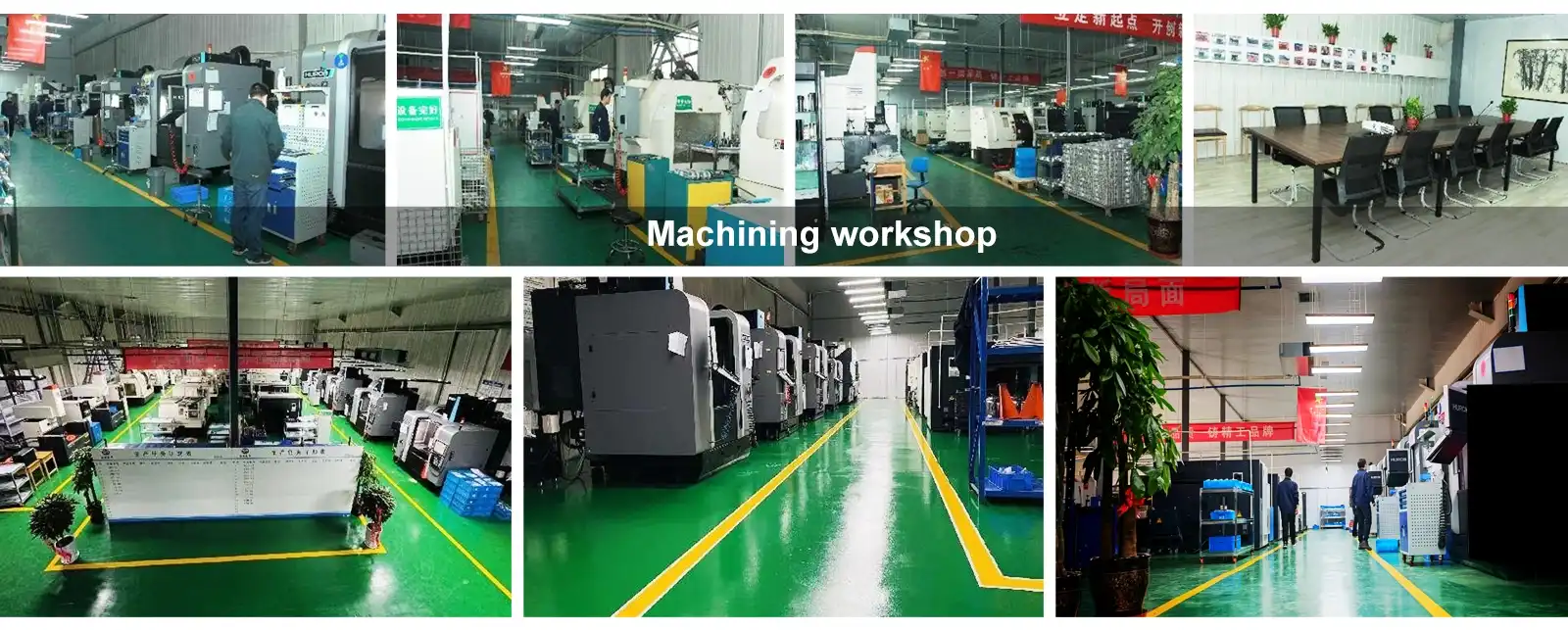
After being demolded, covers go through steps that add value and make them look and work better. With limits of just ±0.05mm, CNC processes make mounting holes, threaded bosses, and mating surfaces that are very accurate. Shot blasting gets rid of surface scale and evens out the texture, which makes covers ready for protective coatings if needed. Tensile strength and hardness are two mechanical properties that are improved by heat treatment cycles, such as T6 tempering for aluminum alloys.
Quality checkpoints are built into the whole production process. Inspection of incoming raw materials makes sure that the alloy's makeup meets the requirements. Coordinate measuring machines are used for in-process monitoring to keep an eye on the accuracy of the dimensions. Non-destructive testing methods, such as X-ray checking, find flaws inside things that can't be seen from the outside. This thorough quality system makes sure that consistency from batch to batch is maintained, which is important for keeping assembly lines running smoothly at client sites.
Comparing Gravity Casting Covers with Other Casting Methods for Customization
When procurement teams look at different gravity casting covers and options, they consider a number of things, such as unit costs, tooling investments, lead times, and the ability to change the design. Gravity casting is a great way to make things in medium quantities while still getting quality and customization.
Gravity Casting vs. High-Pressure Die Casting
High-pressure die casting is great for making a lot of things quickly, so it's a good choice for orders that are more than 10,000 units a year. But the high cost of the tools—often between $20,000 and $50,000 per mold—makes it hard to make smaller batches. Gravity casting molds are much cheaper—usually one-third to one-half the price—so you can make changes without breaking the bank for runs of 500 to 5,000 pieces. Because the fill rate is slower in gravity casting, the parts are larger and have better mechanical qualities than thin-walled die-cast parts.
Gravity Casting vs. Sand Casting
Sand casting works well for small batches and very big parts, but the finish on the outside and the accuracy of the dimensions aren't as good. After each casting, sand molds break down, so a new mold has to be made for each piece, which is time-consuming and not always accurate. When gravity casting, permanent metal molds make the surface smoother, which means that secondary machining is done less or not at all on non-critical surfaces. The repeatability of measurements between batches gets a lot better, which is very important for assembly processes that use removable covers.
Gravity Casting vs. Investment Casting
When you invest in casting, you can get very fine details and smooth surfaces on complicated shapes. This makes it perfect for making aerospace parts and complicated hardware. However, the multiple-step process that uses wax models and clay shell molds drives is a lot more expensive—often twice or three times as much as gravity casting for parts of the same size. Gravity casting is a much cheaper way to make covers that need to be fairly complicated without having to meet very tight standards.
These comparative advantages position gravity casting as the optimal choice for industrial covers balancing performance requirements with budget realities. Facilities like those run by Rongbao Enterprise can make up to 5,000 pieces per month, which shows that they can be expanded to meet growing procurement needs.
Advantages and Challenges of Custom Gravity Casting Covers
Every manufacturing method for gravity casting covers presents trade-offs. Realistic expectations and successful sourcing partnerships are based on evaluating both strengths and weaknesses.
Key Advantages Driving Adoption
Cost Efficiency at Scale: Medium to large batch orders benefit from fixed molds that can be used again and again, which eliminates the per-unit tooling costs that come with processes that use disposable molds. Unit costs go down a lot once the initial investment in tools is spread out over a large amount of output. For an order of 2,000 pieces, the cost of casting each piece might be 40% less than the cost of sandcasting the same part.
Design Freedom Within Practical Limits: Gravity casting can handle complicated internal tunnels, changing wall thicknesses, and built-in fixing features, but it can't match the complexity of investment casting. This design flexibility lets engineers combine several machined parts into a single casting, which cuts down on assembly work and possible weak spots.
Mechanical Integrity and Material Versatility: When metal is solidified under controlled conditions in molds, fine-grain microstructures are made that have better mechanical qualities. The tensile strength, yield strength, and stretch values are usually higher than those of sand-cast materials that are similar. By choosing from aluminum alloys, copper alloys, and ferrous metals, you can match the properties of the parts you need, such as their ability to carry electricity for electrical uses, their resistance to corrosion in naval settings, or their resistance to heat for powertrain parts.
Managing Potential Challenges
Defect Prevention Through Process Control: Porosity, shrinking holes, and inclusions that happen when process parameters move out of their ideal ranges can be managed. These risks are lessened by experienced suppliers who closely watch the parameters and do quality checks as they go. The right design of gates makes sure that solidification happens in the right way to feed shrinkage zones, and controlled filling keeps turbulence and air trapping to a minimum.
Dimensional Variability and Correction: Small changes in dimensions can be caused by thermal expansion and contraction when something is cooled. These differences are fixed by strategic CNC machining on key surfaces, which makes sure that the covers meet the tolerances for assembly. Over-specification and extra costs can be avoided if buying teams and suppliers talk clearly about which measurements need tight control and which ones can have standard casting tolerances.
Tooling Lead Time Considerations: Making a custom mold can take anywhere from four to ten weeks, depending on how complicated it is. This is longer than buying parts that are already made, but much shorter than making injection molds or forging dies. Schedule changes can be avoided by planning ahead and incorporating mold development into product design timelines.
Certifications like ISO9001:2015, ISO14001, and ISO45001 show that a supplier cares about quality management, being environmentally responsible, and workplace safety. These are all things that supply chain managers are looking at more and more when they are trying to balance performance with corporate sustainability goals.

Conclusion
Customized gravity casting covers are made to fit the needs of specific industries, such as those that make cars, construction equipment, energy equipment, and industrial machinery. Custom mold making, choosing the right materials, and precise post-processing steps like CNC cutting and shot blasting make it possible for a wide range of design changes to be made. Compared to other casting methods, gravity casting is the best choice for medium-volume production because it matches quality, cost, and freedom.
To source things successfully, you need to find suppliers with strong technical knowledge, strong quality systems that can be checked with ISO certifications, and open communication during the development and production stages. Procurement workers can make smart choices that get the best value for money by understanding both the pros and cons of custom gravity casting.
FAQ
What minimum order quantity applies to custom gravity casting covers?
Minimum order numbers are usually between 500 and 1,000 pieces, but can be higher or lower depending on the complexity of the cover and the cost of the tools needed. When suppliers know that a lot of goods will be needed in the future, they may be willing to take smaller orders at first. Talking to makers about your specific volume expectations can help you find flexible plans that meet both their needs for efficiency and your needs for managing your inventory.
How long does custom gravity casting cover development take?
From the first design consultation to the delivery of the first product, the whole development process usually takes 10 to 14 weeks. This schedule includes designing and making the mold (4–8 weeks), casting and fine-tuning the prototype (2–3 weeks), and the first production run (1-2 weeks). The actual duration is affected by how complicated the cover geometry is and how readily available the final technical drawings are. The process goes faster when there are clear instructions and quick contact.
Can gravity casting achieve tolerances required for precision assemblies?
The tolerances for gravity casting on cast objects are between ±0.3mm and ±0.5mm. CNC cutting processes can get accurate results to within ±0.05mm for critical measurements that need smaller tolerances, like mounting holes or mating surfaces. Choosing which parts need precise machining and which ones can be cast with standard tolerances saves money and meets assembly requirements.
Partner with a Trusted Gravity Casting Cover Supplier
Rongbao Enterprise has been making aluminum for 20 years and works with makers of cars, building equipment, and industrial equipment all over the world. With ISO9001:2015, ISO14001, and ISO45001 certifications, our Xi'an factory makes custom gravity casting covers that can be fully tracked. We take care of whole projects, from making the mold to CNC machining and shot blasting to delivering finished covers that are ready to be put together.
With a monthly production capacity of up to 5,000 pieces, the company can make both prototypes and large quantities. Our tech team works together to improve the design so that it can be made and still meet your performance requirements. Since 70% of our work goes to markets in Europe, the United States, and Japan, we know what quality standards and communication standards are expected around the world.
Contact our technical team at steve.zhou@263.net or zhouyi@rongbaocasting.com to discuss your custom gravity casting cover requirements. Visit rongbaocasting.com to explore our capabilities and request a detailed quotation tailored to your project specifications.
References
- Campbell, John. Complete Casting Handbook: Metal Casting Processes, Metallurgy, Techniques and Design. Butterworth-Heinemann, 2015.
- American Foundry Society. Permanent Mold Casting Manual. AFS Technical Publication, 2018.
- Davis, Joseph R. ASM Specialty Handbook: Aluminum and Aluminum Alloys. ASM International, 1993.
- Beeley, Peter R. Foundry Technology. Butterworth-Heinemann, 2001.
- International Organization for Standardization. ISO 9001:2015 Quality Management Systems—Requirements. ISO Standards Catalogue, 2015.
- Brown, John R. Foseco Ferrous Foundryman's Handbook. Butterworth-Heinemann, 2000.
Learn about our latest products and discounts through SMS or email