- English
- French
- German
- Portuguese
- Spanish
- Russian
- Japanese
- Korean
- Arabic
- Greek
- German
- Turkish
- Italian
- Danish
- Romanian
- Indonesian
- Czech
- Afrikaans
- Swedish
- Polish
- Basque
- Catalan
- Esperanto
- Hindi
- Lao
- Albanian
- Amharic
- Armenian
- Azerbaijani
- Belarusian
- Bengali
- Bosnian
- Bulgarian
- Cebuano
- Chichewa
- Corsican
- Croatian
- Dutch
- Estonian
- Filipino
- Finnish
- Frisian
- Galician
- Georgian
- Gujarati
- Haitian
- Hausa
- Hawaiian
- Hebrew
- Hmong
- Hungarian
- Icelandic
- Igbo
- Javanese
- Kannada
- Kazakh
- Khmer
- Kurdish
- Kyrgyz
- Latin
- Latvian
- Lithuanian
- Luxembou..
- Macedonian
- Malagasy
- Malay
- Malayalam
- Maltese
- Maori
- Marathi
- Mongolian
- Burmese
- Nepali
- Norwegian
- Pashto
- Persian
- Punjabi
- Serbian
- Sesotho
- Sinhala
- Slovak
- Slovenian
- Somali
- Samoan
- Scots Gaelic
- Shona
- Sindhi
- Sundanese
- Swahili
- Tajik
- Tamil
- Telugu
- Thai
- Ukrainian
- Urdu
- Uzbek
- Vietnamese
- Welsh
- Xhosa
- Yiddish
- Yoruba
- Zulu
Best casting method for collection box parts
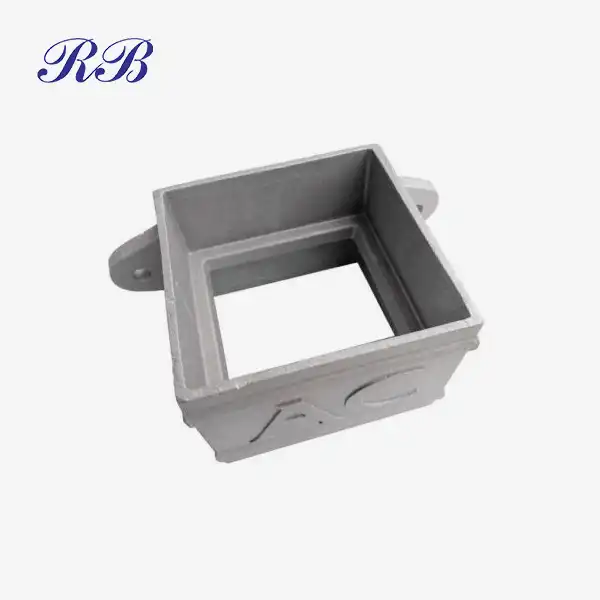
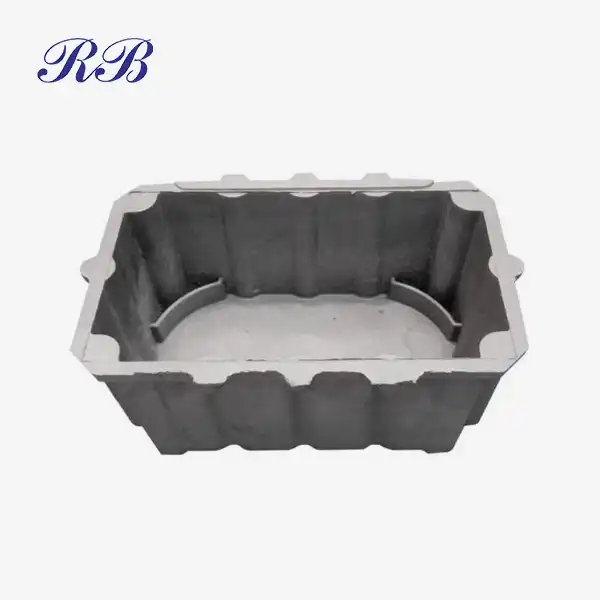
In manufacturing, choosing the appropriate casting method for casting collection box parts is essential to guarantee their best performance, longevity, and cost efficiency. This thorough guide examines the main evaluation criteria, contrasts various casting methods, and suggests the best approach. This article provides crucial insights to help you make decisions if you're involved in the rainwater harvesting industry or the manufacturing of collection systems.
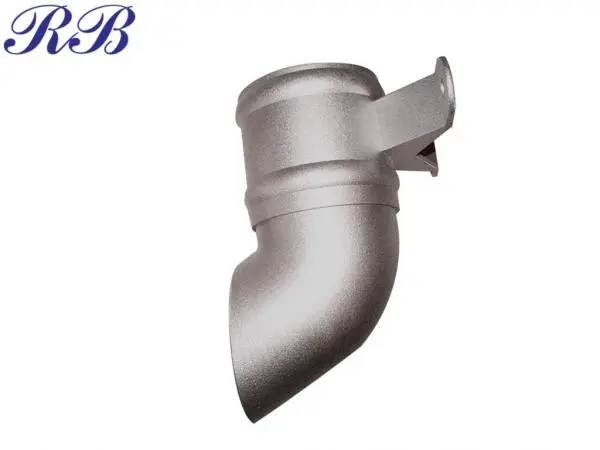
Key Evaluation Criteria for Collection Box Parts
Material Properties and Performance Requirements
When evaluating casting methods for collection box components, it's essential to consider the material properties and performance requirements. Collection boxes, especially those employed in rainwater harvesting systems, must endure different environmental conditions while keeping their structural integrity over time. The chosen casting method should be able to produce parts with the following characteristics:
- Corrosion resistance: To withstand exposure to water and potentially harsh environmental elements
- Durability: To ensure a long service life and minimize maintenance needs
- Dimensional accuracy: To guarantee proper fit and function within the overall collection system
- Surface finish: To facilitate smooth water flow and prevent debris accumulation
For instance, aluminum alloy A356, commonly used in gravity casting processes, offers an excellent balance of strength, corrosion resistance, and castability. This makes it a suitable material for collection box parts, especially those used in rainwater harvesting applications.
Production Volume and Cost Considerations
The required production volume and associated costs also influence the choice of casting method. Aspects to take into account include:
- Initial tooling costs
- Per-unit production costs
- Production capacity and lead times
- Potential for automation and scalability
For example, a manufacturer with a production capacity of 5000 pieces, as mentioned in our specifications, would need to choose a casting method that can efficiently meet this demand while maintaining cost-effectiveness for the production of casting collection box parts.
Quality Control and Certification Requirements
Ensuring consistent quality and meeting industry standards are paramount when producing collection box parts. The chosen casting method should facilitate:
- Adherence to quality management systems (e.g., ISO 9001:2015)
- Compliance with environmental management standards (e.g., ISO 14001)
- Conformity to occupational health and safety requirements (e.g., ISO 45001)
- Ability to meet customer-specific quality criteria
These certifications not only ensure product quality but also demonstrate a commitment to sustainable and responsible manufacturing practices.

Comparison of Casting Methods for Collection Box Parts
Gravity Casting: Balancing Quality and Cost
Gravity casting, or permanent mold casting, is a widely used technique for manufacturing collection box parts. The method of using gravity to cast molten metal into a reusable mold is known as this process. Major benefits encompass:
- Good dimensional accuracy and surface finish
- Suitable for medium to high production volumes
- Lower tooling costs compared to die casting
- Ability to produce complex shapes with consistent quality
Yet, gravity casting might have restrictions regarding wall thickness and may need extra processing for specific features.
Sand Casting: Versatility and Low Tooling Costs
With sand casting, you can accommodate different part sizes and complexities. This method involves pouring molten metal into a sand mold, which is destroyed after each use. Benefits of sand casting include:
- Low initial tooling costs
- Ability to produce large and complex parts
- Suitable for low to medium production volumes
- Flexibility in material selection
However, due to the fact that sand casting can result in lower dimensional accuracy and surface finish than other methods, additional post-processing may be required.
Die Casting: High Production Rates and Precision
Die casting involves injecting molten metal into a steel mold under high pressure. This method offers:
- Excellent dimensional accuracy and surface finish
- High production rates
- Ability to produce thin-walled parts
- Good mechanical properties
While die casting can be highly efficient for large production volumes, it typically involves higher initial tooling costs and may have limitations in terms of part size and wall thickness variations for casting collection box parts.
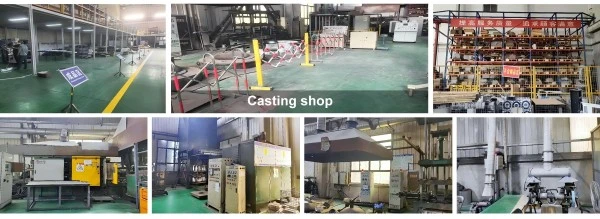
Recommendation: Gravity Casting for Collection Box Parts
Advantages of Gravity Casting for Rainwater Collector Components
After careful consideration of the various casting methods, gravity casting emerges as the recommended approach for producing collection box parts, particularly for rainwater harvesting applications. Here's why:
- Material Compatibility: Gravity casting works well with aluminum alloys like A356, which offer an ideal combination of strength, corrosion resistance, and castability for collection box parts.
- Quality and Consistency: The process allows for good dimensional accuracy and surface finish, ensuring that parts meet the required specifications consistently.
- Cost-Effectiveness: For medium to high production volumes, gravity casting offers a good balance between initial tooling costs and per-unit production costs.
- Flexibility: Gravity casting can accommodate various part sizes and complexities, making it suitable for different collection box designs.
- Post-Processing Capabilities: The method is compatible with additional treatments like CNC machining and shot blasting, allowing for further refinement of the parts as needed.
Meeting Industry Standards and Customer Requirements
Gravity casting, when implemented with proper quality control measures, can help manufacturers meet various industry standards and customer requirements. This includes:
- Adherence to ISO 9001:2015 quality management systems
- Compliance with ISO 14001 environmental management standards
- Conformity to ISO 45001 occupational health and safety requirements
- Ability to meet customized specifications and OEM/ODM requirements
Businesses can guarantee that their collection box parts are of the highest quality and performance by opting for gravity casting and partnering with a trusted manufacturer.
Scalability and Future Considerations
With the increasing demand for effective water collection systems, it's important for manufacturers to contemplate scalability and future production requirements. In this respect, gravity casting has a number of benefits:
- Ability to scale production capacity (e.g., up to 5000 pieces or more)
- Potential for automation to increase efficiency
- Compatibility with evolving design requirements and material innovations
- Flexibility to adapt to changing market demands and regulations
Manufacturers can strategically prepare to fulfill both present and future demands for collection box parts by investing in gravity casting capabilities.
In conclusion, the selection of the appropriate casting method for casting collection box parts is a critical decision that impacts product quality, cost-effectiveness, and overall manufacturing efficiency. While various casting methods have their merits, gravity casting stands out as the recommended approach for producing rainwater collector components and similar casting collection box parts.
Manufacturers can find an ideal balance between quality, cost, and production flexibility by taking advantage of the benefits of gravity casting. This method ensures that the final products meet the highest performance and reliability standards by following industry standards and certification requirements.
As you consider your options for casting collection box parts, it's essential to partner with a experienced and reputable manufacturer who can guide you through the process and deliver high-quality results.
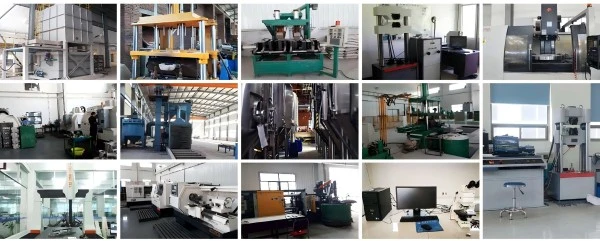
Casting Collection Box Parts Supplier: Rongbao Enterprise
If you're looking for a reliable supplier of casting collection box parts, consider Rongbao Enterprise. With nearly two decades of experience in aluminum alloy casting and precision processing, Rongbao offers comprehensive solutions for equipment manufacturers across various industries.
Key highlights of Rongbao Enterprise include:
- Specialization in gravity casting, high-pressure die casting, and low-pressure die casting
- Advanced CNC machining capabilities for precision finishing
- ISO 9001:2015, ISO 14001, and ISO 45001 certifications
- Customized OEM/ODM services to meet specific requirements
- Global export experience, with 70% of products shipped to the US, Europe, and Japan
To learn more about how Rongbao Enterprise can support your collection box parts manufacturing needs, reach out to their team:
Email: steve.zhou@263.net or zhouyi@rongbaocasting.com
References
- Campbell, J. (2015). Complete Casting Handbook: Metal Casting Processes, Techniques and Design. Butterworth-Heinemann.
- ASM International. (2008). Casting Design and Performance. ASM International.
- Brown, J. R. (2019). Foseco Ferrous Foundryman's Handbook. Butterworth-Heinemann.
- Kaufman, J. G., & Rooy, E. L. (2004). Aluminum Alloy Castings: Properties, Processes, and Applications. ASM International.
- Lumley, R. (2018). Fundamentals of Aluminium Metallurgy: Recent Advances. Woodhead Publishing.
Learn about our latest products and discounts through SMS or email