- English
- French
- German
- Portuguese
- Spanish
- Russian
- Japanese
- Korean
- Arabic
- Greek
- German
- Turkish
- Italian
- Danish
- Romanian
- Indonesian
- Czech
- Afrikaans
- Swedish
- Polish
- Basque
- Catalan
- Esperanto
- Hindi
- Lao
- Albanian
- Amharic
- Armenian
- Azerbaijani
- Belarusian
- Bengali
- Bosnian
- Bulgarian
- Cebuano
- Chichewa
- Corsican
- Croatian
- Dutch
- Estonian
- Filipino
- Finnish
- Frisian
- Galician
- Georgian
- Gujarati
- Haitian
- Hausa
- Hawaiian
- Hebrew
- Hmong
- Hungarian
- Icelandic
- Igbo
- Javanese
- Kannada
- Kazakh
- Khmer
- Kurdish
- Kyrgyz
- Latin
- Latvian
- Lithuanian
- Luxembou..
- Macedonian
- Malagasy
- Malay
- Malayalam
- Maltese
- Maori
- Marathi
- Mongolian
- Burmese
- Nepali
- Norwegian
- Pashto
- Persian
- Punjabi
- Serbian
- Sesotho
- Sinhala
- Slovak
- Slovenian
- Somali
- Samoan
- Scots Gaelic
- Shona
- Sindhi
- Sundanese
- Swahili
- Tajik
- Tamil
- Telugu
- Thai
- Ukrainian
- Urdu
- Uzbek
- Vietnamese
- Welsh
- Xhosa
- Yiddish
- Yoruba
- Zulu
3 Factors to Consider in Designing a Disc Coupling
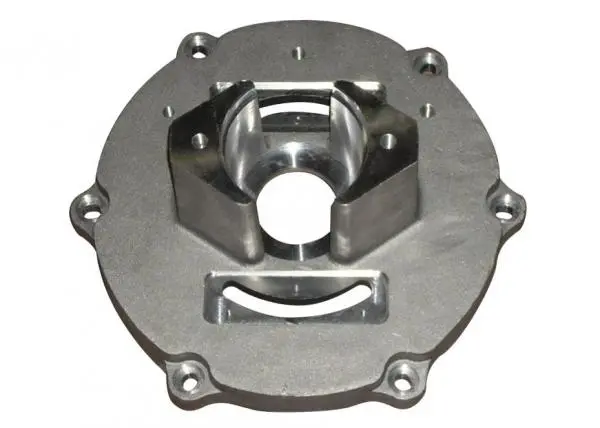
For power transmission systems to link shafts and transmit torque efficiently, disc couplings are necessary. A disc coupling, a crucial component of many industrial applications, needs to be carefully designed with a number of crucial variables in mind. Three important factors that engineers and designers need to consider while making a high-performance cast coupling disc will be discussed in this article.
Torque & Load Capacity
Understanding Torque Requirements
The primary function of a disc coupling is to transmit torque between connected shafts. Therefore, the first and foremost consideration in designing a cast coupling disc is its torque-handling capability. Engineers must accurately assess the maximum torque the coupling will experience during operation, including peak loads and potential shock loads.
To determine the appropriate torque capacity, designers need to consider factors such as:
- The power output of the driving equipment
- The inertia of the connected machinery
- Operational speed ranges
- Start-up and shut-down conditions
- Potential overload scenarios
Material Selection for Optimal Load Bearing
The material choice for a cast coupling disc significantly influences its load-bearing capacity. High-strength aluminum alloys, such as A356, are often preferred due to their excellent strength-to-weight ratio. For instance, Rongbao Enterprise utilizes A356 alloy in their gravity casting process, resulting in disc couplings that weigh approximately 4.3kg while maintaining robust load-handling capabilities.
When selecting materials, engineers must consider:
- Tensile and yield strength
- Fatigue resistance
- Thermal expansion properties
- Corrosion resistance
Optimizing Disc Design for Load Distribution
In order to distribute loads uniformly and reduce stress concentrations, the disc's shape is essential. Advanced computer-aided design (CAD) and finite element analysis (FEA) tools are employed to optimize the disc profile, ensuring it can withstand the required torque while maintaining flexibility for misalignment compensation.
Shaft Misalignment Compensation & Environmental Resilience
Accommodating Angular, Parallel, and Axial Misalignments
In real-world applications, perfect shaft alignment is rarely achievable. Therefore, a well-designed cast coupling disc must be capable of compensating for various types of misalignment:
- Angular misalignment: When shafts are not perfectly parallel
- Parallel misalignment: When shaft centerlines are offset
- Axial misalignment: When there's end-float or thermal expansion
The flexibility of the disc design allows for these misalignments without introducing excessive stress or affecting performance. Maintaining seamless functioning and minimizing wear on associated equipment depend on this adaptability.
Environmental Considerations in Design
Disc couplings frequently work in demanding conditions where they are subjected to a variety of factors that may compromise their lifetime and performance. When designing a cast coupling disc, engineers must consider:
- Temperature extremes: Both high and low temperatures can impact material properties
- Humidity and moisture exposure: Potential for corrosion or material degradation
- Presence of corrosive chemicals or abrasive particles
- Vibration levels in the operating environment
To address these challenges, surface treatments like shot blasting, as employed by Rongbao Enterprise, can enhance the disc's resistance to environmental factors. Additionally, proper material selection and protective coatings contribute to the coupling's durability and reliability in diverse operating conditions.
Balancing Flexibility and Stability
While flexibility is essential for misalignment compensation, the disc coupling must also maintain torsional rigidity to effectively transmit torque. The contour, thickness, and material qualities of the disc must be carefully designed in order to achieve this equilibrium.These qualities may be precisely controlled by CNC machining and other advanced production techniques, which also offer optimal performance across a range of operating circumstances.
Precision, Speed, & System Integration Compatibility
Achieving High-Precision Manufacturing
The performance of a cast coupling disc heavily relies on manufacturing precision. Unbalances, vibrations, and decreased efficiency can result from even little variations. To ensure high precision:
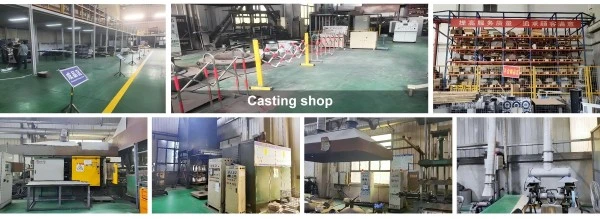
- Utilize advanced casting techniques like gravity casting for consistent material properties
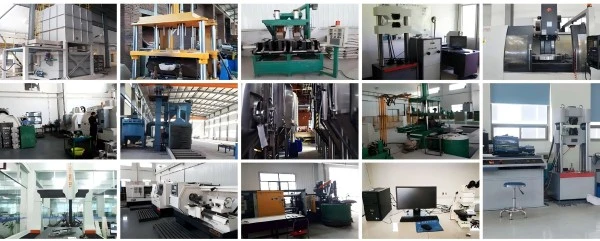
- Implement CNC machining for accurate dimensioning and surface finishing
- Employ stringent quality control measures throughout the production process
Rongbao Enterprise's commitment to precision is evident in their ISO 9001:2015 certification, ensuring that each cast coupling disc meets rigorous quality standards.
Optimizing for High-Speed Applications
Many industrial applications in the modern world require high-speed functioning connections. When designing for high-speed operation, consider:
- Dynamic balancing to minimize vibration
- Heat dissipation capabilities to prevent thermal expansion issues
- Material selection for high-frequency fatigue resistance
- Aerodynamic profiling to reduce windage losses
Ensuring Compatibility with Diverse Systems
A well-designed cast coupling disc should be versatile enough to integrate seamlessly with various power transmission systems. This requires:
- Standardized interfaces for easy installation and replacement
- Scalable designs to accommodate different torque requirements
- Compatibility with common shaft sizes and configurations
- Consideration of industry-specific standards and regulations
Rongbao Enterprise's approach to customization and OEM/ODM services ensures that their cast coupling discs can be tailored to meet specific system requirements across various industries.
A comprehensive strategy that strikes a balance between torque capacity, misalignment correction, environmental resilience, precise manufacturing, speed capabilities, and system integration is needed to design an efficient cast coupling disc. Engineers may design disc couplings that provide dependable, effective, and long-lasting performance in a variety of industrial applications if they properly take these criteria into account.
Those seeking high-quality cast coupling discs that meet these design specifications may trust Rongbao Enterprise. From the production of electronics and medical equipment to the automotive and aerospace industries, Rongbao Enterprise is ideally positioned to satisfy the demands of a broad range of industries due to their dedication to accuracy, adaptability, and adherence to international quality standards.
Cast Coupling Disc Supplier: Rongbao Enterprise
Since its founding in 2003, Rongbao Enterprise has grown to become a major force in the accurate casting and processing of aluminum alloys. Rongbao's manufacturing capabilities include precision machining services, high-pressure die casting, low-pressure die casting, and gravity casting, with a focus on offering integrated component supply solutions.
70% of Rongbao Enterprise's goods have been successfully exported to markets in the US, Europe, Japan, and other countries because of its strong dedication to environmental sustainability, innovation, and accuracy. They are the perfect partner for companies looking for premium cast coupling discs because of their international alliances and ongoing improvements in production processes.
To learn more about Rongbao Enterprise's solutions or to discuss your specific requirements, don't hesitate to reach out:
Email: steve.zhou@263.net or zhouyi@rongbaocasting.com
References
- Saavedra, P. N., & Ramírez, D. E. (2004). Vibration analysis of rotors for the identification of shaft misalignment. Part 1: Theoretical analysis. Mechanical Systems and Signal Processing, 18(5), 1098-1124.
- Bhaumik, S. K., Sujata, M., & Venkataswamy, M. A. (2008). Fatigue failure of aircraft components. Engineering Failure Analysis, 15(6), 675-694.
- Jalan, A. K., & Mohanty, A. R. (2009). Model based fault diagnosis of a rotor–bearing system for misalignment and unbalance under steady-state condition. Journal of Sound and Vibration, 327(3-5), 604-622.
- Choudhury, A., & Tandon, N. (1999). Application of acoustic emission technique for the detection of defects in rolling element bearings. Tribology International, 32(8), 469-480.
- Bhushan, B. (2013). Introduction to tribology. John Wiley & Sons.
Learn about our latest products and discounts through SMS or email