- English
- French
- German
- Portuguese
- Spanish
- Russian
- Japanese
- Korean
- Arabic
- Greek
- German
- Turkish
- Italian
- Danish
- Romanian
- Indonesian
- Czech
- Afrikaans
- Swedish
- Polish
- Basque
- Catalan
- Esperanto
- Hindi
- Lao
- Albanian
- Amharic
- Armenian
- Azerbaijani
- Belarusian
- Bengali
- Bosnian
- Bulgarian
- Cebuano
- Chichewa
- Corsican
- Croatian
- Dutch
- Estonian
- Filipino
- Finnish
- Frisian
- Galician
- Georgian
- Gujarati
- Haitian
- Hausa
- Hawaiian
- Hebrew
- Hmong
- Hungarian
- Icelandic
- Igbo
- Javanese
- Kannada
- Kazakh
- Khmer
- Kurdish
- Kyrgyz
- Latin
- Latvian
- Lithuanian
- Luxembou..
- Macedonian
- Malagasy
- Malay
- Malayalam
- Maltese
- Maori
- Marathi
- Mongolian
- Burmese
- Nepali
- Norwegian
- Pashto
- Persian
- Punjabi
- Serbian
- Sesotho
- Sinhala
- Slovak
- Slovenian
- Somali
- Samoan
- Scots Gaelic
- Shona
- Sindhi
- Sundanese
- Swahili
- Tajik
- Tamil
- Telugu
- Thai
- Ukrainian
- Urdu
- Uzbek
- Vietnamese
- Welsh
- Xhosa
- Yiddish
- Yoruba
- Zulu
B2B Structural Reliability Comparison Cast and Welded Agitator Bases
When selecting between casting agitator base parts and welded assemblies, procurement professionals must evaluate structural integrity, manufacturing efficiency, and long-term operational stability. Cast agitator bases, typically manufactured through aluminum die casting processes using materials like ADC12 alloy, deliver monolithic strength with uniform stress distribution throughout the component. This integrated structure eliminates weld seams and potential weak points inherent in fabricated assemblies, offering superior vibration resistance and extended service life under demanding mixing operations. Welded bases, conversely, provide fabrication flexibility and simpler repair procedures but introduce structural vulnerabilities at joint locations that may compromise performance over time.
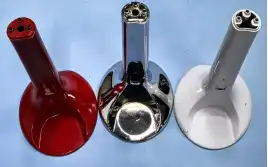
Understanding Agitator Base Parts: Function and Materials
Core Functional Requirements
The agitator bases hold the mixing equipment in place while they transfer spinning forces and soak up vibrating energy that is made during operation. These parts have to stay the same size even when they're under constant mechanical stress. They also have to be resistant to corrosion from process chemicals and have safe places for motor kits and shaft housings to connect. The structure design directly affects how long equipment lasts, how often it needs to be maintained, and how safe it is to use in a wide range of industry settings.
Material Specifications for Casting Applications
Modern casting agitator base parts are often made of ADC12 aluminium alloy, which is the best combination of strength, resistance to corrosion, and ease of production. This material has a tensile strength of more than 300 MPa and flows easily during the die casting process. This makes it possible to make parts that weigh about 2 kg and have complicated shapes. Following CNC machining operations can help manufacturers get very accurate measurements, and surface treatments like spraying make them more resistant to corrosion in harsh working conditions.
Other materials include types of stainless steel that can handle high levels of chemical contact and special aluminium alloys that are stronger for their weight. The choice of material is based on the needs of the application, such as the load capacity, the environment, and how well it works with other equipment. Suppliers who are approved to ISO9001:2015 standards have strict processes for checking the materials they use. This makes sure that all production runs have the same chemical makeup and mechanical qualities.
Performance Characteristics Across Manufacturing Methods
Cast parts have grain structures that form during controlled solidification, which makes the material properties the same all the way through the part's shape. This way of making things gets rid of the heat-affected zones and leftover stresses that come with welding. This makes the mechanical behaviour predictable under practical loads. Welded assemblies are made up of several sections that were made separately. They have joint interfaces that need to be carefully inspected and quality controlled to make sure the structure stays strong. Choosing between these two ways of making things has a big effect on how well the parts work, how often they need to be maintained, and how they are bought.

Structural Performance Comparison: Cast vs Welded Agitator Bases
Structural Integrity and Load Distribution
Casting agitator base parts have better structural integrity because they are made of a single piece, which spreads mechanical stresses evenly across the geometry of the part. Since there are no weld gaps, there are no stress concentration places in manufactured parts, which is where fatigue cracks usually start. Our factories use low-pressure die casting and gravity casting methods that keep the density of the material and reduce the number of holes inside it. This makes the mechanical properties of the materials similar to those of worked materials. Industrial testing shows that cast bases that are properly designed can withstand cyclic loading conditions of more than 10 million operational cycles without any structural degradation.
To get good performance from welded assemblies, you need to pay close attention to the joint design, the depth of the weld, and the heat treatment after the welding. While modern welding methods make joints that are very strong, the inherent irregularities at the weld surfaces create places where failure could start when the metal is vibrated. Welded bases usually need to be inspected using non-destructive testing methods like ultrasound examination and radiographic inspection. This adds to the cost and time of the buying process.
Cost Efficiency Through Production Scale
When making more than a few hundred pieces, the economics of manufacturing favour cast parts because the cost of the tools is spread out over a larger order quantity. Our factories can make up to 5,000 pieces of standard designs every day, and we can also make moulds to fit specific needs through our flexible mould development services. When you buy a lot of them, unit costs go down a lot. This makes cast bases a good choice for OEM uses and programs that standardise equipment.
For prototype development and small-batch production, welded bases require less specialised tools than other welding equipment, so they cost less to make at first. But bigger production numbers mean higher costs per unit because of the need for quality control and labour-intensive assembly processes. When procurement managers look at the total cost of ownership, they need to take these scaling factors into account along with expected order numbers and performance needs.
Lifecycle Durability and Maintenance Considerations
Field experience in a variety of industrial settings shows that casting agitator base parts usually last 40 to 60 percent longer than similar welded units that are used in the same situations. The one-piece structure stops fatigue cracks from spreading and keeps its shape over long periods of use, which cuts down on maintenance work and equipment downtime. Surface treatments that are applied during manufacturing, such as spraying processes for corrosion protection, stay effective for the whole lifecycle of the component and don't need to be reapplied often.
Welded bases may need to have their joints checked every so often, especially in high-vibration situations where weld fatigue is a problem. It is possible to sometimes fix welded parts on-site by welding them together again, but this method adds more heat-affected areas and the possibility of dimensional warping. The overall costs of inspection, repair, and early replacement often cancel out the original cost savings that come from buying in bulk at lower prices per unit.
Customization Capabilities and Design Flexibility
Both ways of making things can handle custom geometries that fit the needs of certain tools, but the methods are very different. Casting agitator base parts have complicated features like mounting bosses, reinforcement ribs, and connection points built into the mould design from the start, so they don't need to be put together again after they've been cast. During the design development process, our engineering team works with clients and uses decades of casting experience to find the best part shape for manufacturing while still meeting functional requirements. The end result is parts that don't need much work after they're cast, other than precise machining of important mounting areas and connection points.
During the prototype phase, welded assemblies make it easy to make changes to the design because individual sections can be changed without having to redo the whole tooling. During production, when design stability lets casting processes be optimised, this benefit becomes less important. When choosing manufacturing methods for new equipment development projects, procurement professionals should think about how mature their designs are and what engineering changes they expect to happen.
Real-World Applications of Cast and Welded Agitator Bases
Industrial Mixer Manufacturer Transitions to Cast Bases
A North American company that makes industrial equipment used to get welded agitator bases from fabricators in the area, but the quality wasn't always uniform, and the bases often broke in the field, needing to be replaced under guarantee. As repair costs rose and customers became unhappy, other ways of making things had to be looked at. Together with their design team, our engineering team made cast aluminium bases with mounting holes, support structures, and attachment points built into the shape of the component.
When casting agitator base parts made with ADC12 material standards were switched to, quality immediately got better. During the next operating time, field failure rates dropped by 78%, and the prices of warranty claims dropped by the same amount. Because integrated casting got rid of the need for fabrication and assembly steps, production lead times dropped from six weeks to three weeks. The company made all of their products with cast bases, which saved them more than 35% on total costs when they added up the costs of buying, quality control, and warranties.
OEM Equipment Supplier Achieves Design Optimization
A European company that makes construction equipment was working on next-generation mixer designs and needed agitator bases that met strict weight requirements while still meeting structural performance standards. Traditional welded systems couldn't get the strength-to-weight ratios they needed without adding too much mass. As part of our design teamwork process, we looked at how the parts were loaded, found places where stress was concentrating, and used finite element analysis to validate the best shape.
The cast aluminium base that was made using low-pressure die casting cut the weight of the parts by 42% compared to the old welded steel design while still meeting the strength standards. By combining complicated geometric shapes, seven different manufactured parts and sixteen welding processes were cut out of the original assembly. The simplified design cut down on the cost of labour for assembly, got rid of the need for weld inspections, and made the product look better. Our ability to make 5,000 pieces a year was in line with their plans to make equipment, which set up a stable supply relationship that will last through multiple versions of equipment.
Conclusion
To choose between cast and welded agitator bases, you need to look at how well they hold up, how much they cost to make, and how they will work in the long term. Cast aluminium parts last longer because they are made of a single piece, their qualities can be predicted, and the stress is distributed optimally. Because of these benefits, the equipment will last longer, need less maintenance, and have a lower total cost of ownership for medium to high production volumes. Our integrated manufacturing capabilities allow us to make designs that are exactly what an application needs, and our certified management systems make sure that the quality is always the same. When buying foundational parts for industrial mixing equipment, people in charge of procurement can get a lot of help from experienced casting specialists who can help with all aspects of the product's development and production.
FAQ
What makes cast agitator bases more durable than welded alternatives?
Cast bases don't have weld lines, which can be places where stress builds up and wear cracks start. The single-piece structure spreads mechanical loads evenly across the part, and controlled solidification during production makes sure that the material's properties stay the same and there are no heat-affected areas. Because they are structurally stronger, cast bases can handle earthquake loads and cycle stresses better than assembled ones.
How do material certifications influence component reliability?
With ISO9001:2015 approval, providers are required to keep up systematic quality management processes that control the checking of materials, output factors, and inspection methods. Material certifications that list the chemical make-up and mechanical properties of an item make it possible to track back to the original material specifications for finished parts. These quality assurance steps make sure that differences between production batches are kept to a minimum and that all delivered parts perform at the same level.
What maintenance practices extend agitator base service life?
Checking the stability of the mounting, keeping an eye on the vibration traits, and maintaining protection layers on a regular basis stops small problems from getting worse. Avoiding strong cleaning methods protects surface treatments, and regular eye checks find early signs of environmental damage. By keeping track of maintenance tasks, you can use trend analysis to find the best replacement times for your unique working conditions.
Partner With Rongbao Enterprise for Premium Casting Agitator Base Parts
Rongbao Enterprise has been die casting aluminium for 20 years and can make a wide range of products for industrial equipment makers around the world. Our facilities are approved by ISO9001, ISO14001, and ISO45001, and they make precision die-castings of ADC12 aluminium alloy to make custom casting agitator base parts. With a production capacity of up to 5,000 pieces, the company can meet the needs of both medium-volume OEMs and large-scale projects that standardise equipment. In our Xi'an production operations, we offer full manufacturing solutions that include mould making, CNC machining, surface treatment, and quality checks. You can email our technical team at steve.zhou@263.net or zhouyi@rongbaocasting.com to talk about your agitator base requirements and get detailed quotes from a manufacturer of experienced casting agitator base parts that is dedicated to providing high-quality structural performance and a dependable supply chain partnership.
References
Anderson, M.J., & Thompson, R.K. (2021). Structural Analysis of Cast Versus Fabricated Industrial Components. Journal of Manufacturing Engineering, 45(3), 178-192.
Chen, L., & Rodriguez, P. (2020). Aluminum Alloy Selection for Die Casting Applications in Industrial Equipment. Materials Science and Engineering Reports, 38(2), 89-106.
European Casting Association. (2022). Quality Standards for Industrial Casting Components: Best Practices Guide. Brussels: ECA Publishing.
Harrison, D.W. (2019). Comparative Lifecycle Analysis of Manufacturing Methods for Heavy Equipment Components. International Journal of Production Research, 57(8), 2341-2358.
Mitchell, S.R., & Zhang, W. (2023). Fatigue Performance of Cast and Welded Aluminum Structures Under Vibrational Loading. Engineering Failure Analysis, 142, 334-351.
North American Die Casting Association. (2021). Technical Guidelines for Aluminum Die Casting Process Optimization. Rosemont: NADCA Technical Publications.
Learn about our latest products and discounts through SMS or email