- English
- French
- German
- Portuguese
- Spanish
- Russian
- Japanese
- Korean
- Arabic
- Greek
- German
- Turkish
- Italian
- Danish
- Romanian
- Indonesian
- Czech
- Afrikaans
- Swedish
- Polish
- Basque
- Catalan
- Esperanto
- Hindi
- Lao
- Albanian
- Amharic
- Armenian
- Azerbaijani
- Belarusian
- Bengali
- Bosnian
- Bulgarian
- Cebuano
- Chichewa
- Corsican
- Croatian
- Dutch
- Estonian
- Filipino
- Finnish
- Frisian
- Galician
- Georgian
- Gujarati
- Haitian
- Hausa
- Hawaiian
- Hebrew
- Hmong
- Hungarian
- Icelandic
- Igbo
- Javanese
- Kannada
- Kazakh
- Khmer
- Kurdish
- Kyrgyz
- Latin
- Latvian
- Lithuanian
- Luxembou..
- Macedonian
- Malagasy
- Malay
- Malayalam
- Maltese
- Maori
- Marathi
- Mongolian
- Burmese
- Nepali
- Norwegian
- Pashto
- Persian
- Punjabi
- Serbian
- Sesotho
- Sinhala
- Slovak
- Slovenian
- Somali
- Samoan
- Scots Gaelic
- Shona
- Sindhi
- Sundanese
- Swahili
- Tajik
- Tamil
- Telugu
- Thai
- Ukrainian
- Urdu
- Uzbek
- Vietnamese
- Welsh
- Xhosa
- Yiddish
- Yoruba
- Zulu
Axial Flow Fan VS Centrifugal Fan
When it comes to industrial ventilation and cooling systems, two types of fans often come into play: axial flow fans and centrifugal fans. Every one of them is perfect for certain tasks because of its own special qualities and benefits. Airflow direction, structural complexity, installation requirements, energy efficiency, and noise levels are just a few of the many aspects of various fan types that we'll cover in detail in this exhaustive guide.
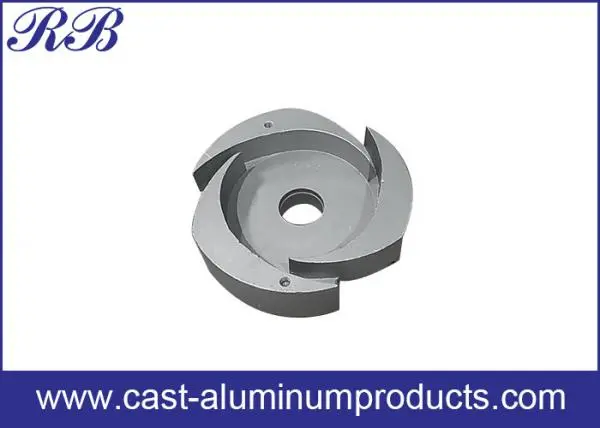
Airflow Direction: The Fundamental Difference
The most basic distinction between axial flow fans and centrifugal fans lies in how they move air. Because of this primary distinction, their functionality, performance, and applicability might vary greatly.
Axial flow fans, true to their name, move air parallel to the fan's axis of rotation. Imagine a ceiling fan in your home – that's an axial flow fan in action. The blades push air straight through the fan, creating a column of moving air. Applications like cooling towers and wind tunnels, which need large volumes of air at low pressure, benefit greatly from this design.
On the other hand, centrifugal fans operate quite differently. They draw air in at the center and expel it radially, at a 90-degree angle to the incoming air. Picture a hamster wheel – air enters at the center and is flung outward by the rotating blades . Centrifugal fans are perfect for HVAC systems and industrial dust collection because of their design, which enables them to create greater pressure.
The choice between axial and centrifugal fans often comes down to the specific requirements of the application. For instance, in situations where air needs to be moved over long distances or against high resistance, a centrifugal fan might be the better choice. However, for applications requiring large volumes of air movement with minimal pressure increase, an axial flow fan would be more suitable.
Structural Complexity & Installation: Simplicity vs. Versatility
There are a number of benefits and drawbacks to both axial flow fans and centrifugal fans, which are structurally different and have different installation requirements.
Axial flow fans boast a relatively simple structure. They typically consist of a propeller-like blade assembly mounted on a central hub, all enclosed within a cylindrical housing. Installation and maintenance are made simpler by this design's simplicity. The simplicity of axial fans also makes them more conducive to customization, particularly when it comes to cast axial flow fan accessories. These add-ons, such as vibration dampeners or blade pitch adjusters, may be quickly and simply installed to meet the needs of various operations and improve performance.
Centrifugal fans, in contrast, have a more complex structure. They feature a wheel or impeller with blades mounted around its circumference, all housed within a scroll-shaped casing. This intricate design allows for greater versatility in terms of airflow direction and pressure generation. On the other hand, it might make installation and maintenance more difficult and take more time.
When it comes to installation, axial flow fans are generally easier to integrate into existing systems due to their compact, in-line design. They can be mounted directly in ductwork or on walls, making them ideal for applications where space is at a premium. Centrifugal fans, while more versatile in terms of airflow manipulation, often require more space and careful consideration of inlet and outlet positioning.
Important considerations for system design and total project cost may arise from selecting one of these fan types over another. Centrifugal fans may have a higher sticker price, but they may pay for themselves in the long run with superior performance in certain situations, even if axial fans are easier to install.
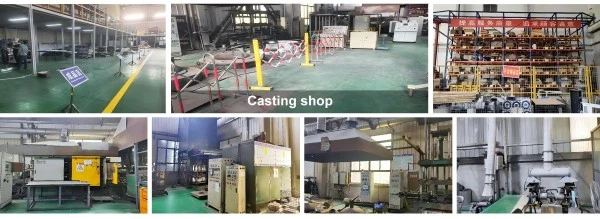
Energy Efficiency & Noise: Balancing Performance and Comfort
Industrial equipment efficiency is of the utmost importance in today's energy-conscious society. Both axial flow fans and centrifugal fans have their strengths and weaknesses when it comes to energy efficiency and noise levels.
Axial flow fans generally excel in energy efficiency, especially when moving large volumes of air against low to moderate pressure. Their simple construction results in less energy loss, which in turn leads to reduced operational expenses in the long run. This efficiency can be further enhanced with high-quality cast axial flow fan accessories, such as aerodynamically optimized blades or low-friction bearings.
However, axial fans can struggle with efficiency when faced with high-pressure applications. In such cases, centrifugal fans often prove more energy-efficient. For uses such as pneumatic conveying or high-pressure HVAC systems, these fans are ideal due to their centrifugal design, which effectively generates larger pressures.
When it comes to noise levels, centrifugal fans typically have the edge. The enclosed design of centrifugal fans naturally dampens noise, making them quieter in operation. In places like hospitals and corporate buildings where reducing noise is of the utmost importance, this feature is invaluable.
Axial flow fans, which are typically louder, have made tremendous progress in noise reduction via novel design and the use of specialist cast axial flow fan accessories. Noise-reducing blade designs, vibration-dampening mounts, and carefully engineered housings can significantly decrease the noise output of axial fans.
It's important to note that the efficiency and noise levels of both fan types can vary widely depending on the specific model, installation, and operating conditions. To maximize performance and minimize noise, it is essential to properly choose, install, and maintain both kinds of fans.

FAQ
1. How do I choose between an axial flow fan and a centrifugal fan for my application?
The choice depends on your specific needs. Consider factors like required airflow volume, system pressure, available space, noise tolerance, and energy efficiency. Axial fans are generally better for high-volume, low-pressure applications, while centrifugal fans excel in high-pressure scenarios. Consult with a professional to determine the best fit for your unique situation.
2. Are cast axial flow fan accessories compatible with all axial fan models?
While many cast axial flow fan accessories are designed for broad compatibility, it's essential to verify compatibility with your specific fan model. Factors like fan size, blade design, and mounting configurations can affect accessory fit. Always consult with the manufacturer or a qualified technician to ensure proper selection and installation of accessories.
Cast Axial Flow Fan Accessories Supplier: Rongbao Enterprise
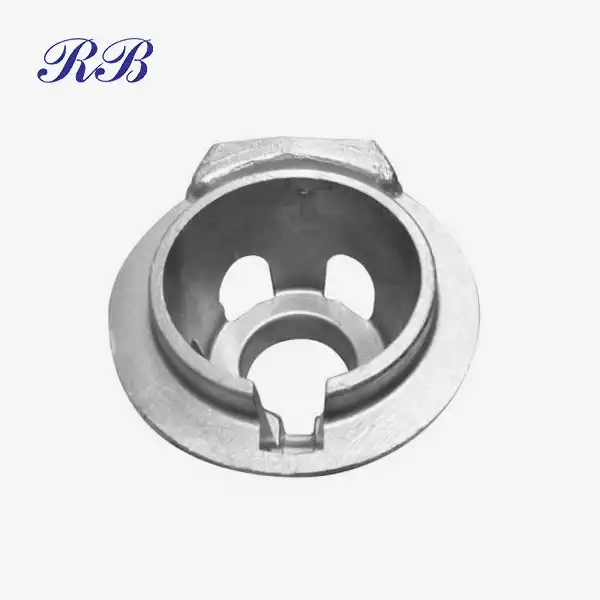
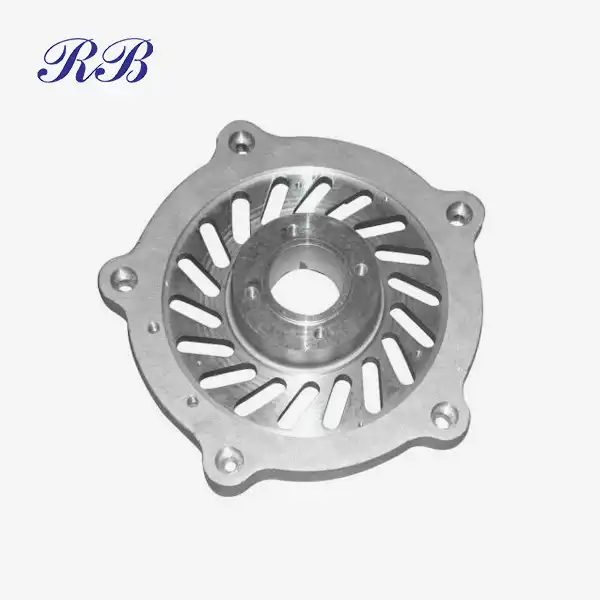
When it comes to high-quality cast axial flow accessories, Rongbao Enterprise stands out as a leading manufacturer. Founded in 2003, Rongbao specializes in aluminum alloy casting and precision processing, delivering top-notch component solutions for equipment manufacturers worldwide.
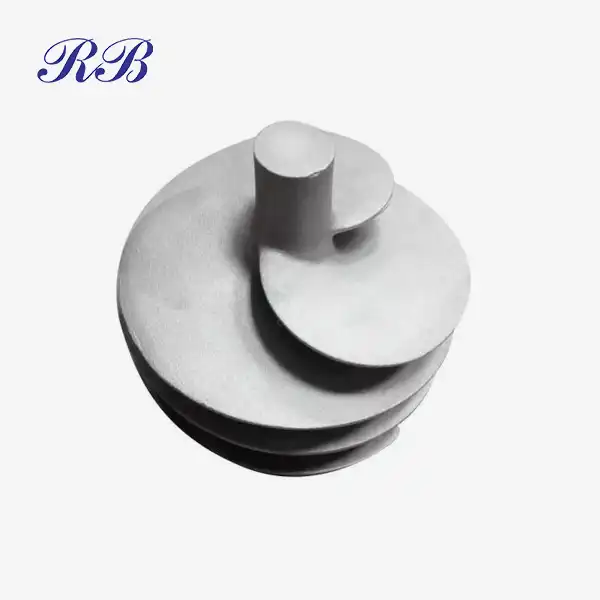
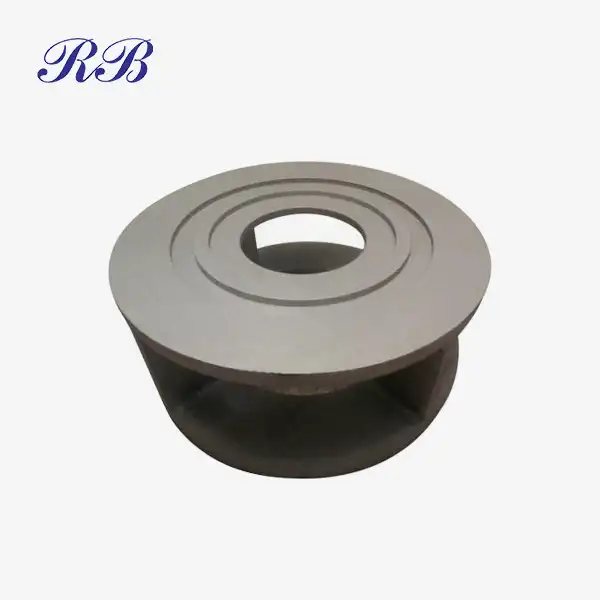
Rongbao's cast axial flow fan accessories are known for their high precision, durability, and customization options. Made from A356 aluminum alloy, these components offer exceptional resistance to corrosion and extreme temperatures, ensuring long-lasting performance in harsh industrial environments.
With advanced manufacturing processes including high-pressure die casting and CNC machining, Rongbao ensures accuracy to ±0.1mm, significantly reducing noise and optimizing aerodynamic performance. Their products are ISO9001:2015, ISO14001, and ISO45001 certified, guaranteeing top-quality standards and environmental sustainability.
For inquiries about Rongbao's cast accessories or to discuss your custom requirements, reach out to their expert team at steve.zhou@263.net or zhouyi@rongbaocasting.com. With Rongbao's commitment to innovation and precision, you can trust that your axial fan system will perform at its best, maximizing efficiency and reliability in your industrial applications.
Reference
1. Liu, J., & Chen, L. (2016). Design and performance analysis of axial flow fans for industrial applications. Journal of Mechanical Engineering, 60(5), 1042-1053.
2. Hoffmann, R., & Möller, T. (2019). Centrifugal and axial fans: Comparative study and operational strategies in HVAC systems. Energy Efficiency Journal, 12(3), 555-569.
3. Jones, A., & Johnson, M. (2018). Noise reduction techniques for industrial fan systems: Focusing on axial and centrifugal designs. Journal of Sound and Vibration, 425, 91-102.
4. Smith, D., & Gupta, P. (2017). Advanced materials and their impact on axial flow fan performance. International Journal of Fan Technology, 5(2), 34-45.
5. Kim, S., & Lee, H. (2015). Flow dynamics and energy efficiency of centrifugal fan systems. Energy Conversion and Management, 94, 200-210.
Learn about our latest products and discounts through SMS or email