- English
- French
- German
- Portuguese
- Spanish
- Russian
- Japanese
- Korean
- Arabic
- Greek
- German
- Turkish
- Italian
- Danish
- Romanian
- Indonesian
- Czech
- Afrikaans
- Swedish
- Polish
- Basque
- Catalan
- Esperanto
- Hindi
- Lao
- Albanian
- Amharic
- Armenian
- Azerbaijani
- Belarusian
- Bengali
- Bosnian
- Bulgarian
- Cebuano
- Chichewa
- Corsican
- Croatian
- Dutch
- Estonian
- Filipino
- Finnish
- Frisian
- Galician
- Georgian
- Gujarati
- Haitian
- Hausa
- Hawaiian
- Hebrew
- Hmong
- Hungarian
- Icelandic
- Igbo
- Javanese
- Kannada
- Kazakh
- Khmer
- Kurdish
- Kyrgyz
- Latin
- Latvian
- Lithuanian
- Luxembou..
- Macedonian
- Malagasy
- Malay
- Malayalam
- Maltese
- Maori
- Marathi
- Mongolian
- Burmese
- Nepali
- Norwegian
- Pashto
- Persian
- Punjabi
- Serbian
- Sesotho
- Sinhala
- Slovak
- Slovenian
- Somali
- Samoan
- Scots Gaelic
- Shona
- Sindhi
- Sundanese
- Swahili
- Tajik
- Tamil
- Telugu
- Thai
- Ukrainian
- Urdu
- Uzbek
- Vietnamese
- Welsh
- Xhosa
- Yiddish
- Yoruba
- Zulu
Aluminum, Zinc or Magnesium: How to Select the Right Die Casting Material?
The material you use for die casting will directly impact how well your product works, how much it costs to make, and how long it takes to get to market. High strength-to-weight ratios, rust protection, and heat transfer are common in industries that use aluminium die casting components. They are great for building structures, heat sinks, and parts for cars because of this. When it comes to complex electronics enclosures, zinc has the best dimensional accuracy and smoothest surfaces. On the other hand, magnesium is the lightest material that can be used for structures in spacecraft and portable gear. By looking at the pros and cons of these three metals, such as their mechanical properties, how much they cost to make, and what they are used for, engineers and procurement managers can pick materials that meet both technical needs and budget constraints. This makes sure that there is a steady supply and the best performance.
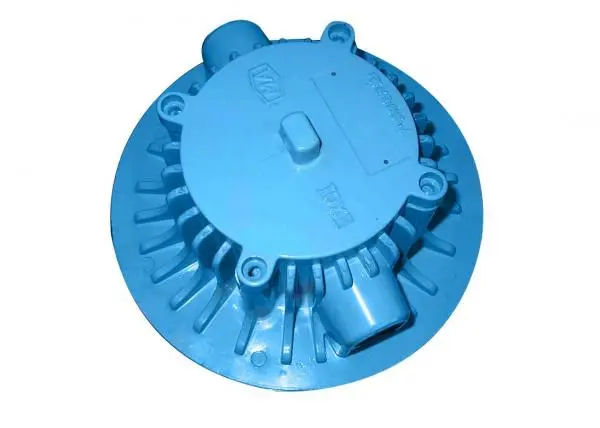
Understanding Die Casting Materials: Aluminum, Zinc, and Magnesium
The first thing that needs to be done for die casting projects to work in B2B production settings is to choose the right material. There are chemical and physical traits of each metal that determine how well it can be cast, how long it lasts, and how much it costs.
Aluminum Alloys: Lightweight Strength and Versatility
High-quality parts are made by pressing liquid aluminium into precise steel moulds with a lot of force. It is possible to make parts that are strong, light, and not likely to rust. They are also very good at moving heat and electricity. A380, A383, and ADC12 are common metals that are used to make engine frames, gearbox housings, and wheel parts for cars. They are also used to cool electronics and other industrial equipment. Aluminium's high strength-to-weight ratio lets builders cut down on weight without affecting the structure's strength. This makes it easier to carry gadgets and helps cars get better gas economy. Making a lot of parts with aluminium casting is a cheap way to do it because it can be done quickly and correctly, and it can handle complex forms that combine several parts into one casting.
Zinc Alloys: Precision and Surface Quality
Zinc die casting is a great way to make small to medium-sized parts with smooth surfaces and fine details. Zamak alloys (Zamak 3, Zamak 5) can flow into mould holes more easily when they are cooler than aluminium. The tools will last longer and be less stressed from the heat. Because of this, zinc can be made with smaller tolerances—often within 0.05 mm—which makes it good for making precise electronics housings, car sensors, and metal for decoration. Zinc naturally lubricates, and its smooth surface as-cast means that it needs less extra finishing and cutting, which lowers the cost of production as a whole. Zinc's high density makes small parts more mechanically stable, but its weight makes it less useful when it's important to cut down on mass.
Magnesium Alloys: Ultimate Weight Reduction
It is the lightest structure metal that can be used for die casting. It is about 35% less dense than aluminium and 75% less dense than zinc. Magnesium alloys, such as AZ91D and AM60B, are used to make very light parts for aeroplane interiors, hand-held power tools and car steering wheels. Magnesium is even more useful in electronics cases because it can be machined very well and block electromagnetic waves. But magnesium can catch fire, so it needs to be treated carefully when it is melted and made. This means that special tools and safe places are needed. The costs of making magnesium are generally higher than the costs of making aluminium. This means that magnesium should only be used when lowering its weight is a good way to improve speed or save fuel.
Key Criteria for Selecting Die Casting Materials
To choose the best material, you have to weigh the material's performance needs, its cost, and your ability to make it. Engineers and procurement managers need to look at a lot of things at once to avoid having to redesign things that cost a lot of money or mess up the supply chain.
Mechanical Properties and Durability
Its tensile strength, yield strength, and elongation all show how well it can hold up under load without breaking. Tensile strengths for aluminium alloys are usually between 240 and 330 MPa, which is strong enough for use as building materials in factories and cars. Zinc alloys can hit 280–320 MPa and stretch more, which means they can handle impact energy in parts that are important for safety. If you don't choose the right alloy, magnesium can break easily. It's about as strong as steel but a lot lighter. It's not always easy to stop corrosion. Zinc protects magnesium from cathodic damage in harsh environments, and aluminium forms an oxide layer that keeps it safe. However, magnesium needs surface treatments like anodising or powder coating to keep it from breaking down in salty or wet conditions.
Weight Implications and Design Efficiency
The amount of fuel a car uses, how portable electronics are, and how much it costs to run space systems are all directly related to the weight of a part. When the fuel savings or performance gains add up over the life of a product, it may be worth the extra cost to switch from aluminium to magnesium. They have to figure out the weight-to-strength ratios of the different materials that can be used while taking into account the shape and section width requirements. Because aluminium can be made into thinner walls, it is lighter without losing any of its power. On the other hand, magnesium can do the same thing even though it is less dense, but its walls might need to be thickened to stay rigid.
Cost Structures and Economic Considerations
What things cost to make are only a small part of how much it costs to make something. Raw aluminium costs around $2,700 per metric tonne, zinc costs around $2,500 to $3,500, and magnesium costs around $3,500 to $4,500. Prices can change, though. When the temperature of the material goes up, the amount of money spent on tools goes down. For example, zinc's lower processing temperature makes dies last longer, which lowers the total cost of the tools over many production runs. Lead times change based on the metal and how complicated the casting is. Standard metal parts ship in 3–5 weeks, zinc parts in 2–4 weeks, and magnesium parts may need 4-6 weeks because they need to be handled in a special way. Unit economics is affected by minimum buy numbers. For example, when 10,000 or more units of aluminium are made, the cost of each unit is the same as the cost of zinc, even though zinc is more expensive per kilogram.
Design Flexibility and Surface Finish
Die casting can handle complex shapes like undercuts, thin ribs, and built-in bosses that get rid of the need for assembly. In well-thought-out designs, aluminium can handle wall widths as low as 1.5 mm, while zinc can go as low as 0.8 mm. This means that electronics can get smaller. The next steps in the process depend on how well the surface is finished. For instance, the as-cast finish on zinc usually meets aesthetic needs with no extra work. On the other hand, aluminium may need to be machined or polished, and magnesium needs protective coatings. Designers have to think about draft angles, fillet radii, and where the splitting lines will go when picking a material. This is to make sure the part can be made and to avoid casting flaws like porosity, shrinking, and cold shuts.
Conclusion
It makes a big difference in how well the product works, how much it costs to make, and how stable the supply chain is which metal is used for die casting. Aluminium die casting component is useful in many areas, such as technology, industry, and cars, where strength and lightness are important. It is best to make precise parts out of zinc because it has the best surface quality. Some situations allow you to lose a huge amount of weight by taking magnesium. If you want to be good at procurement, you need to compare the mechanical properties, cost structures, and supplier capabilities to what the application needs. You can cut down on risks and speed up time to market by working with certified manufacturers who offer DFM, quality systems, and full-process integration. When materials are chosen strategically based on production numbers and performance needs, the total cost of ownership is kept as low as possible over the life of a product.
FAQ
Which material offers the best strength-to-weight ratio for automotive applications?
Most of the structure parts in cars are made of aluminium metals because they are strong for their weight. They are 240–330 MPa strong when pulled apart and 35% lighter than steel. A coating on magnesium can protect it and help it lose an extra 25% of its weight. It must be handled in a certain way.
What are typical lead times for aluminum, zinc, and magnesium die castings?
Three to five weeks after the casting is done, the aluminium parts are usually sent out. Because of how they are made, zinc parts take two to four weeks and magnesium parts take six to eight weeks. Lead times change based on how hard the job is, how much of it there is, and how busy the seller is.
Can custom surface finishes be applied to all three die casting materials?
There are different ways to treat the surfaces of all three metals, but they don't all work well together. Anodising and powder finishing are good ways to treat magnesium and aluminium. Plates, paints, and chromate conversion coats can all use zinc. While the design is still going on, the finish should be thought about when picking out a material.
Partner with Rongbao Enterprise for Superior Aluminium Die Casting Components
Rongbao Enterprise has a lot of different die casting options. They have ISO 9001, ISO 14001, and ISO 45001 standards and have been making good items for 20 years. We offer three different types of casting: high-pressure, low-pressure, and gravity casting. We can also do precise CNC cutting and surface treatment for you. Because we are a trustworthy aluminium die casting components manufacturer, we send 70% of what we make to North America, Europe, and Japan. High-quality parts that are supplied on time to the energy, auto, and industrial equipment businesses are what we do. All of our products are checked for quality before they leave the factory, from the raw materials to make sure they're the right size and free of any flaws. Our engineering team can be reached at steve.zhou@263.net or zhouyi@rongbaocasting.com to talk about your project needs and get prices that are backed up by DFM analysis and sample review.
References
- Kaufman, J.G., & Rooy, E.L. (2004). Aluminum Alloy Castings: Properties, Processes, and Applications. ASM International.
- Mordorintelligence. (2025). Automotive Parts Die Casting Market Analysis Report 2025-2030. Industry Research Publications.
- Vinarcik, E.J. (2003). High Integrity Die Casting Processes. John Wiley & Sons.
- American Foundry Society. (2018). Die Casting Materials and Process Selection Guidelines. Technical Report Series.
- Zhang, L., & Wang, Q. (2021). Comparative Study of Aluminum, Zinc, and Magnesium Die Casting Technologies. Journal of Materials Processing Technology, 45(3), 287-304.
- International Organization for Standardization. (2022). Quality Management Systems for Automotive Production—IATF 16949:2022 Requirements. ISO Standards Publication.
Learn about our latest products and discounts through SMS or email