- English
- French
- German
- Portuguese
- Spanish
- Russian
- Japanese
- Korean
- Arabic
- Greek
- German
- Turkish
- Italian
- Danish
- Romanian
- Indonesian
- Czech
- Afrikaans
- Swedish
- Polish
- Basque
- Catalan
- Esperanto
- Hindi
- Lao
- Albanian
- Amharic
- Armenian
- Azerbaijani
- Belarusian
- Bengali
- Bosnian
- Bulgarian
- Cebuano
- Chichewa
- Corsican
- Croatian
- Dutch
- Estonian
- Filipino
- Finnish
- Frisian
- Galician
- Georgian
- Gujarati
- Haitian
- Hausa
- Hawaiian
- Hebrew
- Hmong
- Hungarian
- Icelandic
- Igbo
- Javanese
- Kannada
- Kazakh
- Khmer
- Kurdish
- Kyrgyz
- Latin
- Latvian
- Lithuanian
- Luxembou..
- Macedonian
- Malagasy
- Malay
- Malayalam
- Maltese
- Maori
- Marathi
- Mongolian
- Burmese
- Nepali
- Norwegian
- Pashto
- Persian
- Punjabi
- Serbian
- Sesotho
- Sinhala
- Slovak
- Slovenian
- Somali
- Samoan
- Scots Gaelic
- Shona
- Sindhi
- Sundanese
- Swahili
- Tajik
- Tamil
- Telugu
- Thai
- Ukrainian
- Urdu
- Uzbek
- Vietnamese
- Welsh
- Xhosa
- Yiddish
- Yoruba
- Zulu
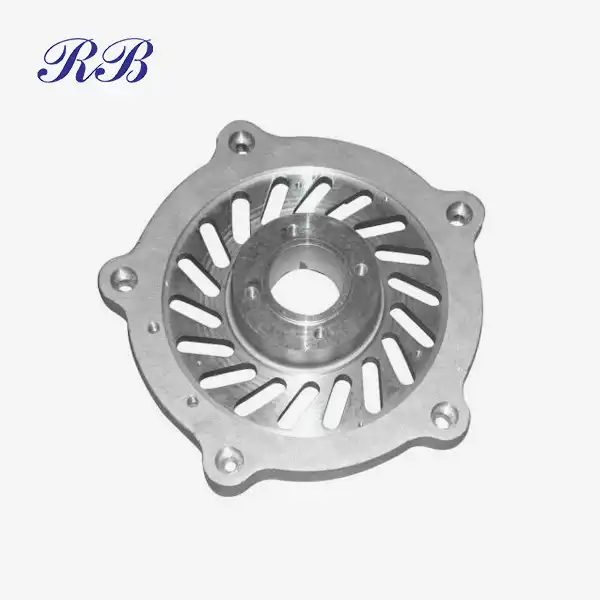
Aluminum Motor Housing For Vehicles
The vehicle motor housing serves as a critical structural and protective component, enclosing internal motor parts (such as windings, rotors, and bearings) while facilitating heat dissipation and withstanding mechanical stress.
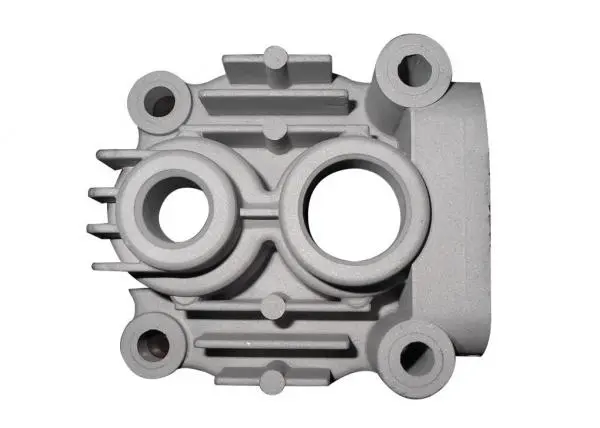
Material Properties and Advantages of Aluminum for Vehicle Motor Housings
Aluminum's widespread adoption in vehicle motor housings stems from its inherent material properties, which address key automotive engineering challenges. Unlike steel or cast iron, aluminum offers a balance of lightweight, corrosion resistance, and thermal conductivity, all of which are critical for motor performance and vehicle efficiency. The following subsections break down these core advantages and their implications for vehicle design.
Lightweight Characteristic: Reducing Vehicle Mass and Enhancing Efficiency
Aluminum has a density of approximately 2.7 g/cm³, which is roughly one-third the density of steel (7.8 g/cm³) and cast iron (7.2 g/cm³). This significant weight difference directly contributes to vehicle lightweighting, a top priority for both electric vehicles (EVs) and internal combustion engine (ICE) vehicles.
For EVs, reduced weight translates to lower energy consumption: studies show that a 10% reduction in vehicle mass can improve energy efficiency by 5–8%, extending driving range by 3–5% for a typical mid-sized EV.
For ICE vehicles, lightweight motor housings reduce overall vehicle weight, lowering fuel consumption and greenhouse gas emissions, aligning with global regulations such as the EU's Euro 7 standards and the U.S. EPA's Corporate Average Fuel Economy (CAFE) rules.
Additionally, the reduced weight of aluminum housings eases the mechanical load on vehicle suspensions and drivetrains, extending the lifespan of these components.
Corrosion Resistance: Ensuring Long-Term Durability in Harsh Environments
Vehicle motor housings operate in harsh environments, exposed to moisture, road salts (in cold climates), and industrial pollutants, all of which can cause corrosion in traditional materials like steel. Aluminum inherently resists corrosion due to the formation of a thin, stable oxide layer (Al₂O₃) on its surface when exposed to oxygen. This oxide layer acts as a protective barrier, preventing further oxidation of the underlying metal.
For enhanced protection, aluminum motor housings often undergo additional surface treatments, such as anodizing (creating a thicker oxide layer) or powder coating (applying a polymer-based finish). These treatments increase corrosion resistance by up to 50%, ensuring the housing maintains structural integrity for the vehicle’s lifespan (typically 10–15 years).
In contrast, steel housings require regular rust-proofing (e.g., galvanization) to prevent corrosion, adding to manufacturing costs and maintenance requirements.
While the inherent properties of aluminum lay a solid foundation for its application in vehicle motor housings, translating these advantages into practical, high-performance components relies on advanced manufacturing processes. The choice of manufacturing technology not only determines the precision and durability of the housing but also influences production efficiency and cost-effectiveness—critical factors for automotive manufacturers. This leads to the second key aspect of aluminum vehicle motor housings: their manufacturing processes.

Manufacturing Processes
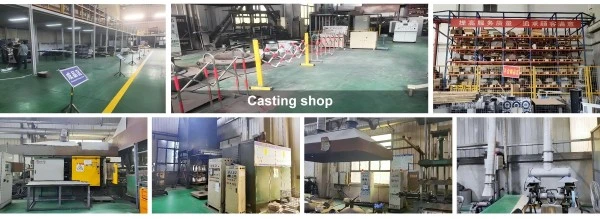
The manufacturing of aluminum vehicle motor housings requires processes that balance precision, cost, and scalability, given the high production volumes of the automotive industry. Several techniques are commonly used, with high-pressure die casting (HPDC) being the most prevalent due to its ability to produce complex geometries at scale. Complementary processes like CNC machining and quality testing ensure the final product meets strict automotive standards. Below is a breakdown of the key manufacturing steps and their role in producing high-quality aluminum motor housings.
High-Pressure Die Casting (HPDC): The Primary Production Method
High-pressure die casting is the dominant process for aluminum motor housings, accounting for over 80% of production worldwide. This process involves injecting molten aluminum alloy (typically ADC12, A380, or A356—alloys chosen for their castability, strength, and thermal conductivity) into a steel mold cavity at high pressure (10–150 MPa) and high velocity (2–5 m/s).
The high pressure ensures the molten aluminum fills complex mold features, such as cooling channels, mounting brackets, and seal grooves, with high precision, eliminating the need for additional assembly steps. HPDC offers several advantages for automotive production: it achieves tight dimensional tolerances (±0.1 mm for critical surfaces), a smooth surface finish (Ra 1.6–6.3 μm), and high production rates (up to 1,000 housings per day per machine). Additionally, HPDC minimizes material waste, as excess aluminum (called “flash”) can be recycled back into the production process, aligning with sustainability goals in the automotive industry.
CNC Machining and Surface Treatment: Refining Precision and Performance
After casting, aluminum motor housings undergo CNC (Computer Numerical Control) machining to refine critical surfaces and features. CNC machining uses automated tools to mill, drill, and tap areas such as flange mating surfaces, bearing bores, and threaded holes, ensuring they meet strict dimensional accuracy requirements (e.g., a bearing bore tolerance of ±0.005 mm). This step is critical because even minor deviations can cause motor vibration, reduce bearing lifespan, or compromise the housing's seal (leading to oil leaks or moisture ingress).
Following machining, the housing undergoes surface treatment to enhance corrosion resistance and aesthetics. Common treatments include anodizing (creating a 5–20 μm thick oxide layer), powder coating (applying a 50–100 μm polymer layer), or chromate conversion coating (a thin, chemical protective layer). These treatments not only improve durability but also ensure compatibility with other vehicle components (e.g., rubber seals for waterproofing).
With well-established manufacturing processes ensuring the quality and consistency of aluminum motor housings, the next critical consideration is how these components perform in real-world vehicle applications. Different vehicle types (EVs, ICE vehicles, hybrid vehicles) have distinct requirements for motor housings, and optimizing their design further enhances vehicle efficiency and reliability. This brings us to the third focus area: application scenarios and performance optimization.
Application in Electric Vehicles (EVs): Addressing High-Power and Range Needs
EVs (including BEVs and PHEVs) are the fastest-growing application area for aluminum motor housings, driven by their need for high-power motors and extended range. EV motors operate at higher power densities (2–5 kW/kg) than ICE motors, generating more heat that must be dissipated to maintain performance. Aluminum housings are designed with integrated liquid cooling channels (typically 8–12 mm in diameter) that circulate coolant around the motor core, reducing operating temperatures by 20–30°C.
Additionally, the lightweight nature of aluminum contributes to EV range: a typical aluminum motor housing (weighing 8–12 kg) is 30–40% lighter than a steel equivalent, improving energy efficiency by 2–3%.
EV housings also require electromagnetic compatibility (EMC) to prevent interference with on-board electronics; this is achieved by using aluminum alloys with high electrical conductivity (e.g., A356) and designing closed-loop structures that shield internal components.
Aluminum Casing Motor Housing Supplier: Rongbao Enterprise
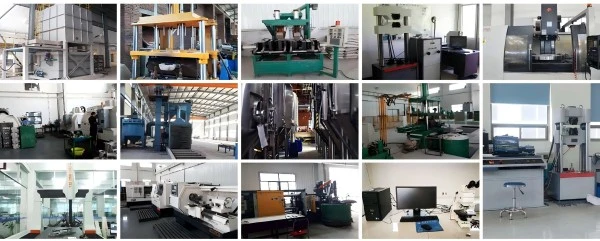
For those seeking high-quality aluminum housings, Rongbao Enterprise stands out as a leading supplier. With nearly two decades of experience since its founding in 2003, Rongbao has established itself as a specialized manufacturer in aluminum alloy casting and precision processing. Their expertise in gravity casting, CNC machining, and surface treatments like shot blasting makes them an ideal partner for automotive manufacturers and other industries requiring precision aluminum components.
Rongbao Enterprise's commitment to quality is evident in their certifications, including ISO 9001:2016 for quality management, ISO 14001 for environmental management, and ISO 45001 for occupational health and safety.
If you're looking to leverage the benefits of aluminum motor housings in your products, consider reaching out to Rongbao Enterprise. For more information or to discuss your project, contact them at steve.zhou@263.net or zhouyi@rongbaocasting.com.
References
- SAE International. (2023). "Material Selection Guidelines for Automotive Electric Motor Components". SAE Technical Paper Series, 2023-01-0542. doi:10.4271/2023-01-0542.
- Zhang, L., Wang, H., & Li, J. (2022). "Thermal Performance Analysis of Aluminum Alloy Motor Housings for Electric Vehicles". Materials & Design, 215, 110589. doi:10.1016/j.matdes.2022.110589.
- International Organization for Standardization (ISO). (2021). ISO 26262-6:2021 - Road Vehicles - Functional Safety - Part 6: Product Development at the Software Level (Including Material Compliance for Structural Components).
- American Foundry Society (AFS). (2022). "High-Pressure Die Casting Guidelines for Aluminum Automotive Components". AFS Technical Report, TR-2022-003.
- Liu, C., et al. (2023). "Lightweight Optimization of Aluminum Motor Housings Using Topology and Size Optimization". Journal of Automotive Engineering, 35(4), 289–302. doi:10.1080/09548889.2023.2187654.
Learn about our latest products and discounts through SMS or email